The first few months on the road, our RV felt like a very nice hotel room we happened to own. Everything was functional: the beds were made, the kitchen worked, the storage held our stuff, but nothing about it felt like us. It was beige and vinyl and slightly sterile, decorated by whoever built it rather than the people actually living in it. We’d come back from a hike or a long driving day and step inside to a space that was fine, but never quite comfortable, never quite ours.
That gap is incredibly common for anyone new to RV life. You downsize from a full house into a few hundred square feet, and somewhere in that transition, the instinct to actually make the space personal gets lost under the practical pressure of just fitting everything in. Function takes over completely, and comfort, warmth, character the things that make a space feel like home instead of a vehicle get pushed to “someday.” For us, someday kept getting postponed for almost a year.
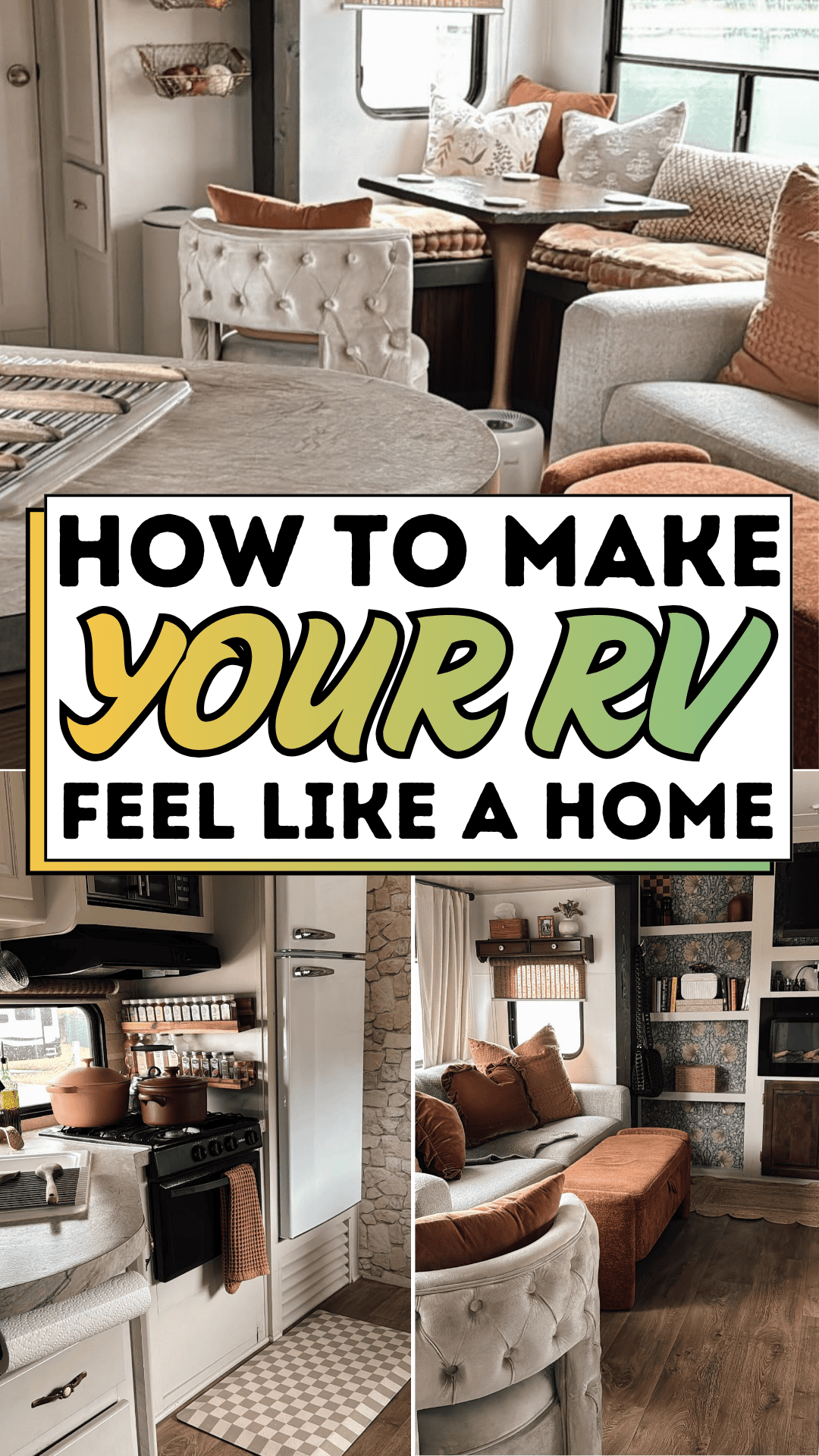
What finally shifted things was treating the interior like an actual design project instead of an afterthought: a curved marble-look counter with woven cane detailing, a beaded chandelier catching the light through the window, a soft gray couch layered with terracotta pillows, a stone accent wall bringing texture into the space. None of it was complicated or expensive on its own. Layered together, it turned our RV from a place we were staying into a place we genuinely wanted to be. Here’s exactly how to make your RV feel like a home, one intentional layer at a time.
Your RV Blueprint
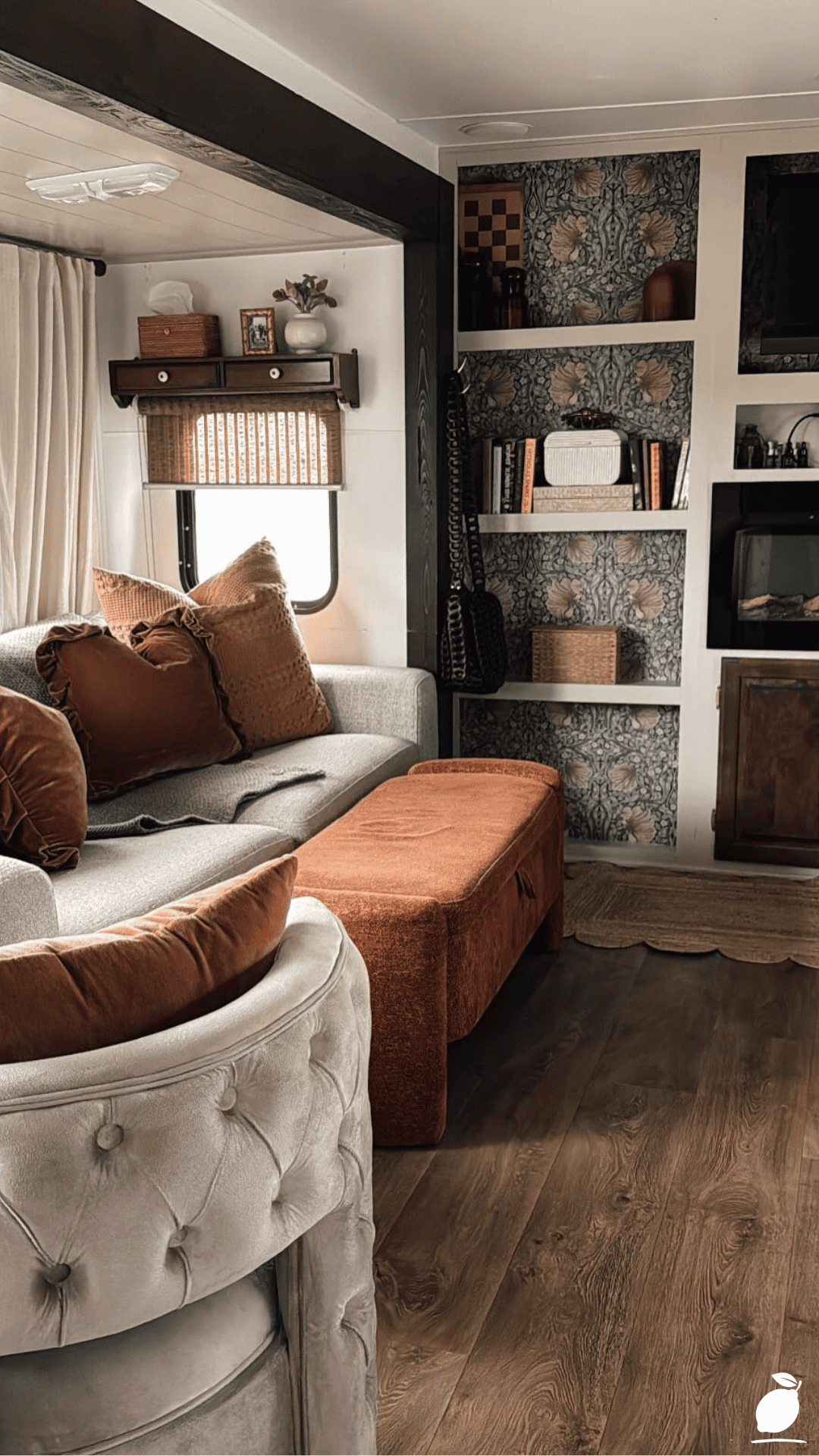
Turning a functional RV interior into a genuinely warm, personal space comes down to layering texture, color, and small design choices in the right order. Here’s the full sequence.
Step 1: Define Your Color Palette First
Before buying anything, choose two or three core colors — a warm neutral base with one or two accent tones works beautifully in a small space. Locking this in early keeps every future decision for your RV cohesive instead of scattered.
Step 2: Upgrade Hardware and Fixtures
Swap out builder-grade cabinet pulls, faucets, or light fixtures for pieces with more character, like woven cane panel accents or a statement chandelier. This is one of the highest-impact, lowest-effort upgrades available for making your RV feel intentionally designed rather than factory-default.
Step 3: Add Layered Textiles
Bring in throw pillows, a soft blanket, and a textured rug in colors that complement your chosen palette. Terracotta, warm gray, and cream work especially well together, softening the hard surfaces that dominate most RV interiors.
Step 4: Introduce a Statement Furniture Piece
Choose one piece, like a tufted accent chair, that adds personality and a slightly elevated feel without taking up excessive floor space. A single well-chosen statement piece does more for how your RV feels than several smaller, forgettable purchases.
Step 5: Add Texture to at Least One Wall
Install a stone-textured panel, wood accent, or removable wallpaper on a single feature wall to break up the flat, uniform surfaces common in most RV builds.
Step 6: Personalize with Small Decorative Touches
Mount a few small decorative bowls, art pieces, or shelves near doorways and open wall space. These small, personal touches are often what makes your RV feel lived-in rather than staged.
Step 7: Maximize Natural Light
Swap heavy or dated window coverings for a simple roller shade in a neutral tone, allowing more natural light to fill the space and make it feel larger and brighter overall.
Step 8: Edit and Simplify
Once your design layers are in place, step back and remove anything that feels cluttered or unnecessary. A well-designed RV interior relies on restraint just as much as it does on thoughtful additions.
Expert Secrets for Success
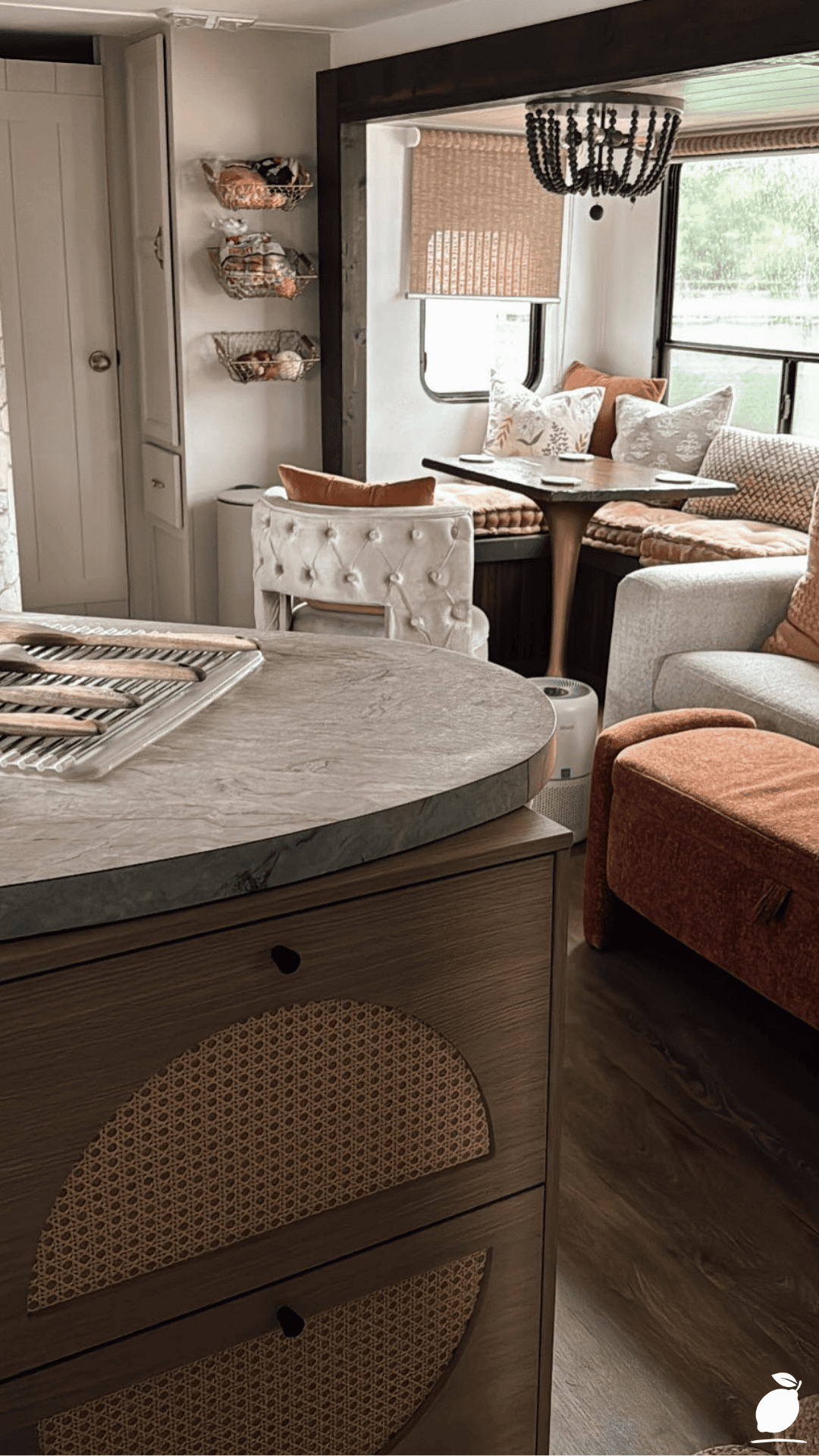
Pro-Tips for a Better Result
Choose multi-functional furniture wherever possible. A stylish piece that also offers storage or converts for guests maximizes both comfort and practicality in a small footprint.
Use removable, RV-safe materials. Peel-and-stick tile, removable wallpaper, and adhesive hooks let you personalize your RV without permanent damage or complicated installation.
Anchor your palette with textiles, not paint. Pillows, throws, and rugs are far easier to update as your taste evolves than repainting walls in a moving vehicle.
Prioritize lightweight decor. Choose lighter materials for wall-mounted decor and furniture to keep overall vehicle weight manageable for travel.
Layer lighting sources. Combining a statement fixture with smaller accent lighting creates a warmer, more residential feel than a single overhead light alone.
Common Mistakes to Avoid
Over-decorating a small space. Too many patterns, colors, or decorative objects can make an already compact interior feel cluttered rather than cozy.
Ignoring weight limits. Heavy furniture or decor items can affect your RV’s balance and fuel efficiency, so always check weight ratings before making larger purchases.
Choosing non-secure decor for travel. Loose or unsecured items can shift or break while driving, so prioritize pieces that can be anchored or stored safely in transit.
Skipping a cohesive color plan. Buying pieces individually without a unified palette often results in a mismatched, disjointed look rather than a designed one.
Neglecting function for aesthetics. A beautiful piece that doesn’t actually work well in daily RV life will become a source of frustration rather than comfort.
Why Your RV Matters
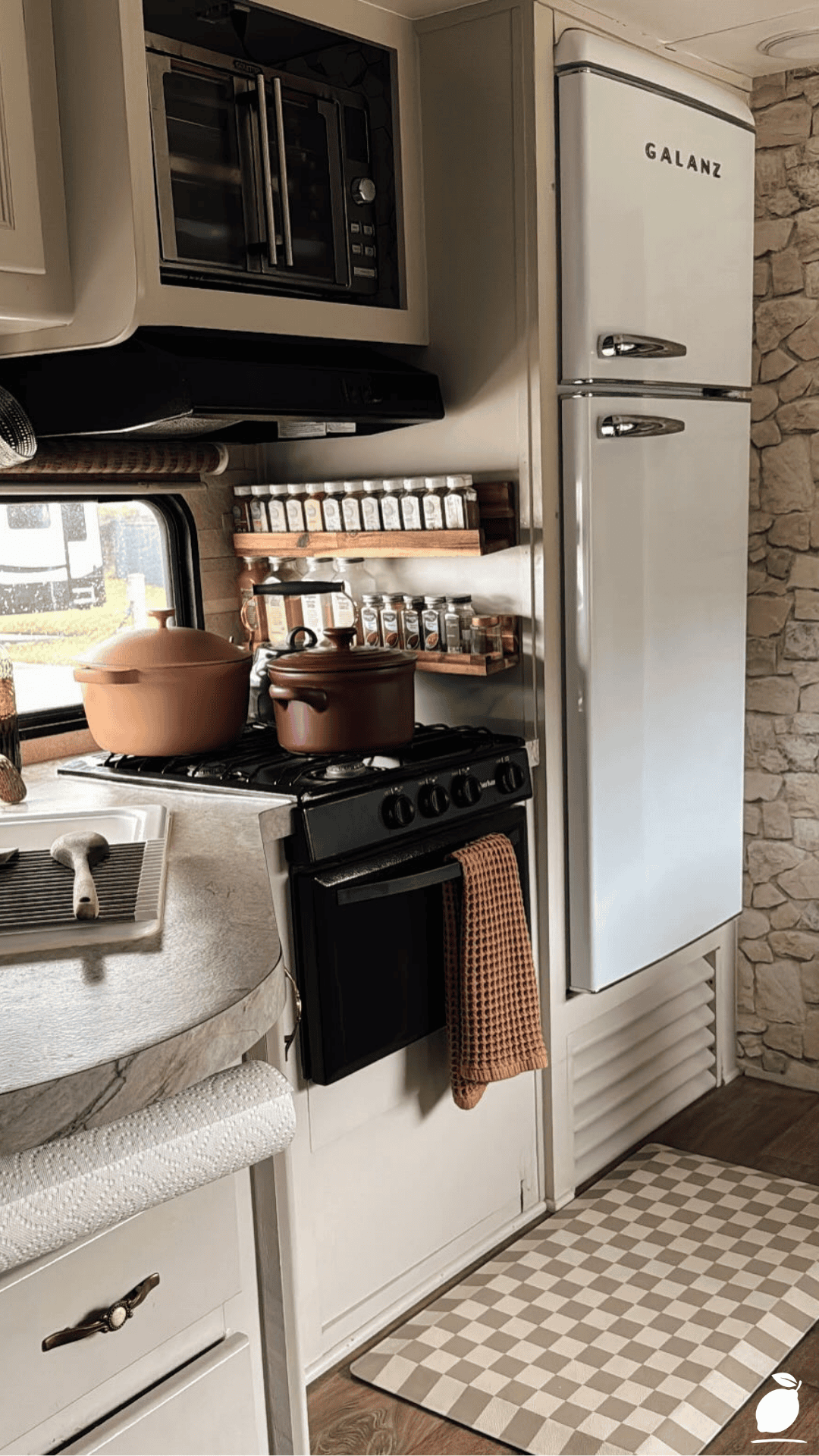
There’s a real emotional difference between staying somewhere and actually living somewhere, and for full-time or frequent RV travelers, that difference matters enormously. A space that finally feels personal, warm, and considered gives you somewhere genuine to return to after a long travel day, rather than just a functional shell you happen to sleep in.
That sense of home also has a ripple effect on how the whole family experiences life on the road. A calm, comfortable interior makes close quarters feel less confining, gives everyone a small sense of ownership over the space, and turns ordinary evenings into something that feels intentional rather than merely tolerated. Small design choices, layered thoughtfully, genuinely contribute to mental clarity and peace within a lifestyle that already asks a lot of everyone involved.
At Easy Peasy Life Matters, this is exactly the kind of transformation we love supporting: proof that comfort and personality aren’t reserved for traditional houses. With the right layered approach, your RV can offer the same warmth and sense of home as any full-sized house, just built thoughtfully into a much smaller footprint.
FAQ
What’s the easiest first step to make an RV feel more like home?
Swapping out hardware, light fixtures, and window coverings is one of the simplest, most affordable places to start, since these small changes instantly shift the overall feel of the space without major renovation.
How do I decorate an RV without adding too much weight?
Prioritize lightweight materials like textiles, removable wallpaper, and small decorative accents over heavy furniture or dense building materials, and always check manufacturer weight guidelines before larger purchases.
Can I make design changes to a rented or leased RV?
Yes, focusing on removable, non-permanent upgrades like peel-and-stick materials, textiles, and freestanding furniture allows you to personalize a rented RV without violating lease terms or causing lasting changes.
How much does it typically cost to redesign an RV interior?
Costs vary widely depending on scope, but many meaningful upgrades, like textiles, hardware swaps, and small decor pieces, can be completed for a few hundred dollars, while larger renovations involving flooring or built-ins cost significantly more.
How do I keep decor secure while driving?
Use adhesive strips, museum putty, or small anchoring hardware for wall decor, and store loose decorative items in secured cabinets or drawers whenever the RV is in motion to prevent shifting or damage.