You’ve got guests coming for brunch on Sunday, and the table is currently a landing zone for mail, a stray phone charger, and a half-empty fruit bowl nobody’s touched in days. Every spring, you tell yourself this is the year you’ll actually put together a pretty table setting, and every spring it ends the same way: mismatched plates, a plain tablecloth if you’re lucky, and a bouquet plopped in whatever vase happens to be closest. It looks fine. It just never looks like the effortless, put-together tables you keep saving for inspiration.
If that sounds familiar, the good news is that the gap between “fine” and “genuinely lovely” is much smaller than it feels. A beautiful spring tablescape doesn’t require rare china or a florist on speed dial; it comes down to a handful of simple, layered choices made in the right order: a patterned linen, coordinated dishware, a couple of well-placed floral arrangements, and a little intentional symmetry.
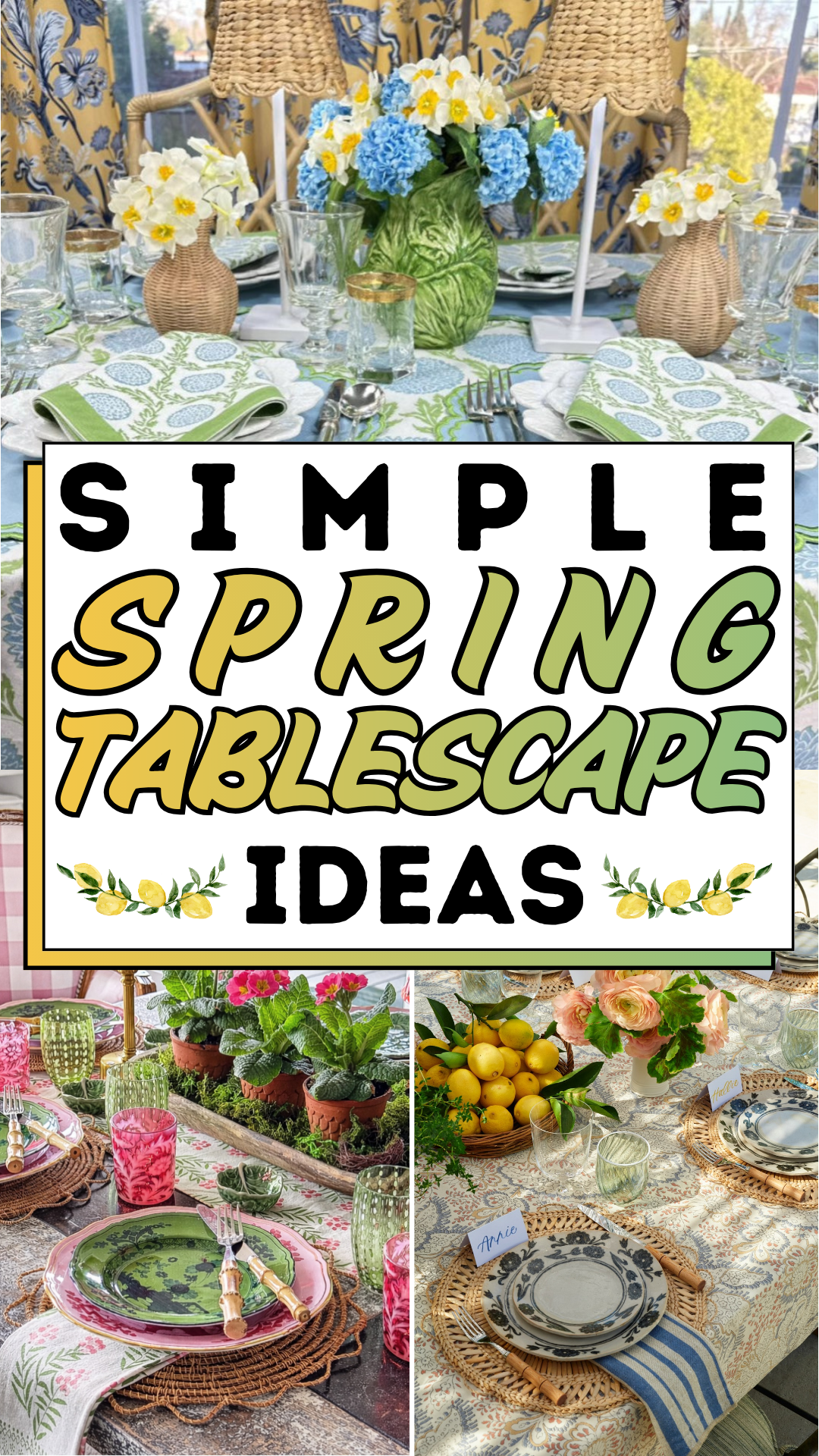
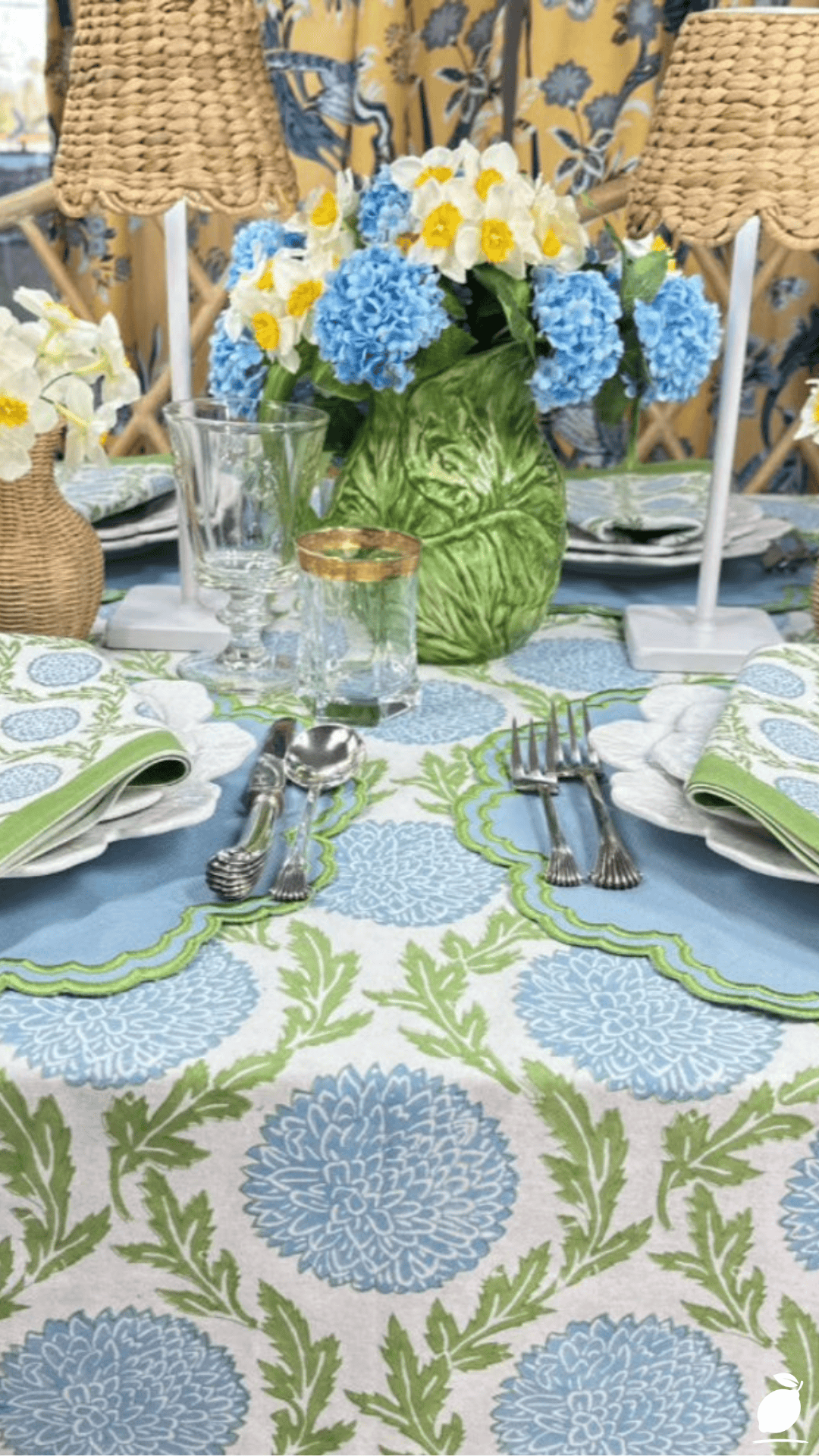
Picture a table dressed in a soft blue and white floral cloth, patterned plates in coordinating greens, silver flatware, a lush arrangement of hydrangeas anchoring the center, and smaller woven vases of daffodils tucked in alongside. Nothing overly fussy, nothing that required professional styling just a handful of pretty, coordinated pieces layered together with a little care. These simple spring tablescape ideas walk you through exactly how to get that same warm, gathered-together look at your own table this season.
The Spring Tablescape Blueprint
Building a beautiful spring tablescape comes down to layering your base, dishware, and centerpieces in a clear, deliberate sequence. Here’s the full process.
Step 1: Choose Your Color Palette
Select two or three coordinating colors to guide every choice that follows, like soft blue, white, and green, or a warmer yellow and cream combination. Locking in your palette first keeps every element of your spring tablescape feeling cohesive rather than random.
Step 2: Start with a Patterned Tablecloth or Runner
Lay down a floral or patterned tablecloth as your foundation, since a printed linen instantly sets the seasonal tone and gives the rest of your spring tablescape something to build on visually.
Step 3: Layer Your Dishware
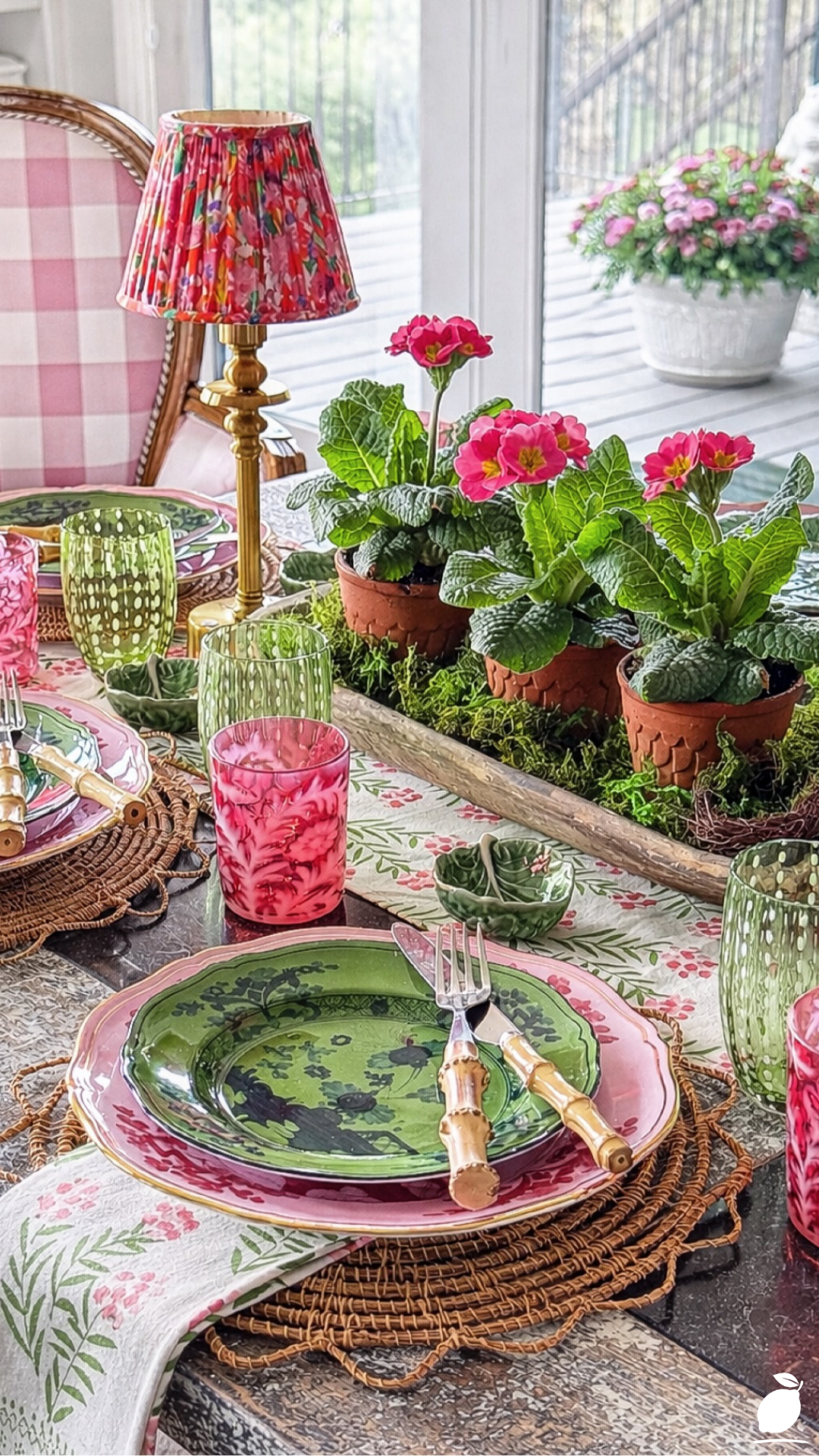
Set plates in a complementary pattern or color, stacking a patterned salad plate over a solid dinner plate for visual layering. This simple stacking trick adds instant depth to a spring tablescape without requiring any extra pieces.
Step 4: Add Coordinated Flatware and Glassware
Place silver or gold flatware and simple clear glassware at each setting, keeping the focus on your color palette rather than introducing new competing tones.
Step 5: Fold and Place Napkins
Choose napkins in a color from your palette, folding them simply and placing them either on the plate or beside the flatware for a clean, finished look at each setting.
Step 6: Build Your Centerpiece
Arrange a larger floral centerpiece, like hydrangeas in a glass vase, at the center of the table. A single substantial arrangement often has more visual impact on a spring tablescape than several small, scattered ones.
Step 7: Add Smaller Accent Arrangements
Place a few smaller vases, like woven baskets filled with daffodils, along the length of the table to extend the floral moment without overwhelming the centerpiece.
Step 8: Check Symmetry and Balance
Step back and view the table from a distance, adjusting place settings and floral arrangements as needed so everything reads as intentional and evenly balanced from every angle.
Step 9: Add Final Personal Touches
Finish with small details like place cards, a scattering of loose petals, or coordinating candles to round out your spring tablescape and make it feel complete.
Expert Secrets for Success
Pro-Tips for a Better Result
Mix patterns intentionally, not accidentally. Choosing one dominant floral pattern, like the tablecloth, and keeping other elements more solid or subtly patterned keeps a spring tablescape from feeling too busy.
Use varying vase heights for visual interest. Pairing one taller centerpiece with a few shorter accent arrangements creates natural depth across the table.
Repeat your color palette in unexpected places. Echoing your chosen colors in napkins, candles, or even place cards ties a spring tablescape together at every level of detail.
Shop your own home first. Vases, plates, and linens you already own can often be recombined into a fresh, seasonal look without any new purchases.
Set the table a few hours early. Setting up well before guests arrive gives you time to step back, reassess, and make small adjustments without any last-minute pressure.
Common Mistakes to Avoid
Overcrowding the table with too many elements. Too many patterns, colors, or centerpieces competing for attention can make a spring tablescape feel cluttered rather than curated.
Skipping a cohesive color plan. Choosing pieces individually without a unified palette often results in a mismatched, less polished final look.
Placing centerpieces too tall for conversation. Oversized arrangements can block sightlines across the table, making it harder for guests to talk comfortably during the meal.
Ignoring table proportions. A centerpiece or floral arrangement that’s too large or too small for the table size can throw off the overall visual balance of your spring tablescape.
Forgetting to consider seating logistics. A beautifully set table that leaves too little room for actual plates and elbow space can undercut the practical experience of the meal.
Why a Spring Tablescape Matters
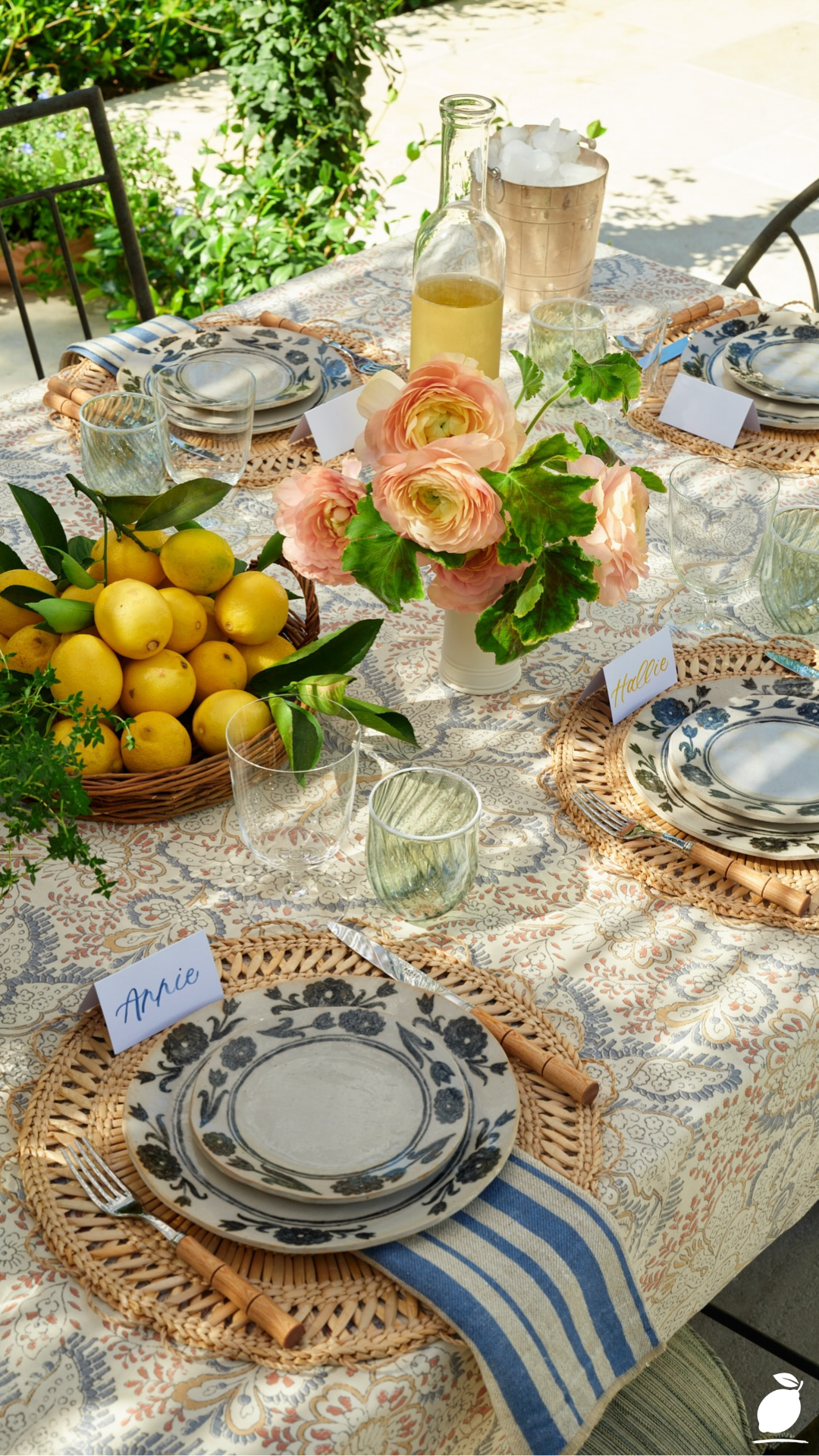
There’s something genuinely restorative about sitting down to a table that feels considered rather than thrown together. A well-built spring tablescape does more than look pretty in photos; it signals to everyone gathered that this meal, this moment, mattered enough to prepare for with a little extra care.
For the person setting the table, there’s real satisfaction in the process itself. Layering colors, arranging flowers, stepping back to adjust the details- it’s a slow, creative task that offers a small sense of accomplishment before guests even arrive. That kind of intentional preparation tends to set the tone for the whole gathering, turning an ordinary meal into something that feels genuinely special.
At Easy Peasy Life Matters, this is exactly the kind of small, doable project we love supporting: not an elaborate, expensive undertaking, just a little thoughtful layering that transforms an everyday table into something worth lingering at. A simple spring tablescape is proof that beauty and warmth at home don’t require a big budget, just a little intention and the right sequence of choices.
FAQ
What colors work best for a spring tablescape?
Soft, fresh tones like blue, white, green, and yellow are classic choices for a spring tablescape, though any pastel or garden-inspired palette works beautifully for the season.
How do I create a spring tablescape on a budget?
Reusing dishware, linens, and vases you already own, and choosing seasonal flowers from a local grocery store rather than a florist, are both effective ways to build a beautiful spring tablescape without significant expense.
What flowers are best for a spring tablescape centerpiece?
Hydrangeas, daffodils, tulips, and ranunculus are all popular choices for a spring tablescape, offering a mix of texture, color, and seasonal charm depending on your palette.
How far in advance should I set a spring tablescape?
Setting the table a few hours before guests arrive gives you time to make small adjustments and step back for a final look, though most elements can be prepared the day before if needed.
Can a spring tablescape work for both casual and formal occasions?
Yes, adjusting details like flatware formality, napkin folds, and the complexity of the centerpiece allows the same basic spring tablescape approach to suit anything from a casual brunch to a formal dinner party.