My bedroom had everything and felt like nothing. There were throw pillows in four different patterns, a gallery wall I had assembled over three years without any unifying principle, two mismatched nightstands, a collection of skincare products arranged across every flat surface, and somewhere underneath all of it, a bed I was supposed to be resting in. The room was not dirty. It was not even particularly disorganized by most standards. But every time I walked in, I felt a low-grade, hard-to-name tension, the kind that comes from being in a space that is asking too much of you visually. I could not relax in it because it never stopped talking. Every object demanded a little bit of my attention, and collectively they demanded all of it. I was exhausted in the one room where I was supposed to recover.

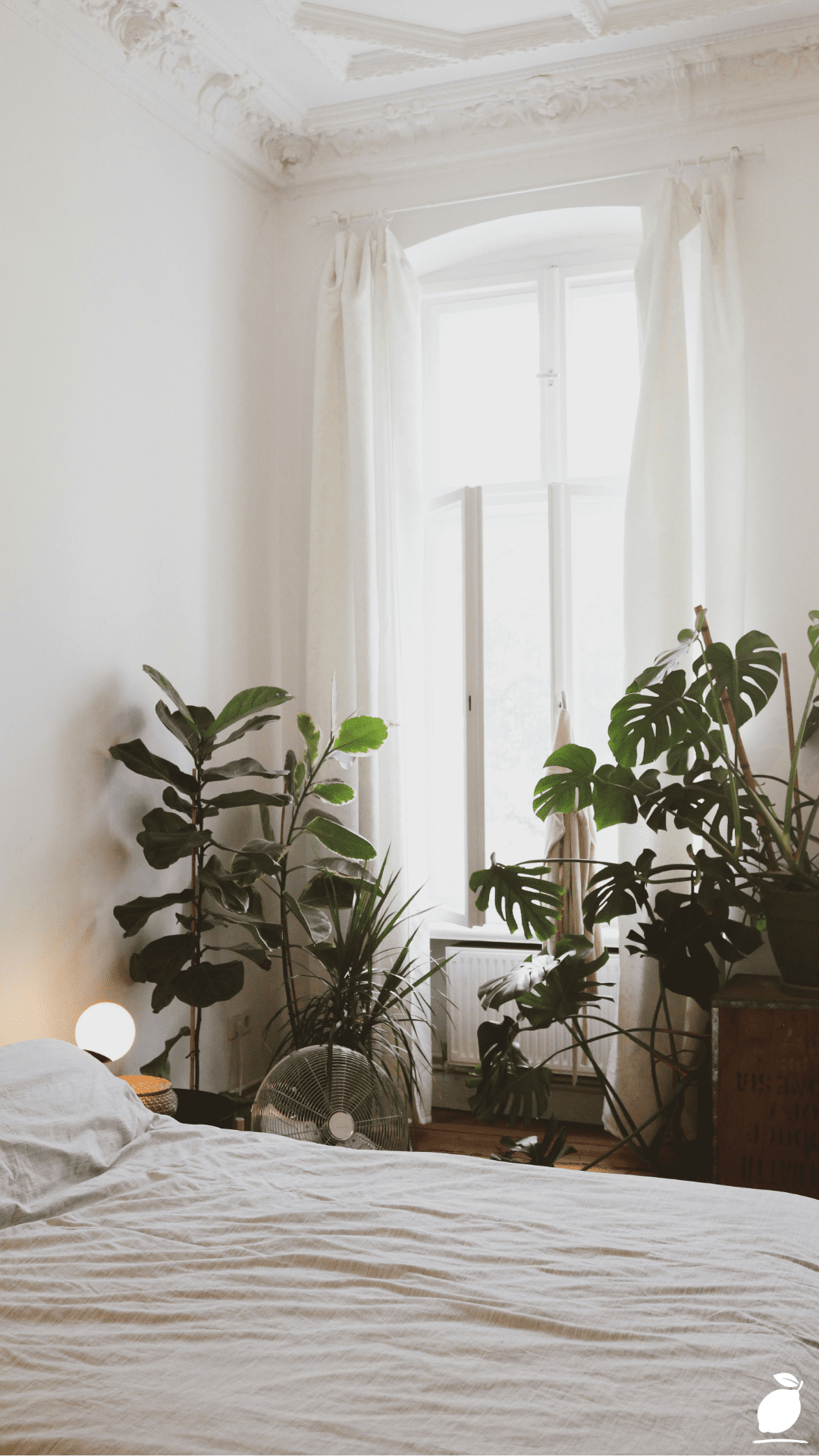
The minimalist bedroom in the image above is the direct answer to everything that was wrong with mine. White walls, white ceiling with ornate classical crown molding, light wood floors, and a large bed covered in a single white textured duvet and one white pillow, all of it utterly calm, completely resolved, asking nothing from you except that you rest. And yet the minimalist bedroom in this image is not cold or empty.
On the right side, clustered near a large window with white sheer curtains and vertical blinds, a fiddle leaf fig stands tall with broad, dark violin-shaped leaves, while five monstera deliciosa plants with large perforated green leaves spill across a dark wooden side table and the floor around it. A small, round white orb lamp on a wooden nightstand beside the bed emits a warm, soft glow. The ornate crown molding overhead adds architectural richness without visual noise. The result is a minimalist bedroom that achieves the rarest thing in interior design: it feels simultaneously empty and full, quiet and alive, spare and deeply, unmistakably warm.
The minimalist bedroom is widely misunderstood. Most people assume it means white walls, no art, and a mattress on the floor, a style of deprivation rather than a style of intention. The minimalist bedroom in the image above redefines the concept entirely: it is not about having less for its own sake, but about choosing every element with enough care that nothing in the room is accidental, nothing competes for attention, and everything that remains has earned its place through beauty, function, or the specific quality of aliveness that only plants can contribute. This guide will show you exactly how to build a minimalist bedroom that is warm, personal, and genuinely restorative step by step, from the largest decisions to the smallest details.
The Minimalist Bedroom Blueprint
Step 1 — Start the Minimalist Bedroom with a Whole-Room Edit, Not a Purchase
The most important first step in any minimalist bedroom project is removing rather than adding. Before you buy a single new item, take everything non-essential out of the bedroom entirely: every decorative object, every surface item, every piece of art, every extra textile, and leave only the furniture and the bare walls. Live in this stripped state for two to three days. You will immediately identify which elements you genuinely missed and which ones you realize you never needed. This approach is built on clarity: not the anxiety of space, but the relief of it. What you choose to bring back after the edit is now a deliberate decision rather than an accumulated default.
Step 2 — Choose the Minimalist Bedroom’s White as a Warm White, Never a Cool One
White is the structural color of virtually every minimalist bedroom, and the specific white you choose determines whether the room feels like a sanctuary or a sterile box. The one in the image uses a warm white throughout walls, ceiling, curtains, and bedding that absorbs the soft natural light from the large window and reads as creamy and inviting rather than clinical and hard. For your space, avoid whites with blue or gray undertones (often labeled “bright white” or “pure white”) and choose instead whites with barely perceptible yellow or beige shifts: Benjamin Moore White Dove, Sherwin-Williams Alabaster, or Farrow & Ball All White are all excellent minimalist bedroom wall choices that read as clean without reading as cold.
Step 3 — Anchor the Minimalist Bedroom with One Generous, Well-Made Bed
In a minimalist bedroom, the bed is not one piece of furniture among many; it is the room’s entire reason for being, and it deserves to be treated accordingly. The bed in the image occupies the lower half of the entire frame, dressed in a single white textured duvet and one white pillow, nothing more. The bed should be generous in size relative to the room, impeccably made with high-quality linen or cotton in white or warm cream, and dressed with restraint: one or two pillows maximum, one throw if desired, no decorative pillow collection. The quality of the materials matters more than in any other design context because there is nothing else in the room to distract from it; every imperfection shows, and every excellence is noticed.
Step 4 — Introduce Minimalist Bedroom Plant Life as the Primary Source of Warmth
The element that prevents the minimalist bedroom from tipping into coldness is almost always living greenery, and the image makes this case more powerfully than any styling guide could. A tall fiddle leaf fig positioned to the left of the window brings vertical scale and the particular drama of broad, dark green leaves silhouetted against the bright window light. Five monstera deliciosa plants clustered on a dark wooden side table and the floor to the right of the window create a lush, layered abundance that fills the corner with organic life without introducing visual chaos. In your minimalist bedroom, choose plants at two scales: one tall floor plant (fiddle leaf fig, rubber plant, or bird of paradise) and two or three medium or trailing plants at a lower level, and group them near the natural light source. The plant cluster becomes the minimalist bedroom’s single expressive statement, doing the work that art, accessories, and textiles do in other design styles.
Step 5 — Select Minimalist Bedroom Furniture for Warmth of Material, Not Complexity of Form
In a minimalist bedroom, furniture silhouettes should be clean and simple, but the materials should carry warmth and character. The dark wooden side table in the image, with its visible grain and slightly weathered “LUX” lettering on the side, is simple in form but rich in material presence. It anchors the plant cluster and provides the dark, warm wood tone that prevents the all-white room from feeling ghostly. Choose one or two bedside pieces in warm wood tones (walnut, oak, or teak in their natural colors), a bed frame in white-painted wood or upholstered linen, and nothing else on the floor or walls that is not performing a clear function. The warmth lives in the material quality of what remains, not in the quantity of what is present.
Step 6 — Light the Minimalist Bedroom in Layers of Warmth
The small, round, white orb lamp on the nightstand in the minimalist bedroom image is a masterclass in bedside lighting scale and tone. It is small, not a statement piece in its own right, but it emits a warm, soft glow that changes the entire character of the room after dark, making the white walls read as golden, and the plant leaves catch the light in unexpected ways. Layer your lighting from at least two warm sources: a bedside lamp in a simple form (orb, cylinder, or organic ceramic base) with a warm bulb (2,700K or lower), and either a wall sconce or a floor lamp positioned near the plant cluster. Avoid overhead ceiling fixtures as your primary light source; they flatten the room and eliminate the shadow and warmth that make a space feel intimate rather than institutional.
Step 7 — Preserve the Minimalist Bedroom’s Calm with One Architectural Detail
The ornate classical crown molding in the minimalist bedroom image is the room’s single architectural statement, and it is doing more than decoration. It gives the space a sense of historical depth and craftsmanship that white paint alone cannot convey, elevating it from a carefully edited rental into something that feels genuinely considered and permanent. Identify one architectural detail worth preserving or introducing: crown molding, a plaster ceiling rose, a built-in bookcase painted out in the wall color, or a window with deep reveals and quality hardware. This detail becomes the room’s signature, the element that makes your minimalist bedroom distinctive rather than generic, personal rather than styled.
Expert Secrets for Success
Pro-Tips for a Better Result
Pro Tip 1 — Use Sheer Curtains in the Minimalist Bedroom to Maximize Light Quality. The white sheer curtains and vertical blinds in the minimalist bedroom image are not just window coverings; they are light filters that transform harsh direct sun into the soft, diffused glow that gives the room its signature airy quality. Always layer your window treatments: a sheer white curtain closest to the glass to soften and diffuse natural light, and a secondary panel or blind for privacy and blackout when needed. The sheer layer is non-negotiable; without it, direct sunlight creates harsh shadows and bleaches the warm white palette into something flat and unpleasant.
Pro Tip 2 — Cluster Minimalist Bedroom Plants Rather Than Distributing Them. The image’s plant arrangement is a deliberate cluster near the window rather than individual plants distributed around the room. This clustering strategy is one of the most important minimalist bedroom plant principles: when plants are grouped, they create a single expressive statement, a living, breathing corner that feels intentional and lush. When the same plants are distributed individually around the room, each one feels isolated, and the space feels cluttered with objects rather than graced with life. Choose one corner near the best natural light and give it all your plants. Resist the urge to spread them out.
Pro Tip 3 — Let the Minimalist Bedroom Floor Breathe. One of the most counterintuitive minimalist bedroom principles is the value of visible floor space. In the image, the light wood floor is largely unobstructed. There is no area rug under the bed, no storage boxes pushed against the walls, no clothing draped over a chair. This visible floor creates a sense of spaciousness and calm that a rug or storage pieces would immediately reduce. If your room has beautiful wood flooring, consider leaving it uncovered or limiting a rug to a small bedside placement rather than a room-filling format. The floor is not space; it is part of the composition.
Pro Tip 4 — Use a Small Oscillating Fan as a Functional Minimalist Bedroom Detail. The small white oscillating fan on the floor between the fiddle leaf fig and the window in the minimalist bedroom image is a quietly brilliant detail: it is functional, it is white (invisible against the light walls and curtains), and it actively benefits the plants by providing gentle air circulation. In a space where every object must earn its place, choosing functional items that are also visually neutral, such as a white fan, a simple white power strip, and a clear cable management solution, keeps the room visually clean without sacrificing the everyday functionality that makes a minimalist bedroom livable rather than just photogenic.
Common Mistakes to Avoid
Mistake 1 — Confusing the Minimalist Bedroom with an Empty Bedroom. The most common minimalist bedroom mistake is removing too much. stripping out every piece of art, every plant, every personal object, in pursuit of a sparseness that reads as unfinished rather than intentional. The minimalist bedroom in the image is not empty; it is edited. The fiddle leaf fig and monstera cluster, the warm orb lamp, the ornate crown molding, and the dark wooden side table are all present and expressive. A minimalist bedroom without any warmth-giving elements is not minimalist; it is incomplete. The goal is to keep only what is genuinely excellent, not to remove everything until the room has nothing left to say.
Mistake 2 — Using Cool White Bedding in the Minimalist Bedroom. Bright, blue-shifted white bedding is one of the fastest ways to make a minimalist bedroom feel clinical and unwelcoming. The duvet in the image has visible texture, a warm, slightly off-white tone with a subtle weave pattern that reads as luxurious and soft rather than crisp and institutional. Choose bedding in warm white, ivory, or linen-toned cream, and prioritize materials with visible texture: waffle weave, linen, matelassé, or quilted cotton. The tactile quality of the bedding is one of the most important sensory details in the room; it is what the space feels like, not just how it looks.
Mistake 3 — Placing Minimalist Bedroom Plants Too Far from Natural Light. A fiddle leaf fig or monstera placed in a dark corner of a minimalist bedroom will decline slowly and eventually die, at which point it becomes the most visually depressing object in a room designed to feel restorative. The plant cluster in the image is positioned directly adjacent to the large window for a reason: both species require bright, indirect light to thrive. Before choosing which plants to include, assess your actual light conditions honestly. Bright indirect light near a south or east window supports fiddle leaf figs, monsteras, and rubber plants; lower light conditions require snake plants, ZZ plants, or pothos. A thriving plant is a design asset; a declining one is a liability.
Mistake 4 — Neglecting the Minimalist Bedroom Ceiling as a Design Surface The ornate crown molding in the minimalist bedroom image is the room’s single most distinctive feature, and it exists on the ceiling, a surface most homeowners treat as purely functional. In this style, where wall art, textiles, and accessories are deliberately limited, the ceiling becomes more visible and more important than in a heavily decorated room. If your space has crown molding, ensure it is freshly painted and well-maintained. If it lacks architectural ceiling detail, consider whether a simple cove molding, a painted ceiling medallion, or a single pendant light with a beautiful form could provide equivalent visual interest without competing with the room’s essential calm.
Why Minimalist Bedroom Matters
Sleep researchers and environmental psychologists have spent decades documenting something most of us have experienced intuitively: the visual complexity of the room we sleep in directly affects the quality of our rest. A bedroom full of objects, surfaces, and visual information keeps the brain in a low-level state of environmental processing even after the lights go out. The minimalist bedroom addresses this at the source. By reducing the number of objects the sleeping brain must unconsciously monitor, it creates the neurological conditions for deeper, more restorative sleep, not through medication or technology, but through the quiet architecture of an edited room. This is not a lifestyle preference. It is a sleep intervention.
For families navigating the relentless overstimulation of modern life screens that follow us to bed, the ambient stress of cluttered surfaces that carry undone tasks as visible reminders, the minimalist bedroom becomes one of the most important rooms in the home to get right. When a bedroom is genuinely calm and visually resolved, it functions as a genuine counterweight to the noise of the rest of the day. Children who have access to a simple, uncluttered space for rest and reading develop better sleep habits and lower baseline anxiety than those whose bedrooms double as toy storage and homework stations. The minimalist bedroom is not about aesthetics for aesthetics’ sake; it is about giving rest the conditions it needs to actually work.
And on the personal level, creating a minimalist bedroom is an act of radical self-care that most people undervalue until they have done it. The morning you wake up in a room with white walls, clean light, a single white duvet, and a fiddle leaf fig catching the early sun through sheer curtains that morning feels different from every morning before it. Not because anything external has changed, but because the room told your nervous system, from the first moment of consciousness, that today begins from a place of calm. It cannot fix everything. But it can give every day a better beginning, and over the course of a life, better beginnings compound into something that looks a great deal like wellbeing.
Frequently Asked Questions
How do I make a minimalist bedroom feel warm rather than cold?
The three most effective ways to add warmth to a minimalist bedroom are: choosing warm white (ivory, cream, or off-white with yellow undertones) rather than cool white for walls and bedding; introducing abundant living plants, especially large-leafed species like fiddle leaf figs and monsteras near the room’s natural light source; and using warm-toned wood furniture in simple forms. A small warm-bulb lamp on the bedside table is the single fastest way to transform a cold minimalist bedroom into a warm one. It changes the entire emotional register of the room after dark with one switch.
What plants work best in a minimalist bedroom?
The best minimalist bedroom plants are those with bold, sculptural forms that make a visual statement without requiring elaborate styling: fiddle leaf fig (Ficus lyrata) for dramatic vertical scale and large dark leaves, monstera deliciosa for organic perforated leaves that create beautiful shadow patterns in natural light, rubber plant for a more compact sculptural presence, and snake plant for its geometric upright form and exceptional low-light tolerance. In a minimalist bedroom, always group plants near the primary natural light source, choose pots in neutral tones (white, gray, dark wood, or terracotta), and limit yourself to one plant species per pot to keep the arrangement feeling curated rather than collected.
How many items should a minimalist bedroom contain?
There is no fixed number, but a useful minimalist bedroom guideline is the “one per function” rule: one lamp per side of the bed, one nightstand per sleeper, one piece of art or one plant cluster as the room’s expressive statement, and zero purely decorative objects that do not also contribute beauty or organic life. The minimalist bedroom in the image contains: one bed, one small lamp, one wooden side table, one plant cluster (which reads as one statement), one fan, and one architectural detail (the crown molding). That is the full inventory of a room that feels complete and generous, not empty, but exactly sufficient.
Can a minimalist bedroom work in a small space?
A minimalist bedroom is actually more impactful in a small space than in a large one, because the editing principle that defines the minimalist bedroom, keeping only what is genuinely excellent and removing everything else, naturally creates the sense of spaciousness that small rooms most need. In a small minimalist bedroom, keep the bed as the dominant piece and eliminate all unnecessary furniture, use vertical plant forms (fiddle leaf fig, snake plant) rather than spreading plants horizontally, leave the floor as clear as possible, and rely on natural and warm artificial light rather than overhead fixtures to create depth. The minimalist bedroom principles are not scale-dependent; they scale down as effectively as they scale up.
What bedding is best for a minimalist bedroom?
The best minimalist bedroom bedding is warm white or ivory linen, waffle-weave cotton, or matelassé in a single color with visible texture. The texture is what gives minimalist bedroom bedding its visual interest. A completely flat, featureless white duvet reads as institutional, while the same duvet in a woven or quilted format reads as luxurious and deliberate. Limit pillows to one or two in the same white or cream family as the duvet, avoid decorative pillow arrangements, and invest in the highest thread count and material quality your budget allows in a minimalist bedroom where the bed is the primary visual object; the quality of what covers it is the most important investment in the entire room.