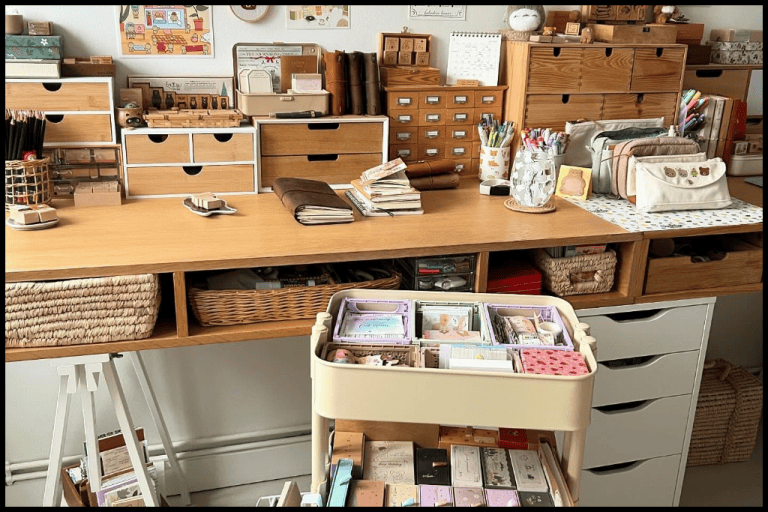
My bedroom had been waiting for a decision for three years. Not waiting in the way that neglected rooms wait, waiting in the active, accumulating way of a room that had been partially improved so many times that its layers of partial improvement had become the problem. A duvet in a color I had chosen carefully and then grown tired of. A gallery wall that I had hung with intention and that now sat at the awkward intersection of personal and purposeless. A lamp that provided light without providing atmosphere. A paint color that had been chosen to be inoffensive and had succeeded at that specific goal to the exclusion of every other quality a bedroom should have. The bedroom was a room where I slept and charged my phone, and I did not think about it otherwise. I had collected dark feminine bedroom images for what felt like long enough to have committed to one, and I had not committed to one because a dark feminine bedroom felt like the kind of decision a different, braver version of me would make, someone who was sure enough of her aesthetic to paint the walls charcoal and mean it.

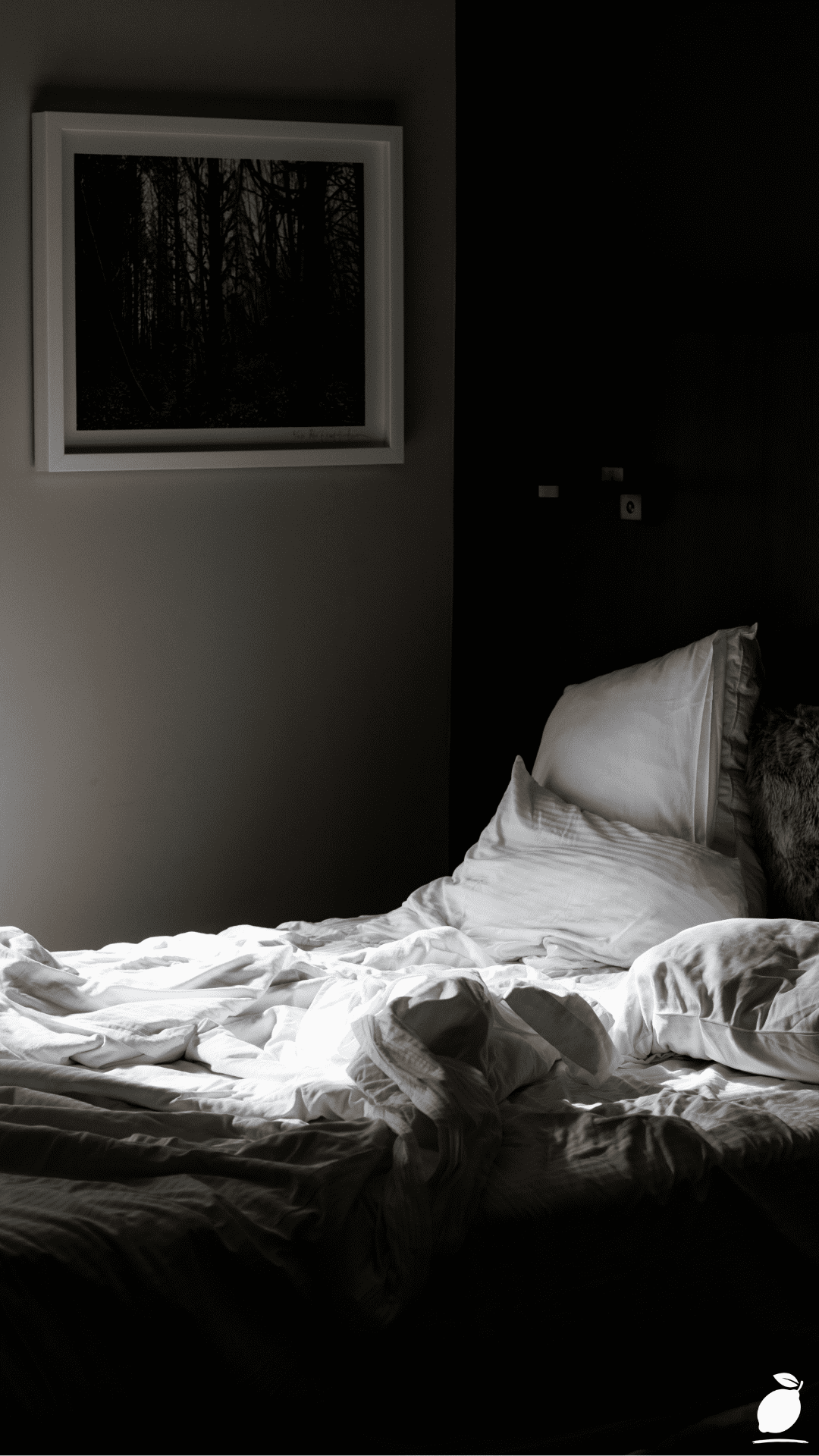
The bedroom in the image above is what a dark, feminine bedroom looks like when it has been committed to rather than hedged toward. Deep charcoal walls create the specific quality of enclosure, not darkness as absence, but darkness as presence, as deliberate shelter from the bright and demanding quality of the world outside the room. A white bed with gray pillows positioned precisely at the center of that dark wall, the contrast between the white bedding and the charcoal surface doing the visual work of fifty accessories. Framed photographs on the wall that are personal without being sentimental, creating a gallery of the self rather than a decoration of the room.
A white table lamp with a cylindrical shade casting warm amber light into the shadows of the charcoal walls, making the dark, feminine bedroom feel like candlelight in a room that knows what it is. A window in the upper right corner admits a specific, limited quality of natural light that the dark walls transform from ordinary daylight into a photographic, dramatic source. The bedding is slightly rumpled, lived-in, occupied by a real person rather than staged for a catalog, and that specific rumpled quality is the dark, feminine bedroom’s most honest quality statement. This room is not performing. It is being.
The dark feminine bedroom ideas I used to transform my own space followed the sequence the image suggests: commit to the wall color first and completely, then build the white counterpoint at the bed, then layer the personal photography gallery, then address the lamp and secondary light, then allow the room to be slightly imperfect rather than over-edited into stillness. These dark feminine bedroom ideas are built around a philosophy as much as a design sequence the philosophy that the bedroom deserves to be as specifically yours as any other expression of who you are, and that the dark feminine bedroom achieves that specificity through the same quality the image demonstrates: the confidence to choose darkness and warmth and personal imagery and live-in texture rather than the safety of something that could belong to anyone. These dark feminine bedroom ideas are for the person who has been collecting inspiration and has not yet acted on it. The time is now, and the room is ready.
The Dark Feminine Bedroom Blueprint
Step 1: Commit to the Dark Feminine Bedroom Wall Color With Full Conviction
Every dark feminine bedroom that achieves the atmospheric quality the image demonstrates begins with the same non-negotiable first step: the wall color applied at full saturation, to all four walls, without the qualifying compromise of painting only one accent wall and leaving the remaining three in white or light neutral. The dark feminine bedroom’s enclosing, sheltering quality, the specific feeling of a room that holds its occupant rather than simply containing her, is a product of the dark color on all surfaces simultaneously. A single dark accent wall in an otherwise light-walled room produces a bedroom with a dark accent wall. Four charcoal walls produce a dark, feminine bedroom.
For dark feminine bedroom wall colors, the most versatile and most consistently successful choices are warm-spectrum charcoals and near-black tones that carry enough warmth in their pigment base to prevent the bedroom from reading as cold or institutional under artificial light. Benjamin Moore’s Wrought Iron (2124-10) is the quintessential dark, feminine bedroom charcoal, a rich, warm, near-black that reads as deeply gray in natural light and as warm charcoal in lamp light, exactly the dual quality the image demonstrates. Farrow & Ball’s Railings (No. 31) provides the darkest option in the same warm register. Sherwin-Williams Urbane Bronze (SW 7048) provides a dark, feminine bedroom wall color at the gray-brown boundary that works particularly well in rooms with warm wood or leather elements. Benjamin Moore’s Kendall Charcoal (HC-166) sits at a slightly lighter value and suits dark, feminine bedroom ideas in rooms with limited natural light, where full-depth near-black reads as oppressive rather than atmospheric.
Apply the dark feminine bedroom wall color to the ceiling as well as the walls, the five-wall application that produces the most complete enclosing quality. A white ceiling above charcoal walls creates the visual lid that prevents the dark, feminine bedroom from achieving its full atmospheric immersion; a ceiling in the same dark tone as the walls dissolves that boundary and creates the enveloping quality that is the dark, feminine bedroom’s defining experiential characteristic.
Step 2: Establish the Dark Feminine Bedroom’s White Counterpoint at the Bed
The white bed against the charcoal wall in the image is the dark, feminine bedroom idea that does more visual work than any other single element in the room, and it does that work precisely because of the contrast relationship between the white and the charcoal. The white bed reads as luminous against the dark wall in a way that white bedding on a white or light-toned wall cannot replicate, because the contrast creates visual brilliance at the bed’s surface that is heightened by the darkness surrounding it. The dark feminine bedroom’s white bed is not a neutral element it is the room’s most powerful visual statement, and it derives its power entirely from the dark feminine bedroom wall color that surrounds it.
For the dark feminine bedroom bed, choose an all-white or near-white bedding palette, white duvet cover, white flat sheet, gray and white pillow arrangement as in the image, rather than introducing a colored bedding accent that would diminish the contrast relationship with the dark wall. The dark feminine bedroom is not made more feminine by adding blush or mauve to the bedding layer; it is made more feminine by the quality of the contrast between the white bed and the charcoal surround, by the texture of the bedding materials, and by the personal photography gallery on the wall above. The dark, feminine bedroom’s femininity is atmospheric and personal rather than coloristic.
The slightly rumpled quality of the bedding in the image is a deliberate dark, feminine bedroom decision, not negligence, but the specific honesty of a room that is lived in rather than staged. A perfectly smooth, hotel-pressed dark feminine bedroom communicates performance; a bedroom with slightly settled bedding communicates inhabitation. Allow the dark, feminine bedroom bed to look like someone sleeps in it, because that specific quality is what gives the room its particular atmosphere of private, comfortable reality.
Step 3: Create the Dark Feminine Bedroom’s Personal Photography Gallery
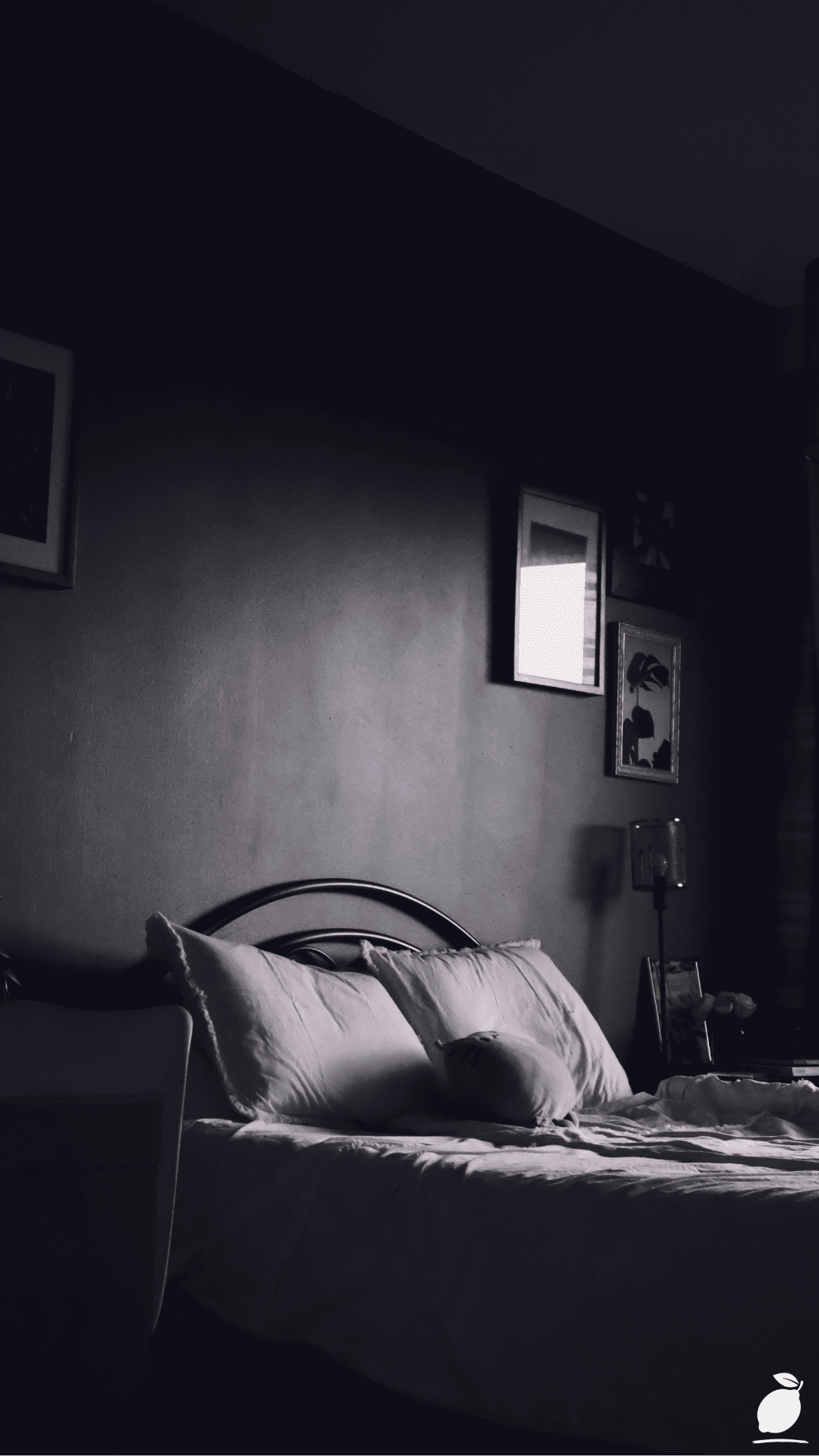
The framed photographs on the charcoal wall above the bed are the dark, feminine bedroom idea that most specifically personalized this particular room, making it unmistakably the bedroom of a specific person rather than a beautifully executed dark bedroom that could belong to anyone. Dark feminine bedroom ideas that substitute generic art prints or decorative mirrors for a personal photography gallery achieve the aesthetic quality of the image without its most essential quality: the sense of a room whose occupant is visible in it, whose specific life and specific eye and specific history are expressed on the walls.
For the dark feminine bedroom photography gallery, curate a selection of photographs that mean something specific to you, not photographs chosen because they are aesthetically beautiful (though they can be that too), but photographs that capture a moment, a person, a place, or an image that is specifically yours. Black and white photography reads most powerfully against charcoal walls in a dark, feminine bedroom context because the monochromatic palette of the print belongs to the same gray scale as the wall, creating a visual continuity that color photographs, which introduce competing palette elements, cannot achieve. Frame in simple white frames that read as clean and intentional against the dark wall surface.
Arrange the dark, feminine bedroom gallery asymmetrically rather than in a rigid grid. The organic, slightly irregular spacing visible in the image communicates personal curation rather than retail styling. Test the arrangement on the floor before hanging anything on the wall, and photograph the floor arrangement from a standing position to assess the gallery’s visual weight and balance before committing any nail to the charcoal wall.
Step 4: Layer the Dark Feminine Bedroom’s Warm Lamp Light
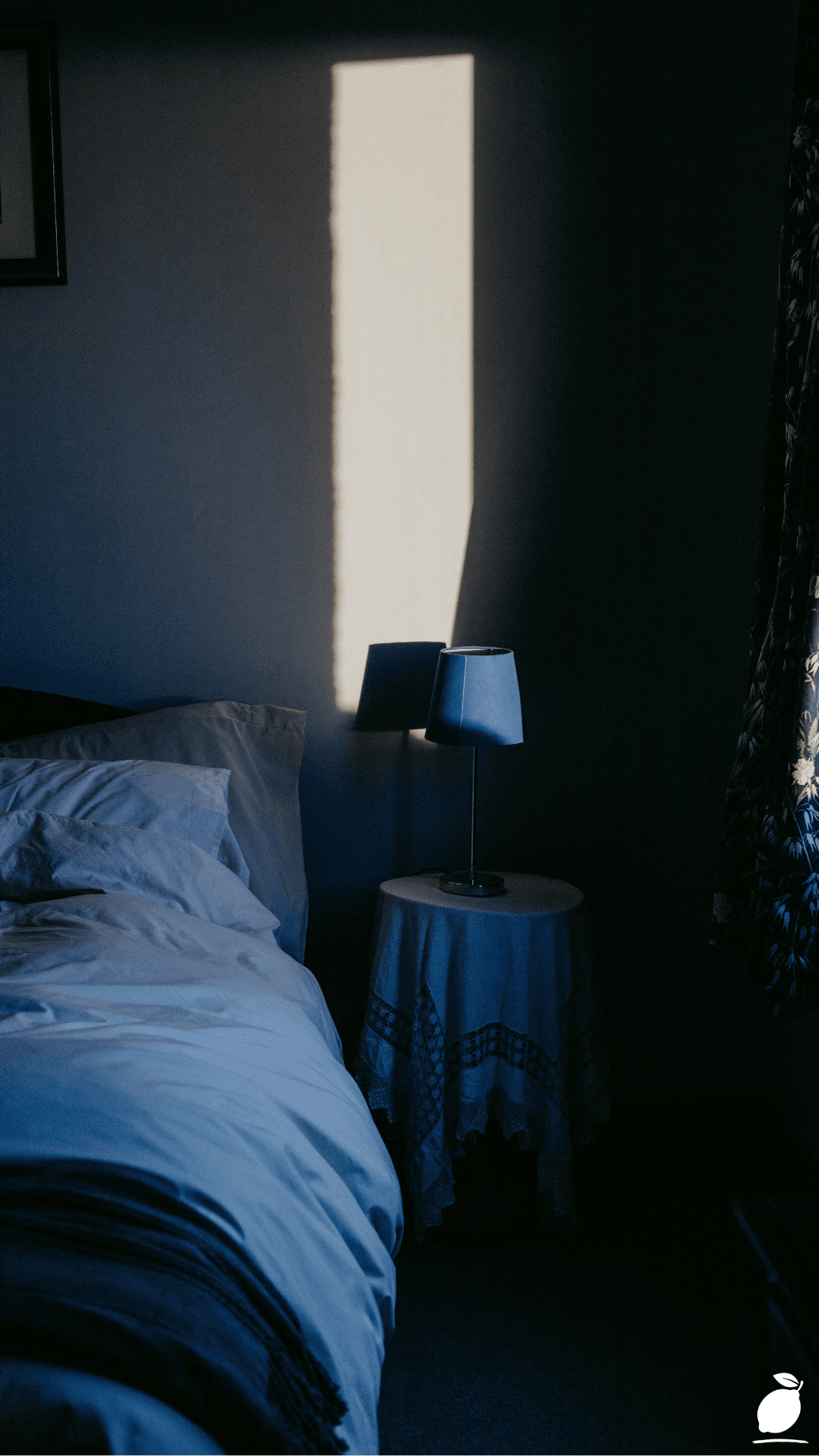
The white table lamp with a cylindrical shade in the image is the dark feminine bedroom lighting element that transforms the room from a dark bedroom (aesthetically interesting but functionally dim) into a dark feminine bedroom sanctuary (aesthetically immersive and humanly habitable). The lamp’s warm amber light in the photograph creates the specific quality of illumination that dark, feminine bedrooms require: directional, warm, source-visible rather than the flat overhead light that would flatten the charcoal walls and neutralize every shadow that gives the dark, feminine bedroom its depth.
For the dark feminine bedroom lamp, choose a cylindrical or drum shade in white or off-white fabric, the translucent shade that allows the warm bulb light to glow from within, rather than the opaque shade that directs all light downward and outward. The glowing quality of the image’s lamp, the shade itself illuminated from within by the warm bulb, creating a secondary light source at shade level, is the specific lamp quality that the dark, feminine bedroom requires. Use warm-white bulbs at 2200K to 2700K in every lamp in the dark, feminine bedroom; the amber end of the warm-white spectrum amplifies the shadows in the charcoal walls in the same way the image demonstrates, creating dimensional depth that cooler bulbs eliminate.
Install a second light source in the dark, feminine bedroom, a bedside sconce, a second table lamp, or a floor lamp in the room’s opposite corner so that the lamp visible in the image is not the only warm light source in the room. Dark feminine bedrooms with a single light source read as dramatically lit from the position nearest the lamp and as dimly dark in every position further away; dark feminine bedrooms with two or three warm-source lamps at different positions in the room read as atmospherically warm throughout.
Step 5: Curate the Dark Feminine Bedroom’s Textile Layer for Depth and Softness
The gray pillows against the white bedding in the image are the dark, feminine bedroom’s textile layer at its most restrained, and the restraint is itself the dark, feminine bedroom idea. A dark, feminine bedroom with elaborate, heavily layered textile elements, velvet throws, multiple decorative pillows in multiple colors, and patterned cushion covers produces a bedroom that is decoratively rich but visually busy, which works against the dark, feminine bedroom’s defining quality of intentional stillness. The dark feminine bedroom textile layer should provide sensory warmth and tactile softness without introducing visual complexity that competes with the charcoal walls’ atmospheric dominance.
Choose textiles for the dark, feminine bedroom in materials that have inherent textural quality, such as stonewashed linen, velvet in charcoal or deep gray, waffle-weave cotton, or heavyweight jersey rather than materials whose interest is primarily pattern-based. The dark feminine bedroom’s pattern interest comes from the photography gallery on the wall; the textiles should contribute softness and material richness without introducing additional visual pattern that fragments the room’s atmosphere.
Limit the dark feminine bedroom pillow arrangement to two to four pillows in a consistent palette. The gray and white arrangement in the image is the maximum complexity that the dark feminine bedroom aesthetic supports without visual overload. Additional throw pillows in new colors or patterns belong to a different bedroom aesthetic; the dark, feminine bedroom’s specific power comes from its palette restraint.
Step 6: Allow the Dark Feminine Bedroom to Remain Slightly Imperfect
The final and most philosophically important of all dark feminine bedroom ideas is the permission to leave the room slightly imperfect, not messy, not neglected, but lived-in in the specific way the image demonstrates. The slightly rumpled bedding, the window light falling at an angle that is specific to a particular time of day, the lamp casting its warm glow into specific shadow zones created by the objects and bodies that inhabit the room, these are the qualities that make the dark, feminine bedroom feel like a sanctuary rather than a set. A dark, feminine bedroom that is perfectly pressed, perfectly symmetrical, and perfectly lit at all times is a dark, feminine bedroom that is being performed rather than inhabited.
This dark, feminine bedroom idea, the permission to inhabit rather than perform, is the one that most people find most difficult after investing time and resources in the room’s aesthetic. The instinct to maintain the dark feminine bedroom at its most photogenic is understandable. The more sustaining practice is to maintain the dark feminine bedroom at its most livable to let the rumple remain on the days when it will be slept in within hours, to let the lamp’s light be the room’s primary evening experience rather than a background to other activities, to use the dark feminine bedroom as the sanctuary it was built to be.
Expert Secrets for Success
Pro-Tips for a Better Result
Apply a matte or ultra-flat finish to dark, feminine bedroom walls for maximum depth and shadow quality. The depth of the charcoal walls in the image, the way shadows pool in the corners, and the lamp light create dimensional variation across the surface is produced by a matte finish that absorbs light rather than reflecting it. Semi-gloss or eggshell finishes on dark, feminine bedroom walls reflect light unevenly, creating visible sheen variations that flatten the wall color’s depth and undermine the shadow play that is the dark, feminine bedroom’s most distinctive atmospheric quality. Use a matte or flat finish on all dark, feminine bedroom wall and ceiling surfaces, and supplement with a washable matte formulation in high-contact areas.
Use the window light intentionally in dark, feminine bedroom photography and daily experience. The window in the upper right corner of the image is not a neutral architectural element; it is the dark, feminine bedroom’s most dramatic light source, admitting a specific quality of natural light that the charcoal walls transform into the photographic, directional illumination the image demonstrates. Position the dark feminine bedroom’s primary bed and lamp arrangement in a conscious relationship to the window position, so that morning light falls at an angle that creates the kind of dimensional shadow play visible in the image. Observe the room’s natural light quality at different times of day and arrange the room in response to the most beautiful light rather than to a conventional furniture arrangement.
Hang dark, feminine bedroom photography at varying heights rather than in a uniform horizontal line. The gallery arrangement in the image creates visual rhythm by varying the heights of individual frames within the grouping, some frames higher, some lower; the overall arrangement reads as organically placed rather than geometrically prescribed. Dark feminine bedroom galleries hung in a rigid horizontal line read as formal and retail-influenced; dark feminine bedroom galleries hung with intentional height variation read as personally curated and atmospherically appropriate.
Choose dark, feminine bedroom lamps with a maximum bulb wattage of 40W to maintain amber warmth without brightness overload. The specific amber quality of the image’s lamp light is produced by a low-wattage warm-spectrum bulb (2200K to 2700K) at a wattage that illuminates the immediate lamp area without filling the entire dark, feminine bedroom with bright light that would neutralize the wall shadows. Dark feminine bedroom lamps at 60W or higher destroy the atmospheric shadow quality that is the room’s primary experiential value. Use 25W to 40W equivalents in warm LED bulbs for all dark, feminine bedroom lamp sources.
Common Mistakes to Avoid
Don’t paint only one dark feminine bedroom wall dark and leave the others white. The single-accent-wall approach is the most common dark feminine bedroom compromise, and it produces a bedroom with one dark wall rather than a dark, feminine bedroom. The dark feminine bedroom’s atmospheric enclosure, the quality that makes the room feel like a sanctuary rather than a bedroom, requires the dark color on all four walls and the ceiling. Committing to the single-accent-wall approach because the full-room dark color feels too bold consistently produces a result that is neither atmospherically immersive enough to read as a dark, feminine bedroom nor light enough to read as a comfortable, light bedroom, a halfway point that serves neither aesthetic.
Don’t use cool-white or daylight bulbs in any dark, feminine bedroom light source. Cool-white bulbs at 4000K or above shift the dark, feminine bedroom’s charcoal walls toward a blue-gray that reads as cold and institutional, the opposite of the warm, amber, sheltering atmosphere the dark, feminine bedroom is built to produce. Every bulb in the dark, feminine bedroom, without exception, should be warm-white at 2700K or below. Replace existing cool bulbs before the first night in the new dark feminine bedroom, and do not allow a single cool-temperature source to compromise the warm amber atmosphere that the image demonstrates.
Don’t hang the dark feminine bedroom gallery in a rigid grid pattern. A perfectly spaced grid gallery of identically sized frames on the charcoal wall reads as a design decision rather than a personal one; it communicates deliberate arrangement rather than curated personal expression. The dark, feminine bedroom photography gallery’s power comes from its specificity and its slight organic irregularity. Mix frame sizes, vary spacing slightly, and place the arrangement asymmetrically on the wall rather than perfectly centered above the bed. The personal gallery that looks slightly imperfectly placed is always more atmospherically appropriate to the dark, feminine bedroom than the perfectly gridded version.
Don’t use a high-thread-count glossy sateen for dark, feminine bedroom bedding. Sateen weave bedding has a subtle sheen that catches light and reads as glossy against the matte dark walls, a surface quality contrast that introduces a slightly clinical, hotel-room quality inconsistent with the dark, feminine bedroom’s specific aesthetic. Choose stonewashed linen, percale cotton, or matte-weave cotton for the dark, feminine bedroom bedding, all materials with a matte surface quality that relates to the charcoal walls and reads as softly textured rather than commercially polished.
Why Dark Feminine Bedroom Matters
The dark feminine bedroom matters for the same reason any specifically personal space matters, amplified: it is the room where the most private daily experiences happen, sleep, rest, the morning and evening transitions that frame every day’s beginning and end, and the quality of that room’s atmosphere has a direct, measurable relationship with the quality of those experiences. A bedroom that was chosen rather than defaulted to, that expresses something specific about the person who sleeps in it, that was built with the intention of producing a specific kind of shelter and privacy and warmth, that bedroom supports the body’s restoration in ways that a generically pleasant bedroom cannot, because the specific quality of being somewhere that feels yours entirely is itself restorative.
Research in environmental psychology has consistently identified the role of personal space ownership, the degree to which a person’s primary living environment reflects her specific preferences and identity as a significant predictor of psychological well-being, sleep quality, and stress recovery. The dark feminine bedroom, specifically, creates conditions that neuroscience identifies as supportive of rest and recovery: low-lux, warm-spectrum ambient light in the hours before sleep, a cool-temperature environment (the dark walls absorb and retain less ambient heat than light walls under the same conditions), visual calm through palette restraint, and the specific psychological safety of a space that communicates unmistakably that it belongs to you. These are not aesthetic benefits. They are functional ones that express themselves as better sleep, faster stress recovery, and the daily renewal of a person who begins each morning in a room that welcomes her back.
Easy Peasy Life Matters is built on the conviction that the bedroom is the most important room in the home to design specifically and personally and that the dark feminine bedroom, executed with the sequence and philosophy this guide provides, is among the most powerful of all bedroom transformation approaches available to someone who has been waiting to claim her space fully and on her own terms. The room in the image is not a magazine feature. It is a bedroom where someone sleeps, charges her phone, keeps photographs of things that matter on the wall above her bed, and begins and ends her days in a room that is entirely, specifically, and unapologetically hers. That is what the dark feminine bedroom is for. These ideas are how you build it.
Frequently Asked Questions
What colors work best for a dark, feminine bedroom?
The most versatile dark feminine bedroom wall colors are warm-spectrum charcoals and near-blacks: Benjamin Moore Wrought Iron (2124-10) and Kendall Charcoal (HC-166) for the most atmospheric warm charcoals; Farrow & Ball Railings (No. 31) for the deepest, most dramatic dark feminine bedroom option; Sherwin-Williams Urbane Bronze (SW 7048) for a warm dark feminine bedroom color at the gray-brown boundary; and Benjamin Moore Black Panther (2125-10) for dark feminine bedroom ideas that want a true near-black with warm undertones. Avoid cool-spectrum dark colors, blue-gray charcoals, pure blue-navies, green-tinged darks in a dark feminine bedroom context, as they produce a cold atmospheric quality rather than the warm enclosure the aesthetic requires.
How do I make a dark, feminine bedroom feel warm rather than cold?
The dark feminine bedroom warmth comes from three complementary sources: the wall color’s undertone (warm-spectrum charcoal with brown or gray-red undertone rather than cool blue-gray), the light sources’ color temperature (all lamps and bulbs at 2200K to 2700K without exception), and the textile layer’s material weight (stonewashed linen, velvet, heavyweight cotton that reads as warmly soft rather than clinically smooth). A dark feminine bedroom that is cold, that reads as gray and institutional rather than atmospheric and warm, is almost always a dark feminine bedroom where one of these three warmth sources has been compromised: a cool-undertone wall color, cool-temperature bulbs, or synthetic lightweight bedding. Address all three simultaneously.
Can a dark, feminine bedroom work in a small room?
Yes, and small rooms often produce the most successful dark feminine bedrooms because the enclosing quality of dark walls on all surfaces is most completely experienced in a room where the walls are close enough to be felt as well as seen. Dark feminine bedroom ideas for small rooms: use a five-wall application (all four walls and ceiling) to eliminate the visual lid that a white ceiling creates in a small dark room; choose a lamp with a warm, low-wattage bulb that fills the small room with amber warmth without the brightness that large lamps would introduce; keep the furniture to the essential minimum (bed, one lamp, one small bedside surface) so the dark walls are the room’s primary visual content rather than the furniture competing for attention.
What type of photography works best for a dark, feminine bedroom gallery?
The dark feminine bedroom photography gallery works most powerfully when it contains photographs that are personally meaningful and stylistically consistent. Black and white photographs, personal, artistic, or a combination of both, read most coherently against charcoal walls because their monochromatic palette belongs to the room’s gray scale rather than introducing competing colors. Documentary photographs (people, places, moments from your own life) produce the most personal dark feminine bedroom gallery quality; fine art prints of photography in a consistent black-and-white style produce the most aesthetically unified dark feminine bedroom gallery. Mix both: two or three personal photographs among three or four artistic prints creates a dark, feminine bedroom gallery that is simultaneously personal and visually considered.
How do I maintain a dark, feminine bedroom aesthetic over time without it feeling staged?
The dark feminine bedroom’s long-term quality is maintained by the same principle that produced it initially: inhabitation over performance. Change the photography gallery when meaningful photographs become less so and are replaced by new ones that matter more. Allow the bedding to settle into its lived-in quality rather than maintaining hotel-press standards daily. Add objects to the room only when they earn their place through genuine meaning rather than decorative impulse. The dark feminine bedroom improves over time when it accumulates specificity; it deteriorates over time when it accumulates clutter. The dark feminine bedroom that evolves with the person who lives in it maintains its sanctuary quality indefinitely; the dark feminine bedroom frozen in its first-styled state gradually loses the inhabited quality that gives it atmosphere.