The yard was embarrassing in a specific, quiet way, not dramatically bad, not the kind of yard that drew complaints from neighbors, but the kind that drew a vague sense of shame every time I pulled into the driveway. The lawn had sections where the grass was thin and sections where it was not there at all. The foundation planting near the house had never been replaced after the previous owners’ shrubs died, leaving bare soil against the brick that communicated abandonment rather than habitation.
The hedge along the property line had grown unevenly because I trimmed it when I got around to it rather than on any deliberate schedule, and the result was a border that curved in the wrong direction and had gaps where something had died back that I had never diagnosed or replaced. I had gathered landscaping ideas from magazines and websites and conversations with neighbors who seemed to have cracked the code of the presentable yard, and I had not acted on any of them because the gap between the landscaping ideas I admired and the budget I had available seemed unbridgeable. Professional landscaping quotes had confirmed the impression: the yard I wanted was priced for someone with a budget I did not have.
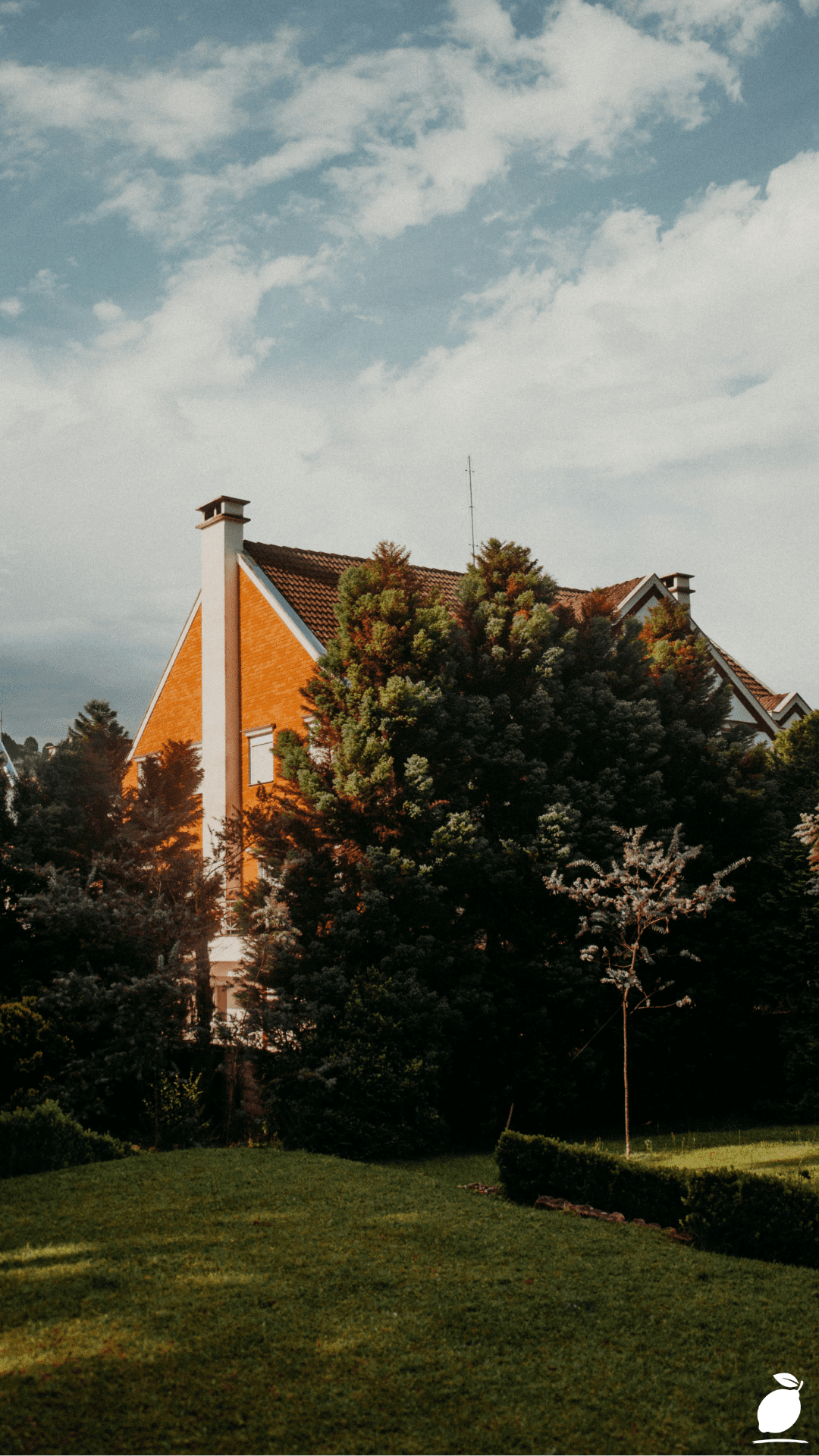
The house in the image above is the answer to that impression, and it is worth looking at closely for what it does and does not include. A traditional orange-brick craftsman house with white trim, a steep-pitched roof, and a prominent chimney. The house itself is beautiful but not unusually so. What makes it look the way it looks from the street is the landscaping: a neatly trimmed green lawn with curved hedge borders in the foreground, mature evergreen trees creating a natural privacy screen around the property, and well-maintained foundation planting that frames the house’s lower story.
None of this landscaping is exotic or expensive. The evergreen trees are cedars and pines, among the most accessible and most economical tree species available at any garden center. The curved hedge border is trimmed with a grass edge rather than an installed edging product. The lawn is a simple, well-maintained green lawn. The landscaping ideas in the image are not the product of a large professional landscaping budget; they are the product of consistent, specific, budget-conscious attention to three things: the lawn’s quality, the hedge border’s precision, and the evergreen planting’s scale and placement. These are the cheap landscaping ideas that produced this result.
The cheap landscaping ideas in this guide are organized around the same three elements the image demonstrates, in the sequence that produces the most visible result per dollar and hour invested: lawn improvement first, then hedge and border definition, then evergreen planting for structure and privacy, then the foundation bed that connects the house to its landscape setting. Every cheap landscaping idea in the sequence addresses a specific visual quality of the front yard that the image demonstrates: the impression of care, the impression of scale, and the impression of permanence that expensive professional landscaping produces and that cheap landscaping ideas, applied with consistency and knowledge, can replicate at a fraction of the cost.
The Landscaping Ideas Blueprint
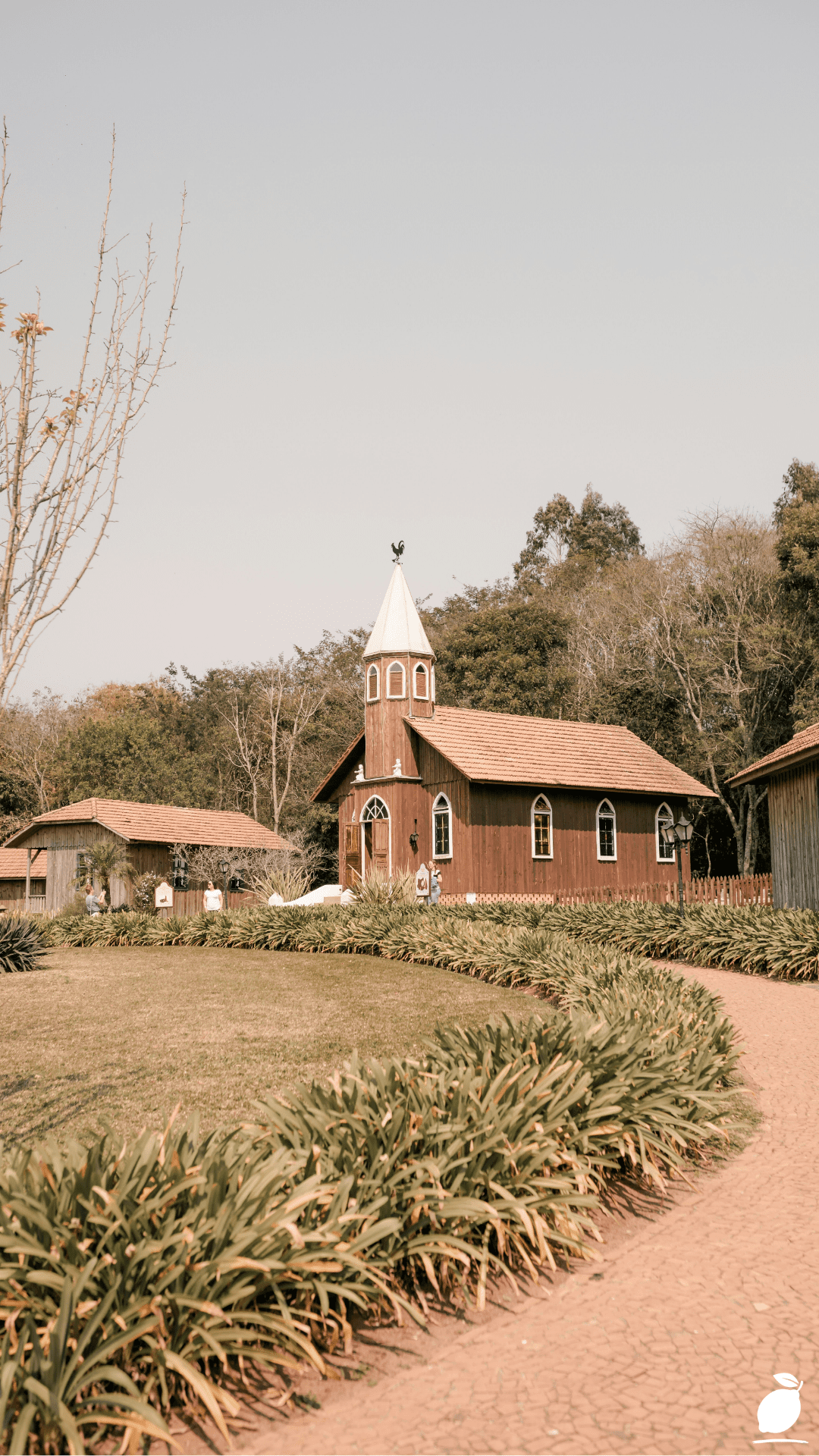
Step 1: Diagnose the Yard’s Specific Landscaping Ideas Priorities
Cheap landscaping ideas applied in the wrong sequence consistently produce front yards that are improved in parts and unchanged in the overall impression they make from the street. The specific diagnostic step that most cheap landscaping ideas projects skip, standing at the street and assessing the yard’s visual quality in order of most-to-least impactful problem, is the step that determines whether a limited budget produces maximum visible improvement or distributes itself across improvements that are individually sound and collectively underwhelming.
Stand at the street, the primary viewing distance from which the yard is seen by anyone approaching the house, and photograph the yard straight-on. Identify the three most visually dominant problems in order: the element that most immediately communicates neglect or absence of care from that distance, the element that is the second most visible issue, and the third element. These three priority items are where the cheap landscaping ideas budget goes first. Everything else, the improvements that are visible only at close range, the plantings that take three years to show, the projects that require professional equipment- wait until the three priority items are addressed.
The image demonstrates what the prioritized cheap landscaping ideas result looks like: the lawn is the most visible element (it occupies the largest visual surface area in the foreground), the hedge border is the most defining element (it creates the curve that separates the lawn from the street and gives the yard its organized boundary), and the evergreen trees are the structural element (they frame the house and create the scale that makes the property look designed rather than residential-standard). This three-priority sequence lawn, border, evergreen structure is the cheap landscaping ideas diagnostic framework that the most visually successful budget yards follow, and it is the framework this guide uses throughout.
Step 2: Improve the Lawn as the Cheap Landscaping Ideas’ Highest-Return Investment
The lawn occupies more visual surface area in most front yards than any other single landscaping element, and lawn improvement is consistently the highest-return, cheap landscaping ideas investment available because a well-maintained, dense, even-colored lawn transforms the yard’s overall impression from the street more completely than any equivalent-cost planting or structural landscaping idea. The lawn in the image reads as a quality lawn because it is dense, evenly green, and cleanly edged. None of these qualities requires professional intervention or significant expense.
For cheap landscaping ideas lawn improvement, address the three most common budget-yard lawn problems in sequence: bare patches (overseed with appropriate grass seed variety in autumn for fastest establishment; cover with a thin layer of topsoil mixed with compost after seeding to maintain moisture and improve germination contact), thin or pale sections (apply a spring application of slow-release nitrogen fertilizer at the manufacturer’s recommended rate thin grass is almost always under-fed rather than under-watered in established lawns), and weed pressure (spot-treat broadleaf weeds with a selective lawn herbicide in spring when weeds are actively growing rather than attempting to maintain the entire lawn on a prevention rather than cure approach, which requires significantly higher budget investment).
The curved hedge border visible in the image’s foreground is not a planted hedge; it is a mown grass edge that has been maintained in a consistent curved line. The specific lawn edging cut that creates this curved appearance is made with a long-handled half-moon edger or a lawn edging shears along a garden hose laid in the planned curve, cut once at the season’s start to establish the line, and maintained with the same cut on each subsequent mowing session. This cheap landscaping idea, the mown-edge curve at the lawn’s boundary, is available to any yard at zero material cost beyond the lawn-edging tool, and it produces the specific, organized-border quality the image demonstrates at every viewing distance.
Step 3: Plant Evergreen Trees as Cheap Landscaping Ideas’ Structure and Privacy Layer
The mature cedars and pines surrounding the house in the image are the cheap landscaping ideas’ most significant visual contribution to the property’s overall quality, not because of what they cost today in their mature form, but because of what they cost when they were planted twenty or thirty years ago as young saplings and allowed to grow into the scale the image demonstrates. This is the cheap landscaping idea principle that most immediately rewards patience: young evergreen trees planted at minimal cost produce the scale, the privacy, and the framing quality of the image’s mature planting within ten to fifteen years at a fraction of the cost of purchasing mature specimens.
For cheap landscaping ideas, evergreen tree selection, choose species based on three criteria: mature size appropriate for the planting position, growth rate appropriate for the timeline of visible impact, and purchase price appropriate to the budget. The most cost-effective cheap landscaping ideas evergreen trees for providing the privacy screen and structural framing the image demonstrates are: Thuja occidentalis (eastern arborvitae) the cheapest columnar evergreen widely available, typically $15 to $30 per small plant, growing to 3m to 5m at 30cm to 60cm per year; Picea abies (Norway spruce) the fastest-growing large evergreen available, typically $10 to $25 per small plant, reaching 20m at maturity at 60cm to 90cm per year; and Cedrus deodara (Himalayan cedar) slightly slower and more expensive at $25 to $50 per young plant, but producing the specific soft-textured, natural-looking canopy that the image’s cedars demonstrate.
Plant cheap landscaping ideas evergreen trees in groups of three or five rather than in single specimens or pairs, odd-number groupings at irregular spacings (not equal-distance spacing) read as naturally established rather than planted in a line, which is the specific quality of the image’s mature evergreen planting versus the institutional quality of equally-spaced single-row planting.
Step 4: Install a Curved Hedge Border as the Cheap Landscaping Ideas’ Defining Structure
The curved hedge border in the image, the line between the lawn and the landscaped areas surrounding the house and property, is the cheap landscaping ideas element that most immediately communicates a designed yard rather than a maintained yard. The distinction between these two qualities is important: a maintained yard communicates that someone mows and waters regularly; a designed yard communicates that someone made specific decisions about where the lawn ends and the garden begins, and maintains those decisions with consistent precision. The curved hedge border in the image is the specific landscaping idea that most cheaply creates the designed yard impression.
For cheap landscaping ideas hedge installation, Buxus sempervirens (common box) and Lonicera nitida (Wilson’s honeysuckle) are the most economical formal hedge species available: both are available as small rooted cuttings or bare-root plants at $1 to $3 per plant through wholesale or mail-order nurseries (versus $8 to $15 per plant at retail garden centers), both respond well to formal clipping into the precise hedge form the image demonstrates, and both establish from small plants within two to three growing seasons to a hedge of sufficient size to create the visual border quality the image shows.
For yards where a planted hedge is not within the immediate project timeline, a mown grass edge maintained in a consistent curve along the lawn’s perimeter provides the same visual boundary quality at zero material cost. The curve of the managed lawn edge reads from the street as a designed border line, even without a planted hedge on either side of it. This is the cheapest available implementation of the landscaping idea that the image demonstrates at its borderline, and it requires only consistent maintenance of the same mown edge shape each season.
Step 5: Create a Foundation Bed That Connects House and Landscape
The well-maintained foundation planting visible along the base of the house in the image is the cheap landscaping ideas element that connects the property’s structural elements, the house itself, to its surrounding landscape, preventing the visual disconnection of a house that sits on its site without any planted relationship to the ground it occupies. Foundation beds are one of the cheap landscaping ideas that most improve the view of the house from the street because they soften the hard line where the house meets the ground and give the eye a planted transition zone between the architectural mass of the house and the open horizontal space of the lawn.
For cheap landscaping ideas, foundation bed installation, prepare a bed of a minimum 60cm depth against the house foundation, 90cm is better for any foundation planting that will include shrubs larger than a compact dwarf variety. Remove the existing grass by cutting and rolling the sod (which can be reused to repair thin lawn areas, providing an additional cheap landscaping ideas benefit from the same physical effort), improve the exposed soil with a 10cm layer of well-composted organic material, and plant the foundation bed in the two-tier structure that provides the most visual completeness from the street: a rear tier of larger evergreen shrubs (Viburnum tinus, Osmanthus × burkwoodii, or compact holly varieties) that provides year-round structure and height, and a front tier of lower perennials or compact spreading plants (Lavandula, Salvia nemorosa, Geranium macrorrhizum) that provides seasonal flower interest between the shrub tier and the lawn edge.
Step 6: Maintain the Cheap Landscaping Ideas Result With a Consistent Seasonal Routine
The cheap landscaping ideas result in the image of the neat lawn, the precise hedge line, the well-maintained evergreens, and the tidy foundation bed, which is not the product of a one-time landscaping project. It is the product of a consistent seasonal maintenance routine applied to a well-designed yard, and the maintenance routine is the cheap landscaping idea that most homeowners do not implement consistently enough to produce and hold the image’s visual quality through all four seasons.
Establish a written four-season cheap landscaping ideas maintenance calendar: spring tasks (lawn feed, overseed bare patches, evergreen pruning of dead and crossing branches, hedge trim to re-establish the form established the previous season, foundation bed weed-and-mulch); summer tasks (lawn mowing on a consistent schedule, hedge trim to maintain the summer growth’s form, foundation bed deadheading and watering through dry periods); autumn tasks (lawn aeration and overseeding, bulb planting in foundation beds, evergreen protection against winter desiccation with an anti-desiccant spray in cold climates, leaf clearing from lawn areas); and winter tasks (hedge inspection for damage, lawn and bed boundary maintenance of the mown edge, planning of any additions or changes to the cheap landscaping ideas scheme for the following season).
Expert Secrets for Success
Pro-Tips for a Better Result
Buy evergreen trees as small bare-root plants or seedlings rather than container-grown specimens for cheap landscaping ideas and budget efficiency. Container-grown evergreens at 60cm to 90cm height cost $25 to $60 each; bare-root or liner-size specimens of the same species at 30cm to 45cm height cost $5 to $15 each from wholesale nurseries, mail-order tree nurseries, or native plant sales. The smaller plant establishes its root system more quickly than the larger container-grown specimen in most conditions, reaches the same size within two to three years, and costs 70 to 80 percent less for an equivalent planted result. These cheap landscaping ideas involve purchasing small bare-root plants in volume rather than large container plants singly, producing the privacy-screen and structural-planting quality of the image at a fraction of the retail container-plant cost.
Sharpen the lawn mower blade at the beginning of each season for cheap landscaping ideas, lawn quality that requires no additional investment. The specific green, dense quality of the lawn in the image is partly produced by mowing with a sharp blade that cuts each grass blade cleanly rather than tearing it, which produces the specific clean-cut, evenly green surface that the image demonstrates. Mowing with a dull blade produces the tan-and-green mottled surface that characterizes poorly maintained lawns. The blade tears rather than cuts, leaving frayed grass tips that dry and brown within 24 to 48 hours. A sharpened mowing blade costs $10 to $20 to have professionally sharpened or $20 to $30 to sharpen with a hand file at home, and produces a visibly superior lawn surface quality for the full mowing season at effectively zero additional cost.
Use collected grass clippings as free mulch in the cheap landscaping ideas foundation beds. Grass clippings from the lawn mower’s collection bag provide a free organic mulch that, applied in layers of no more than 3cm thickness, suppresses weeds and retains soil moisture in the cheap landscaping ideas foundation beds without the $30 to $60 per cubic meter cost of purchased bark mulch. Allow each layer of grass clippings to dry and brown before applying a subsequent layer of fresh grass clippings in thick layers that mat together and can produce anaerobic conditions at the soil surface. These cheap landscaping ideas involve material cycling, which converts lawn clippings to free garden mulch, eliminating one of the most consistent ongoing costs in a maintained foundation bed.
Establish the cheap landscaping ideas curved hedge line with a garden hose before cutting any edge. The specific quality of the image’s curved hedge and lawn border, the smooth, consistent curve that reads as professionally designed from the street, is achievable with a garden hose laid on the lawn in the planned curve before any cutting begins. A hose curved on the lawn can be adjusted until the curve reads correctly from the street viewing position (walk to the street and assess the hose curve before any cutting), then fixed in position with tent pegs or garden pins before the half-moon edger cuts along its inside edge. This cheap landscaping ideas layout technique eliminates the irregularity that freehand curved edges consistently produce and requires no specialist equipment beyond the edging tool.
Common Mistakes to Avoid
Don’t plant cheap landscaping ideas evergreen trees in single-file rows at equal spacing. A single row of equally spaced evergreen trees the most common cheap landscaping ideas. Evergreen planting arrangements read as a formal screen or windbreak rather than as a natural privacy planting, and require every tree to establish and grow at the same rate (which never happens in practice) to maintain its uniform appearance. The image’s mature evergreen planting reads as natural because the trees are planted in informal groupings at varied spacings, producing the overlapping canopy mass that creates a genuine visual screen without the institutional quality of a uniform row. Plant in groups of three or five at irregular spacings for the most natural, cheap landscaping ideas evergreen result.
Don’t apply landscaping mulch directly against house foundations without maintaining a 15cm clearance gap. Mulch applied directly to the house’s wood siding, trim, or foundation creates the moisture conditions that accelerate wood rot and provide the habitat that termites and carpenter ants require. Maintain a minimum 15cm gap between the mulch surface in cheap landscaping ideas foundation beds and the house’s structural materials. This gap is also required by most homeowner insurance policies and building codes that specify foundation plantings. Pull mulch back from the house wall after any heavy rain event that may have displaced it toward the foundation.
Don’t overseed the lawn during summer heat. Overseeding the cheap landscaping ideas lawn improvement technique of broadcasting grass seed over existing thin or bare lawn areas produces the best establishment results when done in autumn (September to October in temperate climates) when soil temperatures are still warm enough for germination, but air temperatures are cool enough to prevent the heat stress that kills germinating seedlings in summer conditions. Summer overseeding in July or August produces a germination flush that is immediately subjected to the heat and drought stress of the warmest months, producing poor survival rates and wasted seed and budget. Defer overseeding to autumn for the most reliable, cheap landscaping ideas lawn improvement result.
Don’t neglect the cheap landscaping ideas foundation bed’s back-edge definition, where it meets the house wall. The front edge of a foundation bed, where the planted area meets the lawn, is the visible edge that most cheap landscaping ideas projects maintain carefully. The back edge, where the planted area meets the house foundation, is rarely maintained, producing a zone of compressed soil, surface debris, and weed establishment immediately at the house foundation that creates both maintenance and potential structural moisture problems. Keep the foundation bed’s back edge clear with an annual removal of all debris, weeds, and excess mulch from the 15cm zone immediately adjacent to the foundation wall, and this cheap landscaping ideas maintenance detail will prevent the most common foundation bed deterioration pathway.
Why Landscaping Ideas Matter
The front yard is not just the area of ground between the house and the street; it is the home’s public statement, made continuously to every neighbor, visitor, delivery person, and passerby who sees it. The quality of that statement is not measured by the dollar value of the plants it contains or the complexity of the design scheme it expresses. It is measured by the impression it creates: that the people who live in this house took care of the space around their home, that they invested attention and intention in the ground their house sits on, and that the result of that investment is a yard that communicates pride of place. Cheap landscaping ideas executed with the consistency and knowledge this guide provides produce that impression the same impression the image creates, with a traditional orange-brick craftsman house surrounded by mature evergreens and a maintained lawn at a fraction of the cost of professional landscaping.
Research in residential psychology and community studies has identified the condition of residential landscaping as among the most significant environmental factors affecting neighborhood quality of life perception, community belonging, and individual homeowner well-being. Homeowners who invest in their yard’s landscaping even modestly, even through cheap landscaping ideas implemented incrementally consistently report higher satisfaction with their home, stronger connection to their neighborhood, and greater sense of personal competence and domestic agency than homeowners whose yards remain in the neglected state that motivates most cheap landscaping ideas projects in the first place. The yard that looks cared-for produces those psychological outcomes for its owner before it produces them for any observer.
Easy Peasy Life Matters is built on the conviction that the home’s exterior deserves as much intentional investment as its interior and that cheap landscaping ideas executed with the right knowledge, the right priorities, and the right consistent seasonal maintenance produce exterior spaces of genuine quality that compound in value with each growing season rather than requiring constant re-investment to maintain. The lawn in the image did not grow overnight. The evergreens were not mature in the first year. The curved hedge border has been maintained through dozens of seasons. Good landscaping ideas, cheap or otherwise, produce results that improve with time. These ideas are where that improvement begins.
Frequently Asked Questions
What are the cheapest landscaping ideas for improving curb appeal quickly?
The three cheapest landscaping ideas for the fastest curb appeal improvement are: lawn edging (defining a clean, consistent mown edge along the lawn’s perimeter at the street and driveway boundaries costs nothing beyond the edging tool and one afternoon, and produces immediate visible improvement from the street), lawn feeding (a bag of slow-release lawn fertilizer at $20 to $40 covers most standard front lawns and produces visible greening within two weeks of application the most cost-effective single landscaping idea for lawn quality improvement), and mulching the foundation bed (a bag of bark mulch at $5 to $8 per bag applied 5cm deep over the foundation bed’s surface immediately improves the bed’s appearance and suppresses weeds through the remainder of the growing season). Together, these three cheap landscaping ideas cost under $100 and produce immediate, significant curb appeal improvement.
How do I create a privacy screen with cheap landscaping ideas?
The most cost-effective, cheap landscaping idea privacy screen approach is fast-growing evergreen trees planted from small bare-root stock in an informal grouping. Thuja occidentalis (arborvitae), planted as 30cm to 45cm bare-root specimens at $5 to $10 each, spaced 90cm to 120cm apart in an offset double row, produces a 2m privacy screen within three to four growing seasons at a material cost of $50 to $150 for a standard 10m to 15m privacy screen length. Bamboo in root-barrier containers is a faster-establishing, cheaper landscaping idea alternative (visible screening within one to two seasons) but requires root-barrier installation to prevent aggressive spread, a cost consideration that reduces the bamboo option’s budget advantage over arborvitae in most applications.
How much should I realistically budget for cheap landscaping ideas?
A meaningful, cheap landscaping ideas front yard transformation lawn improvement (seed and fertilizer), a curved hedge installation from small plants, three to five evergreen trees from bare-root stock, and a foundation bed mulch typically costs between $150 and $400 in materials for a standard residential front yard, depending on the yard’s size and the current condition of the lawn. Professional landscaping for equivalent design work in most markets costs $2,000 to $8,000. The cheap landscaping ideas approach in this guide produces the majority of the professional landscaping’s visual result at 5 to 20 percent of the professional cost, with the trade-off of personal time investment and a one to three year timeline for plants to establish at the visual scale the image demonstrates.
When is the best time of year to implement cheap landscaping ideas?
Autumn is the optimal cheap landscaping ideas implementation season for the majority of the projects in this guide: grass overseeding (needs warm soil and cool air for best establishment), evergreen tree planting from bare-root stock (dormant planting produces best root establishment), hedge planting from bare-root stock (same principle as tree planting), and foundation bed preparation (autumn bed preparation and mulching provides maximum winter weed suppression and soil improvement before the spring growing season). Spring is the appropriate season for the cheap landscaping ideas that require active growth: lawn feeding, foundation bed planting of summer-flowering perennials, and hedge trimming to establish the season’s first formal line. A cheap landscaping ideas project that begins the preparation work in autumn and the planting work in the following spring produces the strongest first-year establishment of any seasonal approach.
How do I maintain cheap landscaping ideas results without spending every weekend on yard work?
The cheap landscaping ideas maintenance approach that requires the least time for the most consistent result is the scheduled rather than reactive approach: one spring maintenance day (lawn feed, overseed bare patches, hedge trim, foundation bed weed-and-mulch), one summer maintenance session every three to four weeks (lawn mowing on consistent schedule, hedge touch-trim to maintain seasonal form), one autumn maintenance day (aeration, overseeding, leaf clearing, evergreen protection), and one winter planning session (assess the previous year’s cheap landscaping ideas results and identify the one priority improvement for the following season). This four-event seasonal schedule, totaling approximately fifteen to twenty hours of active yard work per year, is sufficient to maintain and gradually improve a cheap landscaping ideas front yard to the quality the image demonstrates.