Wedding flowers were the line item that broke my budget spreadsheet before anything else even had a chance to. Every florist consultation I went to ended with a quote that assumed roses, peonies, and the specific kind of arrangement complexity that costs accumulate around invisible wire, foam, delivery, setup, and the labor of professional arranging multiplied across twelve centerpieces, a bridal bouquet, and a dozen boutonnieres. I loved sunflowers. I had loved them since before the wedding planning started, in the uncomplicated way you love something that has nothing to do with budgets or vendor contracts their size, their unapologetic yellow, the dark centers that look like they are looking back at you. But every florist I spoke to treated sunflowers as a secondary or accent flower, something to mix into an arrangement dominated by more “wedding-appropriate” blooms, and the sunflower-forward wedding I actually wanted kept receding behind quotes for flowers I had not asked for.
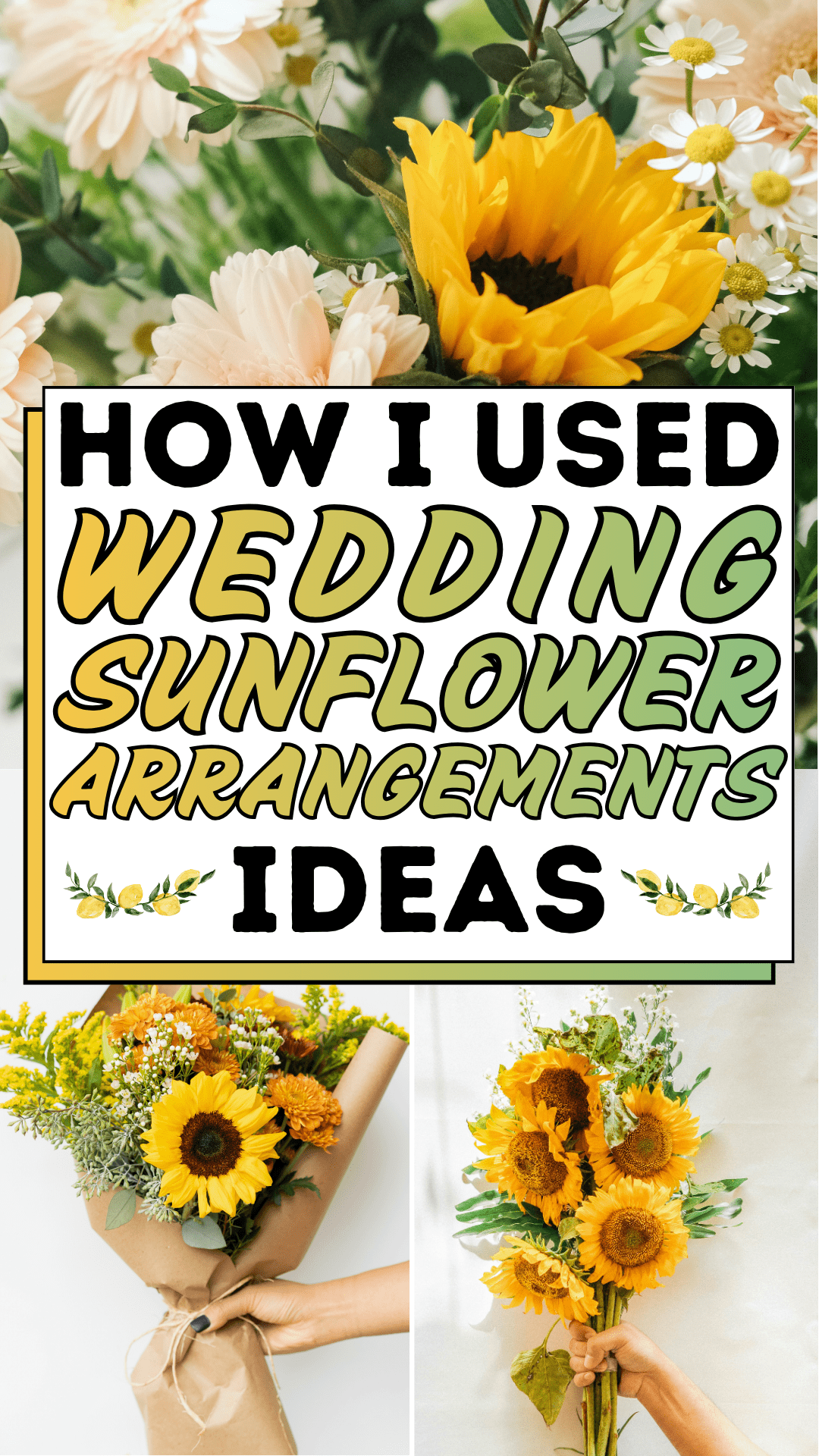
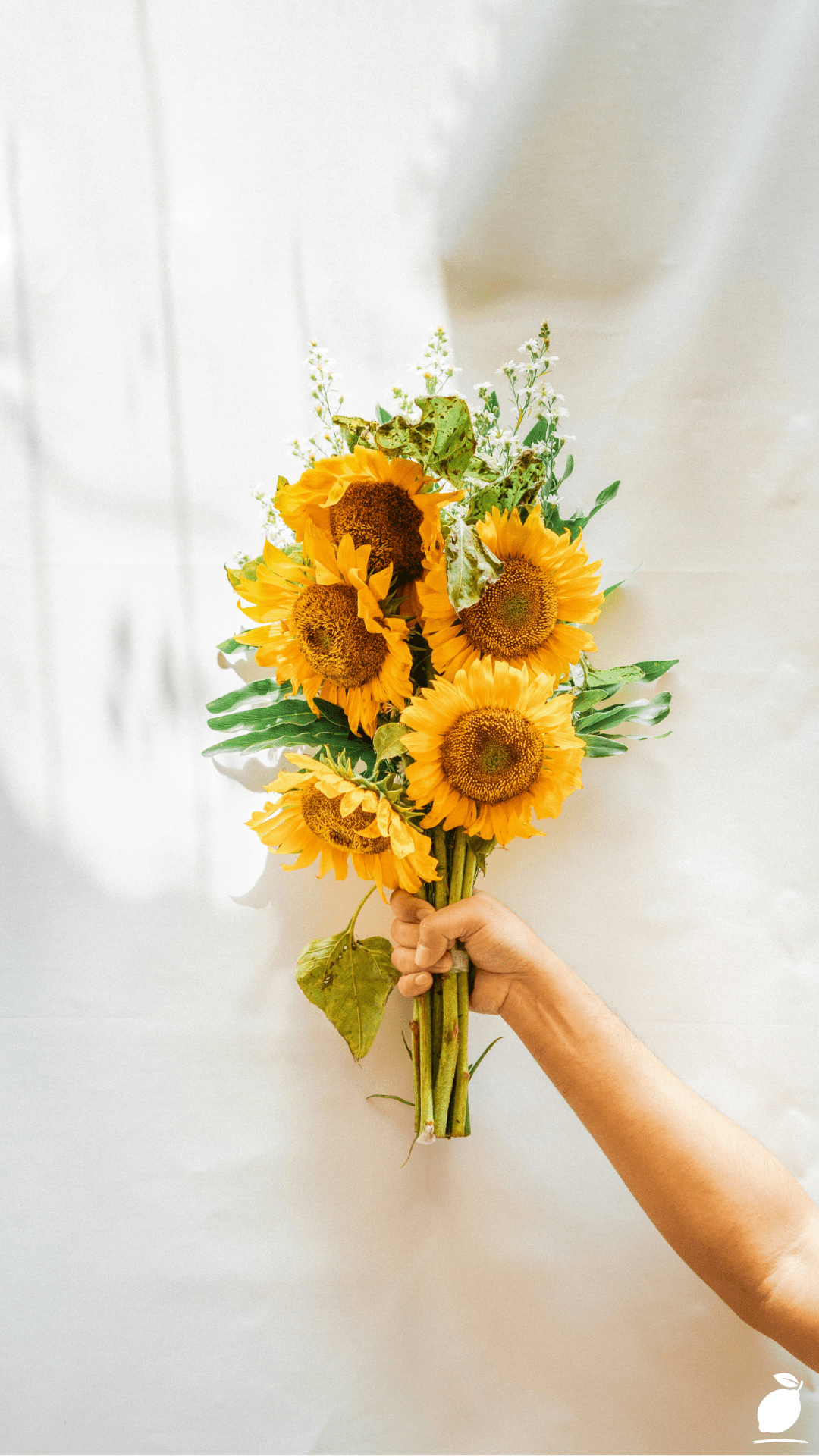
The image above is proof that the wedding I wanted did not require what the florists assumed it did. A single hand holding six large sunflowers, dark brown centers fully visible, green stems and leaves left natural and unwired, white baby’s breath woven through as the only supporting flower. Nothing else. No filler greenery in five varieties, no wire armature, no foam base holding everything in an unnatural fixed position. The sunflower arrangement in the image is beautiful, specifically because of what it does not include: the confidence to let six excellent flowers be the entire composition, photographed simply against a clean white background that does nothing but let the yellow and the white, and the green, speak for themselves. This is what sunflower arrangements look like when they are trusted to be enough on their own, and it is the specific realization that changed my wedding flower planning from an expensive negotiation into a DIY project I was actually excited about.
The wedding sunflower arrangements in this guide follow the image’s governing principle: sunflowers are not an accent flower that needs to be dressed up with five supporting varieties; they are a complete, dramatic, genuinely wedding-worthy flower that performs best when the arrangement around them is restrained rather than elaborate. This guide covers every sunflower arrangement decision a DIY wedding florist needs: sourcing and timing the sunflowers so they peak on the wedding day, the specific arranging techniques that make six stems look intentional rather than sparse, the hand-tied bouquet technique the image demonstrates, and the centerpiece and ceremony arrangement adaptations that extend the same principle across the full wedding flower plan. These sunflower arrangements are achievable by anyone with no professional floristry training, at a fraction of the cost of a full-service florist, and they produce results that look as the image proves genuinely beautiful rather than budget-compromised.
The Sunflower Arrangements Blueprint
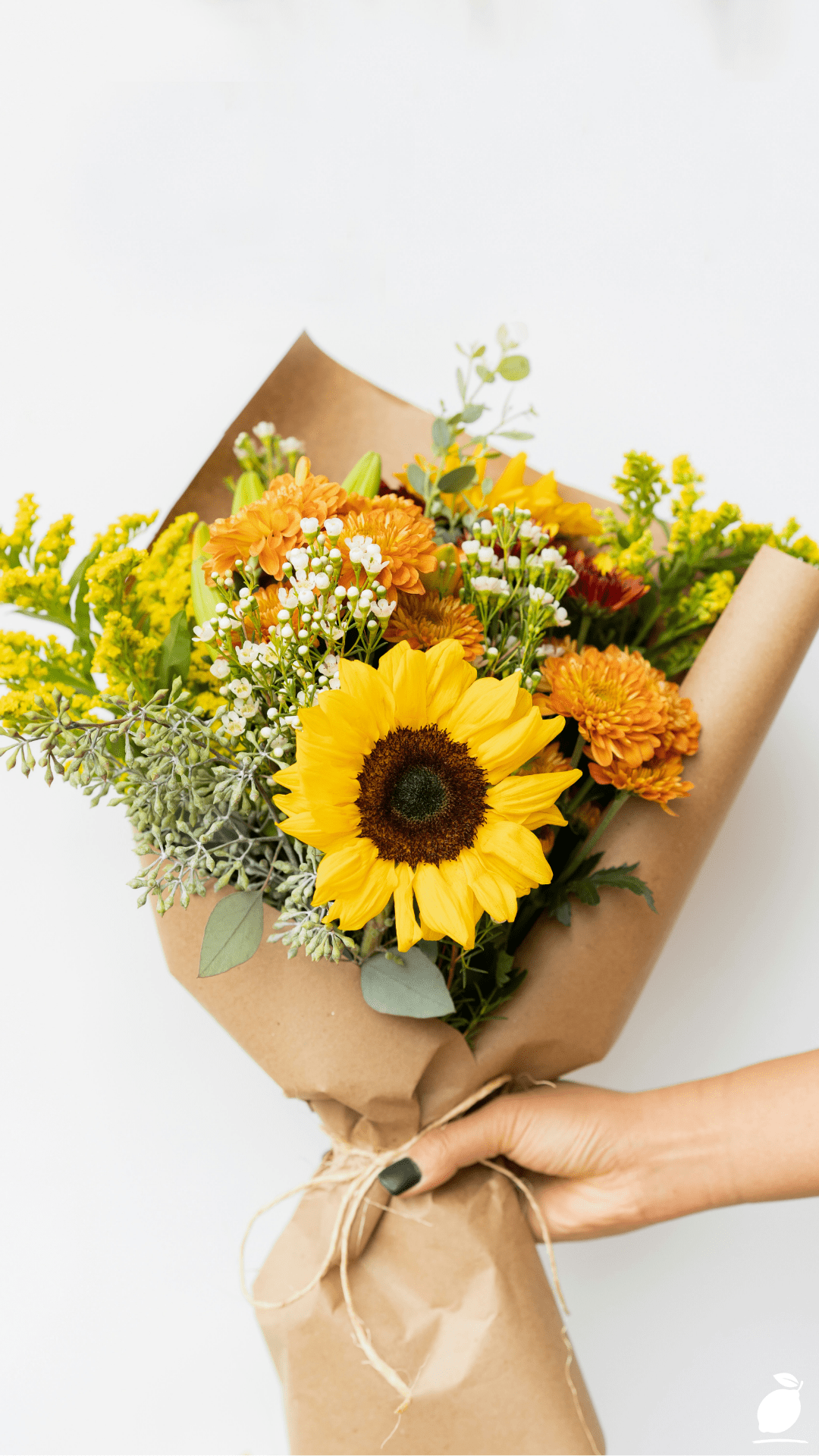
Step 1: Source Sunflowers on the Correct Timeline for Wedding Sunflower Arrangements
Wedding sunflower arrangements depend on a timing discipline that most first-time DIY wedding florists underestimate: sunflowers have a shorter vase life than many traditional wedding flowers (5 to 10 days for the freshest-cut stems, compared to 10 to 14 days for roses), and their distinctive open-faced bloom means they show wilting and petal droop more visibly and more quickly than flowers with denser, more structured forms. The sunflower arrangements in the image demonstrate flowers at their absolute peak, petals fully extended, centers clearly defined, no browning at the petal edges, and reaching that peak on the wedding day specifically requires careful sourcing and timing.
For wedding sunflower arrangements, order or harvest sunflowers three to four days before the wedding date, not earlier. Sunflowers ordered from a wholesale flower supplier or farm should arrive as tight or partially open buds rather than fully bloomed flowers. Fully bloomed sunflowers at delivery will be past their peak by the wedding day in most cases. If sourcing from a local flower farm (the most cost-effective sunflower arrangements sourcing approach, and one that supports the specific sunflower variety selection described in Step 2), arrange the harvest for two to three days before the wedding, harvesting stems when the flower head is just beginning to open rather than fully bloomed.
Store sunflowers for wedding arrangements in clean buckets of room-temperature water (not refrigerated; sunflowers are sensitive to cold and will not open properly if chilled below 10°C) in a cool, dark location away from direct sunlight and any source of ethylene gas (ripening fruit, which accelerates flower aging significantly). Re-cut the stems at a 45-degree angle and change the water every 24 hours from the moment the sunflowers arrive until the arrangements are assembled. This water-change discipline is the single highest-impact freshness practice for sunflower arrangements and extends usable vase life by two to three days beyond stems left in static water.
Step 2: Choose Sunflower Varieties for the Wedding Sunflower Arrangements’ Specific Aesthetic
Wedding sunflower arrangements benefit significantly from variety selection beyond the standard giant yellow sunflower most people picture, because the sunflower family includes varieties specifically bred for cut-flower use with characteristics that improve both the arrangement’s visual quality and its vase life performance. The image’s sunflowers, with large yellow petals, dark brown centers, classic proportions, represent the most recognizable and most universally appropriate sunflower arrangement variety, but understanding the full range allows the wedding sunflower arrangements to be tailored to a specific color palette or aesthetic.
For wedding sunflower arrangements, ‘ProCut Gold’ and ‘ProCut Bright Yellow’ are the most widely available pollen-free cut-flower sunflower varieties. Pollen-free is a critical sunflower arrangements consideration for wedding use, since standard pollen-producing sunflowers shed visible yellow pollen onto bridal gowns, table linens, and guest clothing. ‘Sunrich Orange’ provides a warmer, more orange-leaning petal color for sunflower arrangements in an autumn or warm-toned wedding palette. ‘Moulin Rouge’ and ‘Ruby Eclipse’ provide deep burgundy-red petals for sunflower arrangements with a dramatic, non-traditional color statement. ‘Italian White’ provides pale cream petals with dark centers for sunflower arrangements in a soft, romantic wedding palette that wants the sunflower form without the bright yellow saturation.
Confirm the pollen-free characteristic of any sunflower variety before ordering for wedding sunflower arrangements. Pollen-free varieties are bred specifically for cut-flower use and are widely available from wholesale flower suppliers and flower farms, but standard garden sunflower seed (intended for landscape or wildlife use) typically produces pollen-bearing flowers that are unsuitable for wedding sunflower arrangements due to the staining risk.
Step 3: Master the Hand-Tied Sunflower Arrangements Technique, the Image Demonstrates
The hand-held sunflower arrangement in image six stems gathered naturally, no visible binding mechanism, held at a slight upward angle, demonstrates the hand-tied bouquet technique, the most accessible and most forgiving sunflower arrangement method for a DIY wedding florist with no professional training. The hand-tied technique produces the natural, gathered-from-the-garden quality that the image’s sunflower arrangement demonstrates, in contrast to the more structured, wired techniques that professional florists use for more architectural bouquet styles.
For the hand-tied sunflower arrangements technique, begin by laying all sunflower stems on a flat work surface and removing all foliage from the lower two-thirds of each stem (the portion that will be below the binding point) to prevent leaves from being crushed or trapped inside the finished bouquet’s hand-grip area. Hold the first sunflower stem in your non-dominant hand at the point that will become the bouquet’s binding point, typically 15cm to 20cm below the flower head. Add each subsequent stem at a slight angle to the first, rotating the growing bouquet in your hand with each addition so that the stems spiral around a central point rather than stacking in parallel. This spiral technique is what produces the natural, domed arrangement shape visible in the image rather than a flat, fan-shaped cluster.
Add the baby’s breath stems throughout the sunflower arrangement during the same spiraling process, distributing them evenly rather than clustering them in one section the baby’s breath in the image is interspersed throughout the sunflower cluster rather than added as a separate border or backing layer, which produces the airy, integrated texture that makes the white accents read as part of the arrangement rather than as packaging around it. Once all stems are gathered and the arrangement’s shape and density satisfy you, bind the stems at the spiral’s binding point with floral tape, then conceal the tape with a wrap of ribbon ending in a finished bow or knot at the back.
Step 4: Adapt the Sunflower Arrangements Technique for the Bridal Bouquet
The bridal bouquet is the wedding sunflower arrangements application that requires the most attention to proportion, weight, and presentation quality, because it is held and photographed continuously throughout the wedding day and is the single most photographed floral element of the entire event. For a bridal bouquet using the sunflower arrangements technique, the image demonstrates that six to eight sunflower stems is the appropriate quantity for a bouquet of substantial, photogenic presence. Sunflowers are heavier per stem than most traditional bouquet flowers, and a bouquet built from twelve or more sunflower stems becomes genuinely difficult to hold comfortably through a full ceremony and reception.
For wedding sunflower arrangements, bridal bouquets, trim the stem length to 25cm to 30cm below the binding point (shorter than the image’s loosely held stems, which are appropriate for a photograph but too long for comfortable handling through a full wedding day), and finish the stem ends cleanly with a single diagonal cut rather than the staggered natural cut ends visible in casually gathered arrangements. Wrap the bound stem section in floral tape first (for moisture control and grip security) and then in satin ribbon in white or ivory for a classic finish, or a ribbon color drawn from the wedding’s color palette for a more personalized sunflower arrangement result.
For sunflower arrangements, bridal bouquets that need extended freshness through a full wedding day, insert the finished bouquet’s stem ends into a small water-filled floral pick or vial immediately after binding, and remove the water vial only at the point the bouquet needs to be carried (typically immediately before the ceremony processional). This water-vial technique extends the bridal bouquet’s fresh appearance by four to six hours beyond a dry-stemmed equivalent, which matters significantly for sunflowers, given their comparatively shorter vase life.
Step 5: Build Sunflower Arrangements for Wedding Centerpieces
Wedding sunflower arrangements centerpieces apply the same governing restraint principle as the bouquet, fewer, larger sunflowers with minimal supporting material, but scale the technique to a standing arrangement in a vase rather than a hand-held bouquet. For a standard round wedding table seating eight to ten guests, a centerpiece using five to seven sunflower stems in a low, wide-mouthed vase produces the visual presence appropriate to a centerpiece without the height that would obstruct guest sightlines across the table.
For sunflower arrangements centerpieces, choose a vase with a mouth wide enough to allow the sunflower stems to fan slightly outward from the vase’s center, producing the natural, gathered quality the image demonstrates rather than a tight, vertical cluster. Cut the sunflower stems to a length that positions the flower heads 15cm to 20cm above the vase rim, tall enough to provide presence on the table, low enough to maintain clear sightlines for guests seated across from each other. Add baby’s breath or another simple filler (eucalyptus, dusty miller, or wheat stems for sunflower arrangements with a more rustic aesthetic) distributed throughout rather than concentrated at the vase’s edge, maintaining the integrated texture quality of the image’s bouquet at centerpiece scale.
For sunflower arrangements centerpieces across a full wedding reception, build the arrangements the morning of the wedding day or the evening before. Sunflower arrangements built more than 24 hours before the event will show visible decline by the reception’s later hours, given the variety’s shorter vase life relative to traditional wedding flowers.
Step 6: Complete the Sunflower Arrangements With Boutonnieres and Ceremony Details
The supporting sunflower arrangements, boutonnieres, corsages, and small ceremony accent arrangements extend the bouquet and centerpiece’s restrained aesthetic to the full wedding party and ceremony space. For boutonnieres, a single small sunflower head (look for miniature or “teddy bear” sunflower varieties, which produce smaller blooms specifically suited to boutonniere scale) paired with one sprig of baby’s breath and a single small leaf, wired and taped in the standard boutonniere construction technique, provides the sunflower arrangement’s aesthetic at the smallest practical scale.
For ceremony sunflower arrangements, aisle markers, arch or arbor decoration, and any altar or focal-point arrangements, apply the same restraint principle at a larger scale: clusters of five to seven sunflower stems with minimal supporting greenery, gathered loosely rather than wired into rigid formal shapes, repeated at consistent intervals along the aisle or concentrated at the ceremony’s visual focal point. This consistency of restraint across every scale of the wedding sunflower arrangements, from boutonniere to bouquet to centerpiece to ceremony arch, is what produces the coherent, intentional aesthetic that distinguishes a well-executed sunflower-forward wedding from one where sunflowers appear as an isolated accent among otherwise conventional florals.
Expert Secrets for Success
Pro-Tips for a Better Result
Harvest or receive sunflowers at the bud stage and open them indoors under controlled conditions. Sunflower arrangements assembled from buds that open in a cool, bright indoor location over two to three days produce flowers with the fullest, most symmetrical petal extension and the longest subsequent vase life. Sunflowers that open naturally outdoors are subject to weather stress, insect damage, and UV exposure that fully-opened cut stems show as petal imperfections. Place bud-stage stems in water in a bright room (not direct sun) and allow them to open naturally over 48 to 72 hours before the wedding. Sunflower arrangements are assembled.
Add a floral preservative to all sunflower arrangements, water, but use half the recommended concentration. Standard commercial floral preservative at full concentration can cause sunflower stems to absorb water unevenly, sometimes producing stem curling or premature wilting in this specific flower family. Use floral preservative at half the package-recommended concentration for sunflower arrangements specifically, which provides the bacterial control and nutrient benefit of preservative without the stem stress that full concentration can cause in sunflowers.
Strip all foliage below the waterline immediately and recheck daily. Sunflower leaves submerged in a vase or bucket of water decompose faster than the leaves of most other cut flowers, producing bacterial bloom in the water that shortens the vase life of the entire sunflower arrangement. Remove every leaf that would sit below the water surface line at the time of arranging, and check daily for any leaves that may have shifted below the waterline as stems settle, removing them immediately.
Photograph the sunflower arrangement bouquet against a plain background before the wedding day for a backup image. The image that accompanies this guide a single hand holding the sunflower bouquet against a clean white background is a styling and photography technique worth replicating intentionally: a simple, well-lit photograph of the finished bridal bouquet taken the morning of the wedding (or the day before, if timing allows) against a plain wall or backdrop provides a beautiful standalone image of the sunflower arrangements work, independent of the wedding day’s broader photography schedule and lighting conditions.
Common Mistakes to Avoid
Don’t crowd the sunflower arrangements with excessive filler flowers and greenery. The single most common mistake in DIY sunflower arrangements is the instinct to “fill out” the arrangement with multiple varieties of greenery and filler flowers in an attempt to make six or seven sunflowers look more substantial. The image demonstrates the opposite principle successfully: six sunflowers and a small amount of baby’s breath, with nothing else, produce an arrangement of genuine visual substance precisely because nothing competes with the sunflowers’ scale and color. Resist the instinct to add eucalyptus, ferns, and multiple secondary flower varieties; let the sunflowers be the entire statement.
Don’t choose standard garden sunflower seed varieties for wedding sunflower arrangements. Standard sunflower seed sold for landscape or wildlife planting typically produces pollen-bearing flowers that shed visible yellow pollen onto anything they contact, a significant risk for wedding sunflower arrangements that will be near bridal gowns, table linens, and guest clothing. Source sunflower stems specifically labeled as pollen-free cut-flower varieties (‘ProCut’ series, ‘Sunrich’ series) from a flower farm, wholesale florist supplier, or specialty seed source if growing your own for the wedding.
Don’t refrigerate sunflowers at any point in the wedding sunflower arrangements process. Unlike many cut flowers that benefit from refrigerated storage, sunflowers are a warm-climate annual species that does not tolerate temperatures below approximately 10°C well. Refrigeration causes sunflower petals to fail to open fully and can produce visible cell damage that shows as translucent or water-soaked petal patches. Store all sunflower arrangement materials at cool room temperature, away from direct sun and heat sources, but never in a refrigerator.
Don’t bind sunflower arrangements or bouquets too tightly at the stem. Sunflower stems are thick, fibrous, and contain significant water content. Binding them too tightly with floral tape or wire can crush the stem’s water-conducting tissue, reducing the water uptake that keeps the flowers fresh through the wedding day. Bind sunflower arrangements with firm but not crushing pressure, checking that the stems remain round in cross-section rather than flattened at the binding point, which indicates the binding tension is appropriate.
Why Sunflower Arrangements Matter
Wedding flowers carry meaning beyond their visual function. They are among the most personal and most remembered details of a wedding day, present in every photograph, held through every significant moment, and frequently preserved afterward in the specific way that meaningful objects from a wedding are preserved. Sunflower arrangements that reflect a couple’s genuine aesthetic preference rather than a conventional wedding-flower default produce wedding photography and wedding memories that feel authentically theirs rather than borrowed from an expected template. The choice to build a wedding around sunflower arrangements, flowers that are bold, unapologetic, and specifically meaningful to the couple who chose them, is itself a statement about the kind of wedding and the kind of marriage being entered into: one built on genuine preference rather than convention.
Beyond their symbolic significance, DIY sunflower arrangements matter for the specific quality of accomplishment and connection that hands-on wedding preparation provides. Couples, family members, and wedding parties who arrange their own flowers rather than receiving a finished product from a vendor on the wedding morning participate in the wedding’s creation in a way that purchased and delivered florals cannot replicate. Research in pre-wedding stress and satisfaction has documented that couples who engage in collaborative, hands-on wedding preparation tasks report higher satisfaction with their wedding planning process and stronger positive memory association with the preparation period than couples who outsource every element to vendors. The sunflower arrangements built by your own hands, the morning of or the days before the wedding, become part of the wedding’s story in a way that a florist’s invoice does not.
Easy Peasy Life Matters is built on the conviction that the most meaningful celebrations are built from genuine choices rather than default expectations and that sunflower arrangements, executed with the sourcing knowledge, technique, and restraint this guide provides, produce wedding florals of genuine beauty at a fraction of conventional florist cost. The image at the top of this guide is proof: six sunflowers, a hand, a white background, and nothing else needed. These sunflower arrangements are how simplicity becomes your wedding day.
Frequently Asked Questions
How many sunflowers do I need for a wedding?
The total sunflower count for a wedding depends on the full scope of sunflower arrangements planned: a bridal bouquet requires 6 to 8 stems, each bridesmaid bouquet requires 3 to 5 stems, each boutonniere requires 1 miniature sunflower head, each centerpiece requires 5 to 7 stems (multiplied by the number of reception tables), and ceremony arrangements (aisle markers, arch decoration) require 5 to 7 stems per arrangement point. For a wedding with a bridal party of four and ten reception tables, total sunflower stem requirements typically range from 120 to 150 stems across all sunflower arrangements. Order 10 to 15 percent additional stems beyond the calculated total to account for any stems that do not open well or show damage upon arrival.
How far in advance can I make sunflower arrangements for a wedding?
Sunflower arrangements should be assembled as close to the wedding event as practically possible, given the variety’s comparatively shorter vase life. Boutonnieres and small arrangements can be assembled the evening before the wedding if refrigerated appropriately (note: refrigerate only the assembled arrangement briefly for transport-related timing, not the raw sunflower stems, which should never be refrigerated for extended periods). Centerpieces should be assembled the morning of the wedding day for an evening reception, or the evening before for a morning or early-afternoon event. The bridal bouquet should be assembled as close to the ceremony time as logistically possible, ideally within two to four hours of the processional, for the freshest possible presentation through photography and the ceremony itself.
How much do DIY sunflower arrangements cost compared to a florist?
DIY wedding sunflower arrangements, sourced directly from a flower farm or wholesale flower supplier, typically cost $2 to $4 per stem for pollen-free cut-flower varieties, producing a full wedding flower plan (bouquets, boutonnieres, centerpieces, and ceremony arrangements) for $300 to $600 in flower materials for a wedding of 100 to 150 guests. The same scope of sunflower arrangements through a full-service wedding florist typically costs $1,500 to $3,500, with the difference reflecting professional arranging labor, delivery, setup, and the florist’s standard markup on flower materials. The DIY sunflower arrangements approach in this guide is achievable in a single day of preparation, with two to three people assembling arrangements.
What other flowers pair well with sunflowers in wedding arrangements?
The most effective companion flowers for sunflower arrangements maintain the aesthetic’s restraint principle while adding texture or seasonal variation: baby’s breath (as in the image the most classic and most versatile sunflower companion, providing airy white texture without competing for visual attention), wheat or grain stems (for sunflower arrangements with a rustic, harvest-season aesthetic), dusty miller (for soft silvery-gray foliage texture that complements the sunflower’s warm yellow), and eucalyptus (for a more structured greenery accent in sunflower arrangements with a slightly more formal presentation). Avoid pairing sunflowers with flowers of similar scale and visual weight; large dahlias, peonies, or garden roses compete with rather than support the sunflower’s visual dominance in the arrangement.
How do I keep sunflower arrangements fresh through a full wedding day?
The most effective freshness strategies for wedding-day sunflower arrangements are: water-vial insertion for the bridal bouquet stem ends (removed only immediately before the processional), assembly timing as close to the event as logistically feasible, storage in cool (not refrigerated) conditions away from direct sun and heat sources until the moment of use, and avoiding any arrangement handling or repositioning beyond what is necessary once the sunflower arrangements are complete, since excessive handling bruises the petals and accelerates wilting. For outdoor summer weddings with significant heat exposure, consider misting sunflower arrangements lightly with water from a spray bottle every two to three hours during the reception to maintain petal hydration in hot, dry conditions.