When we bought our red brick house, I thought the exterior color choices would be simple. The brick was doing most of the work, I told myself; all I needed to do was pick a trim color and move on. What I did not anticipate was how many wrong turns were possible in that single decision. I painted the shutters a cool gray that turned the warm red brick dingy. I tried a deep navy on the front door that looked striking in the paint chip aisle and funereal in actual daylight. I spent two summers living with colors that were fine in isolation but fought the red brick at every hour of the day. The house always looked like it was arguing with itself, and I could not figure out why.
The problem, I eventually understood, was that I had been choosing colors in isolation instead of choosing colors in relationship. Red brick is not a neutral backdrop; it is a warm, complex, living surface with orange and brown and sometimes even purple undertones depending on the light and the season. Every color you put next to it is in conversation with those undertones, whether you intend it to be or not. Paint colors that complement red brick are not simply colors that look nice on their own. They are colors that understand the temperature and character of the brick and respond to it intelligently, anchoring it, cooling it slightly, or drawing out its warmest notes with intention.
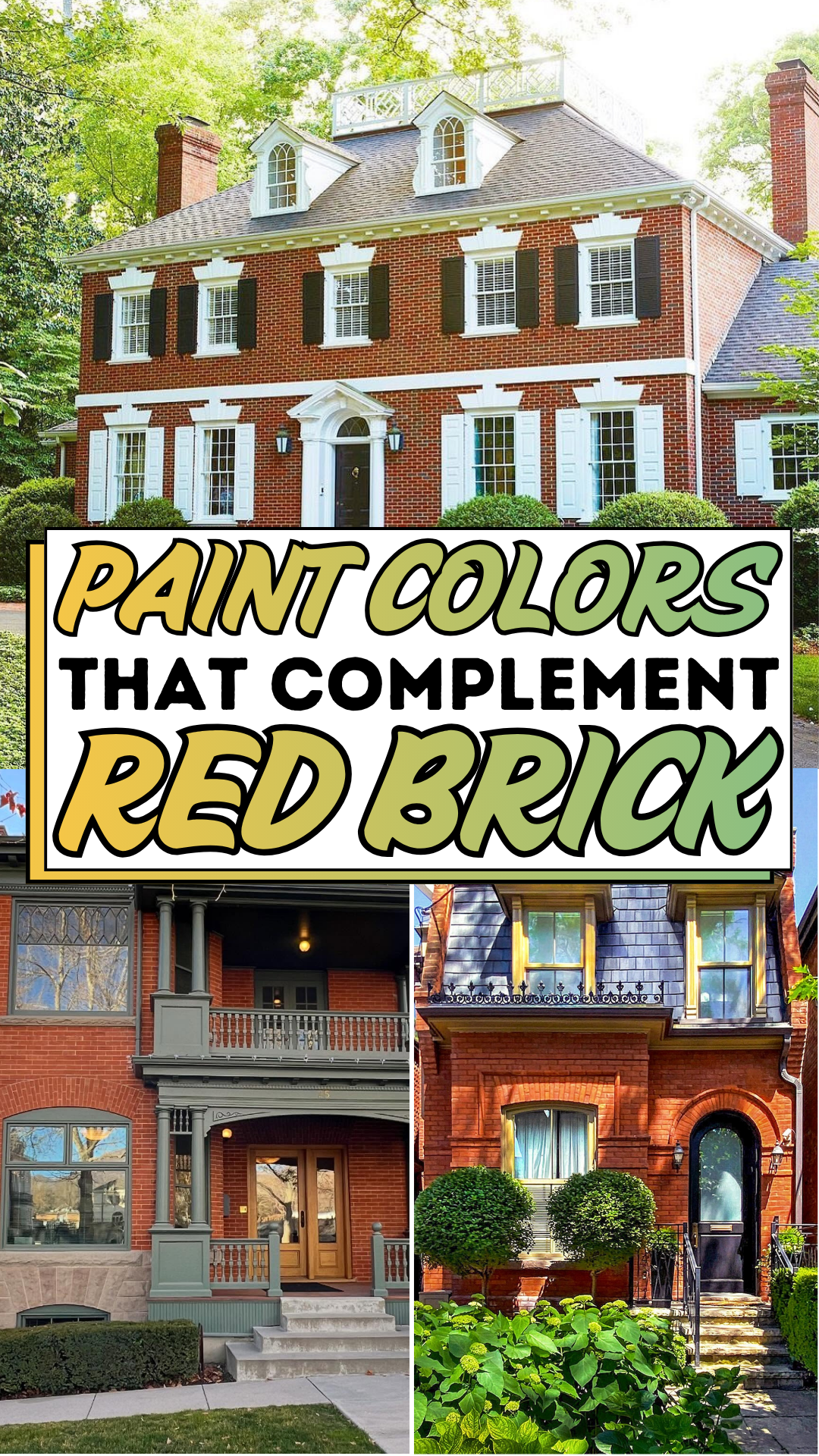
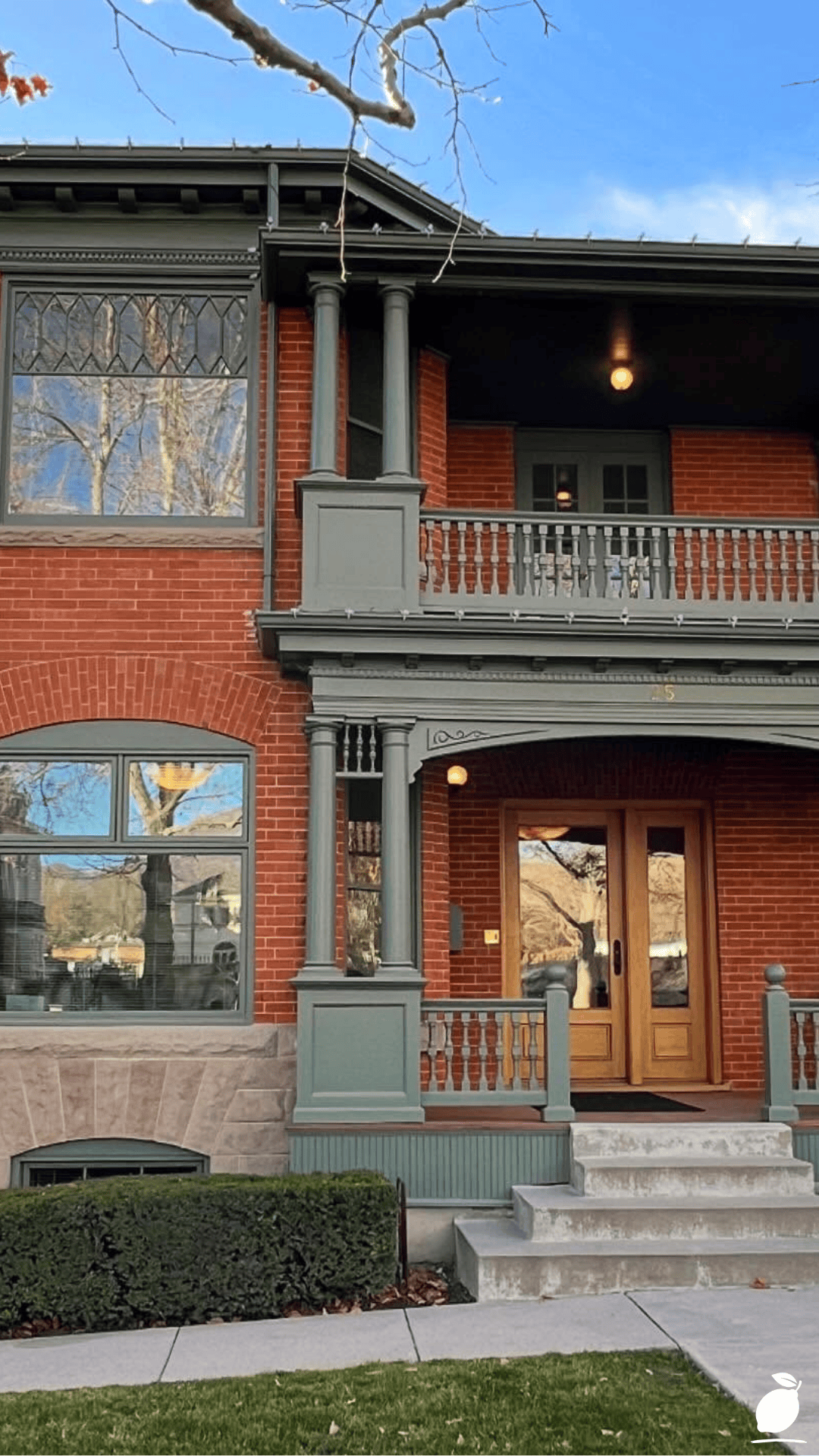
The Victorian house in this image demonstrates that conversation at its most confident and successful. The red-orange brick facade is paired with sage green trim, a muted, earthy tone that provides enough contrast to read clearly against the warm brick without fighting it. The classical columns, ornate balusters, and decorative window surrounds are united by that single trim choice, and the result is a home that feels historically grounded, visually coherent, and deeply individual. The walkway is clean gray concrete, the evergreen shrubs are tidy and structured, and even the bare autumn branches above feel like part of the composition. This is what the right paint colors next to red brick can accomplish. Here is how to find yours.
The Red Brick Blueprint
Step 1: Read Your Brick Before You Touch a Paint Sample
Not all red brick is the same, and the single most important step in choosing paint colors that complement red brick is understanding exactly what kind of red you are working with. Examine your brick in different lighting conditions: morning sun, midday, late afternoon, and overcast sky. Some red brick runs orange-warm; some leans toward a cooler, bluer red; some has significant brown in it; some carries visible purple or plum undertones in shade. Photograph the brick in each condition and identify the dominant undertone. This undertone is the key that unlocks every other color decision. Paint colors that complement red brick with orange undertones are different from those that work beside cooler, browner brick, and confusing the two is the root cause of most exterior color failures on brick homes.
Step 2: Decide Your Color Strategy: Complement or Contrast
There are two valid approaches to choosing paint colors that work with red brick, and understanding which one suits your home and your aesthetic is the second decision you need to make. The complementary approach, using colors from the same warm family as the brick, such as cream, sand, warm white, or earthy green, creates a harmonious, unified exterior where the brick and the trim feel like they belong to the same story. The contrast approach using cooler, darker, or higher-contrast colors like charcoal, black, deep navy, or crisp white creates visual drama and makes the brick pop as a distinct design element. Both strategies produce beautiful results when executed correctly. The Victorian in this image uses the complementary approach: sage green trim reads as cool relative to the brick but shares the same organic, earthy quality, creating harmony rather than tension.
Step 3: Test Paint Colors on the Actual Exterior Surface
Paint chips and digital visualizers are useful starting points, but they are not reliable decision tools for exterior colors next to red brick. The only reliable test is painting large swatches at least twelve by twelve inches directly onto the exterior surface you intend to paint and observing them across multiple days and lighting conditions. Paint the swatches in areas that receive both direct sun and shade. Red brick changes dramatically in different light, and a trim color that looks perfect at noon can look completely wrong at 4 p.m. with the sun at a low angle. Buy sample pots of your top three candidates and commit to the swatch test before purchasing full quantities.
Step 4: Choose Your Trim Color as the Primary Decision
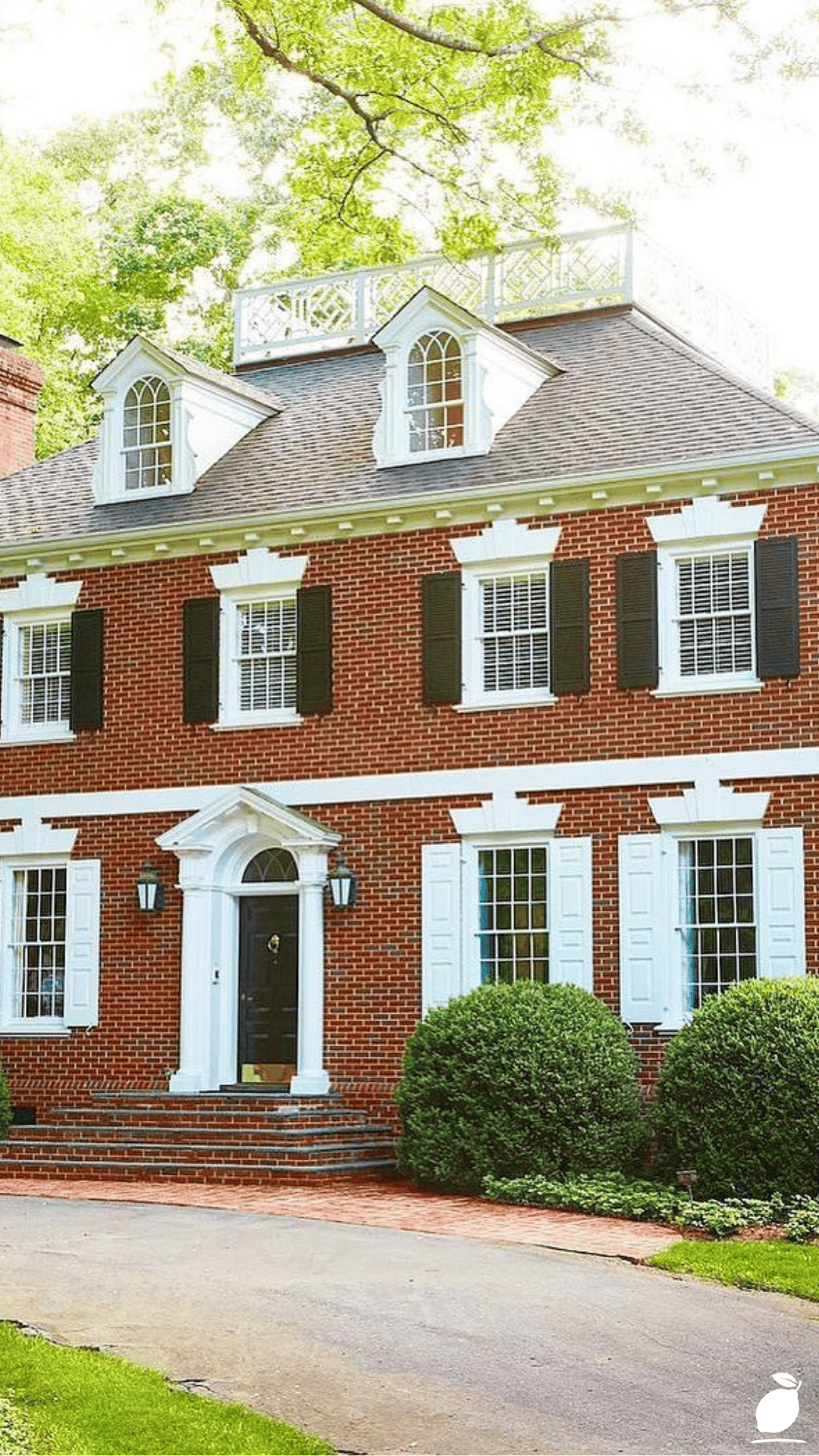
On a red brick home, the trim color is the most consequential paint decision you will make. It frames every window, defines every architectural detail, and sets the overall temperature of the exterior. Paint colors that complement red brick in the trim position tend to fall into a few reliable families: muted sage and eucalyptus greens, warm off-whites and creams, deep charcoals and near-blacks, classic forest and hunter greens, and earthy taupes and greiges. Cool, stark white is a higher-risk choice; it can work beautifully on brick with blue-red undertones but look harsh and disconnected on warmer, more orange-leaning brick. Start your trim selection here and let the door and accent colors follow from it.
Step 5: Select a Front Door Color That Anchors the Composition
The front door is the accent note of your exterior color story the place where personality enters the composition. On a red brick home with sage green or neutral trim, the front door has significant freedom: deep black reads as grounded and sophisticated; dark red or burgundy creates a tonal depth that makes the brick glow; forest green harmonizes with sage trim; a warm charcoal bridges brick and trim with quiet authority. The wooden double doors with glass panels in this image allow the natural wood tone to serve as its own warm accent, which works beautifully within the sage-and-brick palette. Whatever you choose, the door color should feel like the deliberate final word in the color story, not an afterthought.
Step 6: Address the Foundation and Walkway Colors
Many homeowners choose paint colors that complement red brick for the trim and door, then overlook the foundation finish and the walkway surface two elements that significantly affect how grounded and complete the overall exterior feels. A light gray stone or painted foundation, as visible in this Victorian, bridges the warm brick above and the gray concrete walkway below with quiet competence. If your foundation is currently painted in a color that clashes with your new trim direction, a fresh coat of warm white, light gray, or greige paint is a low-cost step that completes the exterior color story from roofline to ground.
Step 7: Confirm the Final Palette Works as a System
Before you commit to full quantities of paint, stand at the street and evaluate your chosen colors as a complete system: brick color, trim color, door color, foundation color. They should feel like a family related in temperature, coherent in contrast level, and unified in the overall impression they create. Photograph the exterior with your swatch samples in place and compare it to inspiration images of homes with similar brick tones. Paint colors that complement red brick succeed not because each color is beautiful in isolation, but because together they tell a single, clear, confident story about the home they belong to.
Expert Secrets for Success
Pro-Tips for a Better Result
- Look at the brick’s mortar color before choosing trim. The mortar, the material between the bricks, is often overlooked, but it contributes meaningfully to the overall tone of the wall. Gray mortar cools the overall reading of warm red brick; cream or tan mortar warms it further. Your trim color should coordinate with both the brick and the mortar together, not the brick alone.
- Use the LRV (Light Reflectance Value) as a contrast guide. Paint colors that complement red brick tend to sit at least 30 LRV points away from the brick’s own value to ensure they read as distinct trim rather than blending into the wall. Most paint brands list LRV on their color chips or websites.
- Sage green is the most versatile trim color for red brick. It works across orange-red, brown-red, and even cooler red brick tones because its yellow-green base responds warmly to orange undertones while its gray component prevents it from clashing with cooler ones. It is the closest thing to a universal answer that exterior color theory offers for red brick homes.
- Consider the roof color in your palette. The roof is the largest color surface visible from the street, and it participates in the exterior color conversation whether you include it consciously or not. Warm brown or gray-brown shingles generally support the widest range of paint colors that complement red brick.
- Test your chosen colors at dusk. Warm, low evening light is the most flattering condition for red brick and the most revealing for trim colors. Colors that work beautifully in this light will work in all conditions. Colors that turn murky or conflict with the brick at dusk will do so regularly.
Common Mistakes to Avoid
- Choosing cool-toned white trim on warm orange-red brick. Bright, blue-white trim is one of the most common exterior color mistakes on red brick homes. It creates a stark, jarring contrast that makes the brick look more orange, and the trim look more blue simultaneously. Warm whites, creams, and off-whites always perform better beside warm-undertoned red brick.
- Matching the brick too closely with warm trim. Trim that is too close in tone to the brick disappears, and the architectural details the trim is meant to define window surrounds, columns, balusters, brackets lose their visual articulation. Paint colors that complement red brick need enough contrast to read distinctly, even within a harmonious palette.
- Making the door color decision first. The door is the most emotionally exciting color decision, which leads many homeowners to make it first and then try to reverse-engineer a trim and brick relationship around it. Always finalize the trim and establish the brick’s undertone before choosing the door color.
- Ignoring seasonal light changes. Exterior paint colors that complement red brick should be evaluated across multiple seasons if possible, or at minimum across several weeks. The low winter sun, the bright summer noon, and the amber-filtered autumn light all interact differently with both the brick and the paint colors alongside it.
- Painting over brick. It is tempting to simplify the entire exterior color challenge by painting the brick itself. Resist this. Painted brick is extremely difficult and expensive to restore, traps moisture that causes long-term structural damage, and removes the natural texture and warmth that makes red brick architecturally valuable in the first place. Work with the brick, not over it.
Why Red Brick Matters
There is something about a well-maintained red brick home that communicates stability in a way few other architectural materials can match. Brick is among the oldest and most durable building materials in human history; it carries connotations of permanence, craftsmanship, and care that translate directly into how a neighborhood reads a home and how the people inside it feel about where they live. When the paint colors alongside that red brick are chosen thoughtfully, the home stops being simply a building and becomes a statement of intention. It says: someone here pays attention. Someone here takes pride. Someone here is invested in the quality of this place and what it represents.
For families, the exterior of the home is where belonging begins. It is the first thing children see when the school bus drops them off. It is what guests encounter before they step inside. It is the image that appears in the background of every family photo taken in the front yard for years. A home exterior where the paint colors complement the red brick, where the trim is right, the door is inviting, and the whole composition feels settled and intentional creates the visual conditions for pride of place. That pride is not vanity. It is the feeling of living somewhere that reflects your care and your values back to you every time you pull into the driveway.
And the process of getting there of learning to read brick undertones, testing swatches across changing light, making the deliberate decision to choose sage green over that first instinct toward cool gray produces a kind of competence and confidence that carries beyond the project itself. Every successful home improvement decision builds the belief that the next one is also within reach. Choosing paint colors that complement red brick is, on the surface, an aesthetic exercise. At a deeper level, it is the practice of looking carefully at what you have, understanding it fully, and making a deliberate choice to make it better. That practice, applied consistently, is how good homes become great ones.
Frequently Asked Questions
What trim color looks best with red brick?
Sage green, warm white or cream, deep charcoal, forest green, and earthy taupe are the most reliably successful trim colors alongside red brick. Of these, muted sage green is the most universally flattering because its warm-cool balance works across the widest range of brick undertones. The right choice depends on your brick’s specific undertone; orange-warm brick responds best to earthy greens and creams, while cooler red brick can handle higher-contrast options like charcoal and crisp off-white.
Can I paint my front door a bold color if I have red brick?
Yes, and bold door colors can look spectacular against red brick when chosen carefully. Black, deep navy, forest green, burgundy, and warm charcoal all work beautifully as front door colors on brick homes. The key is ensuring the door color harmonizes with the trim rather than competing with both the trim and the brick simultaneously. Test your door color choice against your actual trim color in natural light before committing.
Does white paint go with red brick?
Warm whites and off-whites cream, ivory, linen, and antique white work very well with red brick. Cool, blue-toned whites are more problematic alongside warm, orange-leaning red brick and can create a jarring contrast. If your brick has more purple or blue in its undertone, a cooler white becomes more viable. Always test white paint samples against your specific brick in natural light before deciding.
What color should I paint the shutters on a red brick house?
Shutter color on a red brick home typically follows the trim color for a unified look, or goes slightly deeper for added contrast and definition. If your trim is sage green, shutters in a deeper forest or hunter green create a layered, sophisticated effect. If your trim is cream or warm white, shutters in charcoal or black add visual weight that frames the windows distinctly. Avoid shutters that are lighter than the trim; they tend to disappear against the brick rather than framing the windows as intended.
How do I choose paint colors for a Victorian red brick home specifically?
Victorian architecture traditionally used multiple paint colors to highlight its elaborate decorative details: brackets, balusters, window surrounds, and porch columns each represent an opportunity for a distinct color layer within a unified palette. For a Victorian red brick home, choose a primary trim color (sage green, cream, or charcoal), a secondary accent for detailed elements (a deeper or lighter version of the trim), and a door color that serves as the palette’s focal point. Study the color schemes of historically accurate Victorian restorations in your region for guidance specific to your brick tone and architectural style.