The living room makeover that was supposed to take a weekend became a six-month circular debate about one thing: the walls. Everyone agreed they needed to be lighter. Nobody could agree on how light, or in what direction the light should read. Pure white felt too stark against the existing sofa. Cream felt too yellow. The greige chips looked perfect on the paint store counter and landed somewhere between lavender and khaki on the actual wall under actual light. The samples accumulated in a grid above the fireplace: twelve different whites and near-whites and warm neutrals until the wall looked like a paint chip factory had exploded into the room. The decision kept expanding. The room stayed paused. And every weekend guests came over, there it was: the sample grid, the deferred decision, the room that had been mid-renovation for longer than some people’s relationships.

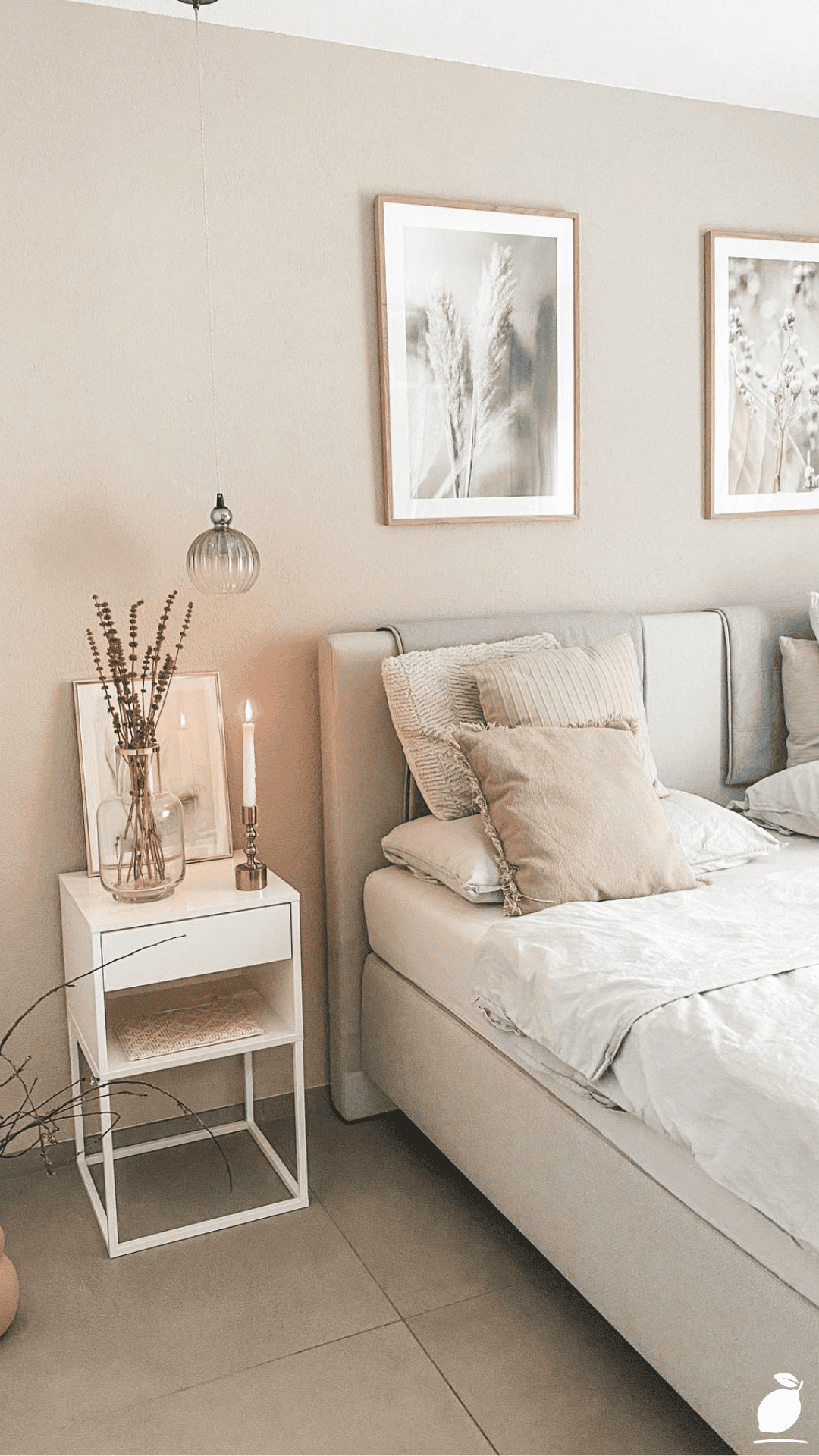
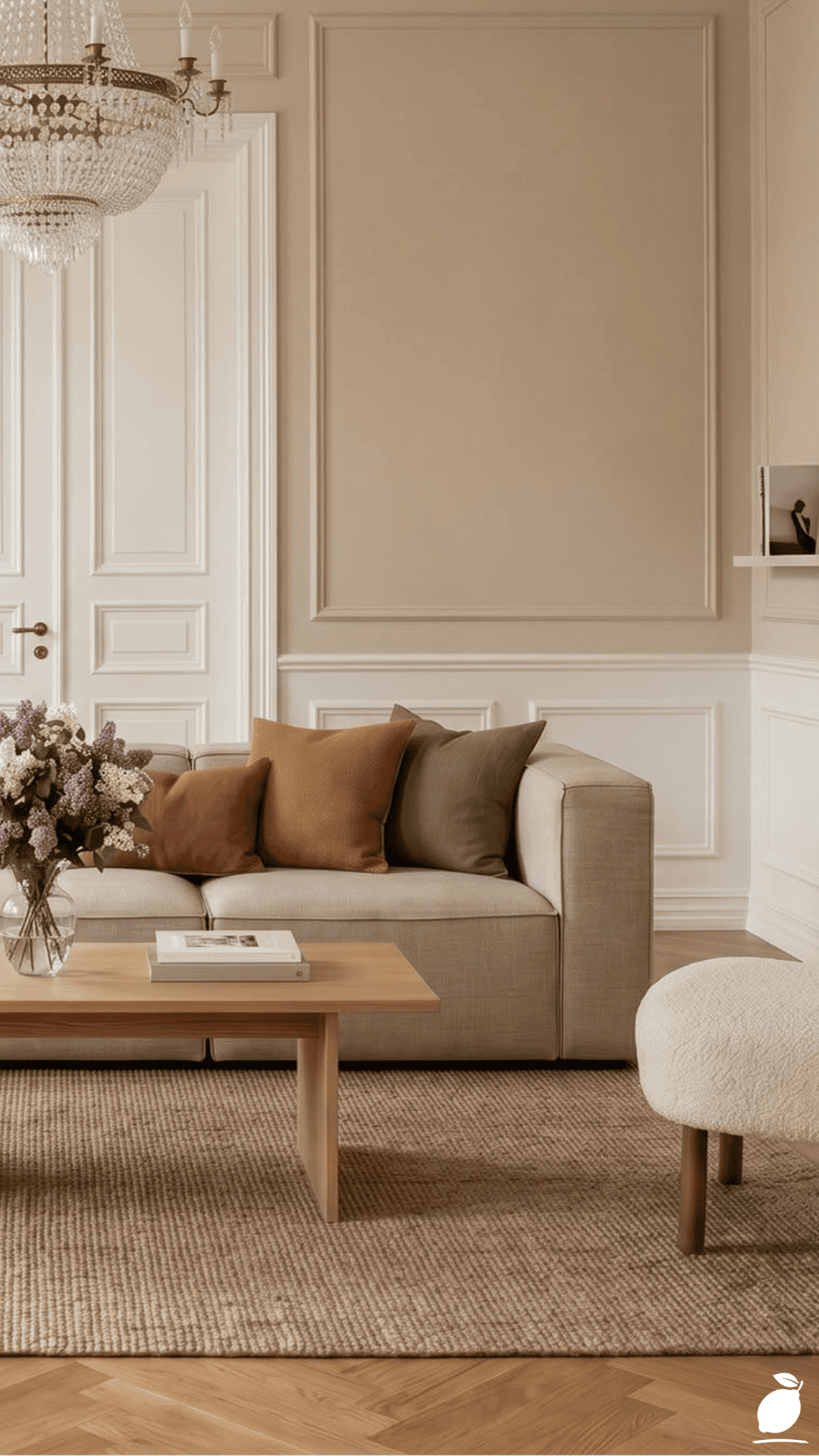
What broke the impasse, eventually, was understanding that white walls and warm trim are not two separate decisions; they are one decision made coherently. The room in the image above demonstrates the resolution: beige walls with white door surround and trim, a plush light-colored sofa, a crystal chandelier catching afternoon light, warm wood tones in the coffee table, fresh flowers on the surface, a curved white accent chair. Every element is a variation on the same warm neutral temperature, and the room reads as completely settled in a way that contrasting color schemes rarely achieve. The white walls provide the luminosity. The warm beige trim, in the specific context of 2026’s most reliable room-finishing decisions, is Sherwin-Williams Accessible Beige; it provides the warmth that keeps the white walls from reading as cold or clinical.
The combination of white walls with Sherwin-Williams Accessible Beige trim is not a trend. It is a design principle executed in a specific, tested palette combination that works across room orientations, furniture styles, and family situations because it resolves the white walls dilemma at its root: white walls that feel warm rather than sterile, trim that grounds the white without fighting it, and a unified visual environment that makes every element placed within it look more considered than it would in a less resolved color context. This guide gives you the complete framework from understanding why this combination works to the specific steps of executing it in your own home.
The White Walls Blueprint
Step 1: Understand Why White Walls and Warm Trim Work Together
The white walls and warm trim combination succeeds where other neutral pairings fail because it solves a specific visual problem: white walls in isolation read as cool, slightly institutional, and unanchored, particularly in rooms that receive limited natural light or in homes with cool-toned flooring. The trim is the architectural frame that the eye uses to understand the wall’s color, and when that frame is in a warm tone that shares the white wall’s light value without sharing its coolness, the white walls read as luminous and warm rather than cold and default.
Sherwin-Williams Accessible Beige (SW 7036) has a Light Reflectance Value of 58, warm enough to read as clearly beige in the trim position, light enough to avoid creating the heavy, dark-frame effect that richer trim colors produce against white walls. Its undertones are a complex mix of warm brown and green-grey that prevents it from reading as purely yellow or purely pink, the two undertone failure modes that make most beige trim colors look wrong against white walls in specific light conditions.
The room in the featured image uses this principle at the wall and door surround level: the beige walls provide the warm ground, the white door surround provides the crisp architectural accent, and the relationship between them creates the specific quality of a room that feels resolved. Transposing this to white walls with Accessible Beige trim reverses the dominant and secondary colors while maintaining the same warm-anchored-by-crisp quality that makes the combination work.
Step 2: Select the Right White Walls Color
Not all whites perform equally alongside Sherwin-Williams Accessible Beige trim, and the white walls selection is the most consequential decision in the project. White walls that carry cool undertones blue-white, grey-white create a temperature conflict with Accessible Beige’s warm undertones that makes both colors look slightly off. White walls that carry yellow undertones cream, ivory sit too close to Accessible Beige in undertone family and lose the contrast that makes the trim visible as a design element rather than a slight variation of the wall.
The white walls that work best with Sherwin-Williams Accessible Beige trim are those with warm but neutral undertones, specifically whites that are neither cool nor creamy but occupy the balanced center of the warm white spectrum. The following white wall colors perform most consistently alongside Accessible Beige trim:
Sherwin-Williams Alabaster (SW 7008) the most reliable partner for Accessible Beige trim, sharing the same warmth direction without the yellow cast of cream. LRV of 82. Works in north, south, east, and west orientations.
Sherwin-Williams Shoji White (SW 7042) a slightly warmer white with visible warm grey undertones that creates a sophisticated tonal relationship with Accessible Beige trim. LRV of 74. Most effective in rooms with abundant natural light.
Benjamin Moore White Dove (OC-17) is a warm, slightly off-white that pairs across paint brands with Accessible Beige trim with reliable consistency. LRV of 83.
Sherwin-Williams Creamy (SW 7012) the warmest white walls choice alongside Accessible Beige, for rooms where maximum warmth is the priority over maximum brightness. LRV of 81. Most effective in south and west-facing rooms where direct sunlight prevents the combination from reading as too warm.
For the featured room’s beige-dominant result, Sherwin-Williams Accessible Beige itself as the wall color with white walls appearing only in trim, doors, and ceiling reverses the combination to the look in the image: warm neutral walls with crisp white architectural accents.
Step 3: Test Both Colors Together on the Actual Walls
The white walls and Accessible Beige trim combination must be tested together on the actual room surfaces before any purchase commitment is made. The two colors’ relationship the way the Accessible Beige trim reads against the white walls changes significantly depending on the room’s light orientation, the flooring material and color, and the dominant furniture tones. A combination that looks definitively right in a sample pair held against a daylight window can read differently when applied to the full scale of a room’s walls and trim.
Purchase sample pots of both the chosen white walls color and Sherwin-Williams Accessible Beige. Paint a minimum 40cm x 40cm swatch of the white walls color on at least two walls of the room: the wall receiving the most light and the wall receiving the least. Paint a 15cm vertical strip of Accessible Beige beside a trim board or door surround to simulate the trim condition. Observe the pair under: morning natural light, midday natural light, overcast daylight (the most revealing condition for undertone assessment), and evening under the room’s specific artificial lighting.
The test is successful when the white walls read as warm and luminous rather than cool and bare, and the Accessible Beige trim reads as a warm anchor for the white walls rather than as a competing color or an insufficiently differentiated variation. If the white walls selected read as too cool against the Accessible Beige trim, move one step warmer in the white family. If the Accessible Beige trim reads as too dark against the white walls, the chosen white is too bright; move one step warmer or decrease the white’s brightness slightly.
Step 4: Prepare the Room Surfaces for White Walls Painting
Surface preparation for white walls is more demanding than for mid-tone or dark colors because white walls reveal every imperfection in the substrate: every crack, every patch seam, every roller stipple from a previous application that darker colors absorb and conceal. The preparation investment for white walls pays in the smoothness and evenness of the finished surface.
Fill all holes, cracks, and surface imperfections with fine surface filler appropriate to the substrate (lightweight drywall compound for plaster and drywall, exterior-rated filler for rooms with moisture exposure). Sand all filled areas to a feather-edge flush with the surrounding surface, then sand the entire wall surface with 180-grit sandpaper to remove any existing texture variations or roller stipple from previous paint applications. Remove all dust before priming.
Prime the full wall surface with a quality primer for white walls specifically; use a white or very pale grey tinted primer rather than an untinted primer, which can create a yellowing base that shifts the final white walls color warm in unintended ways. For walls with existing dark or strong-colored paint beneath the intended white walls, apply a high-hide primer specifically rated for color change applications; standard primer will require three or more white walls topcoats to fully cover a dark underlying color, whereas a high-hide primer typically requires only two.
Prepare the trim separately: sand with 180-grit to remove sheen and surface irregularities, wipe clean, and apply a dedicated trim primer before the Accessible Beige topcoat. Trim primer provides the adhesion base that allows the topcoat to cure hard and resist the abrasion and contact that trim surfaces receive in daily use.
Step 5: Paint the Trim First, White Walls Second
The sequence of painting trim first, white walls second is not merely a stylistic preference. It is the technically correct sequence for achieving the cleanest edge between the white walls and the Accessible Beige trim, and the one that professional painters consistently use for two-tone rooms.
Painting trim first and white walls second allows the white walls application to slightly overlap the Accessible Beige trim’s edge during cutting in a small technical overlap that is corrected when the trim’s final topcoat is applied after the white walls are complete. This sequence means the white walls painter cuts in against the masked or protected trim, and the final trim touch-up coat produces the sharpest, cleanest edge between the two colors. The reverse sequence white walls first, trim second requires the trim painter to cut in against an already-painted white wall surface, which is technically more demanding and more likely to produce the slight bleed-through or roller spray that creates a messy edge.
Paint the Accessible Beige trim in two coats of Sherwin-Williams Emerald Urethane Trim Enamel or the equivalent quality trim paint in an eggshell or semi-gloss finish for durability and washability. Allow to dry completely before masking the trim for the white walls application. Apply two coats of the chosen white walls color in a flat or matte finish for living rooms and bedrooms, eggshell for kitchens and bathrooms. Apply a final touch-up coat to any trim areas disturbed during the white walls application.
Step 6: Complete the Room with the Supporting Palette
White walls with Sherwin-Williams Accessible Beige trim establish the room’s color foundation, but the supporting palette of furniture, flooring, and accessories determines whether the white walls achieve the warm, complete quality of the featured image or remain as unpopulated white walls waiting for a design to happen around them.
The most effective supporting palette for white walls with Accessible Beige trim follows the same warm neutral temperature established by the wall and trim combination: warm wood tones in the coffee table and furniture legs, soft linen and natural weave in the upholstery and cushions, crystal or warm-glass light fixtures that catch and distribute natural light, fresh botanicals that introduce organic green without introducing a competing color family. This is precisely the palette of the featured room, and it works because every element shares the warm neutral temperature that the white walls and Accessible Beige trim establish at the architecture level.
Expert Secrets for Success
Pro-Tips for a Better Result
Apply white wall paint in natural daylight conditions only. White walls applied in artificial lighting, particularly warm incandescent or warm LED light, dry to a slightly warmer, yellower finish than the same paint applied and assessed in natural daylight. The difference is subtle but visible in the final result, particularly at the edge where white walls meet the Accessible Beige trim. Schedule the primary white walls application for a morning session when natural light is entering the room, and assess the dried result under both natural and artificial light before deciding whether a third coat is required.
Use a high-quality brush specifically for cutting in white walls beside trim. The cut-in edge between white walls and Accessible Beige trim is the most visible detail in the finished room and the one that most clearly distinguishes professional results from amateur ones. A quality 2.5-inch angled sash brush with fine synthetic bristles cuts a sharp, consistent edge that a standard roller or a cheaper brush cannot replicate. The brush investment, typically $15 to $25 for a quality option, is returned many times over in the precision of the cut-in line.
Paint the ceiling the same white as the walls for maximum cohesion. A ceiling painted in the same white as the white walls removes the visual boundary between wall and ceiling that standard white-ceiling-against-colored-wall approaches create. In a room with white walls and Accessible Beige trim, a matching white ceiling creates the specific quality of a room where the architecture recedes completely, and the furnishings and details occupy the foreground. This tonal ceiling approach is the hallmark of rooms that read as professionally designed rather than freshly painted.
Choose the Accessible Beige trim finish based on the trim’s surface quality. Eggshell finish on Accessible Beige trim reads as soft and residential, appropriate for rooms with high-quality, smooth trim work. Semi-gloss reads as crisper and more architectural, appropriate for rooms where the trim details crown molding, panel molding, deep baseboards are a design feature rather than a background element. The room in the featured image uses a matte approach for the walls and a semi-gloss for the white door surround, which is the most widely effective trim finish choice for a white walls room.
Common Mistakes to Avoid
Don’t assess white walls sample colors under warm artificial lighting alone. White walls colors that read as perfectly warm and inviting under warm artificial lighting often reveal a yellow or cream cast in daylight conditions that conflicts with the Accessible Beige trim’s undertone. Always assess white wall samples in the actual room under natural midday light and under the room’s artificial lighting; both conditions matter, and a white wall color that works under only one is not the right choice.
Don’t skip the primer coat under white walls paint. White walls applied directly over unprepared surfaces previous paint, drywall compound patches, bare plaster produce uneven absorption that results in patchy, inconsistent coverage even with multiple topcoats. The primer creates a uniform absorption surface that allows the white walls topcoat to dry evenly and consistently across the full wall area. This step is non-negotiable for white walls quality.
Don’t use the same finish on white walls and Accessible Beige trim. White walls in a flat or matte finish and Accessible Beige trim in a flat finish produce a room where the distinction between wall and trim is visible only in color, not in finish differentiation, which reads as flat and lacking depth. The contrast between the matte white walls and the eggshell or semi-gloss Accessible Beige trim creates the specific quality of architectural definition that gives a room its sense of completeness. Always specify a higher sheen finish for the Accessible Beige trim than for the white walls.
Don’t introduce cool-toned furniture or accessories into a white walls and Accessible Beige trim room. The white walls and Accessible Beige trim combination establishes a warm-neutral temperature for the room that cool-toned elements undermine. Silver accessories, cool grey upholstery, blue-toned art, and chrome hardware all create temperature conflict with the warm palette. Maintain the warm temperature across the supporting palette: warm wood tones, natural linen, warm metallics (gold, brass, warm bronze), organic textures, and the white walls; the room achieves the serene, cohesive quality of the featured image.
Why White Walls Matter
A freshly painted room, particularly one where the color decision was made with genuine understanding and executed well, produces a change in how the space feels that is disproportionate to the physical change made. Paint is the thinnest possible intervention in a room’s material composition, and its effect on the room’s psychological atmosphere is among the most significant available. White walls executed correctly warm, luminous, grounded by the right trim create a room that feels larger, calmer, and more complete than the same room in almost any other color. This is not coincidence. It is the result of white walls’ specific interaction with natural light: the way white walls bounce and distribute every photon that enters the room, creating an even, diffuse brightness that elevates mood and supports attention and calm simultaneously.
Research in environmental color psychology consistently identifies warm neutral palettes and white walls specifically in combination with warm architectural trim as among the highest-rated residential color environments for perceived comfort, spatial generosity, and the specific quality of visual rest that researchers associate with reduced cortisol and improved mood regulation. A room with white walls and Accessible Beige trim is not merely pleasant to look at. It is neurologically appropriate for the activities most commonly conducted in it: conversation, relaxation, family meals, quiet reading, the daily rituals that form the texture of domestic life.
Easy Peasy Life Matters is built on the belief that the most impactful home improvements are often the simplest ones executed with genuine understanding. White walls with Sherwin-Williams Accessible Beige trim are precisely that: a simple palette decision, informed by a clear principle, executed over a weekend, that changes the felt quality of a room permanently. The sample grid above the fireplace can come down. The decision is made. The room, like the one in the featured image, is waiting to become exactly what it should have been from the beginning: warm, luminous, and entirely at ease with itself.
Frequently Asked Questions
Does Sherwin-Williams Accessible Beige work as a trim color with any white?
Sherwin-Williams Accessible Beige works most reliably as trim alongside whites that share its warm undertone direction, specifically whites with warm brown or warm grey undertones rather than cool blue or pure grey undertones. The white wall colors most reliably compatible with Accessible Beige trim are Sherwin-Williams Alabaster, Shoji White, and Creamy, and Benjamin Moore White Dove and Chantilly Lace at reduced brightness. Cool whites Sherwin-Williams High Reflective White and Benjamin Moore Decorator’s White create a temperature conflict with Accessible Beige’s warmth that makes both colors look slightly discordant. If the existing white walls in your room are unknown in undertone, hold an Accessible Beige chip against the white walls and assess: if the white looks blue or grey beside the Accessible Beige, it is too cool for this pairing.
Can white walls and Accessible Beige trim work in a north-facing room?
Yes, with appropriate white wall color selection. North-facing rooms receive cool, indirect light that emphasizes the cool undertones in any color, which means white walls in a north-facing room must carry more warmth than in a south-facing room to achieve the same warm-luminous reading. In a north-facing room, choose the warmest white walls option compatible with Accessible Beige trim, Sherwin-Williams Creamy or Shoji White rather than Alabaster to compensate for the cool light’s tendency to push neutral colors toward grey. Accessible Beige trim in a north-facing room reads slightly more muted and warm-brown than in a well-lit south-facing room; this quality is an asset in the north-facing context, providing warmth that the light itself doesn’t deliver.
How many coats of white wall paint are typically required?
White wall paint over a properly primed surface typically requires two full coats for complete, even coverage. A third coat may be required in the following conditions: if the underlying wall color was significantly darker than the white walls being applied, if the room has high ambient light that reveals any coverage variation that lower-light rooms conceal, or if the white walls paint was applied in a flat or matte finish (which provides less film build per coat than eggshell). Three-coat applications on white wall surfaces are more common than on mid-tone colors because white’s lack of pigment makes coverage variations more visible in the finished surface. Never apply fewer than two full coats of white wall paint, regardless of how well the first coat covered; the second coat provides the opacity, evenness, and film depth that white walls require for their full quality.
What is the difference between Accessible Beige and Revere Pewter as a trim companion for white walls?
Both Accessible Beige and Revere Pewter are Sherwin-Williams warm neutrals that function as trim colors alongside white walls, but they produce very different results. Accessible Beige (SW 7036, LRV 58) is lighter, warmer, and more clearly beige; it reads as a warm architectural accent alongside white walls without dominating the room’s visual field. Revere Pewter (HC-172, LRV 55.5, Benjamin Moore) is slightly darker and carries a green-grey undertone that reads as more complex and slightly cooler alongside white walls, creating a more sophisticated, slightly moodier relationship between the white walls and trim. For rooms where the trim should feel warm, residential, and clearly in the beige family, Accessible Beige is the better choice. For rooms where a more complex, design-forward quality is desired from the trim, Revere Pewter produces a more interesting white walls-and-trim relationship.