Hosting our first fall dinner outside felt like a great idea right up until I actually set the table. I had beautiful plates I’d saved for years, a set of blue glassware I’d splurged on, and absolutely nothing in the middle of the table except a slightly awkward gap where a centerpiece should have been. I threw together a couple of grocery store mums in a mason jar at the last minute, and it looked exactly like what it was: an afterthought, not one of the fall floral centerpieces I’d been admiring online for weeks.
If you’ve ever set a beautiful table and then stared at that empty middle space wondering what belongs there, you know the specific kind of stress I mean. Plates and glassware only do so much work on their own. Without something to anchor the eye, even a gorgeous table setting can feel unfinished, a little flat, like all the effort went into the details but not the moment that actually pulls it all together. What I needed wasn’t more dinnerware; it was one of the truly great fall floral centerpieces to bring the whole table to life.
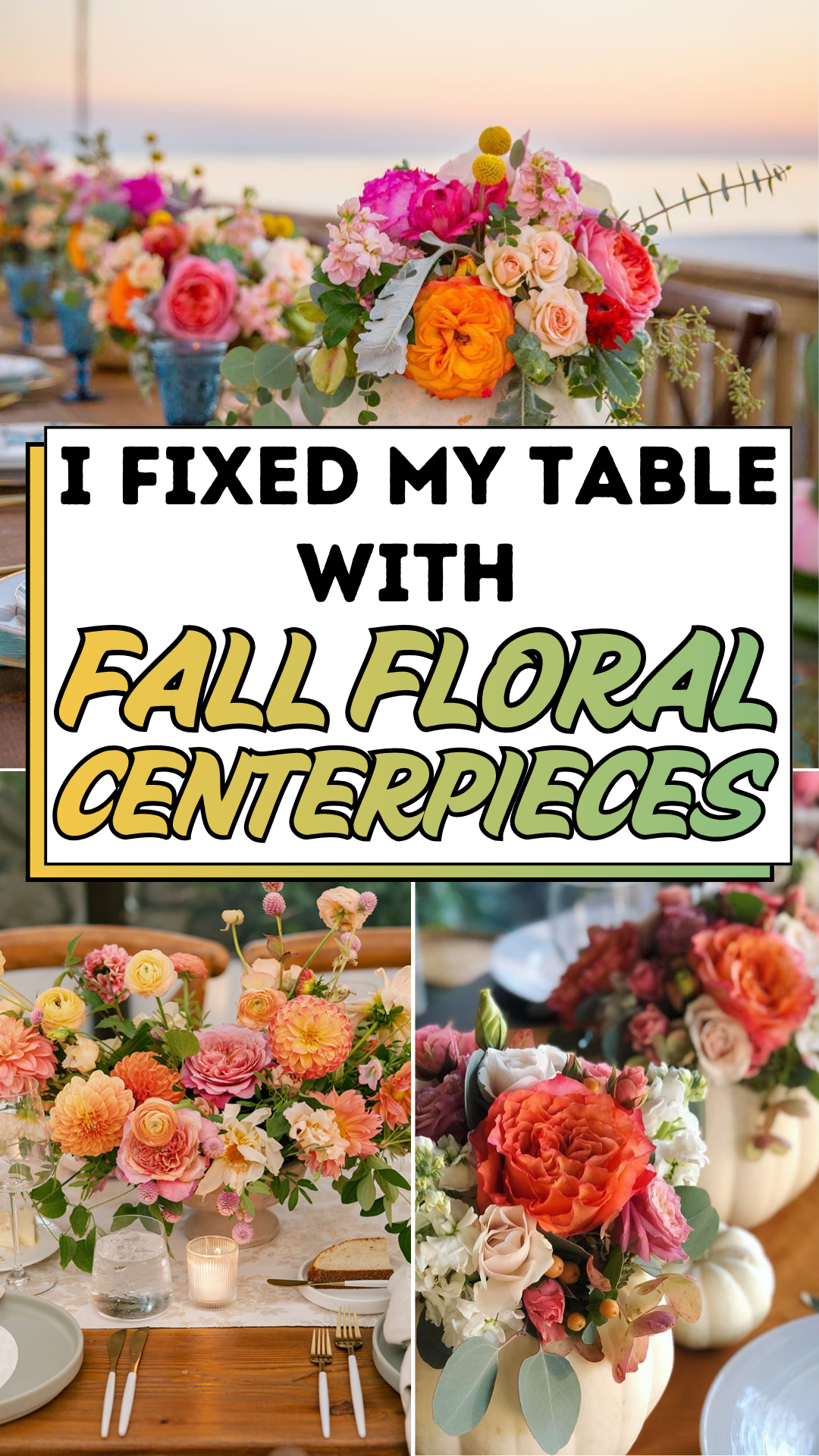
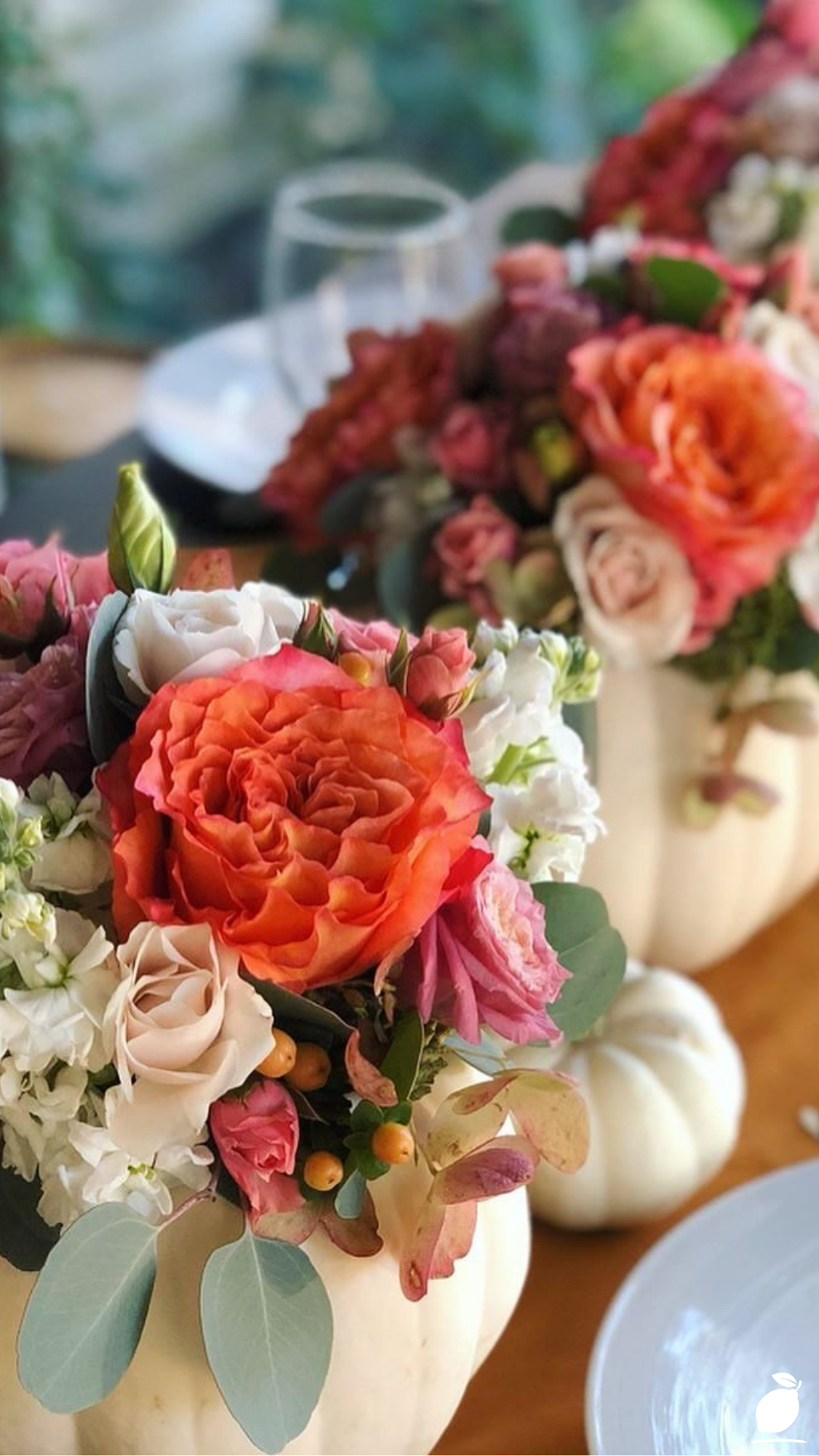
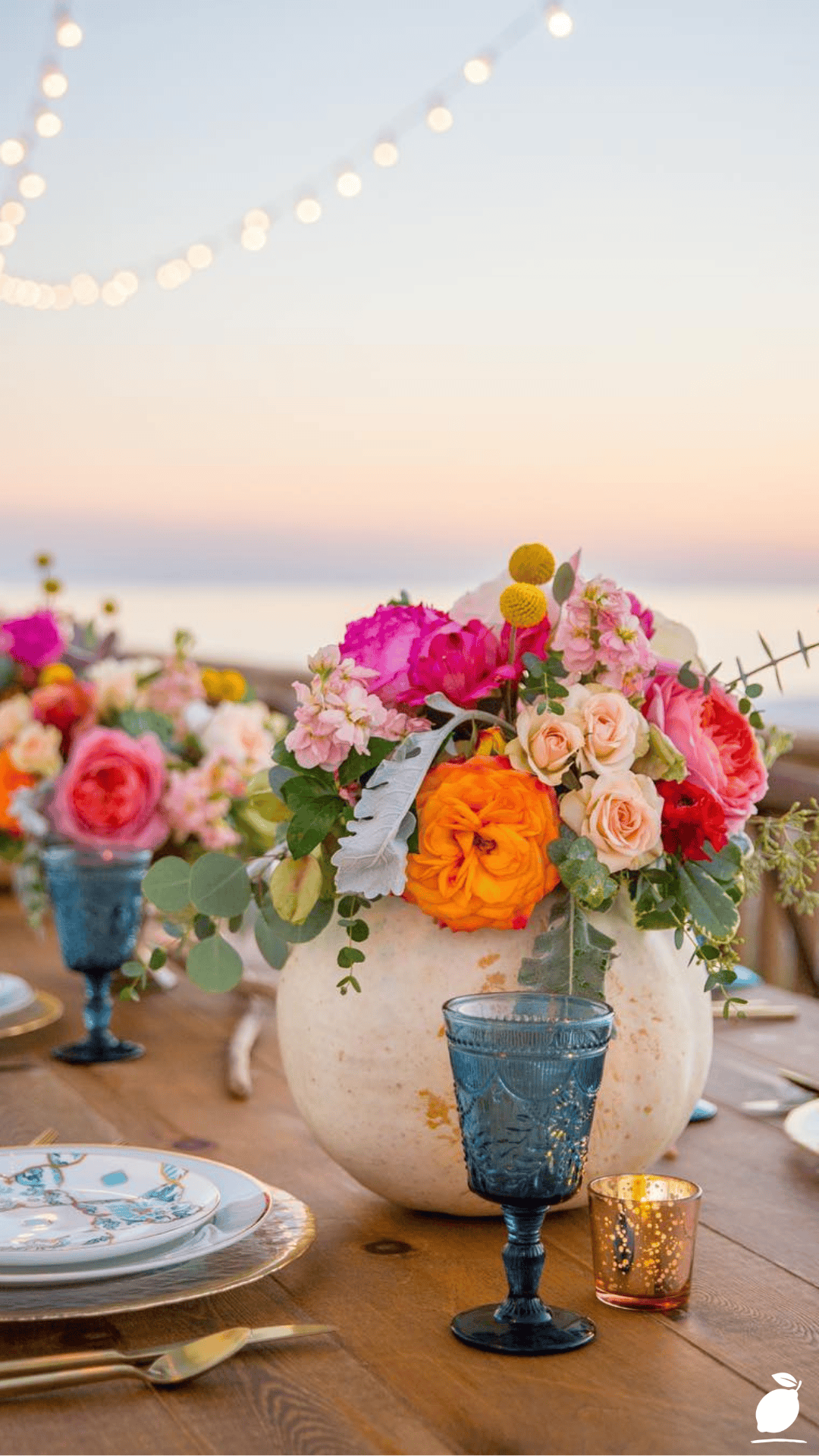
That’s exactly the gap I filled once I found a photo that completely changed how I thought about seasonal table styling: a hollowed pale cream pumpkin overflowing with hot pink, fuchsia, orange, peach, and creamy white blooms, eucalyptus trailing over the edges, set against a dusky seaside sky and warm candlelight. It was lush, a little wild, and unmistakably autumn everything my sad little mason jar wasn’t. That image became my blueprint for fall floral centerpieces, and here’s exactly how I built my own from scratch.
The Fall Floral Centerpieces Blueprint
Building one of the best fall floral centerpieces you’ve ever made doesn’t require professional florist training; it just requires the right materials and a clear process. Follow these steps for a lush, table-ready result.
Step 1: Choose Your Centerpiece Vessel
Select a container that fits your table’s style and season a hollowed pumpkin, a low ceramic bowl, a wide-mouthed vase, or a wooden tray all work beautifully for fall floral centerpieces. A pale or neutral-colored pumpkin, like the one in the image, acts as a soft, natural base that lets the flower colors take center stage.
Step 2: Prep a Pumpkin Vessel (If Using One)
If working with a real or faux pumpkin, cut a circle around the stem and hollow out the interior completely, removing seeds and stringy flesh. Line the inside with a plastic liner or floral foam cage to protect the pumpkin and give your stems something secure to anchor into for your fall floral centerpieces project.
Step 3: Choose Your Color Palette
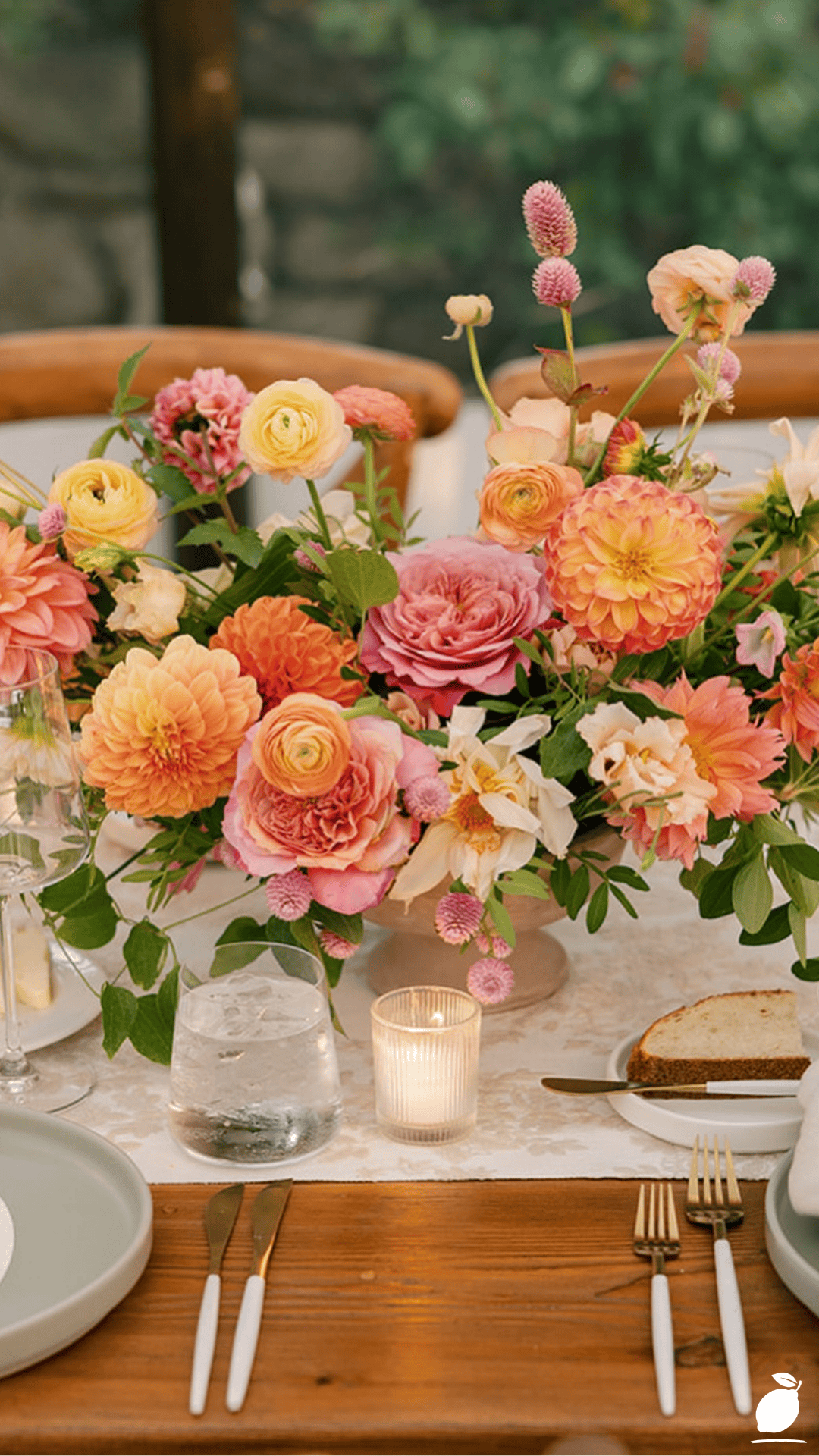
Pick two or three dominant colors and one or two accent tones hot pink and fuchsia roses with pops of orange and peach, for example- to create a rich, cohesive look without feeling chaotic. Limiting your palette keeps a full, abundant arrangement from looking messy, and it’s one of the easiest ways to elevate fall floral centerpieces from good to genuinely striking.
Step 4: Select a Mix of Bloom Sizes and Shapes
Combine larger focal flowers (roses, dahlias) with smaller filler blooms (spray roses, small spherical flowers) and structural greenery (eucalyptus, thin branching foliage). This mix of scale is what gives an arrangement real depth instead of a flat, uniform look.
Step 5: Build From the Outside In
Start by placing greenery around the outer edge of your vessel to establish the overall shape, letting some trail naturally over the sides. Then add your largest focal flowers, followed by mid-size blooms, and finish with smaller filler flowers to fill any visible gaps.
Step 6: Angle Stems for a Full, Overflowing Look
Insert stems at varying angles, not just straight up, so the arrangement spills outward rather than sitting in a tight, stiff cluster. This is what creates that lush, “spilling over the sides” effect seen in the most beautiful fall floral centerpieces.
Step 7: Add Water and Freshness Care
If using fresh flowers, add water to your liner or floral foam and mist blooms lightly. Keep the centerpiece out of direct, prolonged sun exposure between setup and the event to preserve petal freshness as long as possible.
Step 8: Style the Surrounding Table
Complete the look with warm candlelight, string lights, and place settings that echo a color or tone from the centerpiece, like blue glassware picking up a cool accent among warm florals. The centerpiece sets the tone, and the surrounding details should support, not compete with, it.
Step 9: Adjust and Refresh Throughout the Event
Check your centerpiece periodically during longer events, misting blooms and repositioning any stems that have shifted. A little mid-event maintenance keeps fall floral centerpieces looking fresh and full from the first course to dessert.
Expert Secrets for Success
Pro-Tips for Better Results
- Choose sturdy, longer-lasting blooms like roses and dahlias as your focal flowers if the centerpiece needs to last through a multi-hour event or dinner.
- Soak floral foam fully before inserting stems; dry or partially soaked foam won’t hold water long enough to keep flowers fresh throughout an event.
- Assemble your centerpiece the morning of or the evening before, storing it in a cool space until just before guests arrive for maximum freshness.
- Add a few unexpected textures, like small berries or thin branching foliage, to keep a colorful arrangement from feeling too uniform or overly polished.
- Repeat one or two flower varieties across multiple fall floral centerpieces down a long table, which creates a cohesive, professionally styled look from end to end.
- Take a quick photo of your finished centerpiece before the event, so you can recreate or adjust the design for future gatherings.
Common Mistakes to Avoid
- Don’t skip lining a real pumpkin vessel; unlined pumpkins can leak and stain wooden tables or linens once flowers and water are added.
- Avoid choosing a centerpiece so tall or wide that it blocks sightlines and conversation across the table.
- Don’t overcrowd the arrangement with too many different flower varieties; even a lush, abundant look benefits from a limited, intentional flower list.
- Resist placing fresh floral centerpieces in direct sun for extended periods before an event, since heat and light can cause blooms to wilt faster than expected.
- Don’t wait until the day of a large event to source your flowers; many blooms used in fall floral centerpieces have limited seasonal availability and sell out quickly.
- Avoid mismatched vessel styles across a long table; consistent containers make multiple fall floral centerpieces feel like one cohesive design rather than scattered afterthoughts.
Why Fall Floral Centerpieces Matter
A table is more than a place to eat; it’s where a gathering actually happens, where conversation lingers, and people relax into the evening. A beautiful centerpiece does more than decorate; it sets an emotional tone the moment guests sit down, turning a meal into an occasion. Fall floral centerpieces in particular carry a warmth that feels especially suited to slower evenings, cooler air, and the kind of gatherings that ask people to stay a little longer.
There’s a quiet satisfaction that comes from building something with your own hands that transforms an entire table. It’s not about perfection; it’s about creating a small, beautiful moment that makes the people around that table feel genuinely cared for. A homemade centerpiece, chosen and arranged with intention, has a way of making an ordinary dinner feel like something worth remembering.
That sense of care tends to ripple outward from the table itself. Guests notice a beautifully arranged centerpiece before they notice almost anything else, and it sets an unspoken tone of warmth for the entire gathering. Investing a little time into fall floral centerpieces isn’t just about aesthetics; it’s a small, tangible way of saying “I wanted this evening to feel special,” and that intention comes through in every conversation that follows.
FAQ
How long do fresh fall floral centerpieces typically last?
Most fresh arrangements stay vibrant for three to five days with proper water, cool storage, and minimal direct sun exposure, though individual bloom longevity varies by flower type.
Can I make a fall floral centerpiece using a faux pumpkin instead of a real one?
Yes, faux pumpkins are a great reusable option and avoid the risk of leaking or rotting, making them especially convenient for fall floral centerpieces prepared well in advance of an event.
What flowers work best for a fall floral centerpiece?
Roses, dahlias, chrysanthemums, and small spray flowers pair beautifully with eucalyptus and seasonal foliage, offering the rich color and texture that define most fall floral centerpieces.
How far in advance can I prepare a fall floral centerpiece?
Fresh arrangements are best assembled within 24 hours of an event for peak freshness, while faux or dried versions can be prepared days or even weeks ahead of time.
How do I keep a hollowed pumpkin centerpiece from leaking onto my table?
Line the hollowed interior with a plastic liner or watertight floral foam cage before adding water and flowers, which protects both the pumpkin and the surface underneath from moisture damage.
How many fall floral centerpieces do I need for a long dinner table?
For a table seating eight or more, most designers recommend spacing smaller arrangements every three to four feet, so a long table often needs two to four coordinated fall floral centerpieces rather than one oversized display.