
Every heavy rain used to turn the side of our house into a small disaster zone. Water poured out of the downspout, pooled directly against the foundation, and carved a muddy little trench through what was supposed to be a flower bed. I’d rake it smooth after every storm, plant something new, and watch the next downpour wash it all away again. It wasn’t just annoying; I knew that pooling water sitting against the foundation was the kind of problem that gets expensive if it’s ignored long enough.
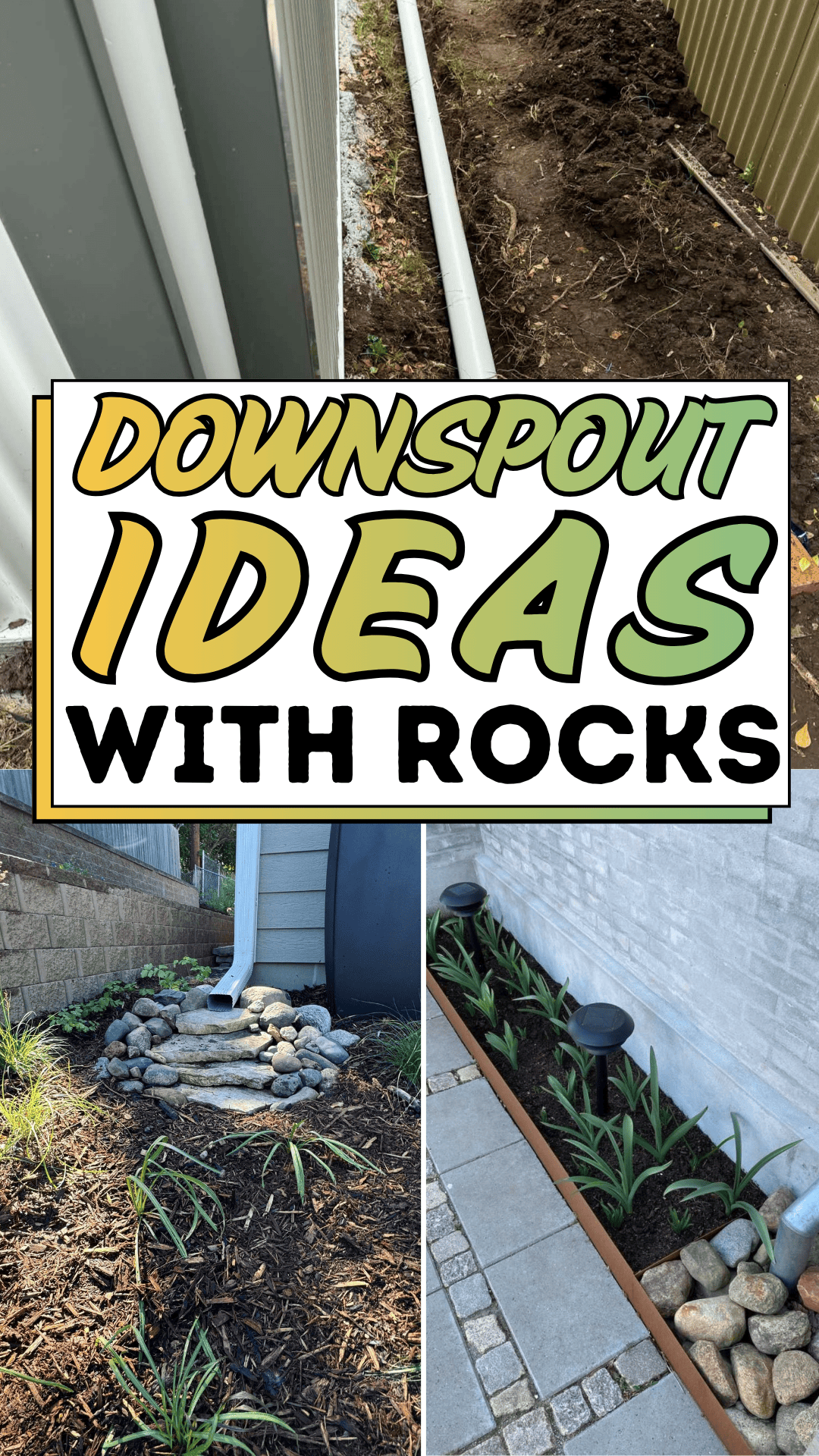
If you’ve ever dealt with a downspout that dumps water straight onto bare soil or mulch, you know exactly this cycle. The fix isn’t complicated, but it does require intention; you need something at the base of that downspout to slow the water down, spread it out, and direct it away from the house instead of letting it erode everything in its path. Most people don’t realize how much of this can be solved with something as simple and affordable as rock.
That’s exactly what I saw in a photo that finally solved my own drainage headache: a downspout tucked neatly beside a stone pathway, water directed cleanly away from the house, dark mulch and young plants thriving nearby instead of drowning in runoff. It wasn’t an elaborate landscaping overhaul; it was smart, simple placement of rock and stone doing exactly the job it needed to do. Here’s a full guide to the best downspout ideas using rock.
The Downspout Guide
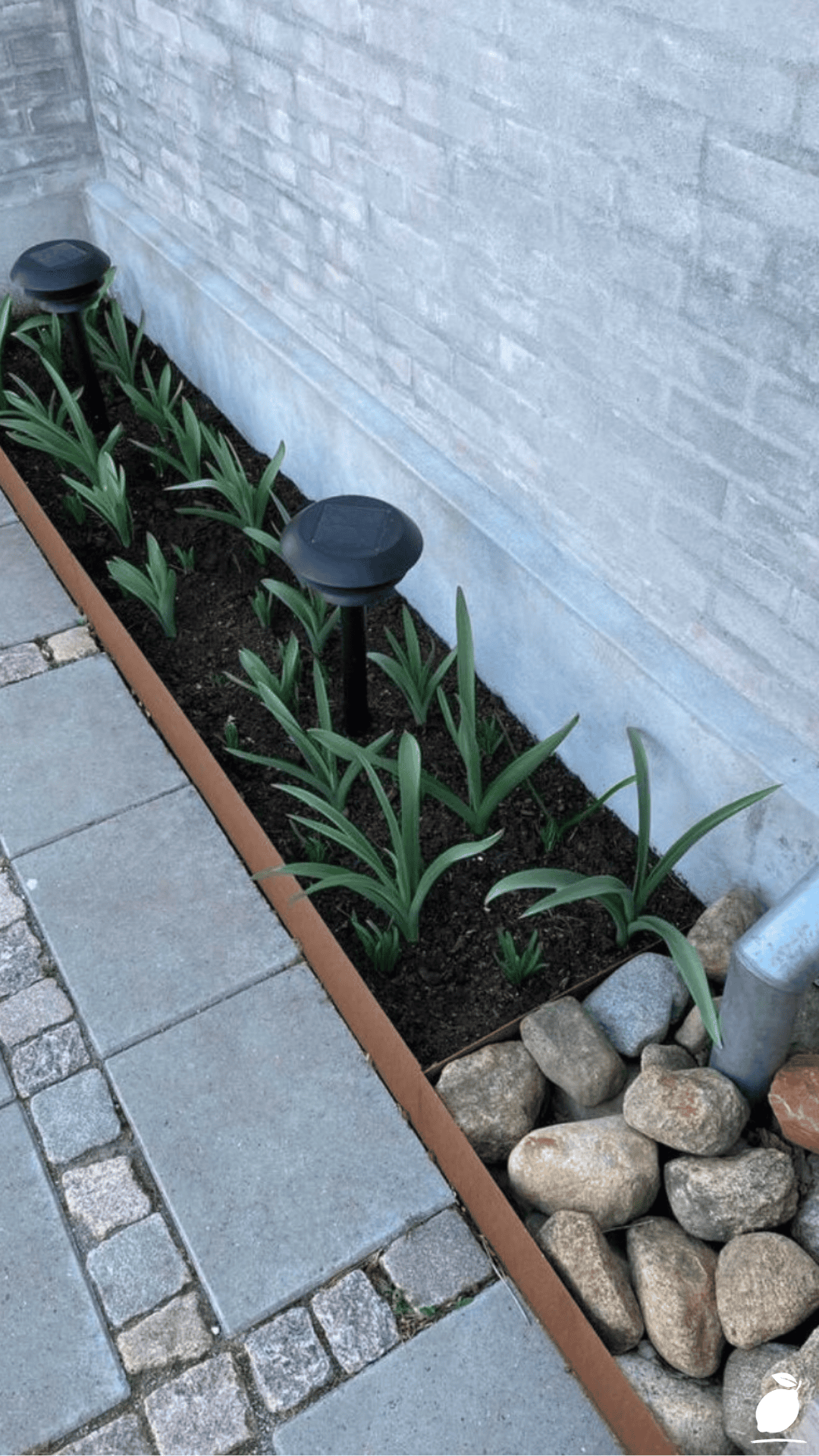
River Rock Splash Pad
Why it works: A shallow bed of smooth river rock placed directly beneath the downspout absorbs the force of falling water and slows it down before it can erode surrounding soil. It’s one of the simplest, most affordable downspout solutions and works well in almost any landscaping style.
Dry Creek Bed
Why it works: A curved, rock-lined channel that mimics a natural streambed directs water away from the downspout and guides it gradually across the yard toward a lower point. It’s both functional and visually appealing, turning a drainage problem into an intentional landscape feature.
Rock-Filled Trench Drain
Why it works: A narrow trench lined with landscape fabric and filled with gravel or crushed stone allows water to filter down and away from the downspout without pooling on the surface. This option is especially effective for yards with clay-heavy soil that drains slowly.
Decorative Boulder Cluster
Why it works: Grouping a few larger boulders near the downspout outlet breaks up the flow of water and adds visual weight to the landscaping, distracting the eye from the utilitarian pipe itself while still managing drainage effectively.
Gravel-Filled Drainage Basin
Why it works: A shallow, rock-filled basin positioned at the downspout’s endpoint temporarily holds excess water and lets it slowly absorb into the ground, reducing the sudden rush of runoff that typically causes erosion.
Rock Border Around a Splash Block
Why it works: Pairing a traditional concrete or plastic splash block with a surrounding ring of rock adds both function and polish, hiding the utilitarian block while reinforcing its water-directing purpose.
Layered Rock and Mulch Bed
Why it works: Combining a rock zone directly under the downspout with mulch further out creates a transition area that manages heavy initial runoff while still supporting nearby plantings, much like the mulched bed with young plants seen near the downspout in the inspiration photo.
Expert Secrets for Success
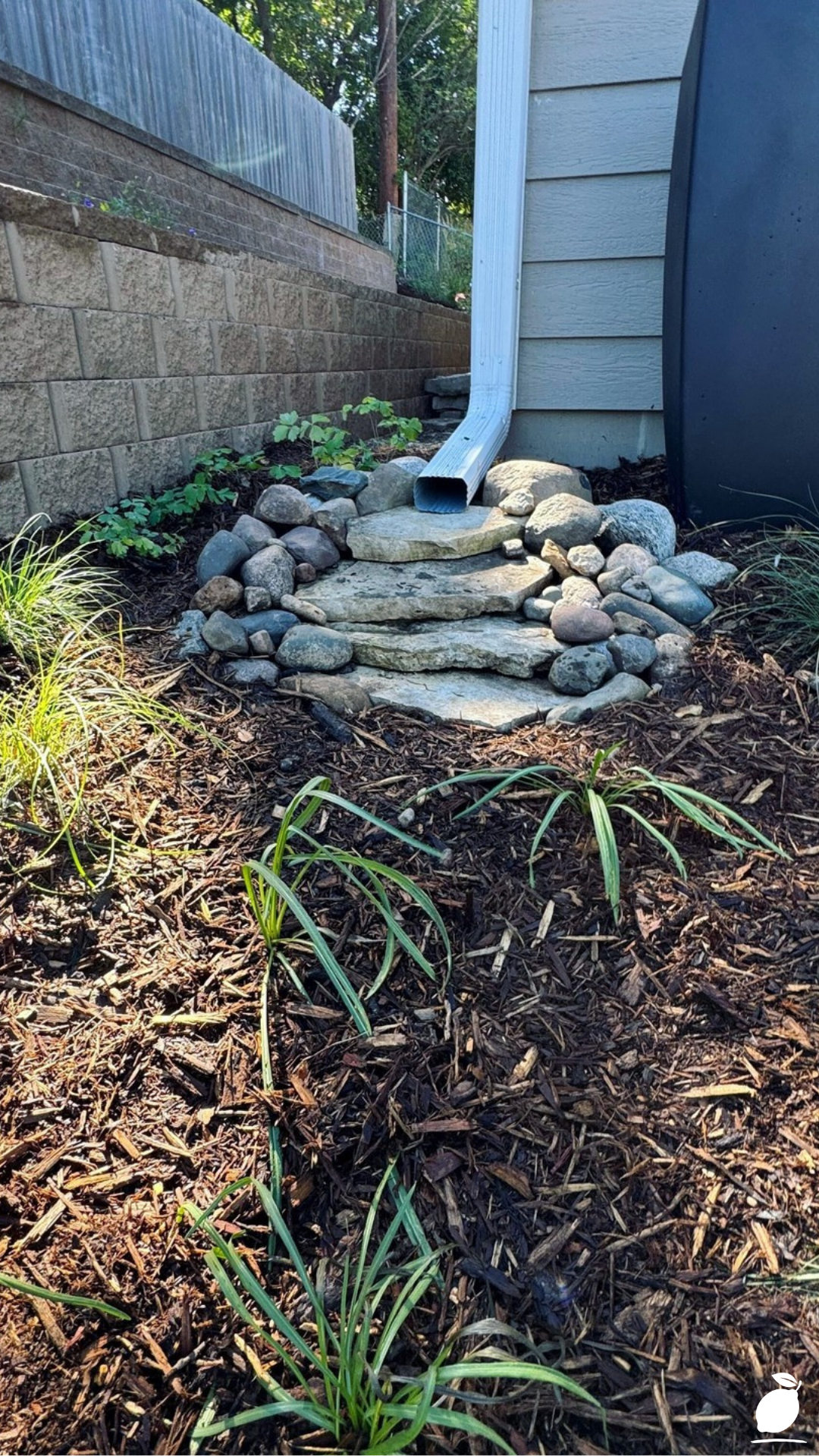
Pro-Tips for Better Results
- Choose larger rocks (river rock or cobblestone) directly beneath the downspout outlet, where water hits hardest, and use smaller gravel further along the drainage path.
- Lay landscape fabric beneath any rock installation to prevent weeds from growing up through the stones and to keep rocks from sinking into the soil over time.
- Slope the ground slightly away from your foundation before adding rock, since rock alone won’t fix a drainage path that runs toward the house.
- Extend your downspout drainage solution at least four to six feet away from the foundation to ensure water is directed clear of the structure entirely.
Common Mistakes to Avoid
- Don’t use small, lightweight decorative rock directly under a downspout; it can wash away or scatter during heavy rainfall, defeating the purpose of the installation.
- Avoid placing rock beds directly against siding or foundation walls without a gap, since it can still trap moisture against the house even while managing surface water.
- Don’t skip landscape fabric under rock installations; without it, rocks sink into the soil and weeds grow through within a season or two.
- Resist choosing a single flat rock bed without any slope or direction; water needs a clear path to follow, or it will simply pool in place instead of draining away.
Why downspout Matters
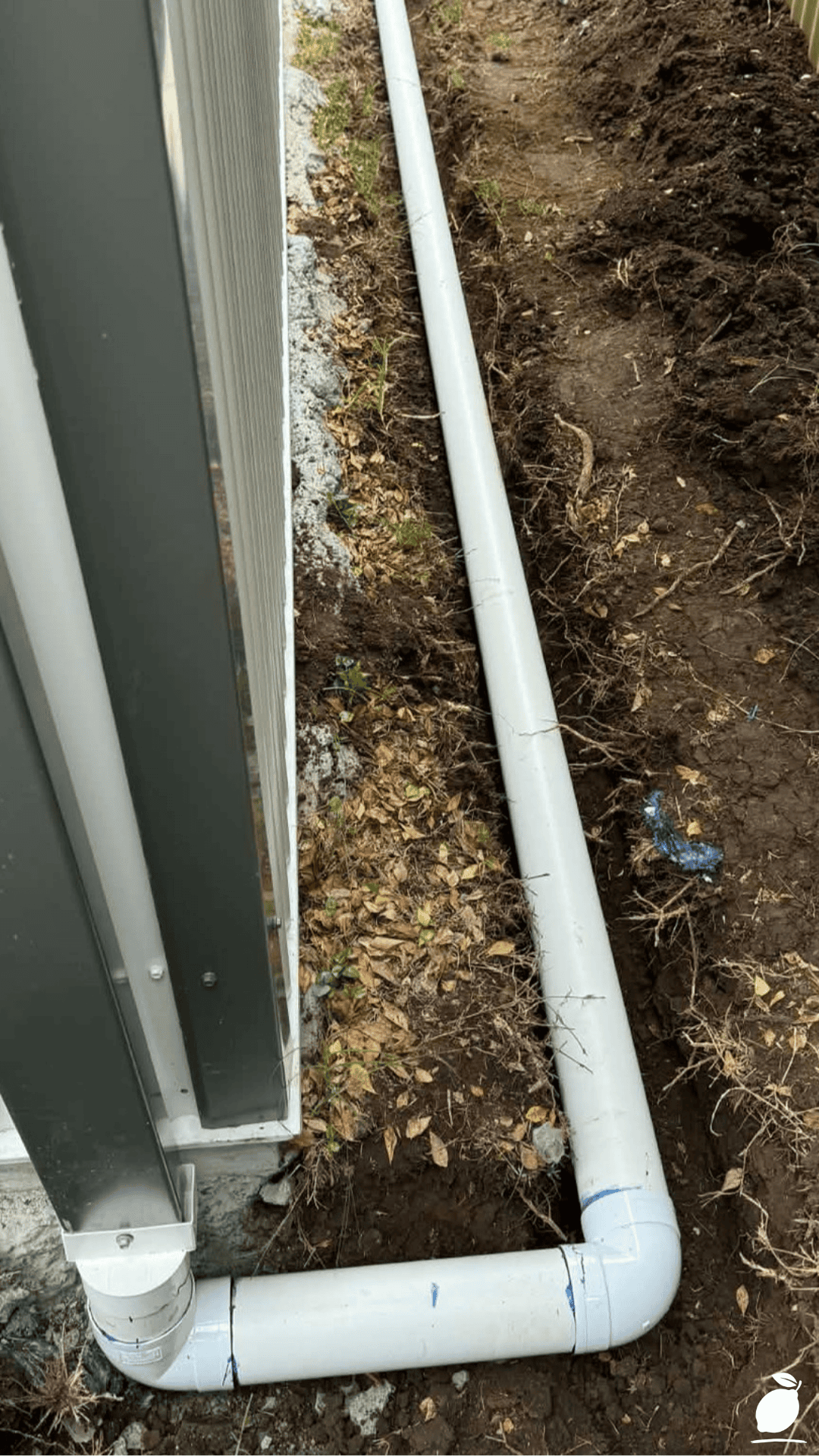
A downspout might seem like a small, purely functional part of a house, but ignoring it can lead to real problems: foundation cracks, basement moisture, and eroded landscaping that takes years to repair properly. Solving a downspout drainage issue isn’t just a chore; it’s genuine home maintenance that protects your biggest investment and prevents much larger headaches down the road.
There’s also a real sense of relief that comes from watching a heavy rainstorm and not worrying about it anymore. A well-managed downspout means one less thing to think about every time the weather turns, and that small mental shift adds up. For families, a home that handles its own water well, quietly and reliably, is one more layer of peace built right into the property.
FAQ
What size rock works best under a downspout?
Larger river rock, typically two to four inches in diameter, works best directly under a downspout outlet, since it’s heavy enough to resist being displaced by the force of falling water.
Do I need professional help to install a rock drainage solution for my downspout?
Most rock-based downspout solutions, like splash pads or dry creek beds, are manageable DIY projects, though more complex trench drains or grading issues may benefit from a professional landscaper’s input.
How far should a downspout drain from the house?
Most experts recommend directing downspout water at least four to six feet away from the foundation to prevent water from pooling against the house and causing long-term structural issues.
Will rock under a downspout stop all erosion?
Rock significantly reduces erosion by slowing and dispersing water flow, but pairing it with proper grading and, when needed, a French drain or extended pipe provides the most complete long-term solution.
Can I combine rock and plants near a downspout?
Yes, many downspout designs use a layered approach, placing rock directly under the water flow and transitioning to mulch and moisture-tolerant plants further from the point of impact, much like the arrangement seen in well-designed drainage landscaping.