You have watched it happen in other people’s gardens. A fat bumblebee drifting from bloom to bloom. Butterflies pausing on a purple coneflower. The whole garden is humming with quiet, purposeful life. You want that for your own outdoor space, the movement, the color, the feeling that your garden is genuinely alive and contributing something to the world beyond your fence. So you plant. Sunflowers, lavender, coneflowers. And then you look up and remember: your garden is mostly shade. The big oak at the back. The fence that blocks the afternoon sun. The overhang that keeps half the border in perpetual dappled light. Your pollinator ambitions and your shady reality seem fundamentally incompatible.
The frustration compounds when you visit a garden center and ask for pollinator flowers. Every recommendation assumes full sun. Every beautifully packaged seed mix on the rack promises “six or more hours of direct sunlight.” You come home with plants that sulk in the shade, stretch desperately toward the light, and produce maybe three blooms before giving up entirely. The bees and butterflies, it turns out, do not visit sulking plants. And you are left with a shadowy border that is neither beautiful nor useful, just green and disappointing and a little bit deflating every time you walk past it.
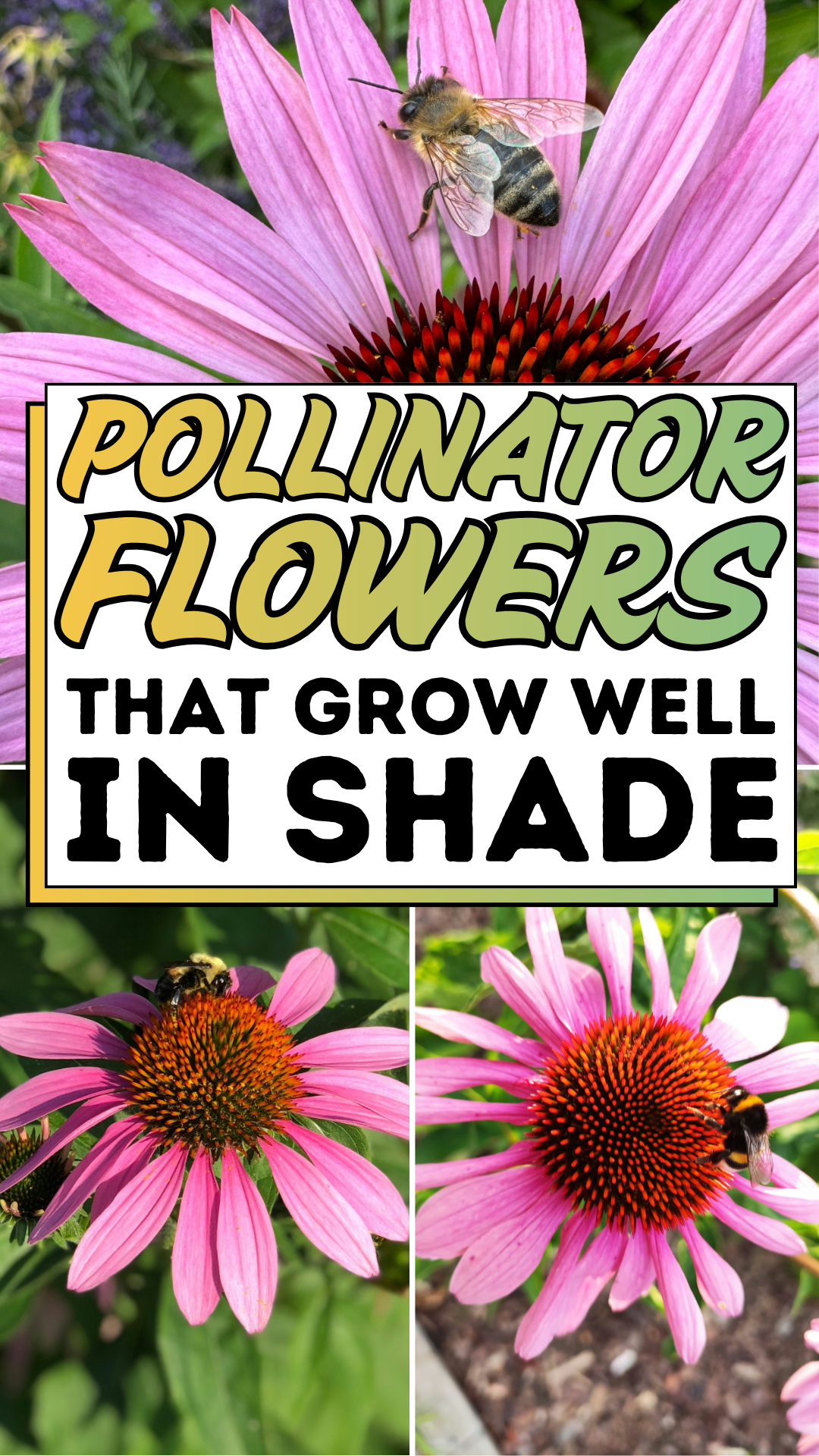
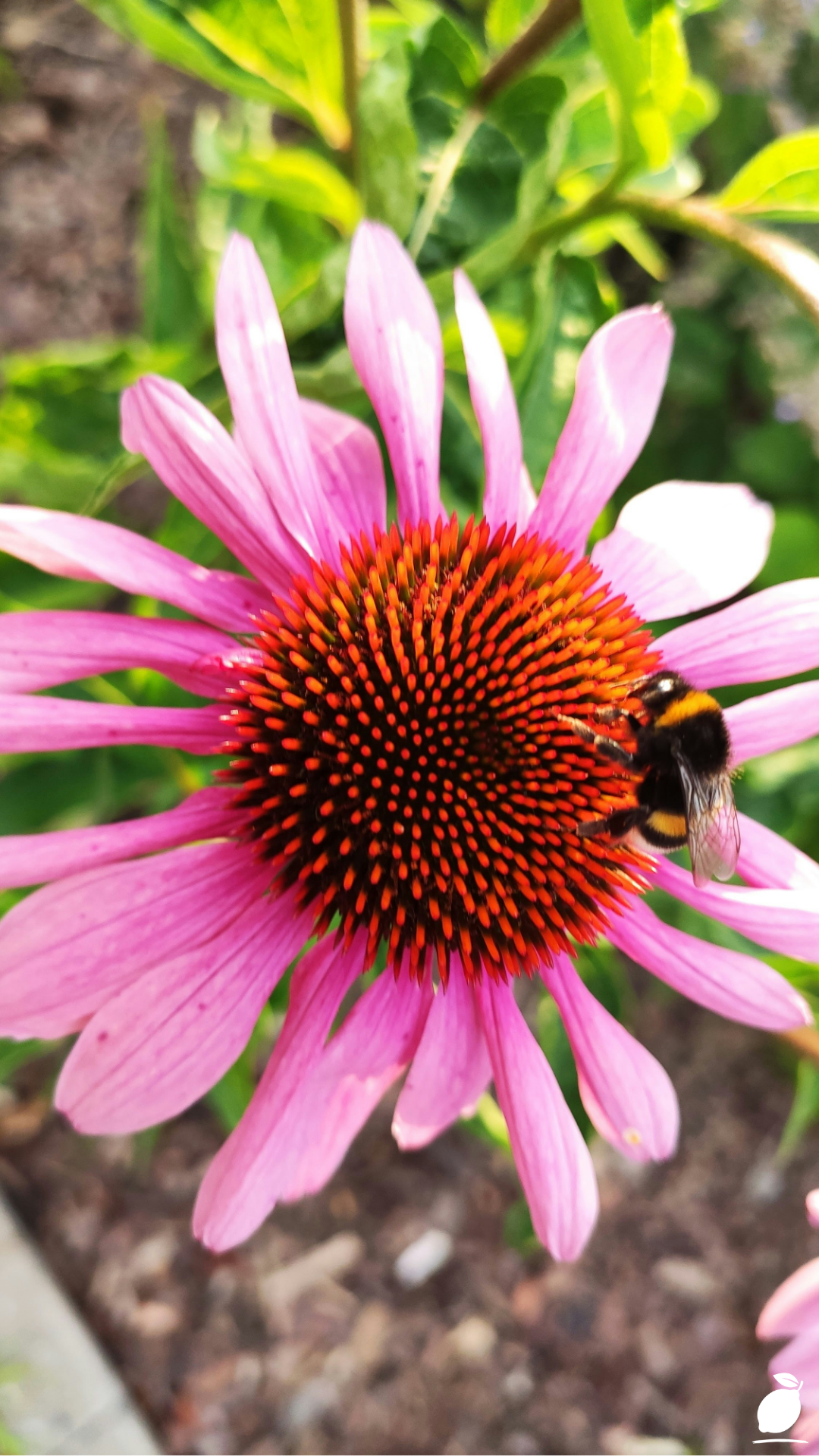
Here is what the garden center rarely tells you: some of the most generous, reliable, and genuinely beautiful pollinator flowers on the planet are perfectly at home in partial or even full shade. The image of a bumblebee buried deep in the warm orange center of a pink coneflower is not a full-sun-only story; it is a reminder that pollinators go where the food is, and with the right plant choices, you can bring that food to your shadiest corners. Shade does not have to mean silence. With these pollinator flowers, it becomes one of the most alive parts of your entire garden.
The Pollinator Flowers That Grow Well in Shade Guide
The title here is a roundup, and the best way to serve it is a curated guide to the most effective pollinator flowers for shaded garden spots, each with clear notes on why it works and how to use it. These selections cover partial shade (two to four hours of direct sun) through dappled and even full shade, giving you options for every difficult corner of your garden.
Echinacea (Purple Coneflower)
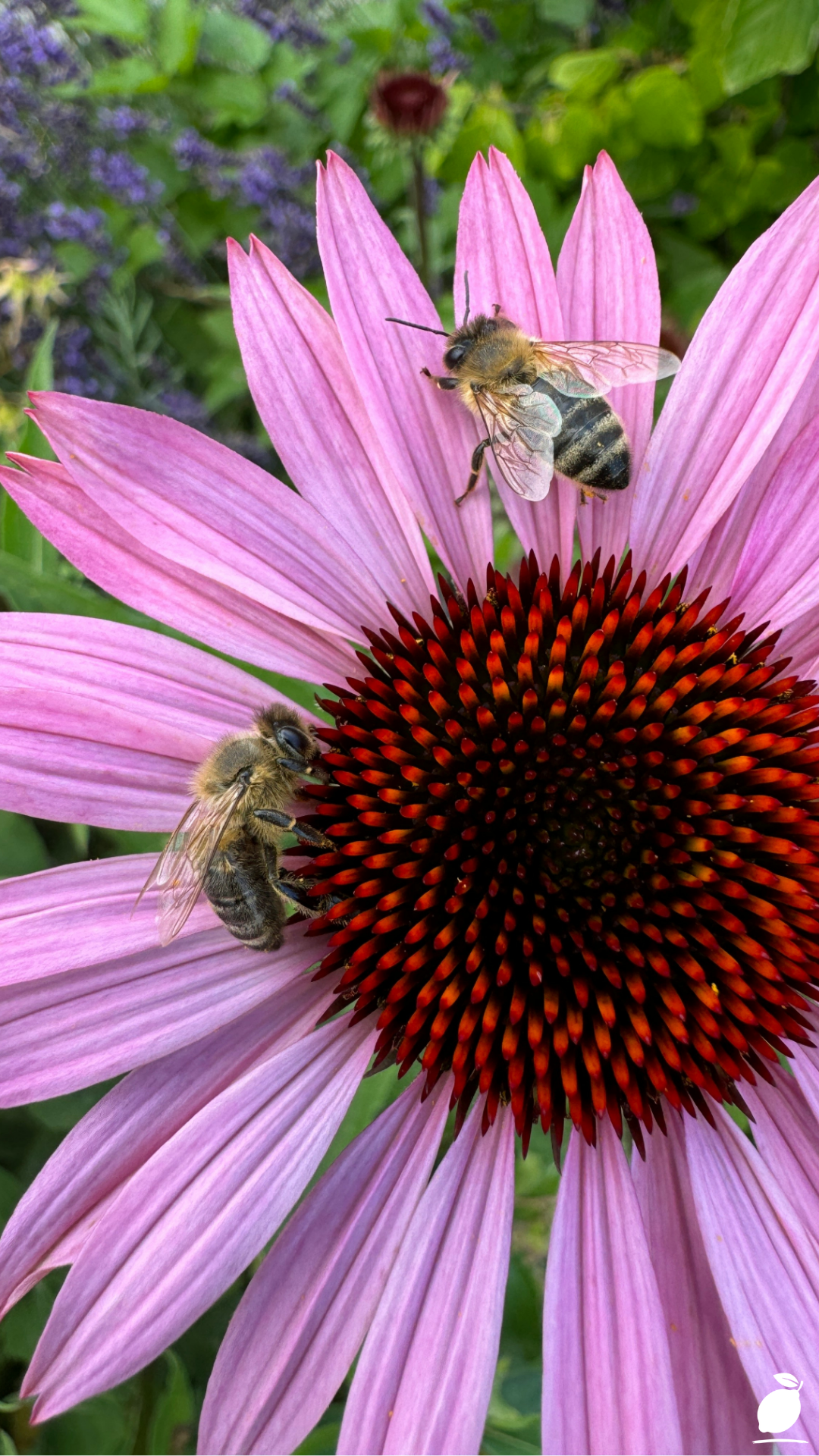
Echinacea purpurea is the gold standard of pollinator flowers, the exact bloom captured in the image above, with its long pink petals radiating from a dense, spiraling orange cone that bumblebees find irresistible. While coneflowers prefer full sun, they are notably tolerant of partial shade, performing reliably with as little as three to four hours of direct sunlight when grown in well-amended, moisture-retentive soil.
Why it works: The cone-shaped seed head of echinacea is one of the most valuable pollinator structures in the garden. It provides nectar for bees and butterflies through summer and seed for goldfinches and other birds through winter. In partial shade, plants tend to grow slightly taller and produce fewer but larger individual blooms, a trade most gardeners are very happy to make. Leave seed heads standing through autumn and winter to extend the value to wildlife of this exceptional pollinator flower.
Foxglove (Digitalis purpurea)
Foxglove is a classic cottage garden pollinator flower that actively prefers partial shade over full sun. Its tall spires of tubular, spotted blooms in shades ranging from white and cream to deep magenta and purple are specifically shaped for bumblebees, which are large enough to enter the tube and access the nectar inside. A single foxglove spike can attract dozens of bee visits in a single morning.
Why it works: Foxglove thrives at the edge of woodland, under the canopy of deciduous trees, and in the dappled shade of north-facing borders, exactly the conditions most gardeners struggle to fill. It is biennial, meaning it produces foliage in year one and blooms magnificently in year two, then self-seeds freely to keep the colony going indefinitely. As a pollinator flower, it fills the early summer gap before many other shade-tolerant bloomers come into their own.
Astrantia (Masterwort)
Astrantia is one of the most underrated pollinator flowers for shaded gardens. Its intricate, star-shaped blooms, surrounded by papery bracts in white, pink, or deep burgundy, are produced continuously from late spring through midsummer and attract an impressive range of pollinators, including hoverflies, small bees, and butterflies. It is a genuinely shade-tolerant perennial that does best in moist, humus-rich soil under partial to full shade.
Why it works: Astrantia’s complex flower structure provides accessible nectar for a wide range of pollinator species, not just the large bumblebees that dominate bigger blooms. This breadth of pollinator appeal makes it an ecologically valuable addition to any shade border. It also blooms for an exceptionally long period, providing a reliable food source through the hungry gap of early summer when many other pollinator flowers have not yet opened.
Lungwort (Pulmonaria)
Lungwort is one of the earliest pollinator flowers to bloom each year, often appearing in February or March when almost nothing else is available to early-emerging bumblebee queens. Its clusters of small, tubular flowers open pink and mature to blue-violet on the same plant, creating a two-tone display that is as attractive to gardeners as it is to early pollinators. It is a true shade-lover, at its best in full to partial shade with reliably moist soil.
Why it works: The timing of lungwort’s bloom is its superpower as a pollinator flower. Early bumblebee queens emerging from winter hibernation need nectar urgently before they can establish new colonies. A clump of lungwort in a shaded border provides exactly that resource at exactly the right moment. It is also evergreen in mild climates, meaning its spotted, silver-marked foliage provides year-round ground cover value beneath taller shade plants.
Hardy Geranium (Cranesbill)
Not to be confused with the tender pelargoniums sold as “geraniums” in garden centers, hardy geraniums are tough, fully perennial pollinator flowers that thrive in partial to full shade and bloom with remarkable generosity for weeks at a time. Varieties like Geranium phaeum (mourning widow), Geranium macrorrhizum, and Geranium sylvaticum are all particularly shade-tolerant and attractive to bees and hoverflies.
Why it works: Hardy geraniums produce open, accessible flowers that are ideal for a wide range of pollinator species, unlike deep tubular blooms that only specialist feeders can access. They spread gradually to form weed-suppressing ground cover under trees and shrubs, bloom over a long period, and require almost no maintenance once established. As a pollinator flower for the gardener who wants maximum wildlife value with minimum intervention, cranesbill geraniums are among the most rewarding choices available.
Aquilegia (Columbine)
Aquilegia’s distinctive spurred flowers, available in virtually every color combination imaginable, are architectural wonders that attract long-tongued bumblebees, hoverflies, and, in warmer climates, hummingbirds. They are short-lived perennials that self-seed prolifically, creating drifts of pollinator flowers in shaded borders with minimal effort from the gardener. They prefer partial shade and cool, moisture-retentive soil, where they bloom abundantly in late spring and early summer.
Why it works: The nectar spurs of Aquilegia are specifically suited to long-tongued pollinators, making them an ecologically distinct pollinator flower that supports species that shorter blooms do not. Their tendency to self-seed freely means one initial planting becomes a naturalized, evolving colony that fills difficult shaded spaces year after year. Few pollinator flowers combine ecological value, low maintenance, and sheer visual charm as effectively as a drift of self-seeded aquilegias in a woodland border.
Toadflax (Linaria purpurea)
Toadflax is a slender, airy pollinator flower that produces long spikes of tiny snapdragon-like blooms in soft purple, pink, and white from early summer through to the first frosts. It is surprisingly shade-tolerant for a flower of its type and thrives on neglect, naturalizing readily in poor soils, gravel, and the dry shade beneath garden walls that defeats most other plants. Bumblebees are its most dedicated visitors.
Why it works: Toadflax fills a genuinely difficult niche: the dry, shaded, nutrient-poor spot that most pollinator flowers refuse. It’s fine, feathery texture adds movement and lightness to dense shade plantings, and its exceptionally long bloom season from June to October in most climates provides a sustained nectar source through the second half of the gardening year when other pollinator flowers begin to wind down.
Expert Secrets for Success
Pro-Tips for Better Results
- Layer your planting heights deliberately. The most productive pollinator flower borders for shade work in vertical layers low ground-cover plants like lungwort and hardy geraniums beneath mid-height bloomers like astrantia and aquilegia, with taller foxgloves and coneflowers above. This layering maximizes the range of pollinator species supported and creates a border that looks full and intentional at every level.
- Prioritize bloom sequence over simultaneous color. Choose pollinator flowers that bloom at different points across the season so that food is available from the earliest spring days through late autumn. A sequence of lungwort (February–April), foxglove (May–June), astrantia (June–August), echinacea (July–September), and toadflax (June–October) provides near-continuous pollinator support through the entire growing year.
- Add water. A shallow dish of clean water near your pollinator flower border dramatically increases bee and butterfly visits, particularly during summer heat. Change the water every two to three days to prevent mosquito breeding. A few pebbles in the dish give insects a safe landing platform.
- Resist the urge to tidy in autumn. Many pollinator flowers provide seed for birds and overwintering habitat for beneficial insects when left standing through winter. Leave seed heads, especially echinacea cones and teasels, intact until late February or March. A tidy garden in winter is often an ecologically impoverished one.
- Amend the shade soil with organic matter every year. Most shade garden soils are dry and nutrient-poor due to tree root competition. An annual mulch of well-rotted compost or leaf mold, applied in late autumn, builds the moisture-retentive, humus-rich conditions that shade-tolerant pollinator flowers need to perform at their best.
Common Mistakes to Avoid
- Planting full-sun pollinator flowers in shade and expecting results. Lavender, echinops, and verbena bonariensis are genuinely outstanding pollinator flowers in full sun. In shade, they stretch, fail to bloom, and attract nothing. Always check a plant’s shade tolerance before adding it to a shaded border.
- Deadheading everything. Many pollinator flowers produce their most valuable wildlife benefit after the petals drop. Seed heads feed birds, hollow stems shelter solitary bees, and decaying flower matter supports a range of invertebrates. Deadhead selectively, leaving at least some spent flowers to complete their full ecological cycle.
- Using slug pellets near pollinator plantings. Slug damage is a real challenge in shaded, moist borders, but conventional slug pellets harm ground beetles, hedgehogs, and birds that feed on slugs and other invertebrates. Use iron phosphate-based pellets, copper tape, or biological nematode treatments instead methods that manage slugs without disrupting the wider food web your pollinator flowers are supporting.
- Planting in isolated pockets. A single pollinator flower plant in an otherwise bare border is far less effective than a grouped planting of five or seven of the same species. Pollinators locate food sources more efficiently when blooms are clustered, and grouped plantings create the visual impact that makes shade borders genuinely beautiful as well as ecologically valuable.
- Ignoring native species. Where possible, prioritize native or near-native pollinator flowers over exotic cultivars. Native species have co-evolved with local pollinator populations over thousands of years and provide more precisely matched nectar, pollen, and habitat value. Cultivars with doubled or filled flowers, while attractive, are often inaccessible to pollinators and nutritionally inferior.
Why Pollinator Flowers Matter
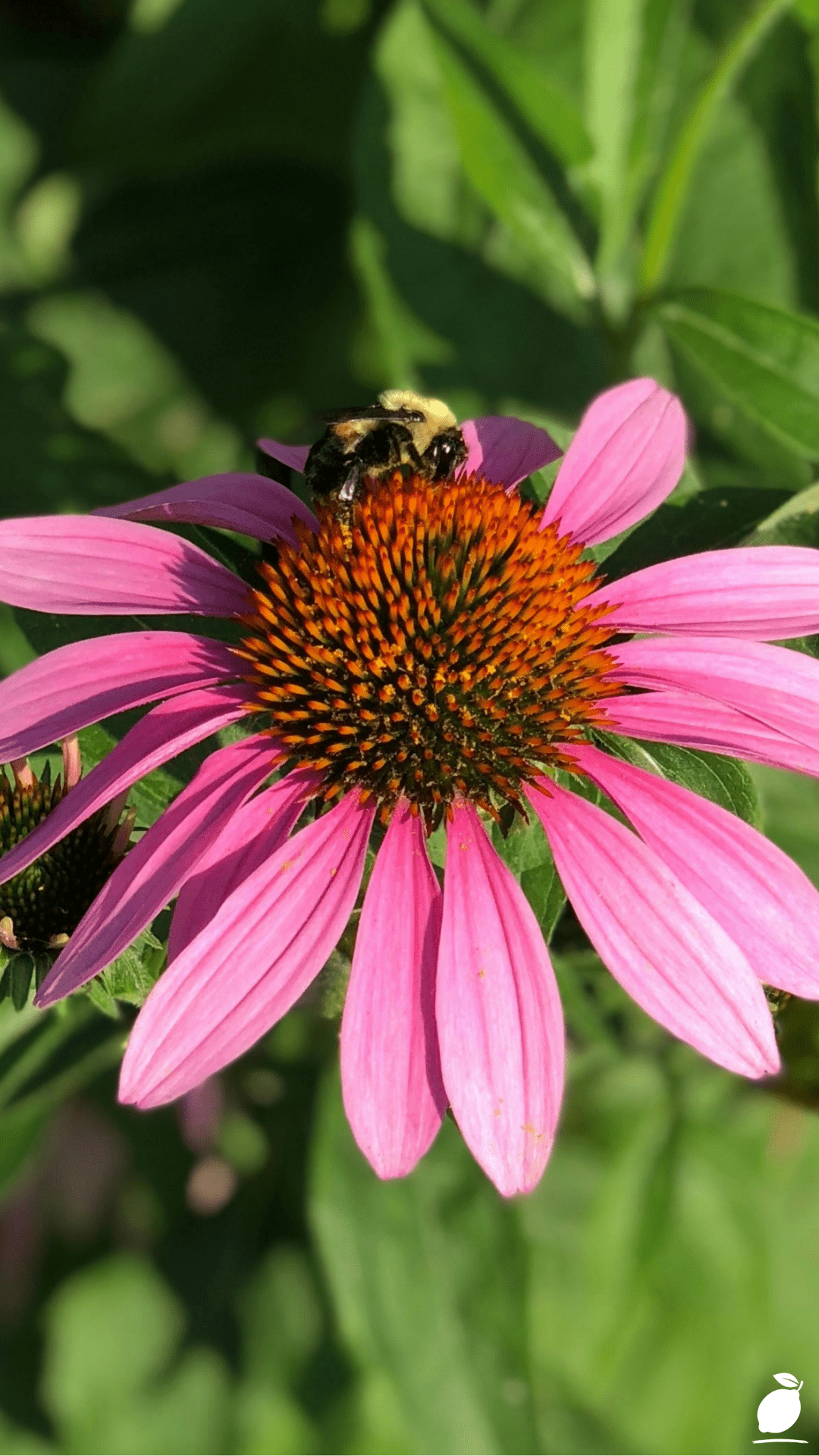
A garden that supports pollinators is doing something quietly extraordinary. Every bumblebee that visits your foxgloves and every butterfly that pauses on your coneflowers is part of a system that underpins not just the beauty of your garden but also the entire food chain surrounding it. One in three mouthfuls of food we eat exists because a pollinator visited a flower. When you plant pollinator flowers even in the shaded, difficult corners that feel like wasted space, you are contributing to something that extends far beyond your fence line.
For families, a garden alive with pollinators becomes a source of daily wonder that screens and devices simply cannot replicate. A child who watches a bumblebee navigate the interior of a foxglove flower has had a genuine encounter with the living world. A teenager who plants their first patch of pollinator flowers and then watches it fill with life across a summer has experienced the particular satisfaction of making something happen, of acting and seeing a real, visible result. These are experiences that build a connection to the natural world at an age when that connection is increasingly rare and increasingly important.
And for your own peace of mind, a garden full of pollinator flowers offers something difficult to name but immediately recognizable when you feel it. Sitting near a border that hums with bee activity and flickers with butterfly wings is one of the most restorative experiences a garden can provide. The sound alone that low, steady hum of purposeful life has been shown to reduce stress and promote a state of calm attention that is increasingly hard to find in daily life. Pollinator flowers do not just make your garden beautiful. They make it alive in a way that feeds something in you every time you step outside and pay attention. That is worth every hour of planting, every year.
Frequently Asked Questions
Will shade-tolerant pollinator flowers attract as many pollinators as sun-grown varieties?
Yes, provided the plants are healthy and blooming well. Pollinators navigate by flower scent and color, not by light levels. A well-grown foxglove or coneflower in partial shade will attract as many bee visits as the same plant in full sun. The key is choosing varieties genuinely suited to shade rather than forcing sun-lovers into unsuitable conditions.
How much shade is too much for pollinator flowers?
Most pollinator flowers categorized as “shade-tolerant” perform best in partial shade, with two to four hours of direct sun daily, with dappled light for the remainder. True deep shade (under a dense evergreen canopy with no direct sun) limits options significantly, but lungwort, native wood geraniums, and some ferns with adjacent taller pollinator plants can still support a limited range of visiting insects. Improving soil moisture and organic matter content helps any shade-pollinator planting perform better.
When is the best time to plant pollinator flowers for shade?
Perennial pollinator flowers like echinacea, astrantia, hardy geraniums, and aquilegia are best planted in spring or early autumn, giving roots time to establish before the demands of flowering. Biennials like foxglove should be planted as young plants in summer or early autumn of their first year to allow the rosette to establish through winter before blooming the following spring.
How do I stop slugs from destroying my shade pollinator border?
Shade and moisture, the conditions your pollinator flowers need, are also ideal for slugs. The most ecologically sound approach combines multiple methods: iron phosphate slug pellets safe for wildlife, a biological nematode drench applied to soil in spring and autumn, and encouraging natural predators like ground beetles, hedgehogs, and thrushes by providing habitat nearby. Avoid bare soil by mulching, which reduces the surface slugs travel across.
Can I grow pollinator flowers in containers in a shaded spot?
Yes, foxgloves, astrantia, hardy geraniums, and aquilegia all grow successfully in large containers in partial shade. Use a peat-free, moisture-retentive potting mix, water consistently (containers dry out faster than borders), and feed with a balanced liquid fertilizer every two weeks through the growing season. Place containers where they receive the most available light, even if the spot is only partially shaded.