
You have a picture saved on your phone. Maybe several pictures. A stone cottage wall draped in climbing roses, a white chair half-hidden in a sea of blooms, dappled sunlight on a lawn framed by overflowing borders. The English cottage garden aesthetic is one of those things that feels entirely achievable in theory and endlessly elusive in practice. You buy the plants, you dig the beds, you arrange things with the best intentions, and what you get looks less like a romantic retreat and more like a random collection of plants that do not quite know what they are supposed to be doing together. Full, yes. Beautiful, not quite
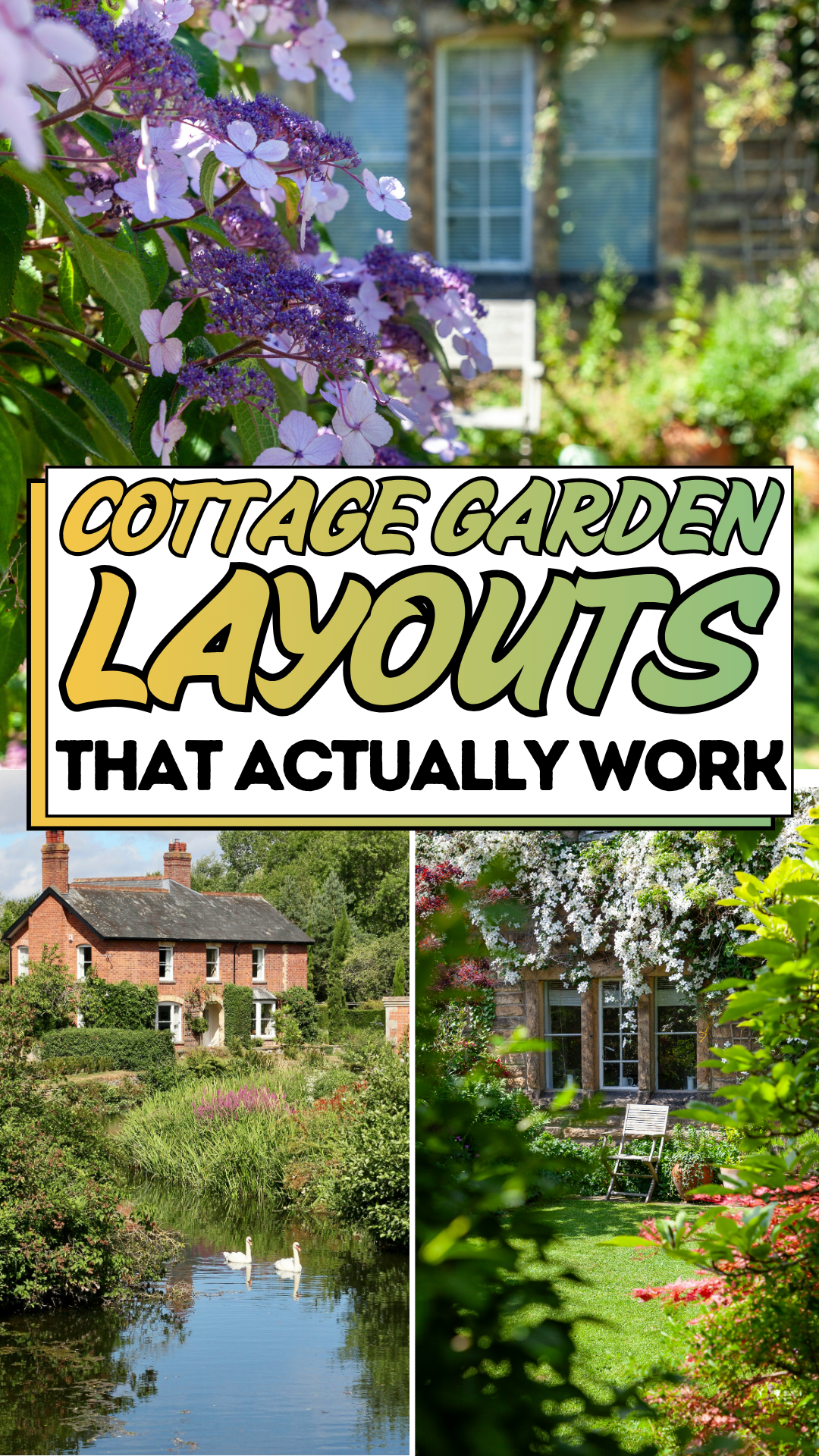
The frustration with cottage garden layouts, specifically, is that they look effortless precisely because they are not. The overflowing, layered, “just happened this way” quality of a well-executed cottage garden is actually the result of deliberate structural decisions made before a single plant goes into the ground. Which plants go at the back, which cascade at the front, how the climbing roses are trained, where the lawn meets the border, what creates the sense of enclosure and intimacy that makes a cottage garden feel like a world of its own, these are design choices, even when they look like happy accidents. Without that underlying structure, you get chaos rather than abundance.
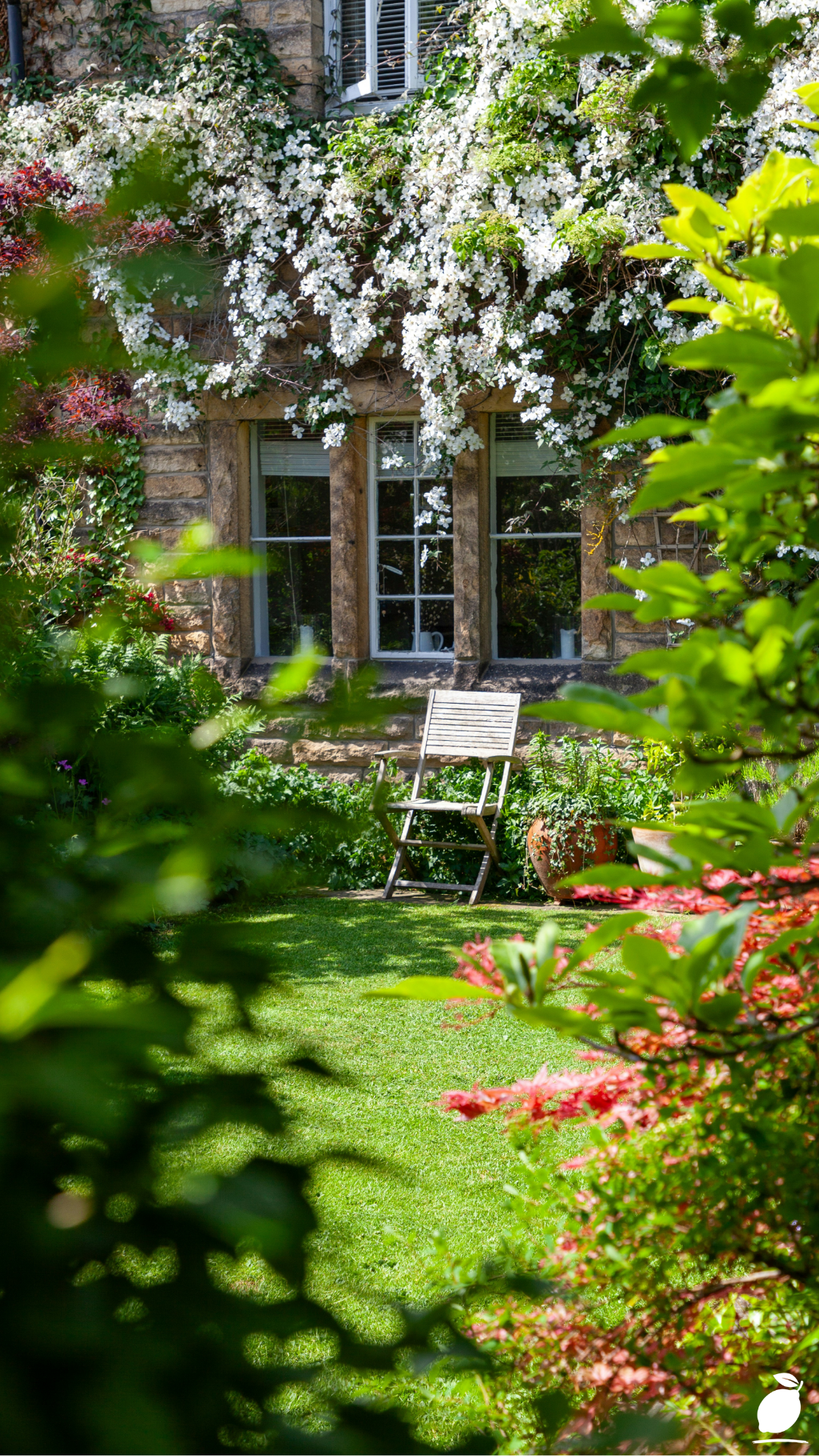
That is the essential insight behind every cottage garden layout that actually works: there is always a framework holding the beauty up. The white chair positioned on a neat lawn, the climbing roses trained carefully across the stone wall above the windows, the red flowers layered in the foreground behind soft foliage, none of this happened by accident. It was composed. Thoughtfully, patiently, and with a clear understanding of how different elements work together to create that particular quality of romantic, layered calm. Here are the cottage garden layouts that deliver that result reliably, and what makes each one work.
The Cottage Garden Layouts Guide
The title calls for a roundup of approaches, so the best format is a curated guide to distinct cottage garden layout types, each with a clear explanation of the structural logic that makes it succeed. These are not vague aesthetics but practical frameworks you can apply to your own space, whatever its size or orientation.
The House-Wall Anchor Layout
In this classic cottage garden layout, the house wall itself becomes the primary vertical element trained with climbing roses, wisteria, or clematis that frame windows, drape over doorways, and cascade softly down stonework.
The planting beds at the base of the wall are filled with a generous mix of perennials and annuals in a loose, layered arrangement, with taller plants behind and shorter, sprawling varieties at the front edge. A simple lawn panel in front provides breathing space and a clean foreground that sets off the abundance behind it.
Why it works: The house wall gives the cottage garden layout a permanent vertical anchor that requires no additional structure; the architecture does the work. Climbing plants trained across it unify the building and the garden into a single composition, while the clean lawn foreground provides the visual contrast that makes the planted areas read as lush and abundant rather than simply messy. This is the layout seen in the image: white climbing roses over stone, a neat lawn, and layered reds and greens at the border edge. It is the most reliably beautiful cottage garden layout for homes with stone, brick, or rendered walls.
Best plants for this layout: Climbing roses (Rosa ‘New Dawn’, Rosa ‘Iceberg’), clematis, wisteria, foxgloves, delphiniums, geraniums, and low-sprawling catmint at the border front.
The Central Path Layout
One of the most structurally satisfying cottage garden layouts places a straight or gently curving central path, brick, gravel, or stepping stone through the middle of the garden, with deep, overflowing borders on both sides that lean and sprawl toward the path from both directions. The path creates a clear axis that gives the layout direction and purpose, while the borders on either side are planted in a relaxed, non-symmetrical way that looks spontaneous even though it is not.
Why it works: The central path solves one of the fundamental problems of cottage garden design: without a clear structural line, abundant planting reads as shapeless. The path provides that line without imposing rigidity; it guides the eye through the garden, creates access for maintenance, and frames the planting on either side in a way that makes everything look intentional. The contrast between the hard, linear path material and the soft, spilling plants on both sides creates the classic cottage garden tension between structure and abundance that defines the style.
Best plants for this layout: Roses, lavender, catmint, alchemilla mollis, delphiniums, hollyhocks, sweet peas on obelisks, and self-seeding foxgloves between path and border.
The Layered Island Bed Layout
For gardens without a significant wall or a linear path to anchor around, an island bed, a free-standing planted area visible from all sides, can serve as the structural heart of a cottage garden layout. The key is strict attention to layering: tallest plants at the center, graduating down to medium-height mid-border varieties, then low, sprawling, or tumbling plants at the outer edges. A simple mown grass path circling the island provides access and definition.
Why it works: Island beds in cottage garden layouts succeed when the layering is bold, and the planting is generous. A half-hearted island bed with a few spaced plants reads as incomplete. A densely planted one with clear height graduation creates a planted composition that looks as considered and beautiful from every angle as a well-designed room. The circular or oval shape reinforces the informal, romantic character of the cottage style without requiring walls or hard structures.
Best plants for this layout: Verbascum, echinacea, rudbeckia, and tall grasses at the center; peonies, roses, and salvia in the mid-layer; hardy geraniums, alchemilla, and nepeta at the edges.
The Enclosed Room Layout
Some of the most beautiful cottage garden layouts divide the garden into distinct “rooms” using hedges, trellises, rose arches, or pleached trees as dividers. Each enclosed space has its own character: a cutting garden in one room, a fragrant seating area in another, a kitchen garden in a third, but the cottage aesthetic runs consistently through all of them through the choice of plants, materials, and the quality of abundant, slightly informal planting.
Why it works: Enclosure is one of the defining characteristics of cottage garden aesthetics, and the room layout makes it structural rather than incidental. Moving from one enclosed space to another creates a sense of discovery and surprise that flat, open gardens cannot replicate. Each room can be optimized for its purpose: peak-season cutting flowers, fragrant evening plants near the seating area, herbs and vegetables near the kitchen, while the connecting arches and hedged divisions provide the framework that makes the whole garden feel coherent and designed.
Best plants for this layout: Yew or box for hedging, climbing roses over arches, lavender as path edging, and a mix of annuals, perennials, and biennials within each room tailored to its purpose.
The Front Garden Cottage Layout
Cottage garden layouts work particularly well in front gardens, where the space between the boundary and the front door becomes a layered, fragrant welcome rather than a strip of lawn or gravel. A narrow central path leads to the front door, with densely planted borders on both sides gradually rising in height from the boundary inward. Climbing plants are trained up the house wall on either side of the door, framing the entrance and creating the classic “covered in roses” cottage look.
Why it works: Front garden cottage layouts benefit from the natural framing of the house facade, the boundary, and the path between them, a ready-made structure that requires only plants to complete it. Because the space is seen from the street, the layered planting reads as a composition in a way that creates immediate, powerful curb appeal. A front garden cottage layout also requires relatively little maintenance once established, since the dense planting suppresses weeds and the self-seeding tendency of many cottage plants keeps the borders filled year after year.
Best plants for this layout: Roses, lavender, catmint, foxgloves, sweet Williams, wallflowers, and climbing roses or clematis around the front door.
Expert Secrets for Success
Pro-Tips for Better Results
- Start with structure, plant into it. Before buying a single plant, decide on the structural bones of your cottage garden layout: the wall that will carry the climbers, the path that will divide the borders, and the hedges or arches that will create enclosure. Plants fill the structure. Without structure, plants create confusion.
- Plant in odd-numbered groups. Single specimens of each plant variety create a spotty, restless visual effect in cottage garden layouts. Planting in groups of three, five, or seven of the same variety creates drifts of color that read as intentional and lush. Space individual plants within a group closer than the label suggests. Cottage gardens are meant to be dense.
- Use self-seeders generously. Some of the most important plants in a successful cottage garden layout, foxgloves, alchemilla mollis, aquilegia, forget-me-nots, and honesty, self-seed freely, filling gaps and threading between other plants in a way that looks entirely natural because it is. Let them seed, thin what is not wanted, and allow the garden to gradually compose itself around your framework.
- Choose a tonal color palette. The most coherent cottage garden layouts work within a limited color story: whites and pinks with silver foliage for a soft, romantic palette; blues, purples, and whites for a cool, contemplative one; or warm reds, oranges, and yellows for a vibrant, exuberant feel. A plant-by-plant approach that ignores color relationships produces the visual noise that makes cottage gardens look chaotic rather than abundant.
- Train climbers early and often. Climbing roses and clematis trained across a wall or over an arch create the defining vertical element of most great cottage garden layouts. The key is training horizontally rather than vertically. Encouraging lateral stems creates more flowering shoots, denser coverage, and the cascading, draped effect that defines the look rather than a single vertical spike of growth.
Common Mistakes to Avoid
- Skipping the lawn or hard surface. Many gardeners trying to achieve maximum planting density eliminate all lawn or hard surface from their cottage garden layout. The result is an unreadable mass of plants with no visual breathing space. Some open foreground, even a narrow gravel path or a small lawn panel, is essential as a foil that makes the planted areas look deliberately abundant rather than simply overcrowded.
- Relying entirely on summer bloomers. Cottage garden layouts that peak in June and July and then collapse into bare stems by August are a common disappointment. Succession plan: spring bulbs beneath summer perennials, late-season asters and rudbeckias behind earlier-flowering roses, and persistent seed heads and evergreen structural plants for winter interest.
- Planting too tidily. Cottage gardens require a tolerance for self-seeding, sprawling, and the occasional plant that decides to grow somewhere unexpected. Removing every volunteer seedling, staking every leaning stem, and cutting back every spent flower head produces a stiff, formal result at odds with the relaxed abundance the style demands. Embrace the controlled disorder.
- Ignoring fragrance. A cottage garden layout that does not engage the sense of smell is missing one of the style’s most defining qualities. Include fragrant plants, roses, lavender, sweet peas, stocks, and honeysuckle at key points along paths and near seating areas where their scent can be fully appreciated.
- Overcomplicating the plant list. Beginners frequently try to include too many different plant varieties in their cottage garden layout, producing a collection rather than a composition. A restrained palette of eight to twelve key varieties, repeated and grouped throughout the layout, creates far more visual coherence and impact than forty different plants each appearing once.
Why Cottage Garden Layouts Matter
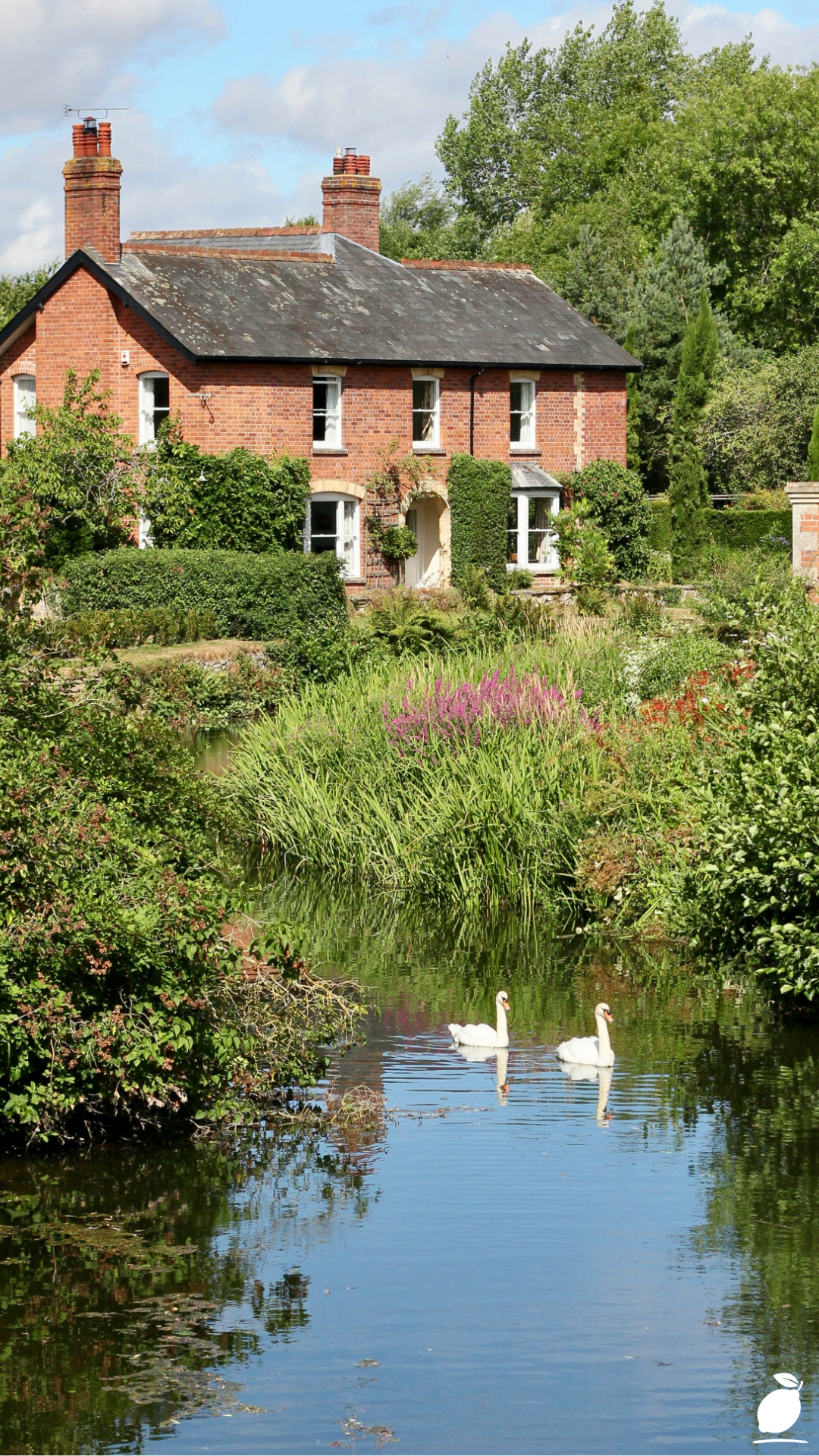
There is a reason the cottage garden aesthetic has persisted for centuries and continues to be one of the most searched styles in the world. Cottage garden layouts, when they work, create spaces that feel like nowhere else on earth.
For families, a cottage garden layout transforms the relationship between the home and the outdoors. Children raised with climbing roses at the front door and self-seeding foxgloves threading through the borders develop an intimacy with seasonal change, with plant life, with the rhythms of the gardening year that stays with them.
Cutting flowers from your own cottage border and bringing them inside is a small act with an outsized effect on the feeling of a home. It makes it warmer, more personal, more alive in a way that buying flowers from a shop never quite replicates. The cottage garden layout is one of the most generous gifts you can give to the daily texture of family life.
Frequently Asked Questions
What is the easiest cottage garden layout for a beginner?
The house-wall anchor layout is the most beginner-friendly cottage garden layout because it uses the house itself as the structural backbone, eliminating the need to build or install additional structures. Plant one or two climbing roses against the wall, fill a border at its base with a mix of perennials including foxgloves, hardy geraniums, and catmint, and maintain a simple lawn in front. It is achievable in a single season and improves dramatically year on year as the climbers establish.
How much space do I need for a cottage garden layout?
Cottage garden layouts scale remarkably well. A strip border three feet wide and twelve feet long is enough to create a genuine cottage garden effect if the planting is generous and layered. Front gardens as small as fifteen square feet have been transformed into full cottage garden compositions. The key is density and layering, not size. A small, abundantly planted space reads as more cottage garden than a large but sparsely planted one.
How do I maintain a cottage garden layout without it becoming overwhelming?
The most manageable cottage garden layouts are maintained through little and often rather than occasional major interventions. A weekly twenty-minute walk through the garden to deadhead spent blooms, tie in a wayward rose stem, and pull the most obvious weeds keeps the layout looking intentional without requiring heavy labor. The dense planting that defines the cottage style is also its best weed suppressant. Established plants leave little room for weeds to take hold.
Which climbing roses work best for cottage garden layouts against a house wall?
For a house wall, choose repeat-flowering climbing roses rather than once-blooming ramblers to ensure color through the season. Excellent choices include Rosa ‘New Dawn’ (pale pink, fragrant, vigorous), Rosa ‘Compassion’ (apricot-salmon, strongly fragrant), Rosa ‘Climbing Iceberg’ (pure white, prolific), and Rosa ‘Madame Alfred Carrière’ (soft white-pink, shade-tolerant and ideal for north-facing walls). All produce the cascading, abundant bloom that defines the cottage aesthetic.
Can I create a cottage garden layout on a budget?
Absolutely. The most cost-effective approach is to start with a few key structural plants, one climbing rose, three or five of a reliable perennial like hardy geraniums or catmint, and then rely on self-seeding biennials like foxgloves, aquilegia, and honesty to fill the gaps inexpensively. Joining a local garden society or online plant-swapping group provides access to divided perennials and surplus seedlings at no cost. The cottage garden style rewards patience: a border planted modestly in year one is frequently stunning by year three as plants establish, spread, and begin to seed themselves through the layout.