Most backyards don’t fail from neglect. They fail from indecision. You buy a bistro set because it looks good in the shop, add a string of lights because everyone does, inherit a plastic storage box that never quite hides, and gradually accumulate a collection of outdoor items that don’t speak to each other. The space is technically furnished but emotionally inert, functional without being inviting, occupied without feeling owned. You walk past the back door on a summer evening and don’t stop. There’s no pull. Nothing says sit here, stay a while, this was made for you. That specific absence of atmosphere, of intention, is what most backyard makeovers are actually trying to fix, even when they don’t name it that way.
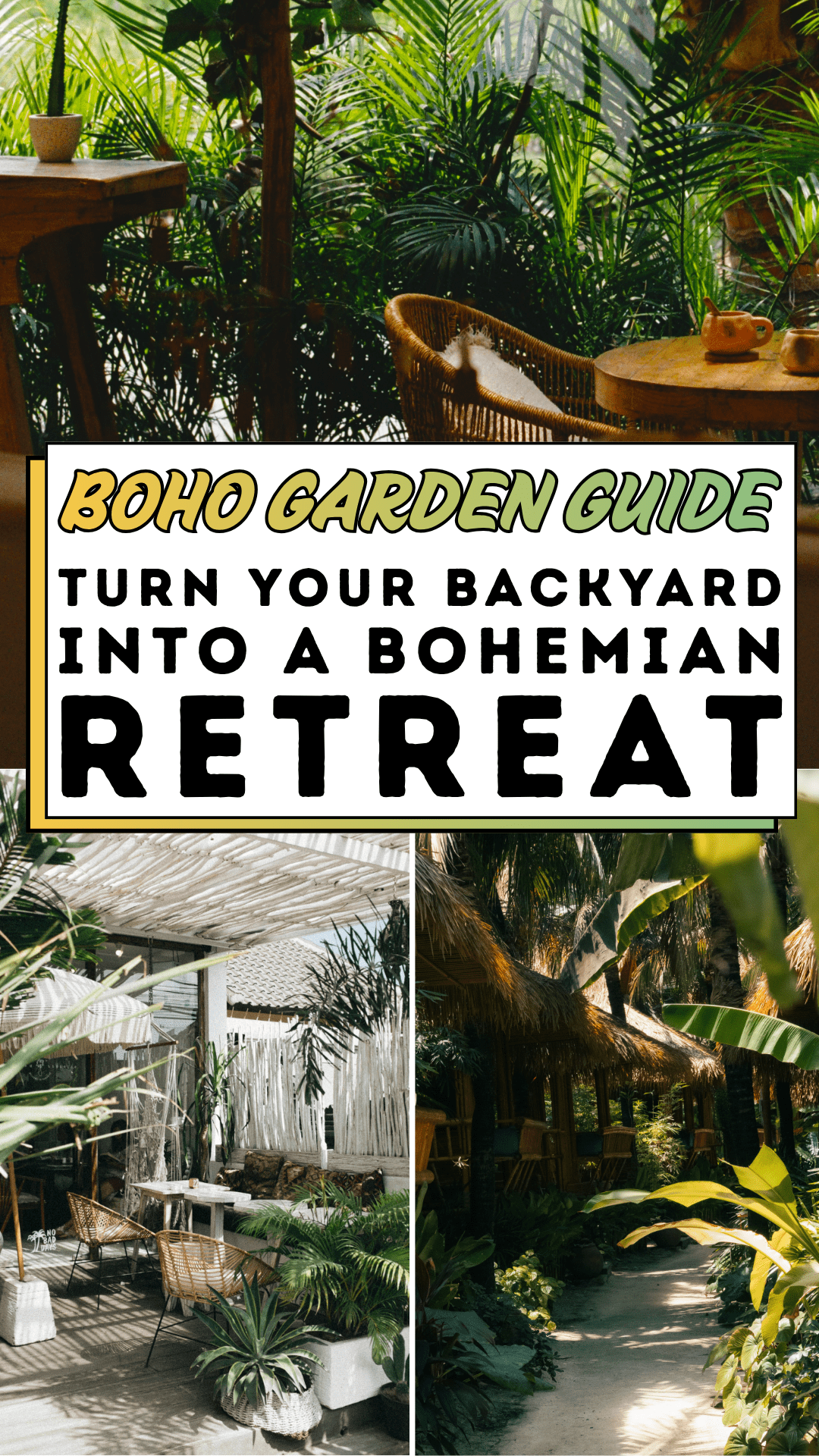
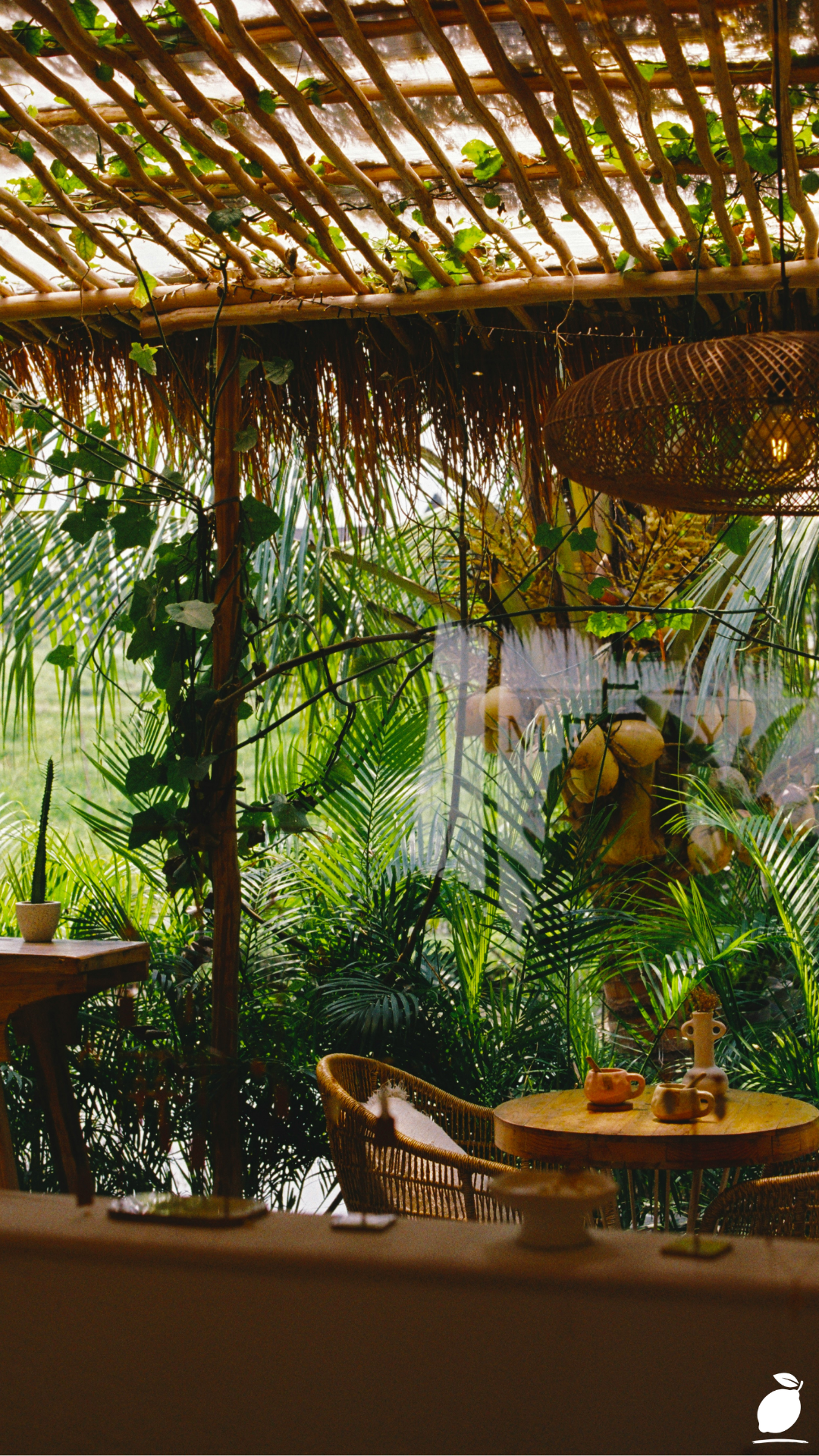
The bohemian aesthetic solves this problem not by adding more but by adding deliberately. A boho garden guide is fundamentally a guide to layering materials, textures, plants, and light in a way that creates a sense of organic richness without visual chaos. The tropical garden in the image above demonstrates the principle precisely: a wooden pergola with climbing vines overhead, a woven rattan pendant light catching filtered sunlight, a round wooden table with a wicker chair positioned in lush greenery, and dark walls partially visible through dense palm fronds. Every element is natural, every texture is warm, every layer adds depth without clutter. It looks like it grew rather than was arranged, and that effortless quality is the specific outcome a good boho garden guide produces.
The encouraging truth about a bohemian backyard is that it rewards imperfection and improvisation more than most design styles do. Mismatched chairs become character. Second-hand lanterns become patina. A fast-growing vine over a timber frame becomes exactly the kind of atmospheric canopy that takes a professional landscaper three years to achieve intentionally. What this boho garden guide gives you is the framework, the specific elements, the layering logic, and the plant choices that turn those happy accidents into a coherent, beautiful outdoor retreat. Your backyard is already closer than you think.
The Boho Garden Guide
Wooden Pergola or Overhead Structure
Why it works: Every successful bohemian outdoor space has a sense of enclosure overhead, something that defines the space as a room rather than a section of ground. A wooden pergola is the single highest-impact structural addition in any boho garden guide because it simultaneously creates shade, provides a framework for climbing plants and hanging lights, and establishes the warm, natural material palette that the entire aesthetic builds from. Cedar, pine, and reclaimed timber all work beautifully and weather to a silver-grey that reads as perfectly boho without any maintenance. For smaller backyards or renters, a freestanding pergola kit or a bamboo frame achieves the same overhead enclosure effect without requiring permanent foundations.
Climbing and Trailing Vines
Why it works: A boho garden guide without vines is a pergola without soul. Climbing plants threaded through a pergola’s lattice, as visible in the featured image, where green climbers soften every structural line, are what transform timber and joinery into a living, breathing canopy. Jasmine brings fragrance and dense white flowering coverage from spring through summer. Passion flower produces extraordinary architectural blooms and establishes rapidly. Climbing roses offer seasonal drama and the specific romantic quality that sits at the heart of bohemian garden aesthetics. For faster coverage, Virginia creeper or climbing hydrangea will cover a 3-metre span in a single growing season. Allow vines to grow freely rather than training them into rigid lines; the loose, organic cascade is the point.
Woven and Rattan Lighting
Why it works: Lighting is where a boho garden guide moves from daytime to evening atmosphere, and the choice of fixture defines the mood entirely. The large woven rattan pendant in the featured image hanging from the pergola center, its organic texture catching dappled afternoon light, is the piece that makes the space feel curated rather than assembled. Rattan, seagrass, and wicker pendants designed for outdoor use bring the warmth and texture of indoor bohemian interiors outside, blurring the boundary between the two in a way that synthetic or metal fixtures never achieve. Supplement pendants with string lights threaded through vine-covered overhead structures, ceramic lanterns on tables, and solar-powered stake lights placed deep in planting beds for layered illumination at every height.
Natural Wood and Rattan Furniture
Why it works: The furniture palette in any boho garden guide centers on natural materials with visible texture and warmth, wood, rattan, wicker, and cane rather than aluminum, resin, or polished steel. The round wooden table and wicker chair in the featured image read as organic extensions of the garden rather than items placed within it, which is the precise effect bohemian furniture selection aims for. Round tables are specifically valuable in boho garden spaces because they create an egalitarian, communal quality, no head of table, no hierarchy, that suits the relaxed, unhurried atmosphere of the style. Mix furniture pieces rather than buying matching sets: a cane chair beside a teak stool beside a woven ottoman creates the layered, collected quality that defines bohemian interiors extended outdoors.
Lush Tropical and Architectural Plants
Why it works: The planting scheme in a boho garden guide prioritizes density, variety of texture, and bold foliage over ordered, symmetrical bedding. The background of the featured image, a wall of palm fronds, deep green tropical foliage, and layered planting that creates a sense of jungle depth, is what makes the furniture and lighting feel embedded in nature rather than placed in a garden. For temperate climates, the tropical effect is achievable with large-leafed plants like Fatsia japonica, Gunnera, Trachycarpus palms, and Tetrapanax, which all survive cold winters while delivering the lush, dramatic foliage that drives bohemian garden atmosphere. Banana plants in large containers, moved under cover in winter, add the most immediately tropical effect of any single plant choice.
Layered Textiles and Outdoor Soft Furnishings
Why it works: No boho garden guide is complete without textiles, the element most often omitted from outdoor spaces and most immediately responsible for making them feel like rooms rather than arrangements of furniture. Weather-resistant cushions in warm earthy tones, outdoor throws in natural weave, kilim-style floor cushions on a covered seating area, macramé wall hangings on a fence or pergola post, and textiles introduce pattern, softness, and the specific intimate quality that distinguishes a bohemian outdoor room from a standard patio setup. Choose fabrics in terracotta, rust, mustard, forest green, and natural linen tones to create a warm, earthy palette that unifies every element in a boho garden guide into a coherent visual whole.
Terracotta Pots and Eclectic Container Planting
Why it works: Container planting in a boho garden guide is as much about the vessel as the plant. Terracotta pots in varying sizes, aged ceramic bowls repurposed as planters, woven basket liners around plain nursery pots, hand-painted clay containers, and concrete vessels of different heights. The eclectic mix of containers is a deliberate aesthetic choice that creates the visual interest of a curated collection rather than a uniform row. Group containers in odd numbers at varying heights, clustering them densely in corners and along walls. The negative space of the wall or fence behind a cluster of pots becomes part of the composition, and the shadows cast by varied pot shapes add a further layer of visual texture that flat, uniform container rows simply cannot produce.
Macramé, Hammocks, and Hanging Elements
Why it works: Vertical space is the most underused dimension in backyard design, and a boho garden guide uses it fully. Macramé plant hangers suspended from pergola beams at varying heights bring planting to eye level and above, adding the dimensional layering that distinguishes bohemian spaces from conventional garden layouts. A hammock strung between two mature trees or a purpose-built hammock stand immediately establishes the unhurried, retreat quality that is the emotional core of any boho garden guide. Wind chimes in natural materials, bamboo, ceramic, and driftwood add sound to the sensory palette. Dream catchers, woven wall hangings, and botanical wreaths on fence panels or garden walls bring the interior bohemian aesthetic into the outdoor space without any structural intervention required.
Expert Secrets for Success
Pro-Tips for Better Results
Start with the overhead structure and build downward. The most common sequencing mistake in boho garden design is furnishing and planting before the overhead canopy is in place, and then discovering that everything chosen at ground level reads differently once the pergola or frame is added. In any boho garden guide, the overhead structure defines the space and establishes the material tone. Build or install it first. Let it stand for a week. Then make every subsequent choice in its presence, which gives you accurate context for scale, shade level, and visual weight.
Embrace weathering as a design asset. Bohemian garden aesthetics depend on the patina of natural materials over time, the silver-grey of weathered timber, the moss that begins to form on terracotta, and the way rattan softens and deepens in outdoor conditions. Resist the instinct to seal, paint, or restore natural materials to their original state. A boho garden guide that works with the weathering process rather than against it produces a space that improves with each season rather than requiring annual restoration to maintain its original appearance.
Layer your planting in three height tiers. The lush, immersive quality of the garden in the featured image comes from planting that operates simultaneously at ground level, mid-height, and overhead. Groundcover plants and low container clusters at floor level, mid-height shrubs and large container specimens at waist to shoulder height, and climbing plants reaching into and over the overhead structure at ceiling height. All three tiers working together create the depth and enclosure that make a boho garden feel like a destination rather than a backdrop.
Common Mistakes to Avoid
Don’t confuse eclectic with random. A boho garden guide achieves its richness through deliberate variety within a unified material and color palette, not through the absence of curation. Every element should share at least one quality material, color family, or texture with the elements around it. The featured image is visually cohesive because everything in it is natural, warm, and organic in form. Adding a bright white plastic chair or a chrome-finished side table would immediately break the palette’s coherence, regardless of how good either piece might look in a different context.
Don’t underplant. The single most common reason a boho garden guide fails in execution is insufficient planting density. A bohemian backyard with sparse or widely spaced plants looks like a conventional garden with bohemian furniture in it. The atmosphere, the sense of being enclosed by green, of nature pressing in from every angle, requires genuine planting density. Buy more plants than feels necessary. Group them more closely than feels comfortable. A boho garden that looks slightly overgrown at installation looks exactly right within a single growing season.
Don’t neglect nighttime atmosphere. A boho garden guide that doesn’t address evening lighting produces a space that is beautiful by day and invisible by night, which means it only functions for half the available time. Warm-toned lighting at multiple heights overhead, pendants, string lights woven through vines, candles in lanterns on tables, ground-level solar lights in planting beds, is what makes a bohemian outdoor space genuinely usable and atmospheric after dark. Plan your lighting at the design stage, not as an afterthought once everything else is in place.
Why a Boho Garden Matters
The outdoor spaces we create around our homes are not decorative extras. They are environments that shape how we feel at the beginning and end of each day, the view from the kitchen window in the morning, the place we gravitate toward after work, the backdrop for the conversations that matter. Research in restorative environment theory identifies natural, biodiverse settings with a sense of enclosure and refuge as the conditions most reliably associated with psychological recovery from stress. The specific conditions, it turns out, are that a well-executed boho garden is created by design. The lush planting, the overhead canopy, the warm natural materials, these are not stylistic preferences. They are restorative environmental conditions that happen to be beautiful.
For families, a bohemian backyard creates something even more specific: a space that operates without rules. No one has to sit at the patio table correctly. The hammock is for anyone. The floor cushions are for sprawling. The garden that grows in and around the furniture invites touching, noticing, and the kind of unhurried attention to the physical world that both children and adults are increasingly deficient in. A boho garden doesn’t demand that you perform leisure correctly. It simply makes being outside feel better than being inside, which is, when you examine it, a profound and undervalued gift to give a household.
Easy Peasy Life Matters is rooted in the conviction that a deliberately created home environment is one of the most impactful things a person can build. A boho garden retreat is that conviction made physical, a space layered with intention, natural beauty, and the specific atmosphere of a life lived at a considered pace. This guide is how you build it. The backyard is waiting.
Frequently Asked Questions
How do I create a boho garden on a tight budget?
The most cost-effective boho garden guide approach prioritizes salvage, repurposing, and plants over new purchases. Source furniture from second-hand markets, Facebook Marketplace, and charity shops. Worn rattan and weathered timber look better in bohemian settings than new pieces anyway. Grow climbing plants from cuttings or seed rather than buying established specimens. Use terracotta pots from discount homeware stores rather than designer planters. DIY macramé hangers from basic cotton rope, following free online tutorials. A boho garden built on a budget of repurposed and natural materials often looks more authentically bohemian than one assembled from new purchases precisely because the patina and variety are genuine rather than manufactured.
Can I create a boho garden in a small courtyard or urban backyard?
A boho garden guide translates particularly well to small spaces because the aesthetic depends on density and layering rather than scale. A 3 x 4 metre courtyard with a freestanding pergola frame, dense container planting, hanging macramé at multiple heights, and warm lighting at every level can deliver the full immersive atmosphere of the tropical garden in the featured image. Vertical planting, wall-mounted planters, climbing plants on every available trellis, hanging baskets at pergola height, is the key technique for achieving jungle density in a small urban space without floor area to spare.
What are the most low-maintenance plants for a boho garden aesthetic?
The most reliable low-maintenance plants for a boho garden guide are those with bold, structural foliage that performs without constant deadheading or intervention. Fatsia japonica delivers large, architectural leaves and thrives in shade with almost no care. Stipa and Pennisetum grasses add movement and a feathery texture that suits bohemian planting schemes and require only an annual cut-back. Hardy ferns create lush groundcover in shaded areas. Trachycarpus palms are fully hardy in temperate climates and grow slowly into the statement specimen plants that anchor boho container arrangements for years. For climbing coverage, Virginia creeper establishes quickly, covers expansively, and turns an extraordinary fiery red in autumn before losing its leaves, providing seasonal drama with zero intervention required.
How do I make my boho garden weatherproof for year-round use?
Year-round use requires addressing three seasonal vulnerabilities: rain, cold, and wind. A pergola with a transparent polycarbonate or canvas roof panel over the primary seating area maintains dryness without sacrificing the open, natural quality of an uncovered frame. Outdoor-rated textiles in solution-dyed acrylic (Sunbrella and equivalent fabrics) handle rain and UV exposure equally well and can be left out year-round in most temperate climates. A patio heater or chiminea extends comfortable outdoor evenings into autumn and early spring. For plants, choose a backbone of hardy species as listed above and treat tender specimens as seasonal additions in containers that can be moved under cover when temperatures drop.