The tree looked perfect in the nursery. Compact, well-shaped, nicely labeled with a mature height that seemed entirely manageable. Three years later, it is still compact and nice, but you have started noticing things. A section of the front path has risen slightly at one edge. A small crack in the render near the base of the garden wall that was not there last spring. And the plumber, when he came for an unrelated job, pointed at the soil near the front boundary and mentioned, in the way tradespeople mention things they know you do not want to hear, that he had seen that species cause problems with older drain pipes in the area. The tree is beautiful. The conversation that has started about what happens if its roots reach the foundations is not.
The front yard tree decision is one of the most consequential choices in residential gardening, and it is almost always made with insufficient information at the wrong point in the process at the garden center, in spring, when everything is in bloom, and nothing feels like a threat. The label says “compact and suitable for small gardens,” but does not mention root behavior, pipe sensitivity, foundation risk, or the specific behavior of roots in the clay soil of your particular street. By the time the consequences become visible, the tree is established, and the intervention removal, root barrier installation, and pipe relining are both disruptive and expensive. The decision that felt like a garden improvement has become a property maintenance issue.
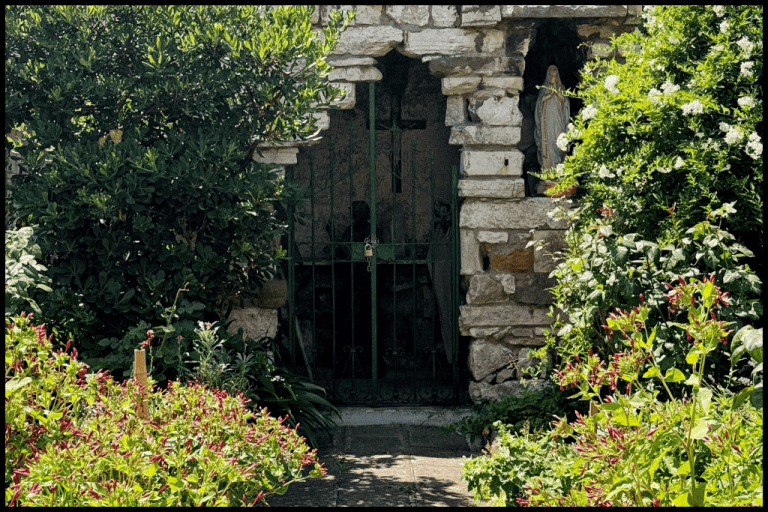
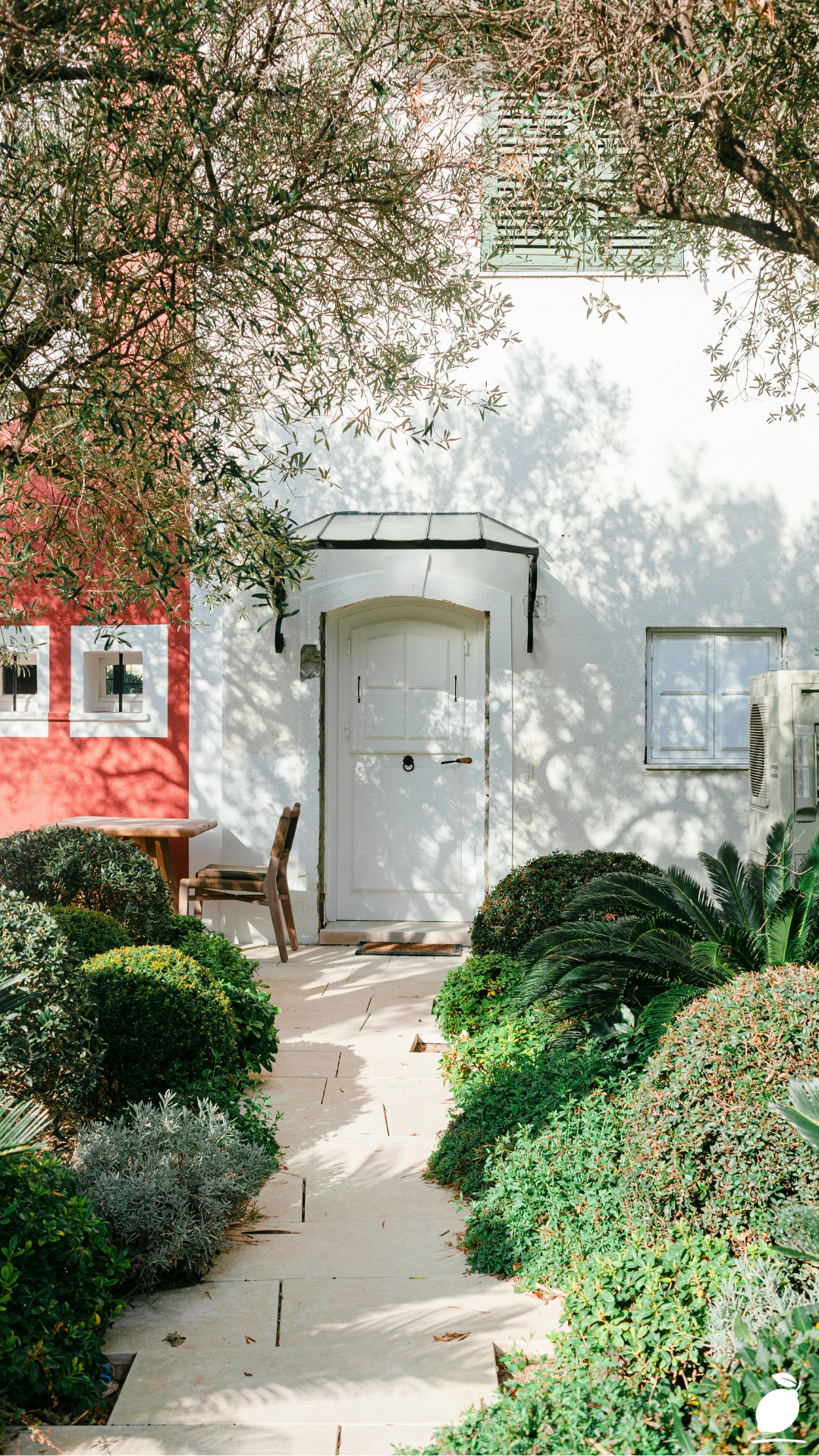
The Mediterranean garden pathway in the image offers a different story. An olive tree arching naturally over the path, casting dappled afternoon shadows on the stone tiles, its canopy creating the natural shelter and structure that makes the entrance feel like a garden rather than a frontage, and doing all of this without threatening the path beneath, the walls alongside, or the pipes below. The olive tree is exactly what it looks like: a small tree with a long history of coexisting with stone, tile, and building fabric because its roots are non-invasive by nature. It is not the only small tree with this quality. Here is the complete guide to the ones that earn a place in the front yard without putting anything else at risk.
The Small Trees Guide
The title calls for a plant roundup, a curated selection of the best small trees for front yards with genuinely non-invasive root systems, chosen for beauty, manageable mature size, landscape value, and the specific quality of root behavior that makes them safe near paths, walls, drains, and foundations. Each entry includes why it works in the front yard context specifically, not just as a garden specimen in isolation.
Olive Tree (Olea europaea)
The olive tree is the quintessential Mediterranean small tree for front yards, the exact tree creating the canopy effect over the stone pathway in the image, and the one most consistently recommended by landscape architects for pathway and entrance planting in warm, dry climates. Its root system is notably non-invasive: fibrous rather than tap-rooted, drought-adapted to grow efficiently rather than widely, and reliably compatible with paving, paths, and building fabric when planted at a sensible distance. Mature height in a garden setting is typically 3 to 8 meters, depending on variety and management, with ‘Arbequina’ and ‘Picual’ among the most compact and best-suited to small front yards.
Why it works: The olive tree, as a small tree for front yard planting, delivers an extraordinary combination of aesthetic value, practical safety, and seasonal interest. Its silver-grey foliage filters light in a way that creates the dappled, shifting shadow quality seen in the image, softening the entrance, moderating afternoon heat, and framing the pathway without overwhelming it. Its root system has been coexisting with Mediterranean stone architecture for millennia and is among the most reliably non-invasive of all small trees at equivalent canopy size. In a front yard where the entrance path, the house wall, and the underground drainage all need protection, the olive tree is the tree most likely to provide decades of canopy value without a single infrastructure concern.
Japanese Maple (Acer palmatum)
Japanese maples are among the most refined and most reliably compact small trees available to front-yard gardeners. Their delicate, multi-lobed leaves in shades from fresh spring green through deep burgundy and fiery autumn orange make them four-season performers that no other small tree of equivalent size matches for sheer visual interest. They are slow-growing, reaching 2 to 4 meters at maturity in most garden varieties, and their root systems are notably shallow and non-invasive. They establish from a compact root ball that expands gradually with the canopy rather than aggressively exploring the surrounding soil.
Why it works: Japanese maple, as a small tree for front yard planting, solves the specific problem of the front yard that needs a specimen plant with year-round impact in a restricted space near the house or path. Its slow growth rate means canopy size is manageable for years without pruning, and its non-invasive root behavior makes it one of the safest small trees for planting within two to three meters of a path, wall, or drain. Varieties like ‘Bloodgood’ (deep burgundy, upright), ‘Sango-kaku’ (coral bark, golden autumn), and ‘Crimson Queen’ (weeping, deep red) each provide a different spatial character, allowing the choice of a small tree to match the scale and style of the specific front yard.
Crab Apple (Malus sylvestris and ornamental hybrids)
Ornamental crab apple trees are one of the most productive and most visually generous small trees for front yards, producing a spectacular display of blossom in spring, followed by fruit that persists through winter and feeds birds through the hungriest months. They are compact by nature, reaching 4 to 6 meters in most ornamental varieties, and their root systems are classified as non-invasive fibrous, contained, and reliably safe near the paths and drains common to front yard planting positions. ‘Red Sentinel’, ‘Evereste’, and ‘Golden Hornet’ are the most reliably compact and most structurally beautiful ornamental varieties.
Why it works: Crab apple, as a small tree for front yard planting, provides the full seasonal arc that most small trees offer only in part: dramatic spring blossom that rivals flowering cherry without the scale, summer foliage and developing fruit, and persistent winter berries that give the front yard color and wildlife value through the bleakest months. Its non-invasive root system makes it a practical choice as well as a beautiful one, one of the small trees that delivers genuine landscape value without the infrastructure risk that larger, more vigorous species carry.
Silver Birch (Betula pendula) Compact Varieties
Standard silver birch grows tall enough, 15 to 25 meters, to disqualify it from most front yard small trees conversations. Compact columnar varieties developed for exactly this application, ‘Fastigiata’, ‘Doorenbos’, and the particularly refined ‘Grayswood Ghost’ reach 6 to 8 meters in height but only 2 to 3 meters in width, providing the elegant white bark and delicate canopy of a birch without the spread that puts paving and pipes at risk. Silver birch root systems are classified as non-invasive; they do not produce the aggressive, pipe-seeking lateral roots associated with willows, poplars, and some fruit trees.
Why it works: Columnar silver birch as a small tree for front yard planting solves the specific need for vertical emphasis without horizontal spread, the architectural tree that gives the front yard height and structure in a narrow footprint. The white bark reads as a year-round feature against both light and dark backgrounds, the delicate leaf canopy provides summer shade without the density that blocks light to ground-level planting beneath, and the autumn color of birch, clean, clear gold, is among the most reliably beautiful of any small tree at this scale. Planted near a pathway, columnar birch frames the arrival without threatening it.
Magnolia (Magnolia stellata and compact hybrids)
Star magnolia, Magnolia stellata, is the small tree choice for front yard gardeners who want a single moment of overwhelming floral impact in early spring and are content with relatively low-key but attractive behavior for the rest of the year. It reaches 2 to 4 meters over many years, flowers profusely on bare branches before the leaves emerge, and produces roots that are fleshy but compact, non-invasive, and specifically sensitive to disturbance, a quality that makes them unlikely to seek out drains or crack paving because they grow toward stability rather than away from it.
Why it works: Magnolia stellata, as a small tree for front yard planting, delivers the single most dramatic early-spring flowering moment available at this compact scale. The white star-shaped flowers covering bare branches in late February and March make the front yard a genuine destination before any other plant in the neighborhood has woken up. Its slow growth and compact root system make it one of the safest small trees for planting in a restricted front yard space, and its preference for undisturbed roots means it will not aggressively seek out the soil surrounding it once established in a suitable position.
Amelanchier (Juneberry / Snowy Mespilus)
Amelanchier lamarckii is one of the most comprehensively rewarding small trees for front yards, producing clouds of white blossom in early spring simultaneously with its copper-bronze new foliage, summer berries that ripen blue-black and attract birds, rich red-orange autumn color, and an elegant multi-stem structure with attractive smooth bark that reads as interesting through winter. It reaches 4 to 6 meters in height with a naturally graceful, open canopy. Its root system is fibrous, non-invasive, and among the most garden-safe of all flowering small trees.
Why it works: Amelanchier, as a small tree for front yard planting, provides four genuinely distinct seasons of landscape value: spring blossom, summer fruit, autumn color, winter structure in a package that is completely compatible with paths, drains, and building fabric. It is the small tree most frequently described by garden designers as a “perfect all-rounder” because it asks relatively little of a reasonably moist, acidic to neutral soil and occasional formative pruning and returns consistent, multi-seasonal beauty across every year of its life. For a front yard where the investment in a small tree needs to pay dividends every month, Amelanchier is the most reliably rewarding choice.
Expert Secrets for Success
Pro-Tips for Better Results
- Check the mature canopy spread, not just the height. Most front yard small tree problems arise not from height but from canopy width, a tree whose mature spread extends over the path, into the neighbor’s airspace, or across the house wall. The mature height printed on a nursery label is rarely the most useful measurement. Research or ask specifically about mature canopy spread and minimum planting distance from structures for any small tree under consideration.
- Plant small trees in autumn for best establishment. Autumn planting, September through November in temperate climates, allows small trees to establish roots through the winter while the soil is warm and moist, giving them a significant growth advantage in their first spring compared to spring-planted specimens. Autumn-planted small trees typically establish faster, require less supplementary watering in their first summer, and show noticeably better growth in their second season.
- Install a root barrier for any small tree planted within two meters of a drain. Even non-invasive root systems will follow moisture toward a leaking or porous pipe if no alternative moisture source is available. A vertical root barrier 60cm deep, installed as a semicircle on the drain side of the small tree planting position, prevents roots from tracking toward underground drainage without limiting root development in other directions. This precaution costs very little and eliminates the small risk that even non-invasive small trees carry in proximity to older drainage.
- Stake small trees for the first two seasons only. Small trees staked rigidly for extended periods develop weak trunk bases because they are prevented from the natural movement that builds structural wood. Use a low, single stake at an angle of 45 degrees to the prevailing wind, attached to the tree trunk at no higher than one-third of its height. Remove the stake after two growing seasons, when the root system is sufficient to anchor the tree without assistance.
- Mulch generously around the base, never against the trunk. A 10cm layer of composted bark mulch applied in a circle of 1 meter diameter around newly planted small trees retains moisture, moderates soil temperature through the critical first summer, and suppresses the weed competition that is most damaging to young tree establishment. The mulch must be kept clear of the trunk itself; touching the bark encourages collar rot and provides cover for rodents that damage bark at the base of small trees.
Common Mistakes to Avoid
- Planting small trees too close to the house wall. Even non-invasive small trees planted within one meter of a house wall create ongoing management problems: canopy contact with the wall surface, moisture accumulation against the render or brickwork, and the eventual need to remove the tree before the canopy causes physical damage to the building fabric. Plant any small tree a minimum of 2 meters from the wall, and 3 meters for trees with a canopy spread above 4 meters at maturity.
- Choosing a tree based on its current nursery size. A small tree in a 10-liter container at the garden center may reach 6 meters in fifteen years. Purchasing based on current size rather than researched mature dimensions is how front yards end up with trees that outgrow their position, threaten paving, and require expensive removal or severe management pruning. Research mature dimensions before purchasing, not after planting.
- Planting in waterlogged soil without improving drainage. Most small trees perform adequately in a range of soil conditions, but very few tolerate persistent waterlogging. Standing water around the root zone of a small tree causes anaerobic conditions that prevent root respiration, leading to a gradual decline that manifests as poor leaf color, reduced growth, and eventual dieback. Improve drainage before planting by incorporating grit into the planting area, installing a French drain alongside, or raising the planting level in a generous mound.
- Neglecting formative pruning in the first three years. Small trees left unpruned in their early years develop crossing branches, unbalanced canopy structure, and competing leaders that create weak junctions vulnerable to wind damage in later years. A simple annual formative pruning session in the first three years, removing crossing stems, selecting a clear central leader where appropriate, and balancing the canopy distribution, takes thirty minutes and determines the structural quality of the tree for its entire life.
- Treating all “small” or “compact” labels as equivalent. “Small tree” as a nursery category encompasses plants from 2 meters to 10 meters at maturity, and “compact” is applied liberally to varieties that are simply smaller than their standard counterparts rather than genuinely compact in the front yard context. Always verify the specific mature dimensions of the exact variety being purchased, not the species in general, but the cultivar on the label. Two meters of difference in mature height and canopy spread is the difference between a tree that works in a small front yard and one that eventually dominates it.
Why Small Trees Matter
A front yard with a well-chosen small tree is a different kind of front yard from one without, not marginally improved but categorically transformed. Small trees provide the vertical structure that ground-level planting cannot: the canopy that frames the entrance from above, the shade that moderates afternoon heat on the path and the house wall, the seasonal change that gives the front yard a rhythm and a character across the full year. They are the element of a front garden that earns its presence every day, not just in peak season, not just in the flowering moment, but in every season, in every weather, in the particular quality of shadow they cast on a bright afternoon and the silhouette they create against a winter sky.
For families, a small tree in the front yard is a landmark, a thing that makes the house immediately identifiable from the street, that children describe to their friends, that guests reference when they are trying to find the house for the first time. The Japanese maple with the burgundy leaves. The magnolia that blooms before anything else in February. The olive tree that the afternoon light passes through in a way that makes the path beneath it look like a photograph. These are not just plants. They are the defining visual identity of a home, visible from the street, from the pavement, from passing cars, the first statement the property makes, before the door color, the path surface, and the window boxes all deliver their own smaller contributions.
And for the gardener who chooses and plants them, small trees are the long-term investment that most reliably outlasts the effort of planting. The perennial border needs annual attention. The vegetable patch demands constant rotation and renewal. The small tree, correctly chosen and correctly positioned, asks for relatively little after its first two years of establishment and returns beauty, structure, and landscape value in every season for the following fifty years. That is the best possible ratio of effort to reward available in gardening, and it is the particular gift of choosing the right small tree for the front yard: a single weekend of planning and planting that improves the home, and the life lived in it, for generations.
Frequently Asked Questions
How far should small trees be planted from a house foundation?
The minimum safe planting distance for small trees from a house foundation depends on the mature canopy spread of the species. As a general guideline, plant small trees with a mature spread under 4 meters at a minimum of 3 meters from the foundation; small trees with a spread of 4 to 6 meters at a minimum of 4 to 5 meters. Non-invasive root systems reduce but do not eliminate the risk of root contact with foundations over decades, and maintaining adequate planting distance is the primary safeguard. Always consult species-specific guidance for the exact variety being planted.
Which small trees are safest near underground pipes and drains?
The small trees with the most consistently safe record near underground drainage are olive, Japanese maple, magnolia stellata, amelanchier, and ornamental crab apple. All produce fibrous, non-aggressive root systems that do not seek moisture with the vigor of willows, poplars, and some fruiting trees. For any small tree planted within two meters of a known drain run, install a root barrier on the drain side of the planting position, regardless of the species’ general non-invasive classification, particularly for older, porous clay pipe drainage that may already be leaking moisture that attracts roots.
How do I choose a small tree for a north-facing front yard?
For north-facing front yards with limited direct sunlight, the most reliable small trees are Japanese maple (which prefers partial shade and avoids full sun bleaching of its foliage), amelanchier (which flowers and colors reliably in semi-shade), and magnolia stellata (which benefits from the cooler conditions of a north-facing position that delay flowering and extend the blossom period). Avoid olive trees, ornamental crab apples in deep shade, and any small tree described as “drought-tolerant” or “full sun.” These indicators suggest a sun requirement that a north-facing position cannot meet.
How quickly do small trees establish in a front yard?
Small trees purchased in 10 to 20-liter containers, the most common garden center size, typically take two to three years to fully establish root systems that support vigorous canopy growth. During this period, consistent watering through dry spells, an annual mulch replenishment, and one or two formative pruning sessions are the primary care requirements. By the third season after planting, most small trees are self-sustaining in normal rainfall conditions and begin producing the canopy growth that delivers the visual return on the planting investment. Autumn planting accelerates this timeline by approximately one season compared to spring planting.