The corner of our backyard had been the same for four years. Not neglected, exactly; there was grass there, and some weeds that had been pulled enough times to be manageable, and a fence that looked fine from a distance. But it was the dead zone: the part of the garden that no one walked to, no one sat near, no one thought about deliberately. When guests came over, we gathered on the patio nearest the house. The corner existed the way a lot of overlooked spaces exist: technically present, functionally absent, a reminder that the yard was bigger than our relationship with it. It was the kind of space that makes you feel vaguely guilty every time you look at it on a Sunday afternoon.
The shift started when I began researching backyard corner garden ideas in earnest, not as a casual browsing session but as a genuine project brief, asking the question: what would it take to make that corner worth walking to? The answer that emerged from months of looking at how other people had handled their forgotten outdoor corners was consistently the same: the spaces that worked were the ones that had been given a reason to exist. A destination element a deck, a seating area, a pergola combined with a planted garden bed that created enclosure, a pathway that created arrival, and lighting that made it usable after dark. Backyard corner garden ideas at their most effective are not about filling a corner with plants. They are about creating a room outdoors.
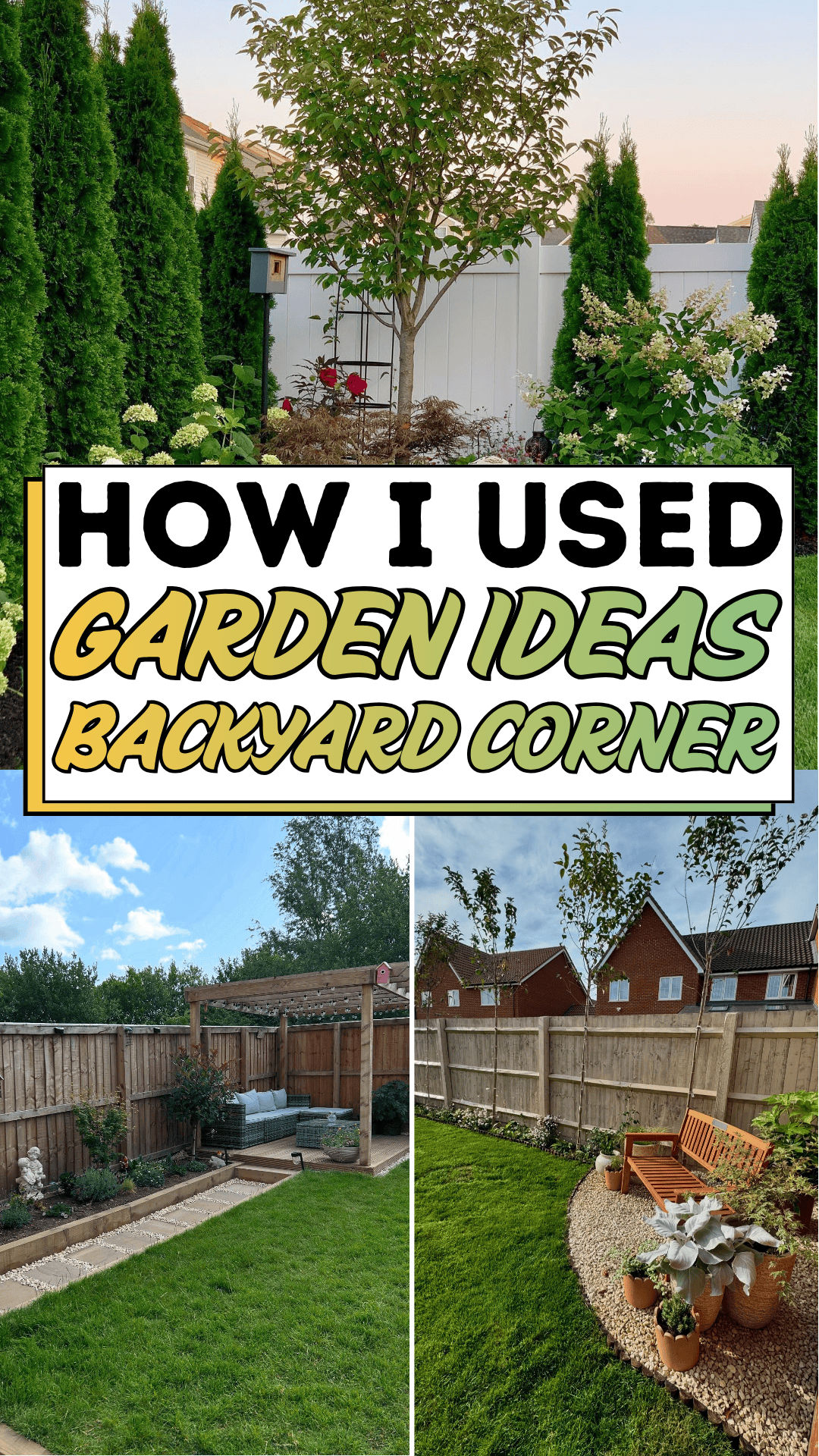
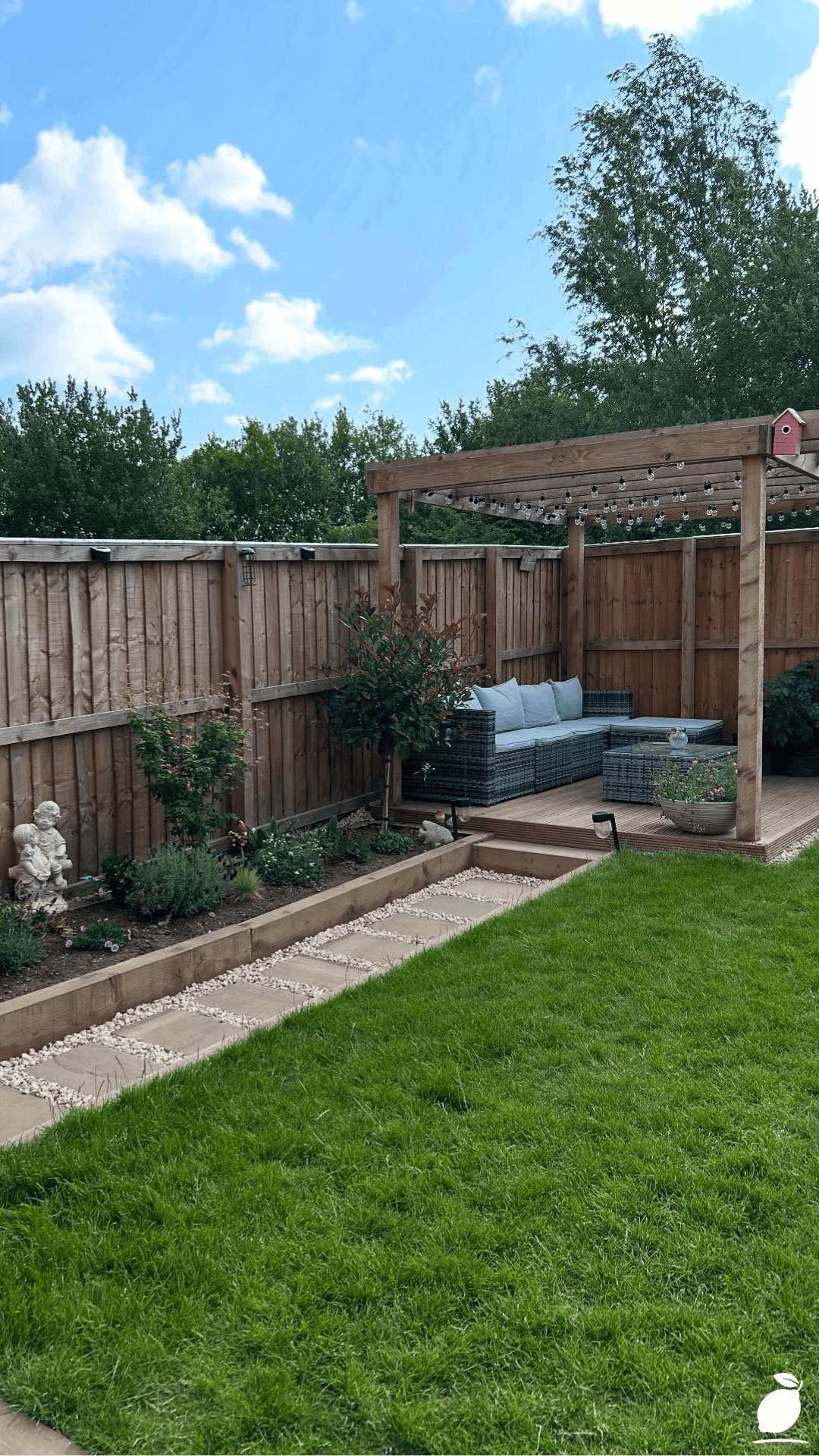
The backyard in the image above is the articulation of exactly that principle. A stone slab and white pebble pathway leads the eye and the foot through a planting bed toward a wooden deck. Above the deck, a pergola with fairy lights creates overhead definition. Comfortable seating with cushions sits beneath it. The wooden fence provides the corner’s structure. Tall trees form the backdrop. Every element in the composition is doing something: guiding, enclosing, welcoming, illuminating. The corner is a destination. This guide covers every step of creating that same quality of backyard corner garden in your own outdoor space, from the first site assessment to the finishing details that make the space feel complete at every hour of the day.
The Backyard Corner Garden Ideas Blueprint
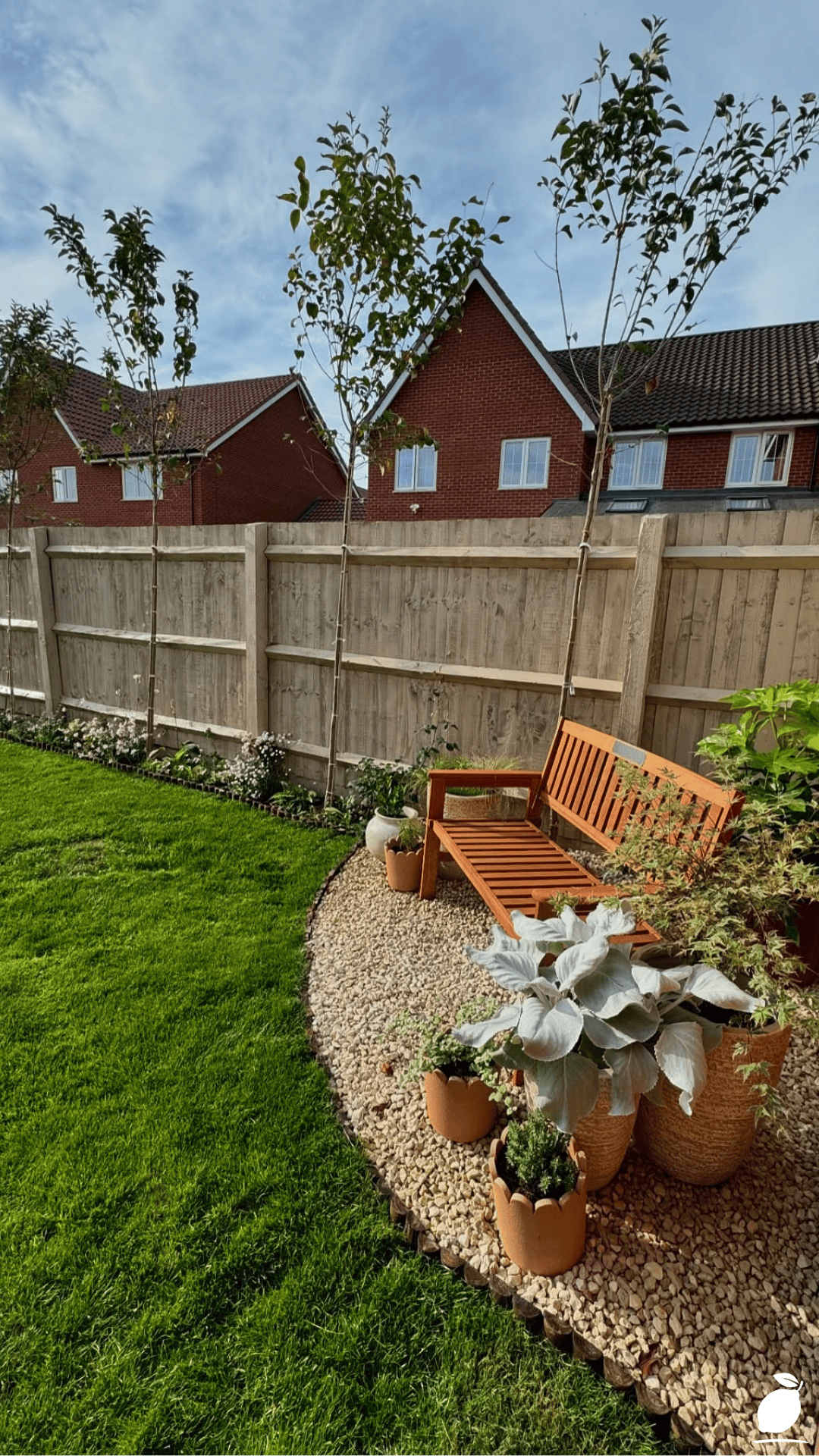
Step 1: Assess the Corner’s Conditions and Potential
Every backyard corner garden ideas project begins with the same first step: a clear-eyed assessment of the corner’s current conditions and the constraints those conditions place on the design. A backyard corner that receives full sun from noon onward has different planting potential than one that sits in the shadow of a boundary fence for most of the day. A corner with an existing mature tree has a different structural logic than a bare corner with only fence lines and grass.
Spend a full day observing the corner at different times: morning sun angle, midday light quality, afternoon shadow patterns. Note the direction of the prevailing wind; a corner that channels wind will need windbreak planting or a pergola with side screening, whereas a sheltered corner doesn’t require. Check soil drainage by digging a 30cm hole, filling it with water, and observing how long it takes to drain. A corner with poor drainage needs raised bed installation or soil amendment before planting; a corner with adequate drainage can be planted directly.
Measure the corner’s dimensions precisely. The angle at which the two fence or wall lines meet determines the geometric options for the pathway and deck configuration. A true right-angle corner produces a different layout logic than an irregular corner created by boundary lines that don’t meet at ninety degrees. Photograph every wall, fence, and existing planting within the corner zone before beginning any design, and photograph the corner from the house’s primary viewpoint the window or door from which the corner will be most often seen. This is the view that the backyard corner garden ideas design must address most directly.
Step 2: Define the Destination Element
The most important decision in any backyard corner garden ideas project is the destination element, the feature that gives the corner a reason to be walked to and a reason to be occupied once you arrive. Without a destination element, a backyard corner garden is a planted zone that people walk past. With one, it becomes a room.
The featured image’s destination element is the combination of a wooden deck and a pergola with fairy lights, a covered seating area that creates both floor definition (the deck surface demarcated from the surrounding garden) and overhead definition (the pergola frame creating the sense of a room with a ceiling). This combination is the most complete and most architecturally satisfying destination for a backyard corner garden ideas project, and it is achievable as a DIY project over two to three weekends for a motivated homeowner with basic carpentry skills.
For backyard corners where a deck and pergola represent more investment than the project allows, a simpler destination element delivers the same spatial principle at lower cost: a gravel or paved seating circle with two chairs and a small table defines the destination without the pergola structure; a single large garden chair under a market umbrella creates arrival without decking. The destination element can be as simple or as substantial as the budget, and the skill set allows; what matters is that it exists, and that it is positioned in the corner’s most sheltered and most visually interesting position relative to the house’s viewpoint.
Step 3: Design the Pathway From the House to the Corner
A backyard corner garden ideas pathway is not merely a practical route; it is the design element that creates anticipation, that signals that the corner is worth walking to, and that gives the garden its sense of spatial sequence. A corner with a destination but no defined path to it remains psychologically disconnected from the rest of the garden. The path is what makes the connection physical and experiential.
The featured image uses a combination of large stone slab stepping stones and white pebble infill, a classic backyard corner garden ideas pathway combination that works because the stone slabs provide the structured, stable stepping surface while the white pebble infill creates brightness, drainage, and the informal, garden-naturalistic quality that a purely paved path doesn’t produce. The path curves gently through the planting bed rather than cutting in a straight line to the deck, a design choice that creates a sense of arrival and exploration rather than simple access.
For backyard corner garden ideas pathways, the general principle is that curved paths feel more naturalistic and more garden-appropriate than straight ones, and that paths that pass through or beside planted areas feel more immersive and more deliberately designed than paths that simply cross open lawn. Design the path to curve toward the destination element, passing close enough to the planting bed that the plants can be enjoyed at close range while walking rather than only seen from a distance.
Material choices for backyard corner garden ideas pathways: natural stone slabs (the most durable and most versatile), brick pavers (warm and traditional), exposed aggregate concrete stepping stones (accessible and long-lasting), or timber sleeper sections (most compatible with a natural and rustic garden aesthetic). White decorative pebble infill works with all of these materials and can be added to any pathway design to increase drainage, reduce weed growth, and brighten the path visually.
Step 4: Create the Garden Bed Around the Corner’s Boundary
The planting bed that frames the backyard corner garden ideas destination element is what transforms a cleared corner into a garden. It is the element that introduces life, color, seasonal change, and the specific quality of natural enclosure that makes a corner seating area feel like a secret garden room rather than simply furniture placed near a fence.
In the featured image, the garden bed runs along the fence line, creating a planted boundary between the structural fence and the open garden space. The planting is a mix of heights: taller plants providing screening and vertical interest, medium-height plants providing the bulk of the garden’s color and texture, and low-growing plants at the bed’s front edge softening the transition between the planting and the pathway. A garden statue within the bed adds a focal point within the planting that creates a secondary point of visual interest alongside the destination deck.
For backyard corner garden ideas planting beds, the most effective approach follows the same height-layering principle: tall structural plants at the back (against the fence), medium ornamental plants in the middle, low groundcover or perennial plants at the front edge. Choose a planting palette of three to five species that share a color family and a climate suitability rating for the corner’s specific light conditions, and plant in groups of three or five of the same species rather than single specimens of many different species; grouping creates the visual coherence that makes a planting bed look designed.
Step 5: Install the Pergola and Overhead Structure
The pergola in the featured backyard corner garden ideas is the element that completes the outdoor room; it provides the overhead plane that makes the seating area feel enclosed and sheltered rather than simply placed in the garden, and it provides the structure from which the fairy lights are hung to create the evening atmosphere that makes the corner usable after dark.
A standard corner pergola for a backyard corner garden ideas project is built from four structural posts anchored to the deck surface or the ground, connected at the top with horizontal beam rails and overhead rafters at regular spacing. For a deck-mounted pergola, posts are bolted to the deck structure using post bases rated to the post’s dimensions. For a ground-mounted pergola, posts are set in concrete footings to a depth that meets local building code requirements for freestanding structures.
Timber pergolas can be painted, stained, or left to weather naturally. The featured image’s pergola is in a natural warm brown timber tone that complements both the fence material and the deck surface, a material consistency that is one of the most important principles in backyard corner garden ideas design, where every structural timber element should belong to the same material family. Cedar and pressure-treated pine are the most widely used pergola timber choices for their durability and their availability in finished dimensional lumber sizes that don’t require additional milling.
Step 6: Install Fairy Lights and Establish the Evening Atmosphere
The fairy lights strung across the featured backyard corner garden ideas pergola are the element that most dramatically extends the corner’s usable hours and most powerfully creates the atmospheric quality that makes the space feel genuinely special after dark. A backyard corner without evening lighting is a daytime-only space; one with warm, ambient lighting becomes an evening destination that adds hours to the outdoor space’s daily usefulness.
For backyard corner garden ideas fairy light installations: outdoor-rated warm white LED string lights with flexible wire are the most versatile and most widely available option. String them in parallel rows across the pergola’s overhead rafters, attaching with small hooks or cable staples at regular intervals. Solar-powered fairy lights are the most convenient installation option where running a weatherproof electrical cable from the house to the corner isn’t practical. Plug-in lights with a weatherproof extension cable and a timer are the most reliable option for consistent nightly illumination without the solar system’s daylight-dependent charging requirement.
Supplement the fairy lights with one or two additional light sources at lower heights: a solar lantern on the deck table, a pair of stake-mounted garden lights along the pathway, or a wall-mounted weatherproof sconce on the fence. Layered lighting at multiple heights produces the warm, atmospheric evening quality that flat overhead illumination alone cannot achieve.
Expert Secrets for Success
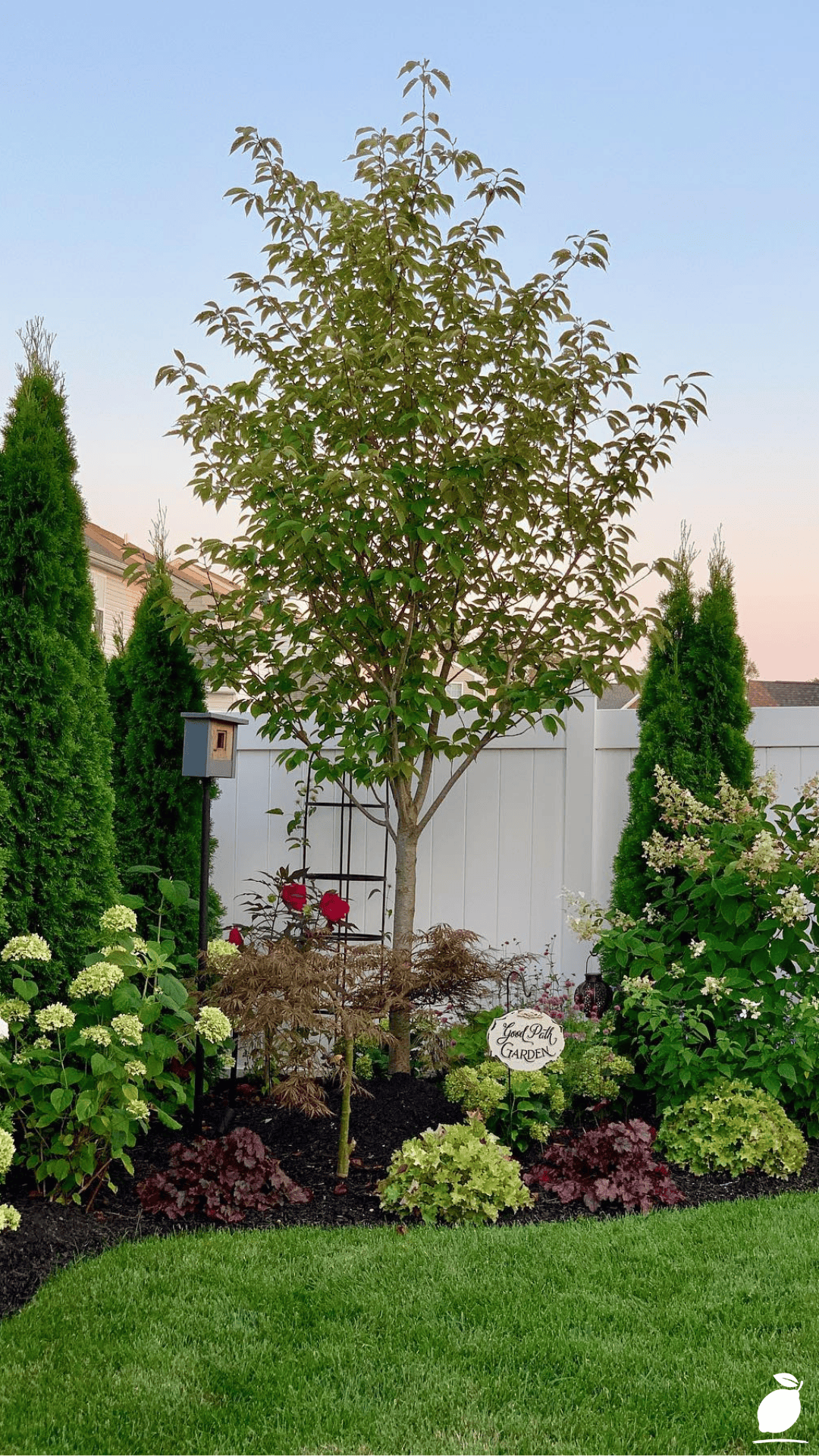
Pro-Tips for a Better Result
Build the pathway before the planting bed. The most consistent sequencing mistake in backyard corner garden ideas projects is establishing the planting bed first and then trying to fit the pathway around it. Building the pathway first, placing the stone slabs and pebble infill before any plants go in, gives you an accurate sense of the space’s proportions and the pathway’s relationship to the destination element, and allows you to adjust the route and the curve before any planting decisions are made. Plants can always be positioned around a completed pathway; a pathway cannot always be routed around established plants without disturbing them.
Choose one consistent timber finish for all structural elements. The visual coherence of the backyard corner garden ideas in the featured image comes significantly from the fact that the fence, the deck, and the pergola all share the same warm brown timber tone. A backyard corner where the deck is painted grey, the pergola is stained dark brown, and the fence is treated with a green preservative reads as three separate elements rather than one unified outdoor room. Choose the same stain, the same paint color, or the same natural weathering approach for all timber elements in the corner at the project’s outset, and apply it consistently across all surfaces.
Plant the garden bed in autumn for the most successful establishment. Autumn planting, when soil temperatures are still warm enough to support root growth but air temperatures have cooled enough to reduce transplant stress, produces significantly better plant establishment rates than spring planting in most temperate climates. For backyard corner garden ideas projects timed toward a summer debut, autumn planting gives establishing plants a full winter and spring root development period before they face the heat stress of their first summer. Plants established through an autumn-to-spring cycle are typically twice the size and twice the drought resilience of equivalent spring-planted specimens by their first summer.
Install weed barrier fabric beneath the pebble infill. Backyard corner garden ideas pathways with white pebble infill that are installed without weed barrier fabric beneath them become weed management projects within one growing season as grass and annual weeds push up through the pebble layer. Install a permeable weed barrier fabric directly on the prepared ground surface before laying the stone slabs and pebble infill; staple it at the pathway edges and at each slab position. The fabric is invisible in the finished pathway and reduces maintenance to an occasional surface tidy rather than regular weed removal.
Common Mistakes to Avoid
Don’t undersize the deck for the intended furniture. The most consistent backyard corner garden ideas deck sizing mistake is building a deck just large enough to hold the furniture without any additional clearance and then discovering that the furniture fills the space so completely that there is no room to pull chairs back from the table, no room to move around the seating area comfortably, and no visual breathing room around the furniture. A deck that reads as comfortable and spacious typically needs to be at minimum 60cm larger in each direction than the furniture footprint it holds. Measure the furniture with chairs pushed back from the table in their occupied position before finalizing the deck dimensions.
Don’t use frost-susceptible materials in planting beds in cold climates. Ceramic garden statues, unglazed terracotta pots, and certain types of decorative stone used in backyard corner garden ideas planting beds are vulnerable to frost damage in climates with hard winters. Water absorbed into porous materials freezes and expands, causing cracking and spalling that deteriorates the object rapidly over multiple freeze-thaw cycles. Choose frost-resistant materials for all outdoor elements that will remain in the garden through winter: cast stone, fiberglass, or resin garden statues; glazed or purpose-built outdoor ceramics; natural stone rather than composite or reconstituted stone for pathway materials.
Don’t plant tall specimens immediately against the fence. Planting tall or fast-growing plants directly against a timber fence in a backyard corner garden ideas project traps moisture between the plant’s stems and the fence surface, accelerating the fungal decay that deteriorates timber fencing from the back surface outward to the side that is most difficult to maintain and re-treat. Leave a minimum 30cm air gap between the fence and the nearest planting, and choose fence-adjacent plants with an open, airy habit that allows air circulation rather than a dense, moisture-retaining growth form.
Don’t install the pergola without checking local permit requirements. Backyard structures above a certain size and height threshold require a building permit in most jurisdictions before installation begins. The threshold varies by municipality, but permanent pergolas those with posts set in concrete footings or bolted to a permanent deck almost always require assessment before construction. A pergola installed without the required permit may need to be removed if discovered during a property inspection or at the point of sale. Check permit requirements specifically for the proposed pergola dimensions and construction method with your local authority before the project begins.
Why Backyard Corner Garden Ideas Matter
A backyard corner transformed from a forgotten zone into a deliberately designed outdoor room changes the relationship between a household and its outdoor space in a specific and lasting way. The corner that no one walked to becomes the corner that becomes the default destination for an evening drink, for an afternoon of reading, for the conversation that is easier to have outside than inside. Research in environmental psychology identifies access to designed natural environments spaces where nature and human habitation are integrated with intention as a significant predictor of psychological wellbeing, reduced stress, and the quality of attention available for both work and rest. A backyard corner garden that is genuinely used is not a luxury. It is a daily wellness resource.
For families, the outdoor room created by backyard corner garden ideas carries an additional function: it creates a destination that draws different household members into the same physical space without requiring a formal gathering to do so. A pergola with fairy lights and comfortable seating becomes the place where teenagers drift outside on summer evenings without being invited. It becomes the place where a partner brings two cups of tea without announcement. It becomes the place where children’s evening play extends toward sunset because there is something to walk to, something overhead, something that marks the corner as belonging to the family’s life rather than simply the property’s boundary. These are not small outcomes. They are the texture of a family’s life together, and a backyard corner garden is one of the most consistently effective ways of creating the physical conditions for them.
Easy Peasy Life Matters is built on the conviction that intentional home improvement projects undertaken with a clear vision, adequate preparation, and genuine attention to the details that make the difference compound into a home environment that supports the people living in it rather than simply containing them. Backyard corner garden ideas executed well are exactly that kind of project: achievable over a season, designed to last decades, and capable of changing how a household uses its outdoor space permanently. The corner is waiting. This guide is how you begin.
Frequently Asked Questions
How big should a corner garden deck be for a comfortable seating area?
For a two-person seating arrangement (two chairs and a small table), a minimum deck size of 2.4m x 2.4m (8 x 8 feet) provides adequate space for the furniture plus sufficient clearance around it for comfortable movement. For a four-person arrangement (a dining table and four chairs, or a sofa and two armchairs), plan a minimum of 3.6m x 3.6m (12 x 12 feet). These dimensions account for furniture in occupied position, chairs pulled back from the table rather than simply the furniture’s footprint when unoccupied. A corner deck benefits from being slightly larger than these minimums because the corner’s two fence lines create a sense of enclosure that makes the deck feel slightly smaller than its measurements, and additional floor area counterbalances this perceptual compression.
What plants work best in a shaded backyard corner garden?
Shaded backyard corner garden ideas: planting beds those receiving less than four hours of direct sunlight daily are best served by shade-tolerant species that provide genuine ornamental value in low-light conditions. Reliable performers include: hostas (large, architectural foliage in multiple color variations), astilbe (feathery plume flowers in pink, red, and white), hellebores (evergreen foliage and early spring flowers), ferns (a wide range of textures for a naturalistic woodland garden feel), hydrangeas (large, long-lasting flower heads that perform in partial shade), and Japanese forest grass (golden or green variegated ornamental grass with a graceful arching form). A shaded corner garden planted with this palette produces year-round interest through foliage variation even in the months without flowers, which is the key quality that distinguishes a mature shaded backyard corner garden from one that only looks good for a few weeks of the year.
How do I maintain a pebble pathway in a backyard corner garden?
Pebble pathway maintenance in a backyard corner garden ideas installation focuses on three periodic tasks: leaf and debris removal (a leaf blower or a stiff broom every month during the growing season), weed management (checking for any weeds pushing through the barrier fabric and removing promptly before they set seed typically necessary three to four times annually), and pebble top-up (replacing any pebbles displaced by foot traffic, rain, or garden maintenance into adjacent planted areas a 20kg bag of matching pebble spread across a standard pathway once a year typically maintains the coverage level). White pebble pathways need occasional cleaning with a low-pressure hose to remove the green algae film that develops on the pebble surfaces in damp or shaded conditions, particularly in autumn and winter. A dilute white vinegar solution applied and rinsed removes algae without damaging the pebbles or the adjacent plants.
Can a pergola in a backyard corner garden be built as a DIY project?
Yes — a standard square or rectangular pergola in a backyard corner garden is among the more accessible structural DIY projects available to a homeowner with basic carpentry skills. Most timber DIY stores carry all the structural components in pre-dimensioned lumber that can be cut to length with a standard circular saw. The structural sequence setting posts, installing beam rails, adding overhead rafters requires accuracy in the post-setting stage (posts must be plumb in both directions and at the correct height before concrete is poured) and careful marking for the rafter positions above, but neither step requires specialist skills beyond careful measurement and level-checking. A standard 3m x 3m pergola for a backyard corner garden ideas project is achievable in two days of focused work by two people, with one additional half-day for the fairy light installation and any staining or painting of the timber surfaces.