There is a particular kind of garden disappointment that comes with a fence. Not with the fence itself fences are practical, boundary-defining, necessary but with the gap between what a fence could be and what it usually is. Most garden fences are exactly what they appear to be: a boundary. A line. A surface that blocks the view and offers nothing back. Every morning you look out the window and see timber or metal or concrete doing its one job competently and doing nothing else, while the garden on the other side of it quietly misses the opportunity to be something genuinely beautiful. The fence that should be the garden’s backdrop has become the garden’s ceiling, and the space feels smaller and more contained for it.
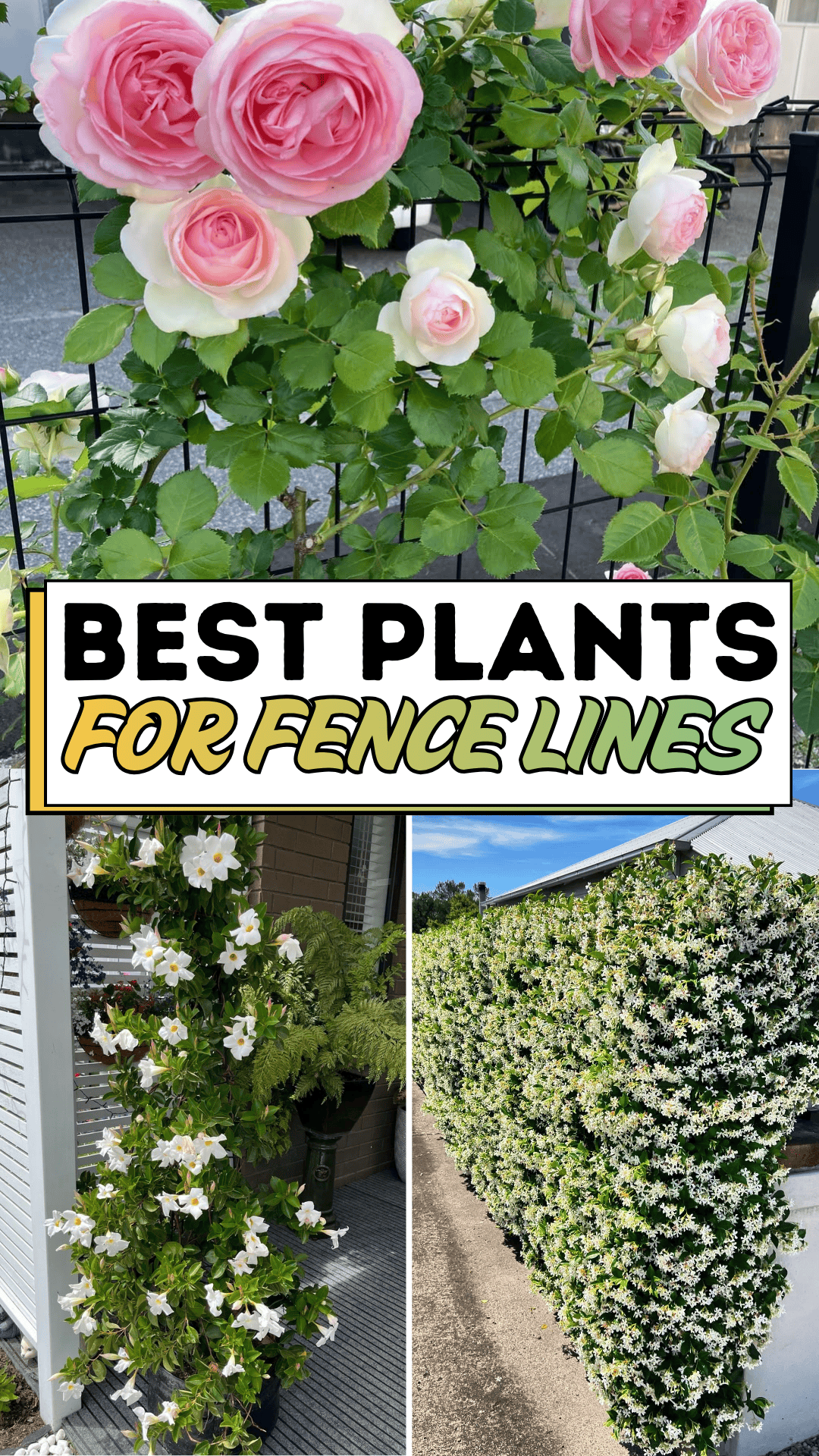
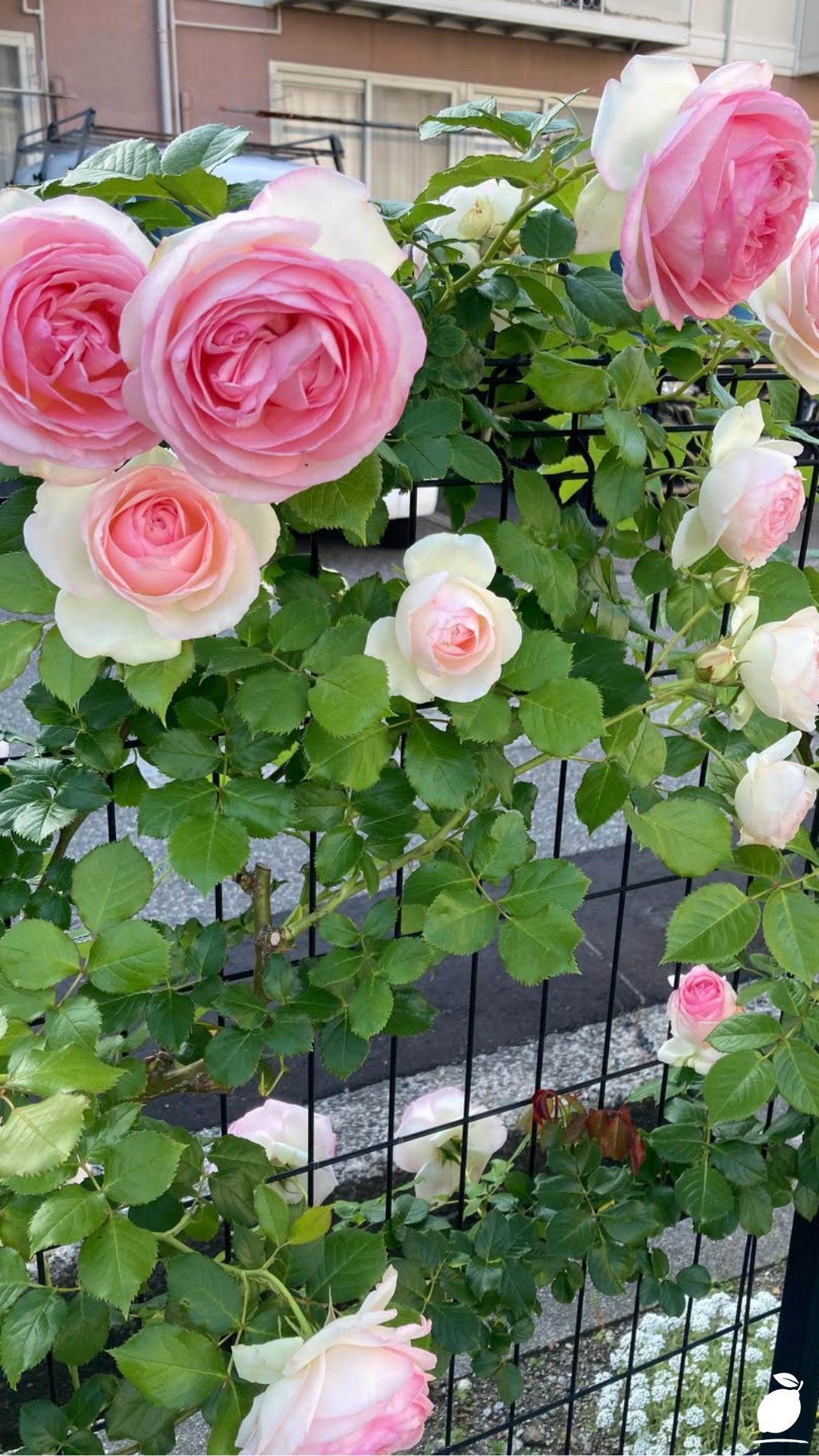
The image above shows what happens when that logic is reversed. Pink roses in full bloom climb a black metal fence in layers of color and texture, some stems resting across the horizontal bars, others draping softly downward, white flowering groundcover at the base completing the composition from ground to rail. The building behind the fence has become a backdrop for the garden rather than the other way around. The fence has been transformed from a boundary into a trellis, from a barrier into a canvas. This is what the best plants for fence lines do: they don’t hide the fence or apologize for it. They use it as the structure around which something worth looking at is built.
Choosing the right plants for fence lines is the specific garden skill that separates a fenced garden from a garden with a fence in it. The difference is visual, yes, but it is also psychological: a garden where the fence lines are planted creates a quality of enclosure and living texture that makes the entire outdoor space feel more generous and more genuinely garden-like, even when the physical dimensions haven’t changed at all. This guide covers the best plants for fence lines available to UK and temperate-climate gardeners in 2026, chosen for their combination of beauty, practicality, and the specific quality of covering, softening, or elevating a fence line in a way that makes the whole garden better.
The Best Plants for Fence Lines Guide
Climbing Roses
Why it works: The pink climbing roses in the featured image are the most visually powerful demonstration of what the best plants for fence lines can achieve. A climbing rose doesn’t simply cover a fence; it colonizes it, producing flowers at every node along its trained stems and creating the cascading abundance of bloom that no other plant at a fence line replicates. Modern climbing rose varieties are significantly more disease-resistant than their predecessors and bloom repeatedly across the season rather than in a single June flush. For a black metal fence like the one in the featured image, a rose with strongly colored blooms deep pink, apricot, white, or the rich red of David Austin varieties creates the maximum contrast against the dark fence material. Train stems horizontally along fence rails rather than vertically; horizontal training produces far more flower production than vertical growth by stimulating the lateral shoots that carry the most blooms.
Clematis
Why it works: Clematis is the climbing plant most consistently described as foolproof for fence lines, and the description is well-earned. It is fast-growing, produces flowers of extraordinary color and variety from late spring through autumn depending on the cultivar group, and uses the fence structure exactly as it was intended, wrapping its leaf stalks around any available support with an enthusiasm that requires no additional training in most fence configurations. For fence lines where climbing roses might be too thorny or too high-maintenance, clematis provides the equivalent visual impact with a significantly lower management requirement. The late-flowering Group 3 clematis, including the beloved Jackmanii purple and the viticella varieties in red, pink, and deep violet, are the most rewarding for fence lines because they can be cut hard back to 30cm from the ground each February, simplifying the annual maintenance to a single decisive session.
Honeysuckle (Lonicera)
Why it works: Honeysuckle brings something that no other plant on this list can match: scent. The tubular flowers of the common honeysuckle, Lonicera periclymenum, produce one of the most recognizable and most deeply pleasurable garden fragrances available in a temperate climate, carried on warm summer evenings to a radius that extends well beyond the fence line itself. As a practical fence-line plant, honeysuckle twines quickly and densely, provides excellent wildlife value (the flowers are a primary nectar source for long-tongued moths and bumblebees, and the red berries that follow in autumn are eaten by thrushes and warblers), and is fully deciduous, which means it is also easy to manage in winter when the bare structure of the stems makes pruning and tying-in straightforward. Plant at the base of any fence with a post or rail structure and it will self-support within two growing seasons.
Pyracantha (Firethorn)
Why it works: Pyracantha is the best plant for fence lines where year-round coverage and security are the primary goals alongside ornament. Its dense, thorny growth provides an impenetrable barrier that deters intruders at the fence line while producing clusters of small white flowers in late spring and extraordinary displays of orange, red, or yellow berries from late summer through winter, the most reliably spectacular winter display of any wall- or fence-trained shrub. Unlike most climbers, pyracantha is a self-supporting shrub that is wall-trained rather than naturally climbing, requiring annual tying-in of new growth to horizontal wires fixed to the fence. It is also one of the most wildlife-beneficial fence-line plants available: the berries are consumed by fieldfares, redwings, and blackbirds through the winter months, and the dense growth provides nesting habitat for wrens and dunnocks.
Jasmine (Jasminum officinale)
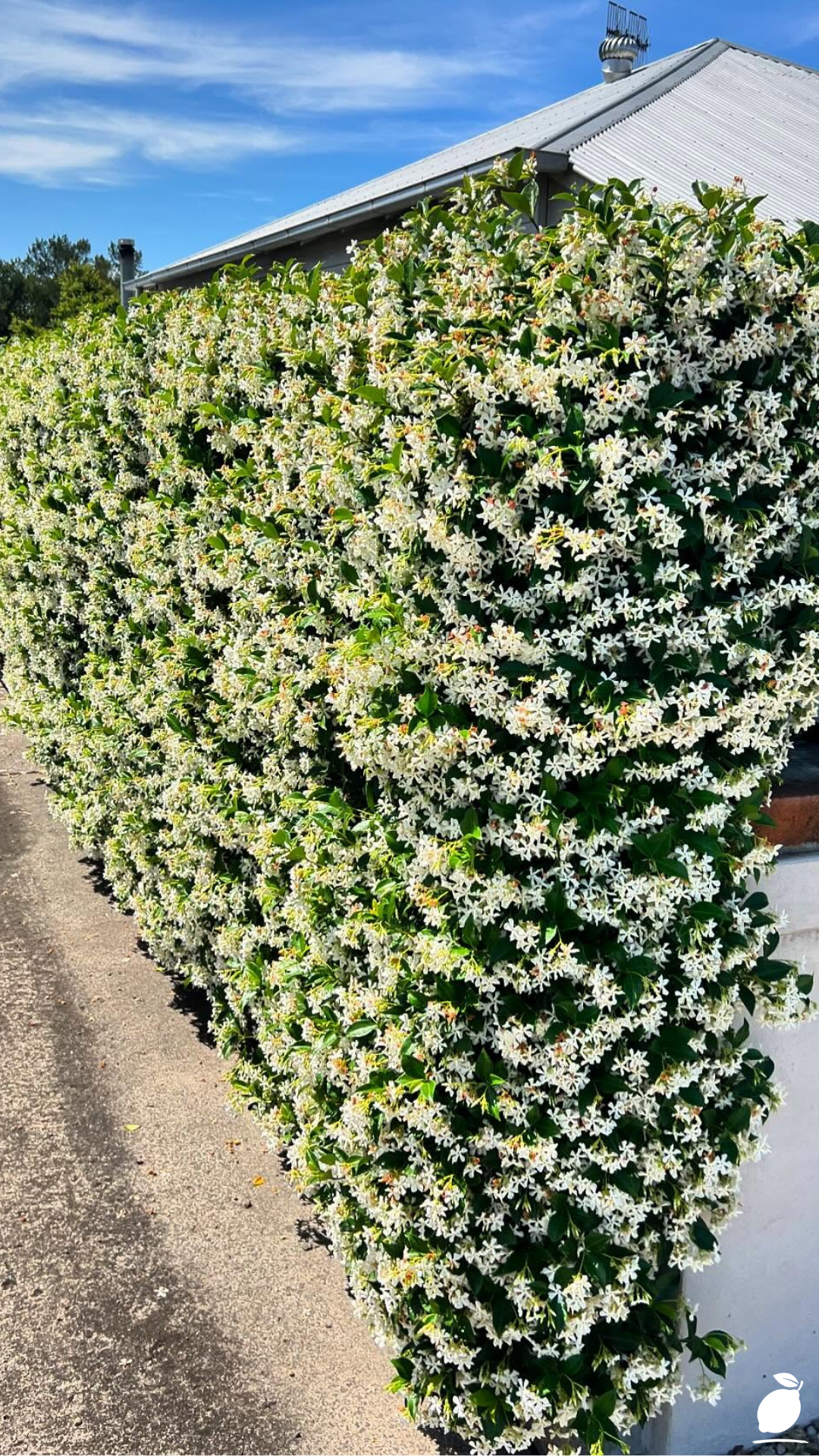
Why it works: Summer jasmine brings the combined qualities of fast coverage, excellent scent, and a refined, romantic aesthetic that makes it one of the most widely chosen best plants for fence lines in cottage gardens and contemporary garden designs alike. Its small star-shaped white flowers, produced in profusion from June through September, have the specific warmth and sweetness of scent that makes a fence-line planting feel generous rather than merely ornamental. Jasmine is a vigorous twiner that will cover a 2-metre fence panel completely within three to four growing seasons in a sunny position, and its semi-evergreen growth retaining much of its foliage through mild winters provides year-round visual interest between flowering seasons.
Ivy (Hedera helix)
Why it works: Ivy is the most polarizing plant in the best plants for fence lines category, dismissed by some as too common and too invasive, valued by others as the most reliably beautiful, most wildlife-beneficial, and most structurally forgiving of all fence-covering options. In its variegated forms, Hedera helix ‘Glacier,’ ‘Goldheart,’ and ‘Buttercup’ ivy provides year-round color variation that monochromatic fence lines rarely achieve with any other plant. As a wildlife resource, established ivy is extraordinary: it flowers in October and November when almost nothing else is flowering, providing nectar for late-season bees and butterflies, and its dense evergreen growth provides nesting and roosting habitat for multiple bird species through the winter. The key to ivy as a fence-line plant is managing its vigour; it requires annual clipping to prevent it from overwhelming adjacent plants and from becoming a weight burden on fence panels.
Wisteria
Why it works: Wisteria on a fence line is the most dramatic and most seasonally spectacular of all the best plants for fence lines, producing the cascading lilac or white flower racemes in May that are among the most photographed garden moments of the entire year. It is also the most demanding in terms of establishment time; wisterias take three to five years from planting to their first substantial flowering display and the most demanding in terms of twice-yearly pruning to maintain flowering performance and to prevent the plant’s famously vigorous growth from damaging fence panels and structures. For fence lines where a long-term planting with a dramatic payoff is the goal, wisteria is unmatched. For fence lines where quicker results are needed, it should be supplemented with faster-maturing plants while it establishes.
Ornamental Grasses
Why it works: Not every fence-line planting needs to be a climber. Ornamental grasses planted along a fence line create a completely different quality of fence-line beauty: movement, softness, the specific quality of a planting that responds to wind and light in a way that woody climbers don’t. Stipa gigantea (golden oats) produces 2-metre flower spikes in early summer that catch light and move with the slightest breeze. Miscanthus sinensis varieties create tall, arching clumps that turn from green to warm gold and copper through autumn. Pennisetum alopecuroides produces bottlebrush flower heads from midsummer through winter. Planted in a continuous drift along a fence line with some space between the fence and the grass clumps, ornamental grasses create a living screen that is structurally different from wall-trained climbers and visually incomparably more dynamic.
Evergreen Clematis (Clematis armandii)
Why it works: Where most clematis are deciduous and leave a bare fence line through winter, Clematis armandii is fully evergreen, its long, leathery, dark green leaves providing dense year-round coverage that makes it the best plant for fence lines in front-of-house positions where the fence line is visible from the street and needs to look good in every season. It flowers in late winter to early spring with clusters of small white flowers that carry a vanilla-like scent, one of the year’s first garden scents and one of its most welcome. It is vigorous and can cover a long fence line quickly, but benefits from some shelter from cold winds in more exposed positions.
Expert Secrets for Success
Pro-Tips for Better Results
Plant at the base of the fence, not against it. The most common fence-line planting error is positioning plants directly against the fence base, often the driest and most root-competition-affected soil in the garden, particularly at the base of a wooden fence or a wall where the structure creates a rain shadow. Position fence-line plants 30 to 45cm away from the fence base, lean the plant toward the fence on installation, and train the stems to the fence surface rather than expecting them to self-attach immediately. Plants established at this distance from the fence base access better soil moisture and can be tipped-in toward the fence as growth develops.
Feed fence-line climbers generously in their first three years. Fence-line plants are asked to cover a large area quickly, often in soil that has been disturbed and impoverished by fence installation, and they perform this task most reliably when they receive a generous feeding programme through their establishment years. A general-purpose granular fertilizer applied in early spring, followed by a monthly liquid feed of a high-potassium formula from first flowering through August, provides the nutritional support that fast-covering fence-line plants require to grow at the rate their vigorous species character promises.
Train horizontal stems, not vertical ones. For all climbing roses and wall-trained shrubs on fence lines, the most important training principle is to direct stems horizontally along fence rails rather than allowing them to grow straight upward. Horizontal training is the single most effective technique for maximizing flowering performance on fence-line climbers; the horizontal orientation of a stem triggers the production of vertical flowering shoots from every node, multiplying the flower count dramatically compared to a vertically trained equivalent.
Common Mistakes to Avoid
Don’t plant climbers without establishing their support first. Climbing plants at fence lines establish most reliably when the support system horizontal wires tensioned between vine eyes, or the fence’s existing rails is in place before planting. A newly planted climber left to find its own way to the fence typically establishes more slowly and with a less uniform coverage pattern than one that is tied into a prepared support framework immediately on planting and trained actively through its first growing season.
Don’t neglect the soil before planting fence-line plants. Fence-line soil is frequently the garden’s poorest: compacted by construction activity, depleted by the root competition of any previously existing plantings, and often contaminated with concrete, lime, or other building materials from the fence’s installation. Before planting any of the best plants for fence lines, dig the planting hole twice the diameter and twice the depth of the root ball, remove any rubble or concrete fragments, and backfill with a 50:50 mix of the original soil and good-quality garden compost. This single preparation step makes a visible difference to the plant’s establishment rate in the first season and its long-term performance thereafter.
Don’t underestimate the establishment timeline. The best plants for fence lines that produce the most spectacular results climbing roses, wisteria, large clematis require two to four years to establish before they produce the full visual impact visible in the featured image or in any garden inspiration photograph. Planting with a realistic timeline in mind prevents the premature conclusion that the plant isn’t performing when it is simply establishing, and it allows supplementary annual plantings (sweet peas, nasturtiums, climbing annual beans) to cover the fence line attractively in the establishment years while the permanent planting develops.
Why Best Plants for Fence Lines Matter
A fence line transformed by the right planting is not just a prettier boundary; it is a fundamentally different garden. The research on biophilic design in residential spaces consistently identifies the quality of visible plant life in an outdoor space as a primary determinant of the space’s restorative capacity, its ability to reduce the stress, fatigue, and cognitive load accumulated during the working day. A fence line that is covered in living, flowering, seasonally changing plant life provides continuous biophilic stimulus that a bare fence cannot. Every morning glance from the kitchen window becomes a small restorative moment. Every evening in the garden becomes a more complete and more genuinely restful experience.
For families, the fence line’s transformation carries a different but equally significant dimension. Children who grow up in gardens where the boundaries are planted rather than bare develop an understanding of the relationship between structure and life, between the human-made and the natural, that is genuinely formative. The climbing rose in the featured image is using a metal fence as its scaffold, a piece of garden literacy that a child in the garden understands wordlessly and that shapes their relationship with the natural world in ways they’ll carry into adulthood. A planted fence line teaches, quietly and continuously, that made things and growing things can coexist in beauty.
Easy Peasy Life Matters is built on the conviction that the details of a home’s outdoor space, including the details most often overlooked, like what grows at the fence line, compound into a daily quality of life that is either nourishing or merely neutral. The best plants for fence lines are one of the most accessible and most immediately impactful garden investments available, requiring modest initial cost and modest initial skill, and returning beauty, wildlife value, scent, and seasonal interest year after year. The fence is already there. It is waiting to become something worth looking at every morning of the year.
Frequently Asked Questions
What is the fastest-growing plant for a fence line?
Russian vine (Fallopia baldschuanica) is the fastest-growing plant available for fence lines in temperate climates, capable of covering a fence panel completely in a single growing season and growing several metres per year at maturity. Its cascading white flowers in late summer are attractive, and it establishes effortlessly in almost any soil. However, its vigour is extreme and requires significant management to prevent it from overtaking adjacent structures and plants. For rapid but less extreme coverage, Japanese honeysuckle (Lonicera japonica) and the fast-climbing large-flowered clematis Group C varieties are reliable performers that cover quickly while remaining manageable.
Which plants for fence lines work in shade?
Shaded fence lines, those receiving less than four hours of direct sun daily, limit the choice of climbing plants but don’t eliminate it. Climbing hydrangea (Hydrangea anomala subsp. petiolaris) is the most reliable and most beautiful self-clinging climber for a shaded fence, producing large white lacecap flowers in June on mature plants. Ivy in its variegated forms provides excellent year-round coverage and is one of the most shade-tolerant of all fence-line plants. Some clematis, particularly the Clematis montana varieties, tolerate partial shade. Ferns planted as a drift at the fence’s base provide groundcover coverage in positions where climbing plants struggle to establish.
How do I stop fence-line plants from damaging the fence?
The most effective fence-damage prevention strategy is to train climbing plants to the fence’s rails and horizontal wires rather than allowing them to grow in dense masses directly against the timber surface. Dense growth against timber prevents the timber from drying after rain and accelerates rot. For wooden fence panels, an annual inspection of the fence surface behind any climbers, checking for rot, loose fixings, or paint deterioration, allows maintenance to be completed before damage becomes structural. For post-and-panel fences, consider training fence-line plants to a separate wire framework positioned 10cm in front of the fence panels, so that the plants can be easily lifted away from the fence when panel replacement or treatment is required.
Can I grow vegetables or edibles along a fence line?
Yes, a south- or west-facing fence line with at least six hours of sun is one of the garden’s most productive positions for edible climbers. Runner beans, climbing French beans, and peas all perform excellently on fence lines, using the fence’s rails as their support structure. Thornless blackberries and hybrid berries (loganberries, tayberries) trained along a fence line combine the visual quality of a flowering climber with a generous fruit harvest. Espalier-trained apple and pear trees against a sunny fence are the most productive and most visually architectural edible fence-line option, producing fruit while providing the same ornamental coverage as any flowering climber.