The water bill arrived in August, and for a moment it felt like a mistake. Not a billing error; the numbers were correct, the meter reading was accurate- but the kind of mistake you make in April when you design a garden for how you imagine summer will feel rather than how summer actually is. The lawn had been watered three times a week. The flower borders needed supplementary irrigation every four days or the petunias visibly protested. The new shrubs by the fence needed daily checking in the heat spells. The garden was beautiful in the way that things are beautiful when they are receiving significantly more care than is sustainable, and August was the moment that gap between aspiration and reality expressed itself on a piece of paper with a dollar amount at the bottom.
The exhausting thing about a high-water garden is not just the cost; it is the anxiety. The check before leaving for a long weekend, the guilt of returning to a crispy border after a hot week away, the perpetual background awareness of the garden’s water dependency that prevents the outdoor space from being what it is supposed to be: a place that restores rather than demands. A garden organized around plants that need constant irrigation is a garden organized around the gardener’s availability to provide that irrigation, and in a household with a full schedule, that dependency is a slow-motion source of stress that accumulates through every dry week of every summer.
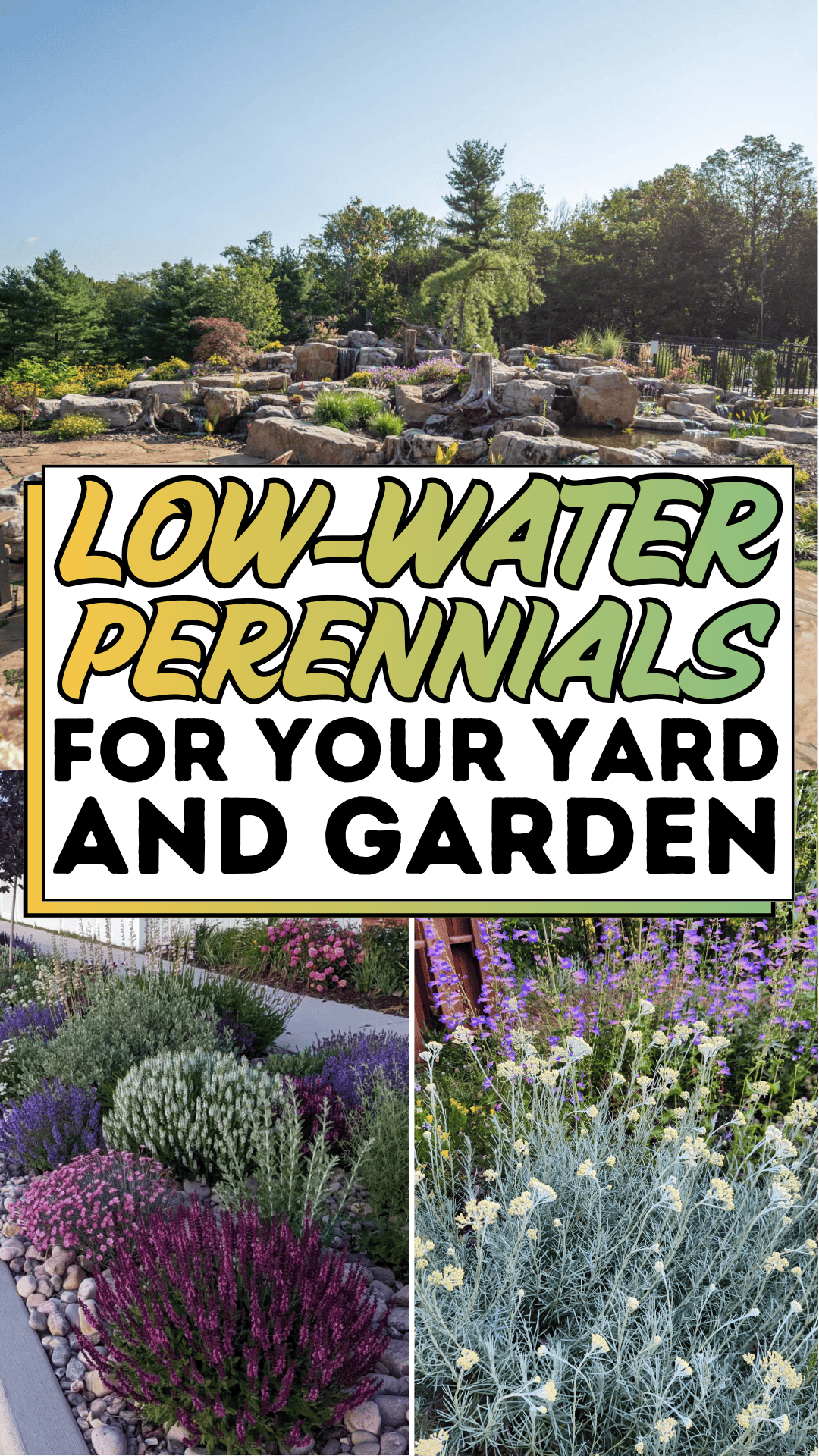
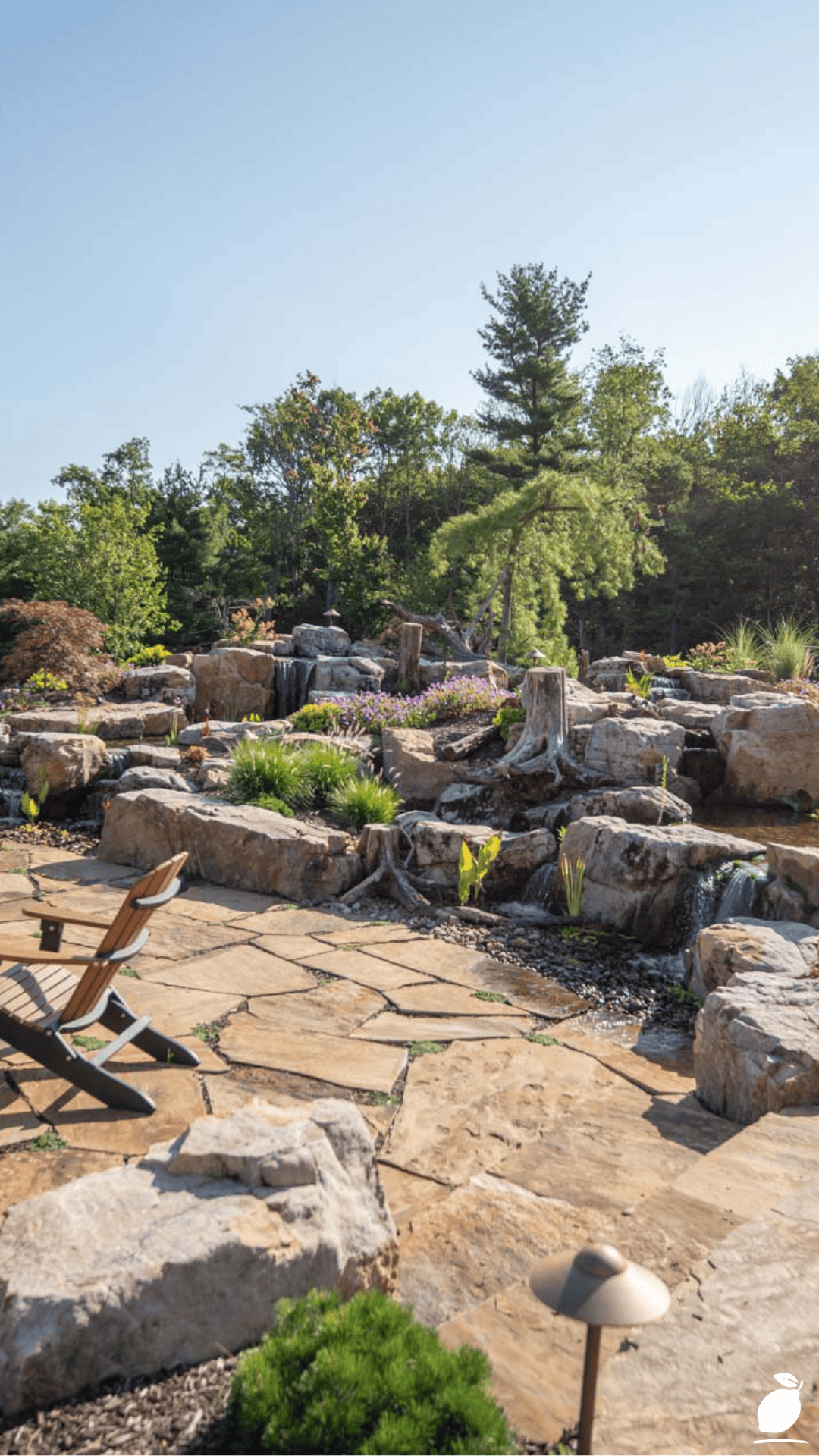
The outdoor space in the image the stone patio with its fire pit, the water feature over cascading rocks, the lush planted borders holding their color under a clear sunny sky is not a garden that looks like this because someone was home every evening with a hose. It looks like this because the plants in those borders were chosen for their relationship with drought rather than their need for water. Low-water perennials in a well-designed garden create the paradox of abundance through appropriate selection: a garden that looks generously planted, richly colorful, and fully alive and that achieves all of this while asking a fraction of what thirstier alternatives would require. Here is the complete blueprint for building that garden.
The Low-Water Perennials Blueprint
Planting a low-water perennials garden is a planned, sequential project: the soil preparation determines the establishment success, the plant selection determines the long-term performance, and the watering taper is what converts a planted garden into a genuinely drought-tolerant one. Follow these steps in order.
Step 1: Assess Your Site’s Soil Drainage Before Selecting Plants
Low-water perennials are not plants that tolerate poor drainage; they are plants that tolerate drought. The distinction matters enormously at the planning stage. Most drought-tolerant perennials are native to conditions with excellent drainage, and when planted into waterlogged or slow-draining clay soil, they rot during the wet season and never develop the deep root systems that make them drought-tolerant in the dry one. Before selecting any low-water perennials for a planting scheme, assess the drainage of every intended planting position.
The simple jar test identifies soil drainage type: fill a jar with a sample of soil from the planting area, add water, shake, and observe how quickly the water clears. Fast-clearing (15 to 30 minutes) indicates sandy or loamy soil suitable for most low-water perennials. Slow-clearing (hours) indicates a clay-dominant soil requiring amendment before low-water perennials will establish well. For clay sites, incorporate generous quantities of horticultural grit at a minimum of one part grit to four parts existing soil through the planting area before installing low-water perennials. This amendment, done once before planting, determines the health of the low-water perennials planting for the following decade.
Step 2: Choose Low-Water Perennials for Each Position’s Sun Exposure
Low-water perennials span an enormous range of sun requirements, and matching each plant to its position’s actual sun exposure is the single most important selection decision for long-term success. A drought-tolerant sun-lover planted in shade grows slowly, blooms poorly, and becomes susceptible to disease the very conditions its drought tolerance was supposed to prevent. A shade-adapted low-water perennial in full afternoon sun shows leaf scorch, wilts dramatically, and requires the supplementary watering that the selection was supposed to eliminate.
For full sun positions (six or more hours of direct sun daily), the most reliable low-water perennials include echinacea (purple coneflower), rudbeckia, salvia nemorosa, nepeta (catmint), sedum spectabile, achillea (yarrow), and lavender. These plants evolved in open, sun-exposed habitats and have developed deep root systems, reduced leaf surface area, and reflective foliage that minimize water loss in exposed positions.
For partial shade positions (two to four hours of direct sun), the most reliable low-water perennials include astrantia, geranium macrorrhizum, epimedium, pulmonaria, and certain hellebore varieties. These plants tolerate reduced moisture in the root zone more effectively than their sun-loving counterparts because reduced transpiration in shade reduces their water demand simultaneously.
For dry shade positions (under established deciduous trees), epimedium and Geranium macrorrhizum are the two most consistently successful low-water perennials; their tolerance of both shade and root competition from trees makes them useful in the challenging position where most planting fails.
Step 3: Prepare the Soil with Organic Matter and Grit
Low-water perennials establish most successfully in soil that combines good drainage with reasonable fertility and organic matter content. This combination, which sounds contradictory but is not, provides the conditions that drought-tolerant plants experience in their native habitats: well-drained soil that does not retain waterlogging but does retain some moisture and nutrients in its organic matter fraction.
Prepare planting beds by digging to a depth of 30 to 40cm and incorporating a generous quantity of well-rotted garden compost or composted bark, approximately one bucket per square meter. In clay soils, incorporate horticultural grit at the same rate simultaneously. In sandy soils, omit the grit but increase the organic matter to improve the soil’s limited moisture retention. After incorporation, allow the prepared bed to settle for one to two weeks before planting; a settled bed provides better physical contact between plant roots and soil than a freshly turned one.
Step 4: Plant at the Correct Spacing and Season
Low-water perennials planted at the correct spacing for their mature spread reach the dense canopy coverage that suppresses weed competition and minimizes soil moisture evaporation from exposed soil surfaces. Planting too widely leaves bare soil that loses water rapidly through surface evaporation and requires more irrigation during establishment than a correctly spaced planting. Planting too closely produces overcrowded plants that compete for root space and do not develop the expansive root systems that make them drought-tolerant.
Plant low-water perennials at two-thirds of their stated mature spread. A plant with a 60cm mature spread is planted at 40cm centers to reach canopy closure within two growing seasons. This spacing looks close in the first season but produces the continuous ground coverage that characterizes a genuinely drought-tolerant landscape by the third season.
Season of planting significantly affects establishment success for low-water perennials. Autumn planting, September through November in temperate climates, allows root establishment through the cool, moist months before the first summer drought stress, giving low-water perennials a full season of root development before their drought tolerance is tested. Spring planting is viable but requires more attentive irrigation through the first summer to compensate for the shorter establishment period.
Step 5: Water Thoroughly at Planting, Then Begin the Taper
The apparent paradox of a low-water perennials planting plan is that it requires generous initial watering. Every plant, regardless of its ultimate drought tolerance, needs consistent moisture at the root zone during its establishment phase, the period between planting and the development of a root system extensive enough to access soil moisture at depth. For most low-water perennials, this establishment phase lasts six to twelve months.
Water newly planted low-water perennials deeply at planting, soaking the root zone thoroughly so moisture reaches to 20 to 30cm depth, and then begin the watering taper that converts them from establishment-dependent to genuinely drought-tolerant. In the first season: water every five to seven days during dry periods. In the second season: water every ten to fourteen days during extended dry periods only. From the third season onward: most well-established low-water perennials require supplementary irrigation only during exceptional drought events of three or more weeks without meaningful rainfall.
Deep, infrequent watering throughout the establishment phase rather than frequent shallow watering is the practice that drives the deep root development that makes low-water perennials genuinely drought-tolerant. Shallow, frequent watering keeps roots at the surface where they remain moisture-dependent; deep, infrequent watering teaches roots to seek moisture at depth where it is consistently available even in dry surface conditions.
Step 6: Apply Mulch to Conserve Established Soil Moisture
A 7 to 10cm layer of mulch applied across the entire surface of the low-water perennials planting area significantly reduces soil moisture evaporation between watering events and suppresses the weed competition that would otherwise draw additional moisture from the root zone. Mulch reduces the supplementary irrigation requirement of low-water perennials by up to 30% during the establishment phase and extends the period between watering events significantly once the plants are established.
Use composted bark, wood chips, gravel, or crushed slate as mulch for low-water perennials; each material performs the moisture retention and weed suppression function while relating visually to different garden styles. Composted bark suits cottage and informal garden aesthetics; gravel and crushed slate suit Mediterranean and contemporary garden designs; wood chip suits naturalistic and woodland-edge plantings. Apply mulch annually in autumn, maintaining the 7 to 10cm depth that provides optimal performance, and keep mulch clear of each plant’s crown to prevent the collar rot that affects low-water perennials in overly retained moisture conditions around the stem.
Expert Secrets for Success
Pro-Tips for a Better Result
- Choose regionally native low-water perennials wherever possible. Native drought-tolerant species have co-evolved with the local climate’s rainfall patterns, soil types, and temperature extremes. They establish more rapidly, develop their drought tolerance faster, and maintain it more reliably than non-native low-water perennials growing outside their native range. Research the native flora of your specific climate region and prioritize natives from that palette when selecting low-water perennials for a new planting.
- Group low-water perennials with similar water requirements together. A planting that combines genuinely drought-tolerant low-water perennials with moderately drought-tolerant species requires the irrigation schedule of the less tolerant plants because the more tolerant plants can tolerate underwatering, but the irrigation program must be determined by what cannot. Group plants with identical water requirements in distinct zones, allowing each zone to be managed to its specific needs rather than the most demanding plant in the group.
- Avoid amending soil with water-retaining crystals or gels. These products, marketed as supplements to reduce watering frequency, retain moisture in a localized zone around the plant’s root ball rather than encouraging the root exploration that develops genuine drought tolerance. Low-water perennials established with water-retaining crystal assistance can remain root-ball-dependent rather than developing the expansive deep root systems that make them drought-tolerant in unamended conditions. Omit these products from low-water perennials planting.
- Delay cutting back dead foliage until late winter. The dead stems and foliage of low-water perennials left standing through winter provide insulation for the root zone against freeze-thaw stress that damages drought-adapted root systems, particularly tap-rooted species including echinacea, achillea, and salvia. They also provide habitat for overwintering beneficial insects and seed for winter birds. Cut back in late February or March when new growth is beginning to emerge, not in autumn.
- Test irrigation zones before the peak summer season. If the garden uses drip or sprinkler irrigation, run a full test of every zone in spring before low-water perennials are under peak drought stress to confirm that all emitters and heads are functioning, that coverage is uniform, and that each zone’s run time is calibrated to the actual water requirement of the plants in it rather than a default setting applied at installation.
Common Mistakes to Avoid
- Planting low-water perennials in clay soil without drainage amendment. The most consistent failure mode for low-water perennials in temperate gardens is planting into unamended clay soil where winter waterlogging kills the root systems that summer drought tolerance depends on. Low-water perennials are adapted to dry summers following well-drained winters in clay soil without grit amendment; they experience the worst of both: waterlogging in winter and inadequate root development for summer. Amend clay soil with grit before planting, without exception.
- Water low-water perennials on the same schedule as thirstier plants. Once low-water perennials are established (from the second season onward), applying the same irrigation schedule as a conventional garden actively harms their drought tolerance development by keeping them surface-rooted and water-dependent. Established low-water perennials benefit from an irrigation schedule reduction water less frequently and more deeply rather than continuing the establishment watering program.
- Selecting low-water perennials based on catalog drought-tolerance claims without local verification. Drought tolerance claims in plant catalogs are often based on performance in the plant’s native range or in specific test garden conditions that may not match the gardener’s actual climate. A perennial described as drought-tolerant in a Mediterranean climate may need regular supplementary irrigation in a continental climate with hot summers and cold winters. Verify drought tolerance performance with local nurseries, extension services, or gardening groups with experience in your specific climate.
- Neglecting new plantings during their first summer dry spell. Even the most drought-tolerant low-water perennials can be lost in their first summer if establishment irrigation is discontinued prematurely during an unusually hot or dry period. New plantings lack the root depth to access deep soil moisture that established plants rely on. Monitor first-year plantings through the first full summer and provide supplementary watering during extended dry periods, even if the plants appear to be performing adequately; wilting is a late indicator of stress that has been accumulating for days before it becomes visible.
- Using high-nitrogen fertilizer on established low-water perennials. High-nitrogen fertilizers promote the rapid, lush, water-demanding growth that is exactly what drought-tolerant plants have evolved to avoid. Fertilizing established low-water perennials with high-nitrogen products produces soft, water-demanding growth that reverses their drought adaptations and increases rather than decreases their irrigation requirement. If fertilizing is necessary, use a slow-release balanced fertilizer at half the recommended rate or rely on the annual mulch application of well-rotted compost to provide gentle, organic fertility that supports drought-tolerant growth habits rather than undermining them.
Why Low-Water Perennials Matter
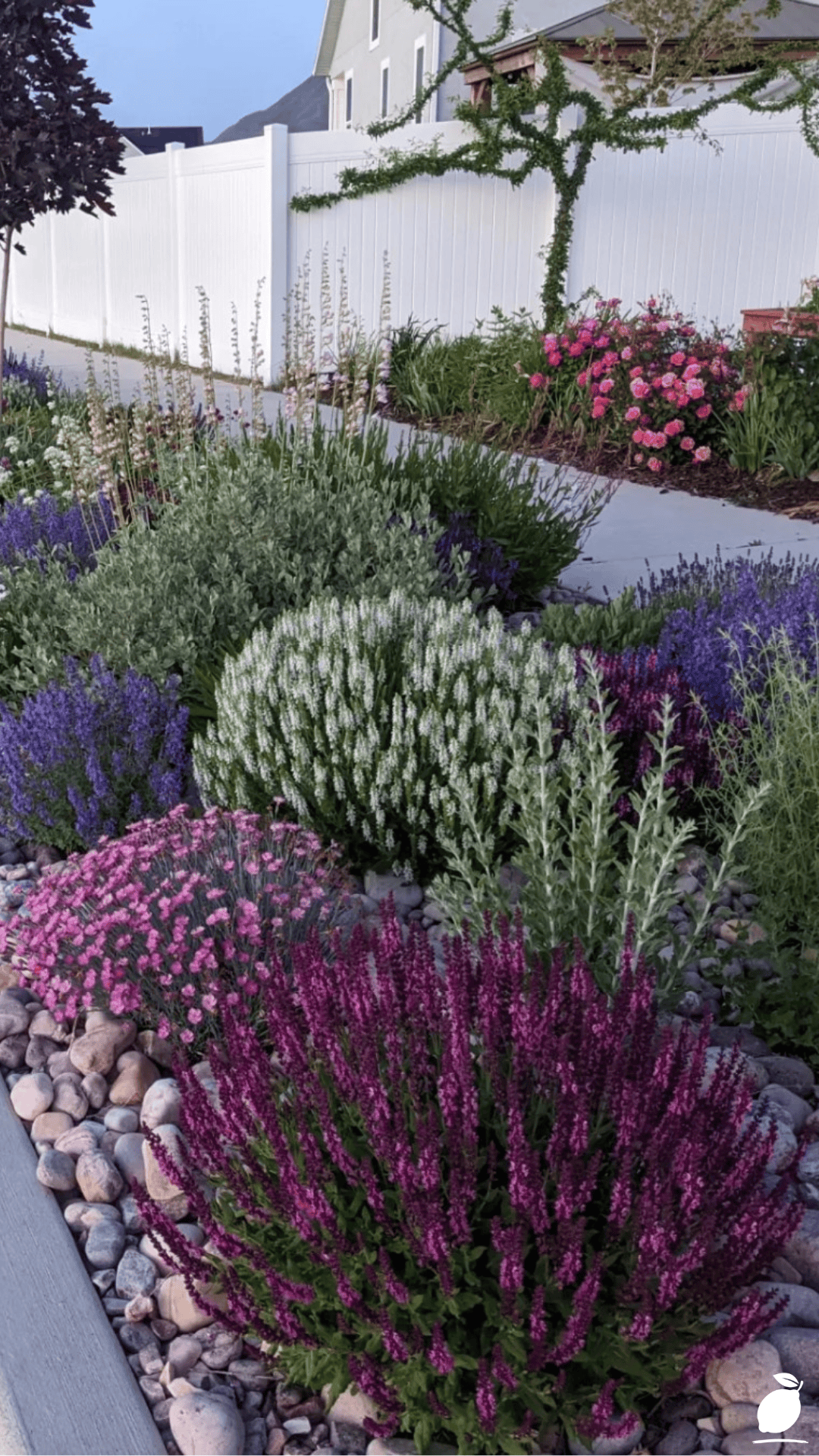
Low-water perennials matter at a scale larger than any individual garden. Water is the most constrained natural resource in the twenty-first century’s residential landscape, and the cumulative impact of millions of domestic gardens using drinking-quality water to maintain thirsty plant selections is a measurable strain on infrastructure and reservoir levels that becomes most acute during the dry periods when gardens need most irrigation. Low-water perennials in residential gardens are not just a cost-saving strategy; they are a participation in the broader stewardship of a resource that is not always as available as a functioning hose makes it feel.
For families, the practical difference between a high-water garden and a low-water perennials landscape is measured in the quality of the summer relationship with the outdoor space. A garden that can be left for a two-week holiday without the anxiety of return is a genuinely different relationship from one that requires checking and watering arrangements before departure. A garden that looks good in August without heroic maintenance effort is actually used in August; the patio furniture gets occupied, the fire pit is lit in the evening, the space earns its function as an outdoor room rather than an outdoor obligation. Low-water perennials are the plant selection that converts a garden from the latter to the former.
And for the gardener who installs them, who amends the soil, plants at the right season, resists the impulse to water too frequently and too shallowly, and waits through two seasons of establishment for the deep root systems that deliver genuine drought tolerance, the reward is a garden that validates the patience with specific, measurable ease. The August water bill is reduced. The holiday departure is uncomplicated. The outdoor space contributes to the quality of daily life rather than competing with it. Those are the returns that low-water perennials provide, and they begin the moment the establishment phase is complete, and the supplementary irrigation schedule can be substantially reduced or eliminated.
Frequently Asked Questions
How long does it take for low-water perennials to become truly drought tolerant?
Most low-water perennials reach their genuine drought tolerance at the point at which supplementary irrigation can be substantially reduced or eliminated after two full growing seasons of establishment. The first season develops the initial root system; the second season extends roots to the depth at which soil moisture remains available between rainfall events. Autumn-planted low-water perennials reach effective drought tolerance one season sooner than spring-planted ones, because the cool, moist autumn and winter months provide optimal rooting conditions before the first summer drought stress.
Can low-water perennials be combined with a water feature like the one in the image?
Yes, and the pairing is both aesthetically and functionally effective. A water feature’s immediate perimeter is typically moister than the surrounding garden, creating a transition zone where less drought-tolerant plants can be placed immediately beside the water feature while low-water perennials occupy the drier surrounding areas. Moisture gradients in the garden created by water features, downspout areas, and low-lying zones can be planted with the appropriate low-water perennial species for each moisture level, producing a planting that reflects the natural variation of the site rather than imposing a uniform irrigation requirement across different conditions.
What are the best low-water perennials for a fire pit area like the stone patio in the image?
For the immediate surroundings of a fire pit area typically a sunny, well-drained stone or gravel patio the most suitable low-water perennials are lavender (fragrant and heat-tolerant, thriving in the reflected warmth of stone surfaces), rosemary (aromatic, drought-tolerant, and practically useful for outdoor cooking), echinacea (tall, structural, and highly pollinator-attractive from midsummer through autumn), sedums (low-growing, drought-tolerant, and visually interesting in the transitional areas between paving and planted border), and ornamental grasses including festuca glauca and stipa tenuissima (providing movement, texture, and year-round structural interest at the border margins).
Do low-water perennials still need watering in winter?
In temperate climates with adequate winter rainfall, established low-water perennials do not require supplementary irrigation in winter; the natural rainfall during their dormant period is typically sufficient and often exceeds their requirements. In Mediterranean climates or drought-affected regions that experience dry winters as well as dry summers, newly planted low-water perennials in their first season may benefit from occasional deep watering in extended dry winter periods. Established plants in their second and subsequent seasons are generally self-sufficient through winter in any climate where annual rainfall exceeds 400 to 500mm.