The neighbor’s new second-story deck appeared in May and changed everything about the backyard. Not in a dramatic or unfriendly way; the neighbors were perfectly pleasant, but in the specific way that a new elevated vantage point changes the quality of the space below it. The garden that had felt private and self-contained suddenly had an audience. The patio that had been a genuine retreat now required a level of social awareness a careful seating angle, a reduced inclination to walk across the lawn in a towel after swimming that retreats are not supposed to require. The existing shrubs along the fence line were 80cm high. They would need to be approximately three times that to solve the problem, and they had been 80cm high for four years.
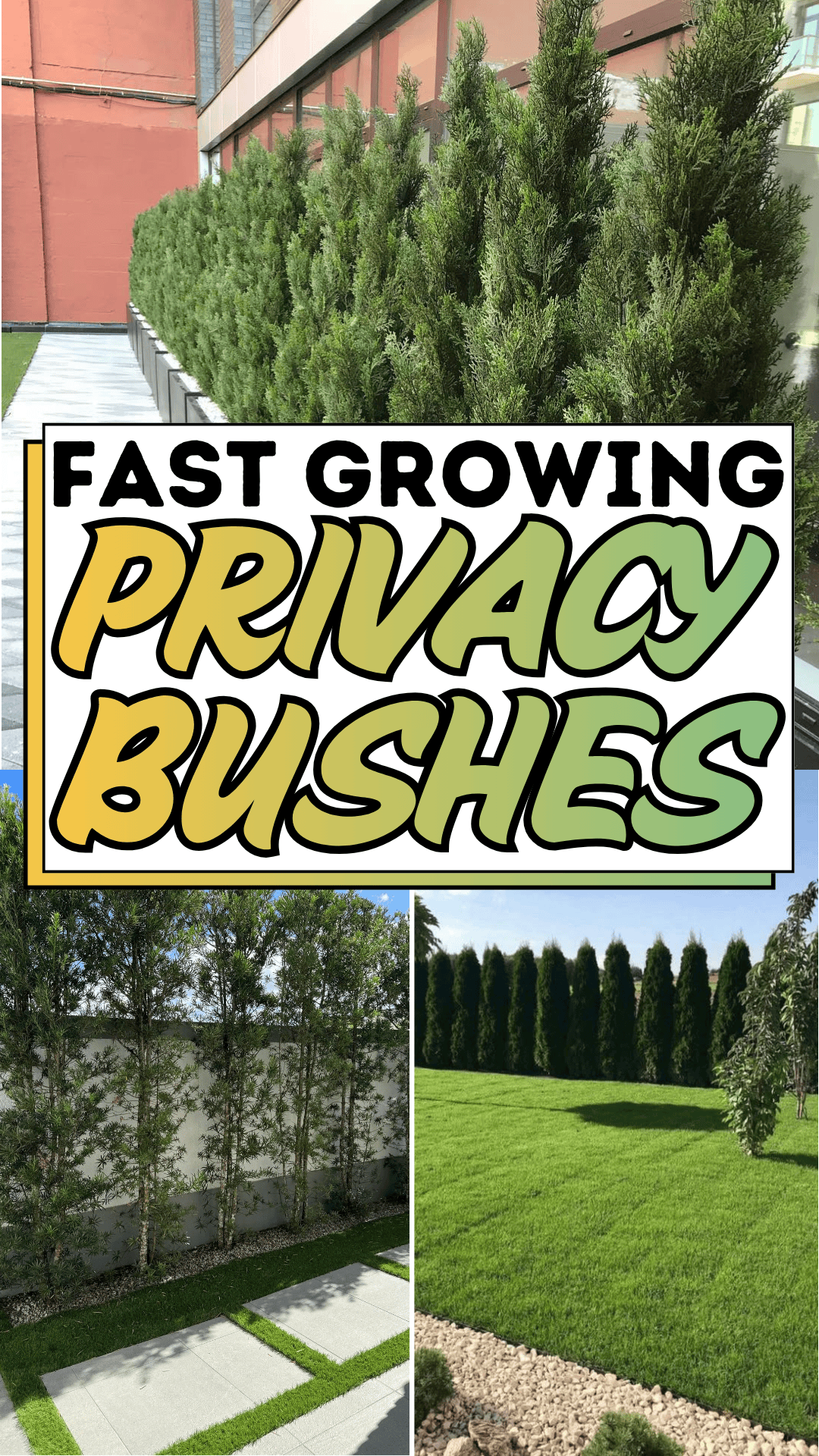
The privacy planting conversation tends to stall in the same place it started: at the gap between what is needed and how long it takes to get there. A privacy hedge using standard nursery specimens in 2-liter containers, planted at the correct density, takes seven to ten years to reach meaningful screening height in most temperate climates. That is not a garden solution for today’s problem. It is a garden solution for the problem you will have in a different decade of your life. The response to this timeline is typically either to overspend on large, semi-mature specimens that arrive with equally large price tags, or to accept the situation and redesign the garden around the exposure rather than addressing it as a concession that no one makes cheerfully.
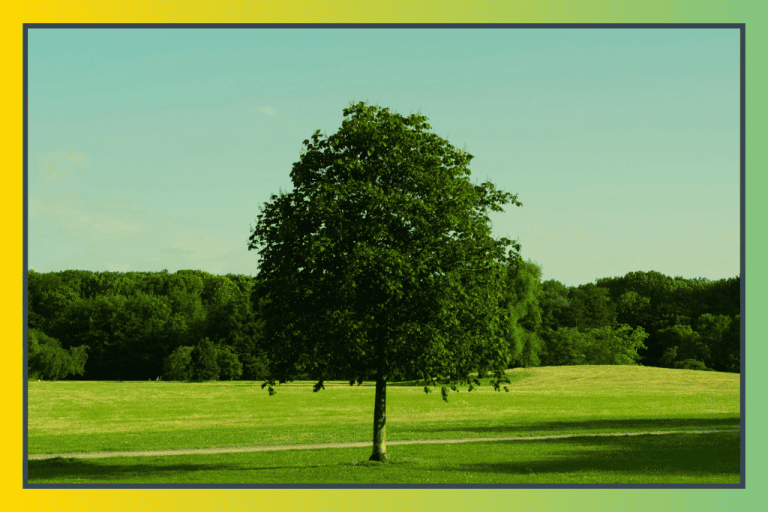
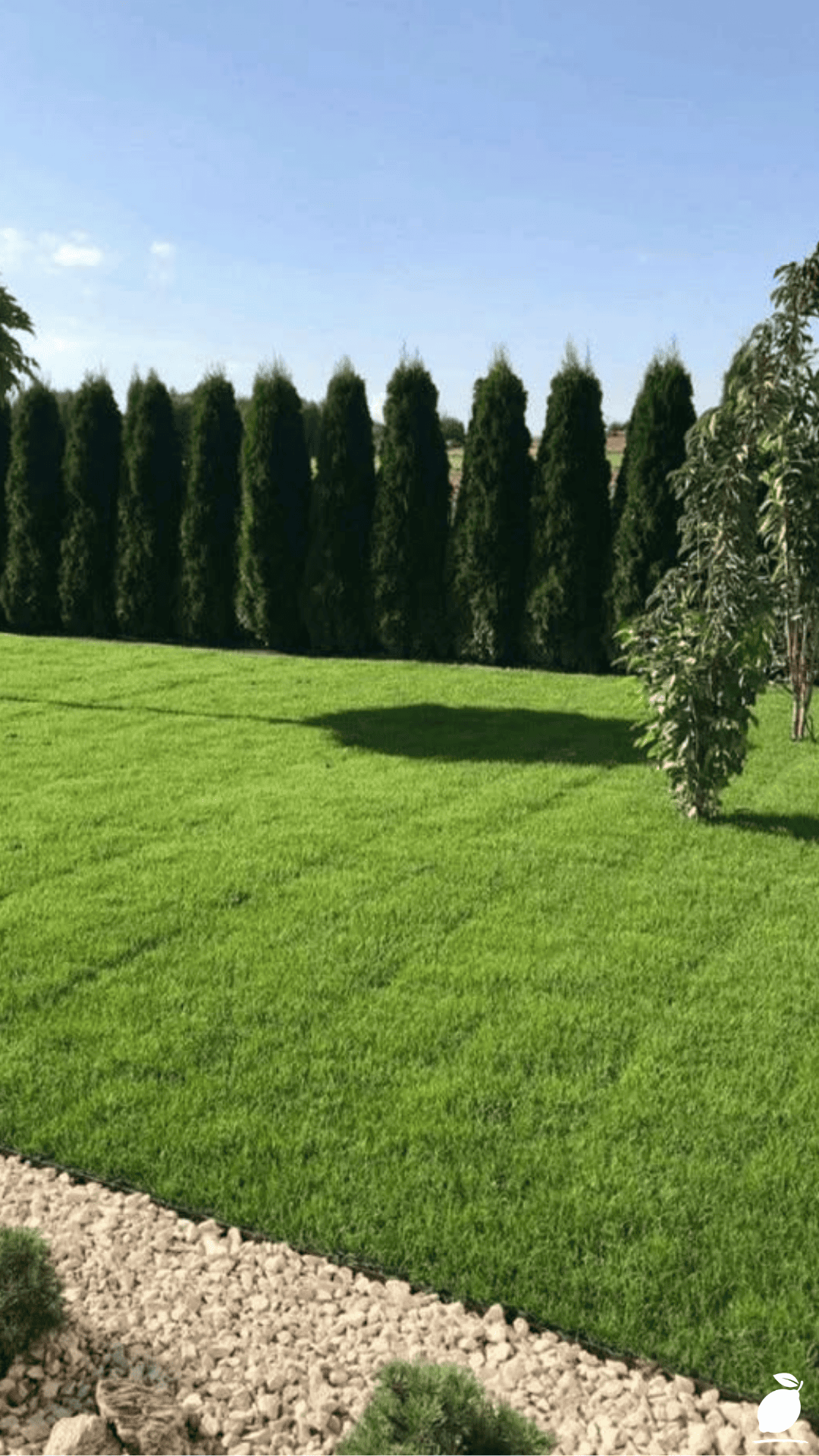
The garden in the image shows the alternative that exists between those two options: a row of tall, slender evergreen trees forming a natural boundary on the left, their columnar habit providing effective screening at significant height within a relatively short establishment timeline. The lawn they border is well-maintained and clearly enjoyed; the pathway, the specimen tree in the center, the orderly shrubs in the foreground are all features of a garden that functions as a genuine outdoor room. The screening on the left is not an afterthought. It is the architecture that makes the room possible. Fast-growing privacy bushes and screening trees, chosen correctly and planted with a proper system behind them, are the path from exposed to enclosed, and the timeline is shorter than most gardeners assume. Here is the complete blueprint.
The Bushe Blueprint
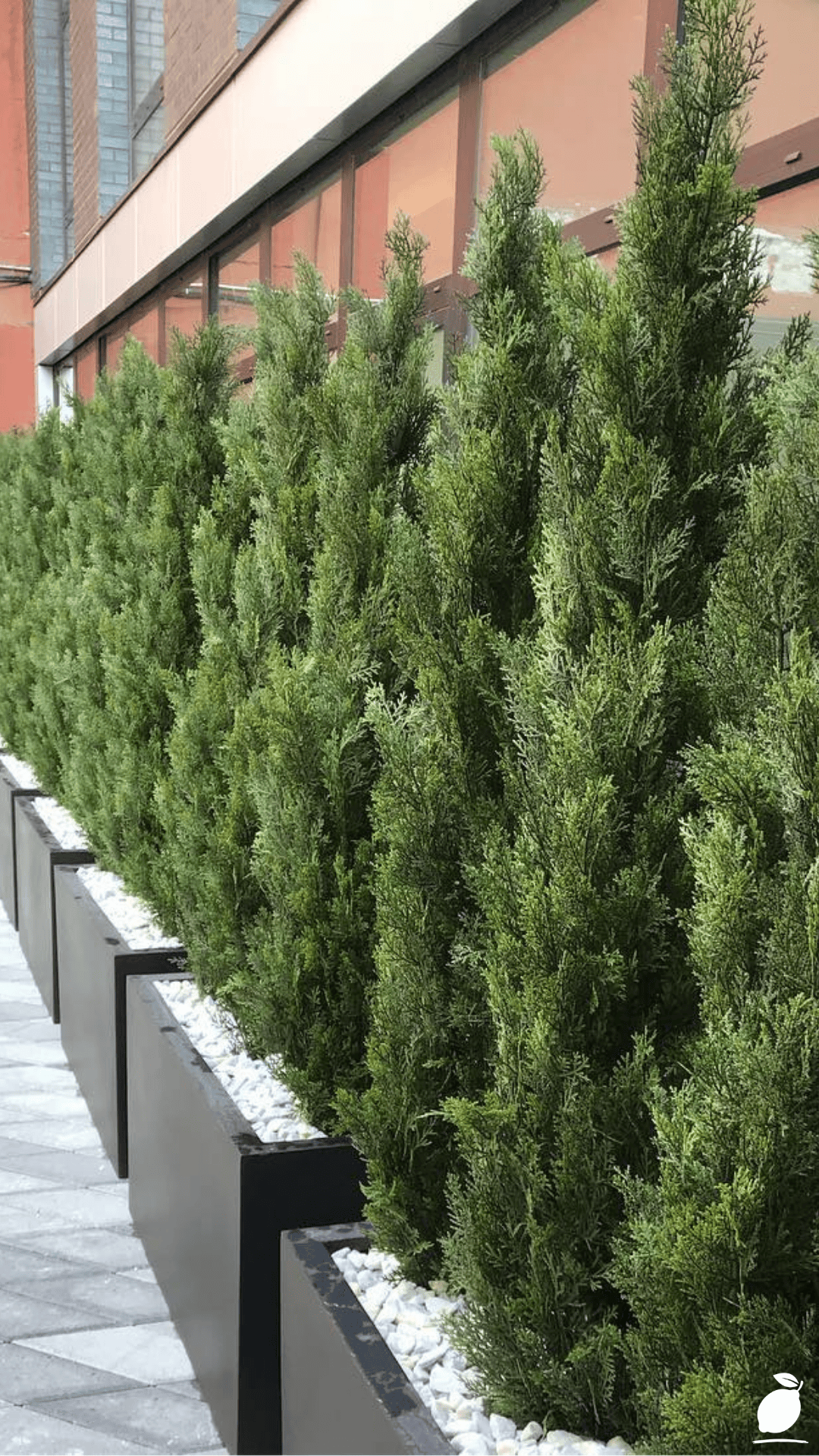
Planting fast-growing privacy bushes is a project with a logical sequence. Each decision builds on the last, and the sequence determines both the establishment speed and the long-term performance of the privacy screen.
Step 1: Assess the Specific Privacy Problem Before Selecting Plants
The first step in any fast-growing privacy bushes project is defining the privacy problem with precision rather than generality. Privacy requirements vary significantly between situations, and the wrong plant choice for the specific problem produces a screen that either grows past its useful height and requires costly management, or fails to reach the required screening height in the critical sight line at the key viewing angle.
Identify: Where is the view coming from a neighbor’s window at ground level, a deck at elevated level, a road? At what height does the screening need to begin from ground level for a road-facing boundary, or from 1.5 meters for elevated neighbor visibility? Over what linear distance does the screen need to run? Are there any underground services gas, water, electricity in the intended planting zone that constrain root systems? Is the planting position in full sun, partial shade, or full shade? Each answer directly constrains which fast-growing privacy bushes are appropriate and at what spacing.
Step 2: Choose Fast Growing Privacy Bushes for Your Specific Site Conditions
Fast-growing privacy bushes span an enormous range of growth habits, tolerances, and mature sizes. Matching plant to site is the most important selection decision; a fast grower planted in the wrong light conditions or soil type grows slowly, if at all, and the “fast” in fast-growing privacy bushes disappears when the plant is stressed by its environment.
For full sun, well-drained soil: Leyland cypress (×Cuprocyparis leylandii) is the fastest-growing privacy screen plant available in temperate climates 75 to 90cm per year in good conditions but requires disciplined annual trimming to maintain a manageable height and width. Italian cypress (Cupressus sempervirens ‘Stricta’) provides the columnar form visible in the image and grows 30 to 60cm per year, making it slower than Leyland but significantly more architecturally refined and less maintenance-demanding. Thuja ‘Green Giant’ is the preferred alternative to Leyland in many US climate zones similar growth rate, better disease resistance, and a more tolerable mature form.
For partial shade or north-facing sites: Portuguese laurel (Prunus lusitanica) is the most reliable fast-growing privacy bush for difficult shade conditions, reaching 30 to 50cm per year, producing fragrant white flowers in early summer, and providing dense, dark green evergreen coverage. Western red cedar (Thuja plicata) tolerates partial shade better than most fast-growing conifers and provides excellent screening at similar growth rates.
For a mixed, naturalistic boundary: Hawthorn (Crataegus monogyna) planted as a dense hedge provides one of the most impenetrable privacy screens available, thorny, wildlife-supporting, and growing 40 to 60cm per year once established. Combined with blackthorn and field maple in a mixed native hedge planting, it provides privacy, wildlife habitat, and seasonal interest that monoculture conifer screens cannot match.
Step 3: Calculate the Correct Plant Spacing and Quantity
Fast-growing privacy bushes planted too widely apart take longer to form a continuous screen. Planted too close, they compete for root space and light, grow more slowly than correctly spaced specimens, and frequently produce the bare-at-the-base appearance that requires additional underplanting to correct. The correct spacing depends on the species and the intended time to screening closure.
For columnar conifers (Leyland cypress, Italian cypress, Thuja ‘Green Giant’): plant at 60 to 90cm centers for screening closure within two to three seasons. For laurels and broadleaf evergreens: plant at 60cm centers for dense coverage within two seasons. For a formal clipped hedge of fast-growing privacy bushes: plant at 45 to 60cm centers for an established hedge appearance within three seasons.
Measure the total linear distance of the intended screen and divide by the intended spacing to calculate the total number of plants required. Add 10% for contingency plants that do not establish, are damaged in transit, or are needed for gap-filling in the second season. Order the full quantity from a single supplier batch to ensure consistent size and root system development across the planting.
Step 4: Prepare the Soil Thoroughly Before Any Plant Goes In
The soil preparation stage is where the growth rate of fast-growing privacy bushes is determined before they are planted. A privacy bush planting installed in unamended, compacted soil grows at a fraction of the rate of the same species planted into properly prepared ground because root development, which drives the above-ground growth that produces the screen, is directly limited by the soil’s capacity to support it.
Dig the planting trench to a depth of 40 to 50cm and a width of 50cm for the full length of the intended screen. Incorporate well-rotted garden compost or composted bark into the excavated soil at a ratio of one part compost to three parts native soil. In clay soils, add horticultural grit at the same ratio to improve drainage. Return the amended soil to the trench, mound it slightly above the existing soil level (it will settle back to grade over the first season), and allow it to settle for two weeks before planting if time permits.
Step 5: Plant at the Correct Depth and Water In Thoroughly
Fast-growing privacy bushes planted at incorrect depth too deep or too shallow- establish slowly and remain vulnerable to moisture stress and disease through their critical first season. Plant each bush at exactly the depth it was growing in its nursery container; the root flare (the point where the stem widens to meet the root system) should be at or very slightly above finished soil level.
Place each plant in its hole, backfill with the amended soil, and firm firmly around the root ball to eliminate air pockets that cause the roots to desiccate. Water in thoroughly immediately after planting, soaking the root zone to 30 to 40cm depth, and apply a 10cm mulch layer immediately after watering, keeping the mulch clear of the stem base. The combination of thorough watering at planting and immediate mulching retains the moisture that newly planted fast-growing privacy bushes need for root establishment and dramatically reduces the supplementary watering requirement through the first season.
Step 6: Install Support and Establish a First-Year Watering Regime
Fast-growing privacy bushes are typically taller than their root systems can fully support in the first season after transplanting, and wind rock the movement of the plant at soil level caused by wind acting on the above-ground crown is one of the primary causes of slow establishment in exposed positions. For any fast-growing privacy bush above 1 meter at planting, install a single stake at an angle of 45 degrees to the prevailing wind, attached to the stem at no more than one-third of the plant’s height, for the first two growing seasons.
Establish a watering regime for the first season: deep watering every five to seven days in dry periods for the first six months, tapering to every ten to fourteen days in the second summer, and then monitoring rather than scheduling from the third season onward as the root systems develop the depth to sustain themselves between natural rainfall events.
Expert Secrets for Success
Pro-Tips for a Better Result
- Buy fast-growing privacy bushes in 5- to 10-liter containers, not 2-liter ones. The growth rate of fast-growing privacy bushes in their first season is directly related to the size of the root system they arrive with. A 2-liter container plant establishes its first-season root system from a very small starting root ball; a 5- or 10-liter container plant arrives with a significantly larger, more developed root system that supports faster first-season above-ground growth. The cost difference between pot sizes is recovered in establishment speed within the first two seasons.
- Plant fast-growing privacy bushes in autumn for maximum establishment advantage. Autumn planting, September through November, allows root establishment through the cool, moist months before the first summer drought stress. Fast-growing privacy bushes planted in autumn typically produce 20 to 30% more growth in their first full growing season than spring-planted equivalents, because they have had the full winter and spring to extend their root systems before the demands of summer shoot growth.
- Feed with a high-nitrogen fertilizer in early spring for the first three seasons. Nitrogen drives the vegetative growth that produces the screening canopy of fast-growing privacy bushes. An application of a granular slow-release fertilizer with a high nitrogen content (lawn fertilizer at half the recommended rate is effective and economical) in March of each of the first three seasons significantly accelerates establishment growth rate and canopy density development.
- Trim fast-growing privacy bushes lightly in year two, not year one. The instinct to begin shaping fast-growing privacy bushes in their first season to produce a neat appearance delays the development of the screening density that is the primary goal. Allow first-year growth to proceed untrimmed; apply a light formative trim in year two to encourage lateral branching that fills the screen from base to crown; and begin regular maintenance trimming from year three onward when the screen has reached its target height and density.
- Plant a double staggered row for instant visual density. For a position requiring maximum visual screening in minimum time, plant two offset rows of fast-growing privacy bushes at 90cm row spacing and 60cm between plants within each row, staggered so each plant in the back row fills the gap between two plants in the front row. This double-row approach creates a screen that appears denser from the moment of planting and reaches effective screening closure significantly faster than a single row of equivalent total plant count.
Common Mistakes to Avoid
- Planting too close to fences, walls, or structures. Fast-growing privacy bushes, particularly conifers, develop root systems and crown widths that extend significantly beyond their nursery size. A Leyland cypress planted 30cm from a fence will, within five to seven years, be pressing against it, lifting its foundations, and creating a maintenance problem that requires either hard pruning that damages the screen or removal of the plant. Plant all fast-growing privacy bushes a minimum of 1 meter from any permanent structure and 2 meters from boundary fences.
- Neglecting watering through the first summer dry spell. The first summer after planting is the critical vulnerability period for fast-growing privacy bushes; their root systems have not yet developed the depth to access groundwater, and a prolonged dry period without supplementary irrigation can cause irreversible stress in plants that would otherwise grow vigorously. Monitor newly planted fast-growing privacy bushes during the first summer more attentively than in any subsequent season, and water deeply at the first sign of wilting or leaf drop.
- Choosing only one species for the entire screen. A monoculture screen of any single fast-growing privacy bush species creates a single point of failure; a single pest, disease, or environmental event can affect all plants simultaneously. The Leylandii canker disease has devastated thousands of Leyland cypress screens planted as monoculture privacy hedges. Mix at least two compatible species, Leyland and laurel, or Italian cypress and photinia, to distribute the risk across species with different vulnerabilities.
- Allowing fast-growing privacy bushes to exceed their ideal management height before trimming. The “fast-growing” characteristic that makes fast-growing privacy bushes attractive is also what makes them problematic if trimming is deferred until the plants have significantly exceeded their target height. A Leyland cypress allowed to reach 8 meters before trimming cannot be cut back to 4 meters without leaving brown, bare wood that will not regenerate. Establish a maximum height target and begin trimming when the plants reach it, not after they have exceeded it.
- Purchasing plants from a supplier without checking root health. Fast-growing privacy bushes purchased from discount retailers or online suppliers without visible root assessment sometimes arrive with root-bound, girdling, or diseased root systems that produce poor establishment regardless of how well the above-ground planting is executed. Purchase from specialist nurseries or reputable online hedging suppliers, and inspect the root ball before planting. A healthy root system is firm, white-tipped, and fills the container without circling; a compromised one is brown, soft, or spiraling around the container base.
Why Bushes Matter
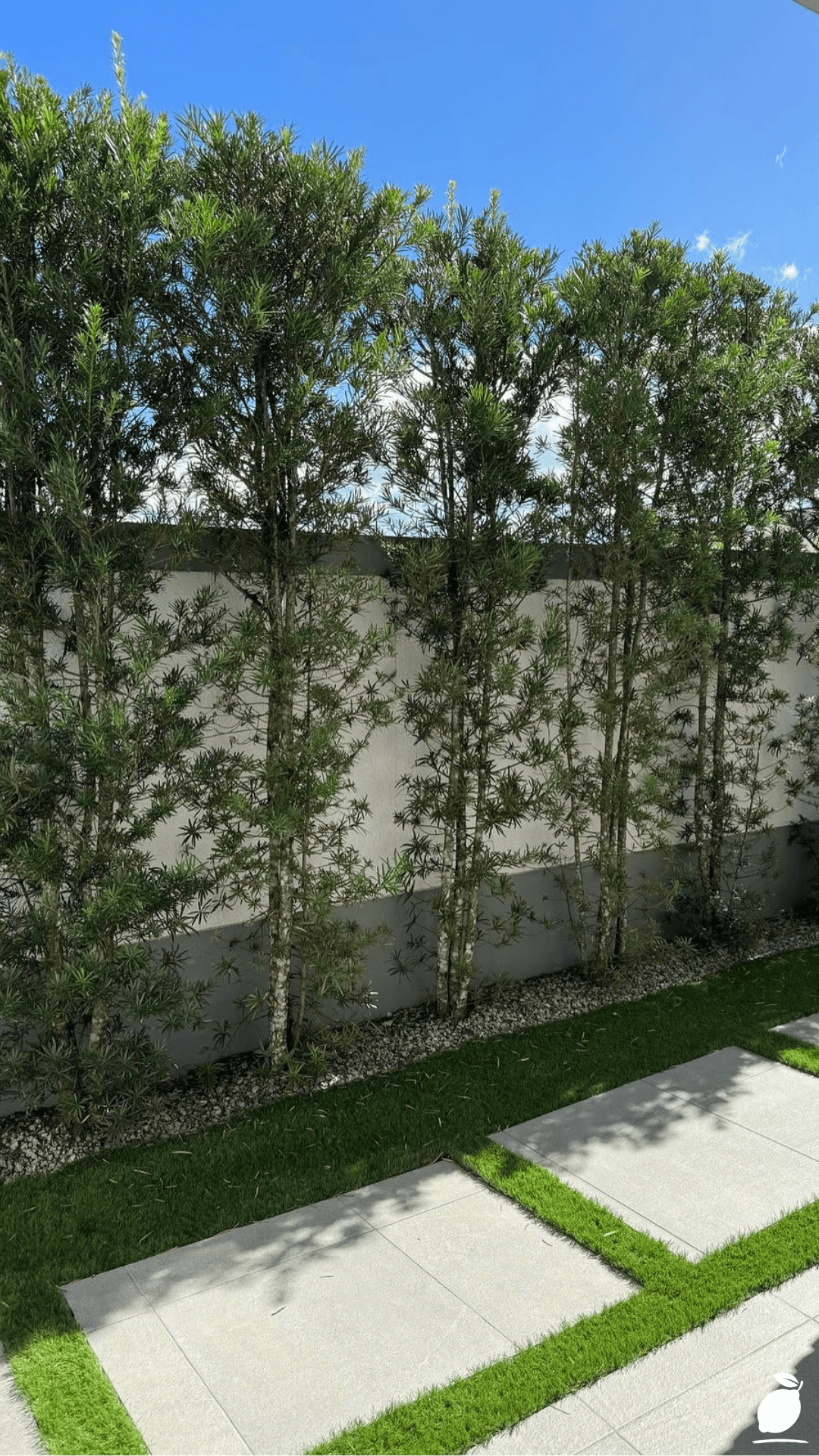
The privacy that fast-growing bushes restore to a garden is not merely a visual quality; it is a psychological one. A garden that cannot be seen into is a garden where genuinely restorative relaxation is possible. The research on attention restoration consistently identifies natural, enclosed environments as the conditions under which recovery from stress occurs most effectively, and the garden that provides that enclosure with living, growing, season-changing privacy bushes provides a qualitatively different restorative experience from one bounded by fences and walls alone. The rustle of the leaves, the movement in the breeze, the seasonal change from summer density to winter structure these are qualities that a fence does not provide, and that fast-growing privacy bushes do.
For families, the enclosed garden that fast-growing bushes create becomes the default outdoor room: the space where children play freely without parental anxiety about visibility from the street, where adults sit for longer because the sense of containment signals permission to rest, and where the shared outdoor experience that family life benefits from happens naturally rather than requiring organization. The garden enclosed by a mature hedge line is a different garden from the exposed one: it is a room with walls rather than a yard with boundaries, and the quality of life within it is correspondingly different.
And for the homeowner who plants the row of fast-growing privacy bushes, who digs the trench, amends the soil, plants at the correct spacing, stakes, waters, and waits through the establishment seasons, the result is one of the most lasting improvements available in residential landscaping. The bushes will outlive the roof replacement and the kitchen renovation and the sequence of furniture purchases that mark the years of a household. They will improve every year for the decade after planting. And the private outdoor space they create will be used, enjoyed, and appreciated every summer for as long as the house is a home.
Frequently Asked Questions
What are the fastest-growing privacy bushes for a tall screen quickly?
Leyland cypress (×Cuprocyparis leylandii) is the fastest-growing privacy bush in temperate climates 75 to 90cm per year in good conditions. Thuja ‘Green Giant’ grows 60 to 90cm per year in US climate zones 5 through 9. For broadleaf evergreen options, cherry laurel (Prunus laurocerasus) and Portuguese laurel (Prunus lusitanica) both grow 30 to 50cm per year. In warm climates, Pittosporum tenuifolium and bamboo (clumping Fargesia species with a root barrier) both achieve 60 to 90cm per year and suit positions where conifer aesthetics are not preferred.
How do I stop fast-growing privacy bushes from getting too tall?
The most effective strategy for height management of fast-growing privacy bushes is establishing a maximum height target before planting and trimming annually when that height is reached, not after it is exceeded. For most residential privacy screens, a target height of 2.5 to 3.5 meters provides effective screening while remaining trimable from the ground. Once established, an annual clip of the leading shoots at the target height redirects growth energy into lateral shoot production, increasing density rather than height. For Leyland cypress specifically, establish the trimming habit by year three at the latest; waiting longer significantly complicates height management.
Can fast-growing privacy bushes damage house foundations?
Most conifer fast-growing privacy bushes (Leyland cypress, Thuja, Italian cypress) have non-invasive root systems that do not typically damage house foundations when planted at a sensible distance. The minimum safe planting distance from any house foundation for these species is 1.5 to 2 meters. Laurels and large broadleaf shrubs used as fast-growing privacy bushes have similarly non-invasive root systems at typical planting distances. Willows and poplars, which are sometimes proposed as fast-growing privacy solutions, do have invasive root systems and should not be planted within 10 meters of any building or underground service. Never use willows or poplars as fast-growing privacy bushes near structures.
How do I fill gaps in an established privacy bush screen?
Gaps in established fast-growing privacy bush screens most commonly occur where a plant has died, where growth has been uneven, or where the original planting was too widely spaced. The most effective gap-filling approach is to plant a container-grown specimen of the same species into the gap at the correct depth and spacing, stake it if the surrounding plants create a wind-sheltered micro-climate that has different conditions from the original planting site, and feed it specifically with a high-nitrogen fertilizer applied at double the standard rate for the first season to accelerate its growth to match the surrounding plants. In some cases, pulling established neighboring plants toward the gap and securing them temporarily with garden wire allows the existing bushy growth to fill the gap faster than a new plant can.