The morning coffee routine in my kitchen had gradually become its own category of small daily frustration. Not the coffee itself, the coffee was fine, but the specific quality of the counter surface where the coffee was made. The espresso machine shared a section of counter with the dish drying rack and the fruit bowl, and the stack of mail that had not yet been sorted, and every morning, I was navigating between these competing presences to make the one thing I actually needed before I was capable of navigating anything.
The machine’s power cord ran across the counter to an outlet behind the fruit bowl. The coffee filters lived in a drawer on the other side of the kitchen. The mugs were in a cabinet that required opening and closing with slightly coffee-stained hands at a point in the morning when I was not yet coordinated enough for cabinet doors. None of these were serious problems. Together, they produced the specific quality of a morning that had not been designed to be functional, adequate, and entirely without the calm intentionality that the experience of drinking coffee deserves.
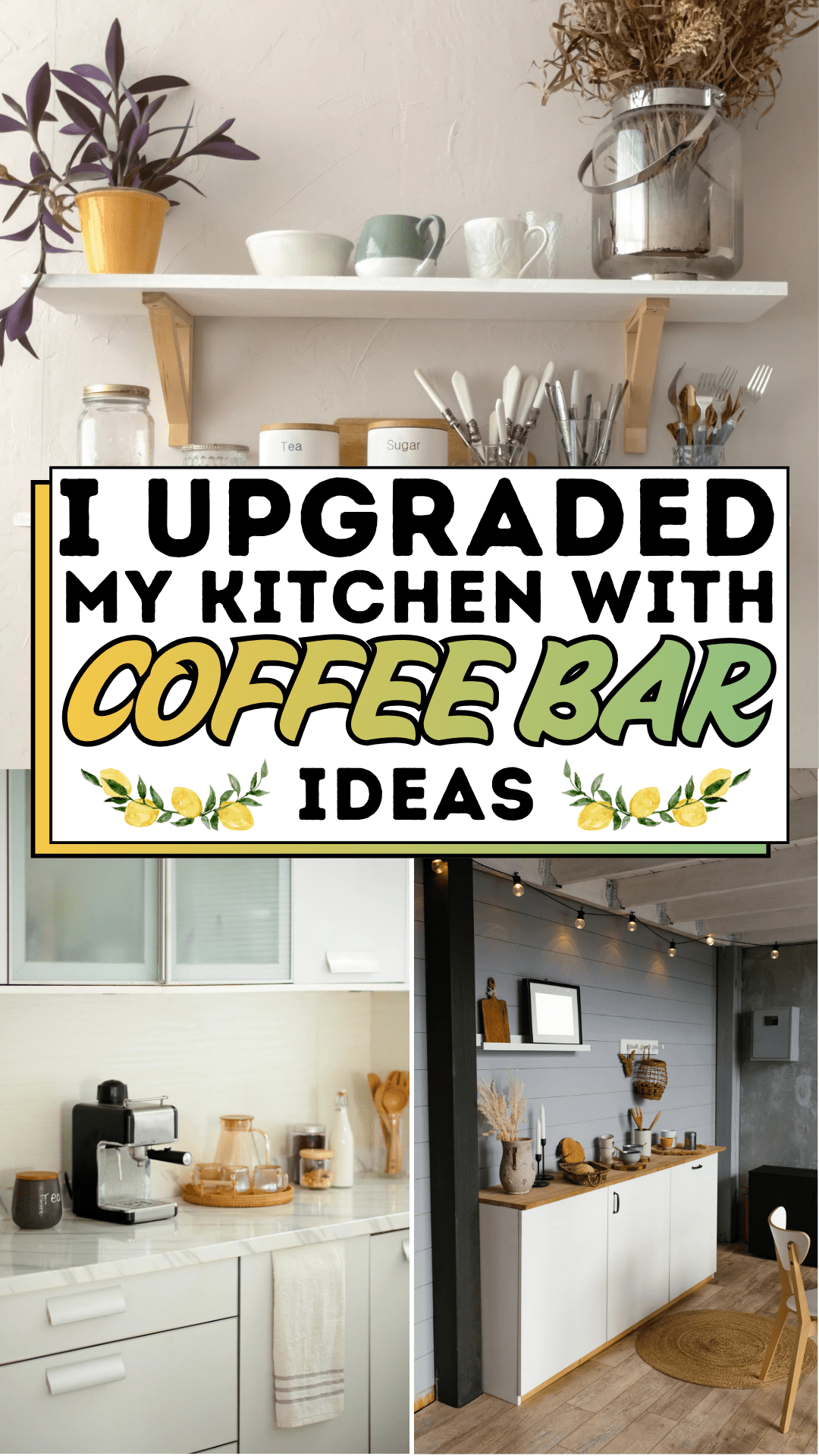
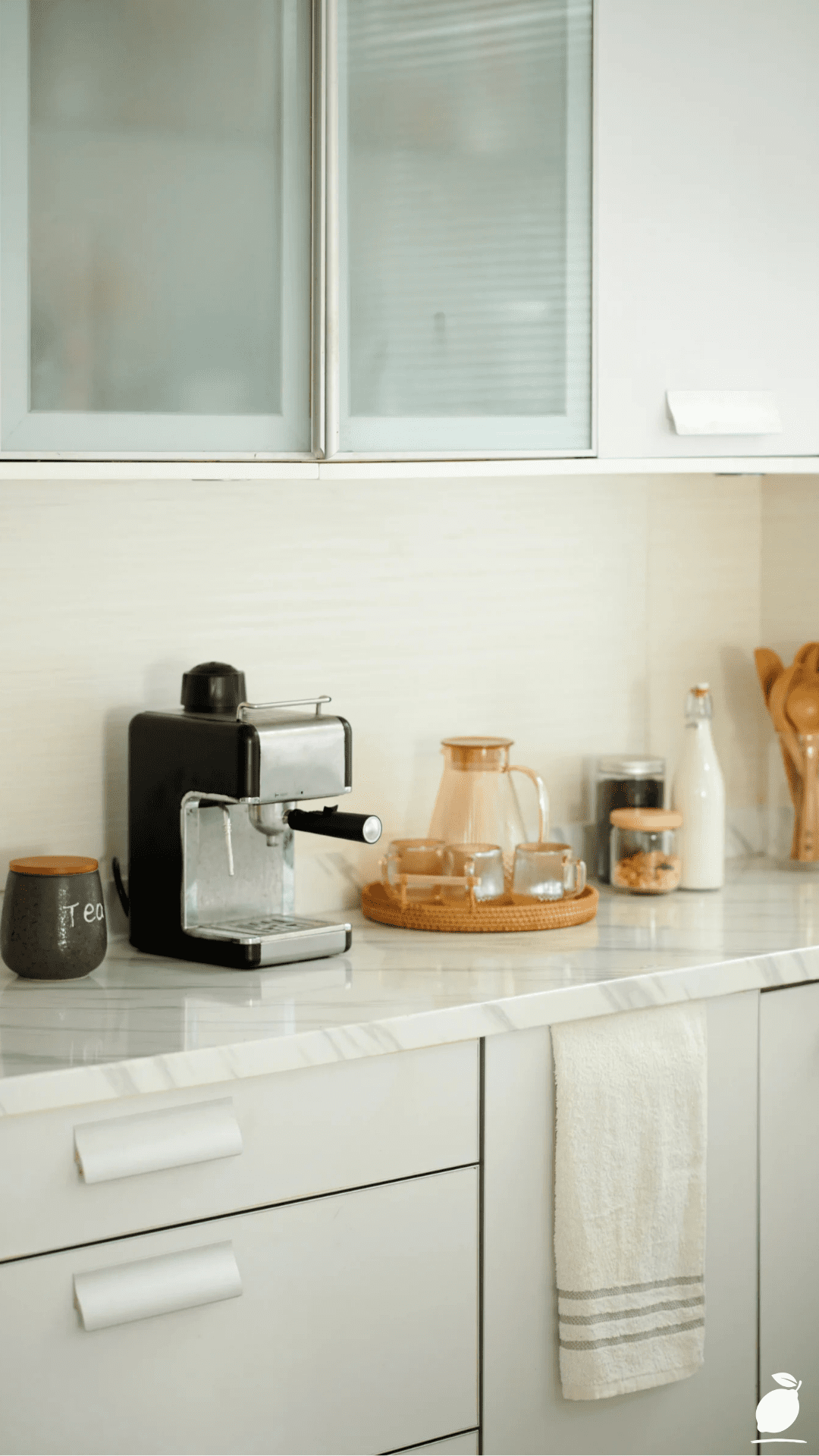
The kitchen counter in the image above is what coffee bar ideas look like when the morning routine has been given its own dedicated, considered space. A black espresso machine with a glass water reservoir and metal accents positioned precisely on a white marble countertop, not sharing space with anything that does not belong to the coffee routine, not edged aside by competing counter objects, but placed as the zone’s primary and acknowledged centerpiece.
To the right, a wooden serving tray containing a glass carafe and accompanying accessories, the tray does the organizational work of containing the coffee zone’s supporting items as a composed grouping rather than a scattered collection. A white ceramic tea mug on the left, positioned with the specific intention of being exactly where it will be needed. White cabinets with silver handles, frosted glass upper cabinets above, a warm beige wall behind the coffee bar, and a supporting environment that makes the zone feel like a designed feature of the kitchen rather than the corner where the espresso machine happens to live. Everything in the image serves the coffee routine or serves the coffee zone’s visual quality, and nothing in the image does neither.
The coffee bar ideas in this guide follow the image’s governing logic: a coffee bar is not a purchase; it is a decision about which section of the kitchen counter belongs to the morning coffee ritual, followed by a sequence of specific choices about what occupies that zone and how. These coffee bar ideas address the zone’s surface, the equipment positioning, the tray organization system, the mug and carafe display, the cabinet and storage relationship above and below the zone, and the small atmospheric details (the striped kitchen towel, the warm wall color, the natural light) that make a coffee bar idea feel like a feature rather than a functional corner. The result, assembled from these specific coffee bar ideas, is the calm morning kitchen the image promises built in a single weekend, functional from the first Monday, and sustaining its quality through years of daily use.
The Coffee Bar Ideas Blueprint
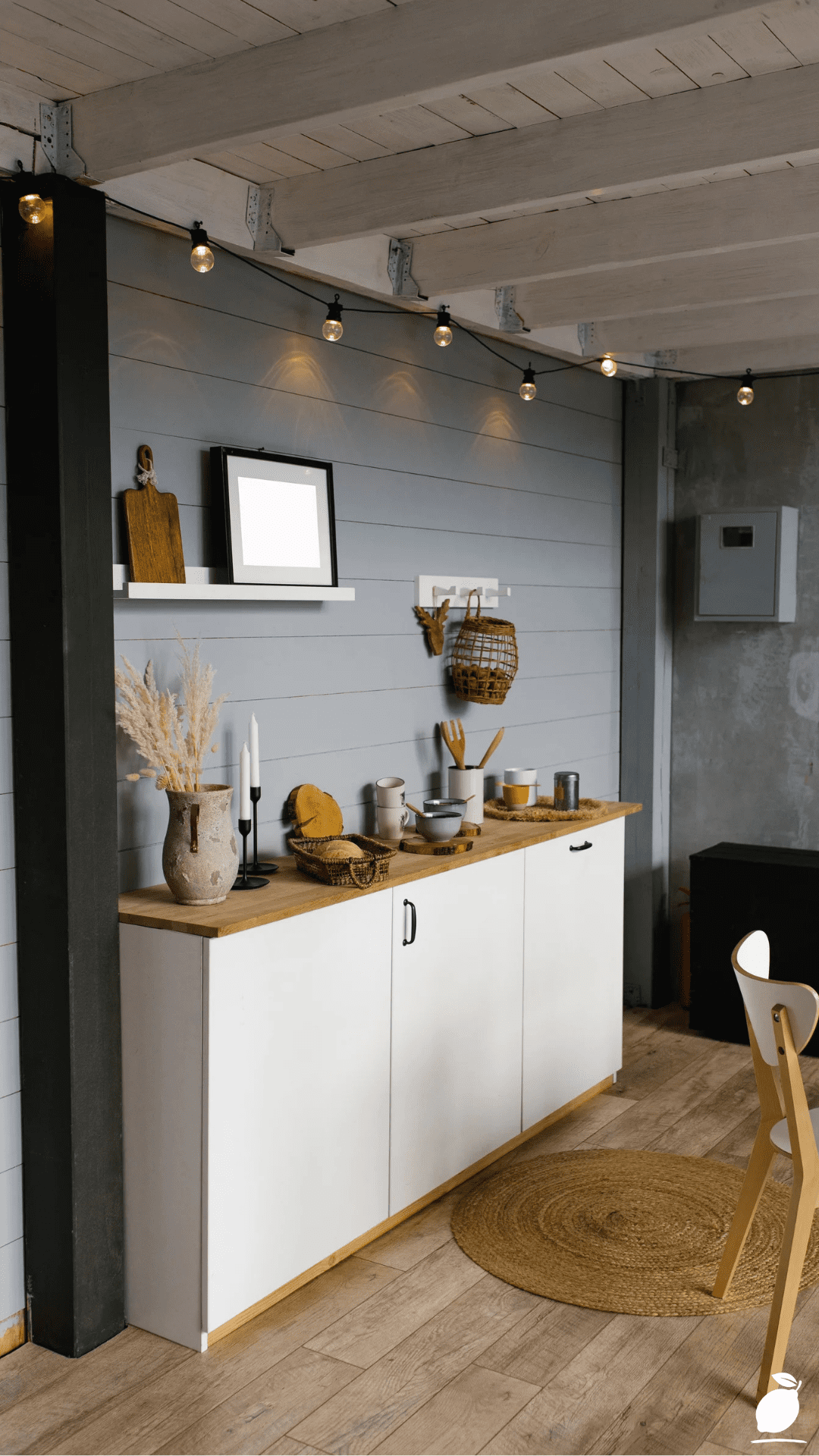
Step 1: Choose and Dedicate a Kitchen Counter Zone for the Coffee Bar Ideas
Coffee bar ideas fail more consistently at the zone-selection stage than at any subsequent design or equipment stage because coffee bar ideas applied to a zone that is also required to hold other kitchen functions inevitably produce competition for the limited counter space that dissolves the coffee bar’s dedicated character within weeks of its establishment. The coffee bar idea’s fundamental premise, a zone that belongs to the morning coffee ritual, requires that zone to be genuinely, consistently available for the coffee ritual rather than shared with the dish rack, the bread box, or the counter space between the sink and the stove that daily cooking perpetually reclaims.
Walk the kitchen and identify which counter section best serves a dedicated coffee bar ideas zone, assessed against three criteria: proximity to a power outlet (the espresso machine requires a power source within direct reach of the counter zone, without a cord running across adjacent counter surface), proximity to the kitchen’s water source (refilling the water reservoir, rinsing the glass carafe, and washing mugs are all coffee bar routine tasks that benefit from being within close reach of the sink), and visual visibility from the room’s primary entry point (a coffee bar ideas zone that is visible from the kitchen’s entry or from an adjacent dining area becomes a design feature of the room; a zone hidden in a corner or behind a partial wall does not).
Mark the coffee bar ideas zone boundaries physically, using a piece of masking tape or a measuring tape to define the section’s left and right edges, typically 60cm to 90cm of counter width for a single-machine coffee bar ideas zone, and live with those physical markers for forty-eight hours, observing whether the marked zone is genuinely unused by other kitchen functions during normal daily use. A zone that attracts mail, fruit bowls, or dish overflow during the observation period is not a suitable coffee bar zone unless those competing functions can be permanently relocated elsewhere in the kitchen.
Step 2: Select the Coffee Bar Ideas Primary Machine as the Zone’s Anchor
The black espresso machine in the image is the coffee bar ideas’ primary equipment anchor, the piece that establishes the zone’s scale, defines its purpose, and determines the dimensions that all other coffee bar ideas elements must fit within. For coffee bar ideas, the primary machine selection is the decision that most significantly determines the finished zone’s character: a single espresso machine produces the specific dedicated zone quality the image demonstrates; a combination of espresso machine, bean grinder, and milk frother requires a wider counter section and produces a more complex coffee bar ideas visual arrangement that benefits from a more elaborate organizational system.
For coffee bar ideas machine selection at various investment levels, the espresso machine visible in the image represents the mid-range of coffee bar ideas equipment: a semi-automatic or pod-based espresso machine with a glass water reservoir at the visible-from-the-outside position, at a retail price of $150 to $400. Budget coffee bar ideas can center on a French press, AeroPress, or pour-over setup (the lowest equipment cost, producing coffee bar ideas with a handcrafted, minimalist character); mid-range coffee bar ideas center on a pod-based or semi-automatic espresso machine with a visible water reservoir (as in the image); premium coffee bar ideas center on a fully automatic bean-to-cup machine or a manual espresso machine with a separate grinder.
Regardless of the machine type, position the coffee bar’s primary machine with its most visually attractive face forward, the glass water reservoir and metal accents in the image’s machine face outward, making the machine’s design features visible and contributing to the zone’s visual quality. A coffee bar idea machine positioned with its back or side to the room loses the visual contribution that a well-designed machine provides to the coffee bar ideas zone.
Step 3: Establish the Coffee Bar Ideas Tray as the Organizational Anchor
The wooden serving tray in the image is the coffee bar ideas organizational element that most efficiently transforms a counter arrangement from a set of objects placed near each other into a composed zone with a clear boundary, the tray’s edge defining exactly where the coffee bar ideas zone’s supporting accessories begin and end. In coffee bar ideas, the tray performs the same function that a rug performs in a living room: it defines a zone within the larger surface, contains the zone’s elements as a cohesive group, and makes the zone’s boundaries visible and consistent regardless of the minor repositioning that daily use produces.
For coffee bar ideas tray selection, choose a material that relates to the kitchen’s existing material palette and is warm enough in tone to complement both the machine’s finish and the counter surface’s material. The wooden tray in the image relates to the black machine and white marble counter through the warm wood tone that sits naturally between the black and white extremes, a material bridge between the zone’s two most contrasting palette elements. Acacia wood, walnut, or bamboo trays in the $20 to $50 range provide the coffee bar ideas tray quality, as the image demonstrates, at accessible price points.
Size the tray to hold the coffee bar ideas’ supporting accessories (the glass carafe, the coffee pods or filters container, the sugar canister, or whatever accessories the specific coffee routine requires) without requiring the items to be stacked or crowded. A tray that holds its items in a single layer with slight visual breathing room between them produces the composed display quality the image demonstrates. An overcrowded tray communicates storage rather than display, which undermines the coffee bar’s visual quality regardless of the individual quality of the items it contains.
Step 4: Curate the Coffee Bar Ideas Mug and Carafe Display
The white ceramic mug positioned on the left side of the image’s coffee bar ideas counter and the glass carafe on the tray represent the coffee bar ideas’ display layer, the items that are both functionally present (they will be used in the morning routine) and visually contribute to the zone’s aesthetic quality. In coffee bar ideas, the choice of which items to display and which to store is the decision that most determines whether the zone reads as a curated feature or as functional counter equipment. Beautiful items, regularly used, and appropriately scaled for display belong on the coffee bar ideas counter; items that are used occasionally, poorly designed, or large enough to overwhelm the zone’s scale belong in the cabinet above.
For coffee bar ideas mug display, choose two to four mugs that belong to the same visual family, the same material (all ceramic, or all matching the image’s white ceramic), the same approximate size, and the same general aesthetic direction, and position them on the counter or on a small mug hook rack mounted inside the cabinet above the coffee bar ideas zone. A consistent, curated set of two to four mugs reads as an intentional display; a counter holding eight mugs in four different sizes, materials, and colors reads as the morning cabinet’s contents relocated to the counter.
The glass carafe in the image serves two coffee bar ideas functions simultaneously: it holds the coffee or hot water needed for the morning routine, and its transparent glass allows the liquid it holds to become a visual element of the zone, a coffee bar ideas object whose contents are as visually present as its form. For coffee bar ideas where the glass carafe is a functional choice rather than a display choice, choose glassware with a simple, well-proportioned form that reads as designed rather than utilitarian at the counter display scale.
Step 5: Address the Coffee Bar Ideas Cabinet Storage Above and Below the Zone
The white cabinets with silver handles and frosted glass upper cabinets visible in the image’s background are the coffee bar ideas’ storage infrastructure, the cabinet space directly above and below the counter zone that holds the items the coffee bar ideas zone requires but does not display. The cabinet relationship is the coffee bar ideas’ most practically important organizational dimension: a coffee bar counter zone that is well-curated but whose supporting cabinet is disorganized produces a zone that looks right and functions poorly, requiring the same morning navigation between dispersed items that preceded the coffee bar ideas project.
For coffee bar ideas, cabinet organization above the zone, dedicate the cabinet directly above the coffee bar ideas counter to coffee-related storage exclusively, the full coffee bean or pod inventory, the backup filters, the coffee cleaning tablets, the coffee scoop, and any additional mugs not in the display rotation. This single-category cabinet approach is the coffee bar ideas organizational principle that most consistently maintains the zone’s functional integrity: when everything the coffee routine requires is either on the counter or in the cabinet directly above it, the morning routine’s spatial logic is complete and self-contained within a 60cm to 90cm counter zone.
For coffee bar ideas cabinet organization below the zone, use the lower cabinet to hold the larger coffee equipment items that are not in daily use, such as the French press used for weekend batch brewing, the travel mug collection, the espresso cleaning brush in a container or bin that can be pulled to the front of the cabinet for access without requiring the reorganization of everything else stored with it.
Step 6: Complete the Coffee Bar Ideas With Atmospheric Detail Elements
The striped kitchen towel hanging from the cabinet handle, the warm beige wall color, and the soft natural lighting in the image are the coffee bar ideas’ atmospheric detail layer, the elements that make the zone feel like a designed feature rather than functional equipment, and that differentiate a coffee bar idea that was styled with care from one that was simply equipped with the correct machine and tray. In coffee bar ideas, the atmospheric details are inexpensive individually and significant collectively: a striped linen towel costs $12 to $20 and contributes more to the zone’s visual character than any organizational insert at the same price.
For coffee bar ideas atmospheric details, introduce texture through a quality kitchen towel (linen or cotton in a stripe or simple pattern related to the zone’s palette the gray stripe on white in the image relates to the zone’s black-machine, white-marble, and warm-beige-wall palette through the gray neutral that bridges those three tones), a small trailing or compact plant on the adjacent counter section if space permits, and a candle or small aromatic element positioned on the tray’s open space for the evenings when the coffee bar ideas zone becomes a tea and candlelight space rather than a morning espresso zone.
Expert Secrets for Success
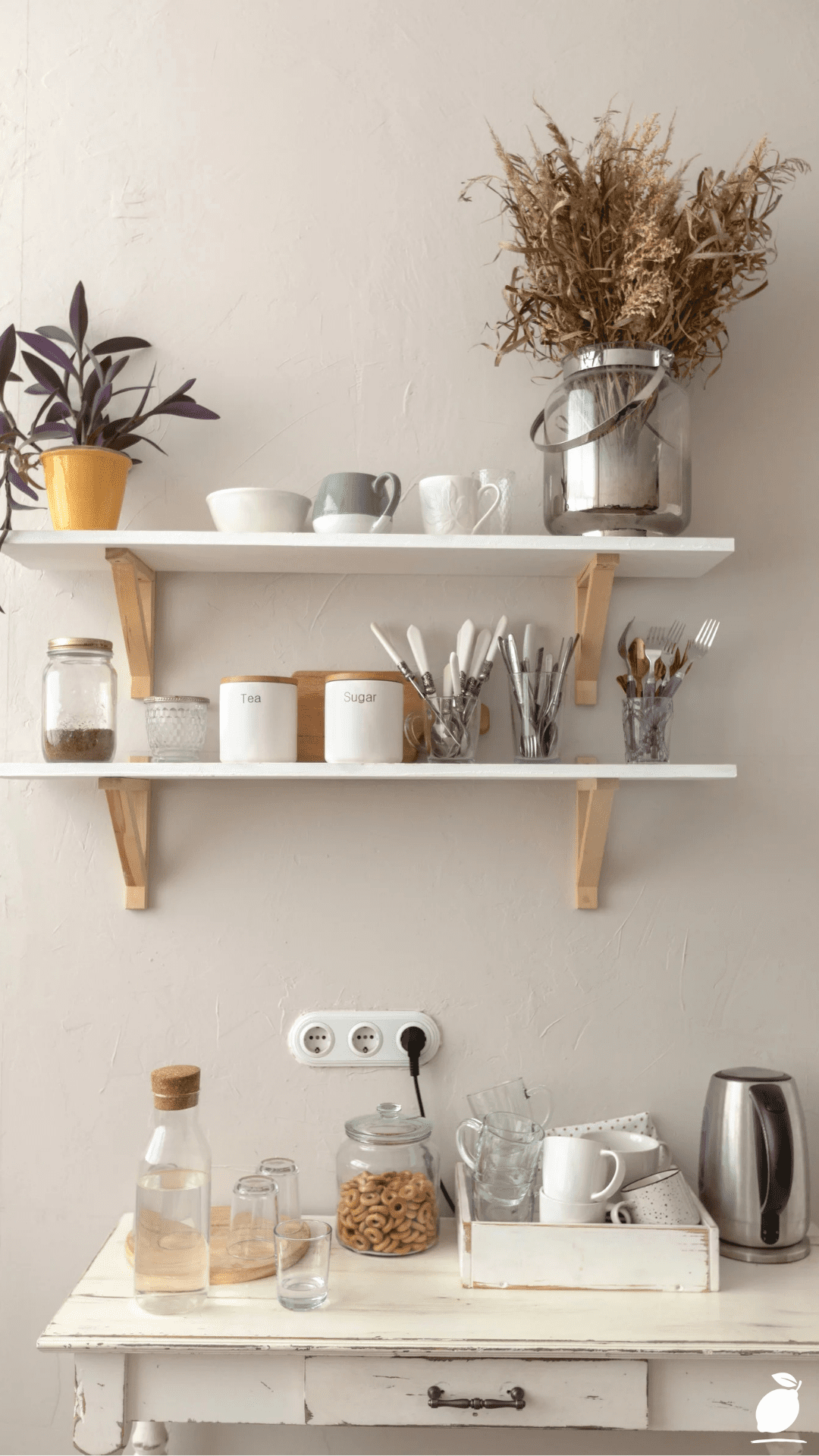
Pro-Tips for a Better Result
Use a power strip mounted inside the lower cabinet directly below the coffee bar ideas zone, with a single outlet cord running up through a small drilled hole to the counter surface. The specific clutter-generating quality of counter power cords, the machine’s cord running across the counter to a wall outlet, or draped over the counter edge to an outlet below, is the coffee bar’s detail that most undermines the zone’s visual cleanliness. Mounting a power strip inside the lower cabinet and routing a single flush-mounted outlet plate through the counter surface (a standard kitchen counter outlet installation, available as a hardware item for $25 to $40) eliminates visible power cords from the coffee bar counter.
Purchase mugs and the glass carafe simultaneously to ensure they belong to the same visual family. Coffee bar ideas display items purchased separately across different shopping trips, frequently producing size or proportion inconsistencies that prevent the display from reading as a composed group. Purchase the two to four mugs and the carafe at the same time, from the same or intentionally coordinated sources, and assess them together in the store or by returning items that do not belong to the same visual family when seen alongside the other coffee bar ideas display items.
Apply a marble countertop contact paper to the coffee bar ideas zone if the existing counter is not marble. The white marble counter surface in the image is the coffee bar ideas background that most naturally complements both the black espresso machine and the warm wooden tray through the marble’s white field and warm gray veining. Marble-effect contact paper in a high-quality version ($15 to $30 for a 60cm × 90cm coffee bar ideas zone section) is now indistinguishable from genuine marble at the counter viewing distance in a well-lit kitchen, and it converts any existing counter surface, laminate, tile, or butcher block into the marble-feel background the coffee bar ideas image demonstrates.
Label the back of the tray with the coffee bar ideas zone’s contents inventory. A small label applied to the tray’s underside listing the items that belong on it (“Glass carafe, sugar canister, coffee pod container, wooden stirrer”) provides the coffee bar ideas reset reference that every household member can use after the tray’s items have been displaced during cleaning, allowing the composed display to be restored to its original arrangement without the visual assessment work of redesigning the display from scratch each time.
Common Mistakes to Avoid
Don’t place the coffee bar ideas machine in a zone that is also used for food preparation. A coffee bar idea zone that shares counter space with cutting boards, vegetable prep, or baking requires the machine to be relocated during cooking and returned afterward, an interaction that produces the specific daily friction of a coffee bar idea that has not been assigned its own counter territory. The machine’s presence on a shared prep surface also subjects it to food residue, water splatter from sink proximity, and flour or oil from cooking that accelerate the machine’s surface degradation. Reserve a counter zone specifically for the coffee bar ideas and relocate the prep surface elsewhere.
Don’t choose a wooden tray that is too small to contain the coffee bar ideas supporting accessories. A tray that is too small for the accessories it needs to contain will have items spilling off its edges, which produces the visual disorder of items appearing to be placed on the counter rather than displayed on the tray. The coffee bar ideas tray should be large enough that all its items fit within the tray’s interior with 2cm to 3cm of visible tray surface between each item, the breathing room that makes the tray’s contents read as a composed display rather than a crowded storage surface.
Don’t use a glass carafe with a volume larger than the coffee bar ideas zone’s scale supports. A large-volume carafe (1.5L to 2L) positioned on a coffee bar ideas tray beside a single espresso machine is scaled for a commercial coffee service rather than a domestic coffee bar ideas zone, and its bulk dominates the tray display in a way that prevents any other tray item from reading at an appropriate scale. Choose a glass carafe in the 600mL to 800mL range for a single-machine coffee bar, the correct volume for a domestic morning coffee routine, and the correct scale for a tray display alongside a single espresso machine.
Don’t neglect to wipe the coffee bar ideas counter zone as a daily habit. Coffee bar ideas produce their clean, considered aesthetic only when the marble (or marble-effect) counter beneath the machine and tray is wiped free of coffee grounds, water rings, and milk residue at the end of each morning routine. A sixty-second counter wipe with a damp cloth after the morning coffee is made is the specific coffee bar ideas maintenance habit that keeps the zone looking like the image every morning, rather than reverting to a stained, marked counter surface within weeks of the coffee bar ideas project’s installation. The striped kitchen towel in the image hung from the cabinet handle immediately adjacent to the zone is the coffee bar ideas’ cleaning-access detail: the towel is exactly where it needs to be for the sixty-second post-coffee wipe.
Why Coffee Bar Ideas Matter
The morning coffee ritual is, for a significant portion of the population, the day’s first deliberate act, the moment before the phone is checked, the first thing made with intention rather than received from elsewhere, the daily practice of making something small and specific that is entirely yours. Coffee bar ideas that give that ritual a dedicated, designed space do more than organize a counter section: they give the morning’s first intentional act a setting that matches its significance to the daily rhythm that it opens. A coffee bar ideas zone that is clean, composed, and specific to the coffee ritual communicates, every morning when it is approached, that the person who made this kitchen takes the quality of the morning seriously and that communication, repeated daily across years of mornings, accumulates into the specific domestic confidence of someone who has made their home work for them.
Research in habit psychology and environmental design has documented the relationship between environmental organization and ritual consistency: habits that are assigned a specific, consistently organized physical space are maintained more reliably and more pleasurably than habits that must be assembled from dispersed materials each time they are practiced. The coffee bar ideas zone is, in this framework, not merely an aesthetic upgrade but a behavioral infrastructure investment, a specific, consistent environment for the morning coffee habit that reduces the friction of the habit’s daily initiation and increases the pleasure of its execution. Coffee bar ideas produce better mornings by producing better morning environments, and better mornings compound into a meaningfully better daily rhythm across the weeks, months, and years of daily coffee making.
Easy Peasy Life Matters is built on the conviction that the kitchen’s most daily rituals, the ones performed every morning without exception, at the hour when the household is most vulnerable to accumulated friction and most receptive to accumulated calm, deserve the specific design investment that coffee bar ideas provide. The black espresso machine on the white marble counter beside the wooden tray and the ceramic mug in the image is not a luxury. It is a morning organized in advance, waiting to be used. These coffee bar ideas are how that morning gets built.
Frequently Asked Questions
What do I need to set up a basic coffee bar and ideas zone at home?
The minimum coffee bar ideas setup requires five elements: a dedicated 60cm to 90cm counter section assigned exclusively to the coffee zone, a primary coffee-making machine positioned as the zone’s anchor (espresso machine, pour-over setup, or French press depending on preference and budget), a wooden or material-appropriate tray to contain the zone’s supporting accessories, two to four mugs from the same visual family displayed on or beside the tray, and a small carafe or water vessel for the quantities of liquid the morning routine requires. Together, these five coffee bar ideas elements establish the zone’s function and visual quality without requiring any cabinet modification, electrical work, or significant investment.
How much does it cost to set up a coffee bar ideas zone?
A complete coffee bar ideas zone, including a mid-range espresso machine, a quality wooden tray, two to four ceramic mugs, a glass carafe, and a counter outlet cover, typically costs $200 to $500, depending on the machine selected. Budget coffee bar ideas using a French press or pour-over setup in place of an espresso machine reduce the total cost to $60 to $150 for the full zone, including equipment, tray, and display items. The counter zone itself, the section of counter being dedicated, requires no additional cost if an appropriate counter section already exists. Marble-effect contact paper for the counter zone surface adds $15 to $30 to any coffee bar ideas project where the existing counter material is not appropriate to the aesthetic direction.
Can I create coffee bar ideas in a small kitchen with limited counter space?
Yes coffee bar ideas in small kitchens with limited counter space work best in the vertical rather than horizontal dimension: a narrow 45cm counter section with a compact espresso machine (choose a model with a built-in water reservoir rather than a separate external reservoir, which reduces the machine’s counter footprint) and a small tray holding only the daily-use essentials (one mug, one pod container), with a wall-mounted floating shelf 30cm above the counter holding additional mugs and the glass carafe. This compact coffee bar’s vertical configuration requires only 45cm of counter width and adds storage capacity through the wall-mounted shelf without consuming any additional counter space.
What is the best countertop material for coffee bar ideas?
White marble and white quartz are the coffee bar’s countertop materials that most effectively serve both the zone’s aesthetic quality (the white-and-gray veining provides a naturally sophisticated backdrop for the black machine and wooden tray) and its functional requirements (smooth, non-porous surfaces, particularly quartz, resist coffee staining and clean easily after the morning’s grounds and water residue). Natural marble, while visually beautiful, is a porous material that requires sealing annually and is susceptible to coffee and citrus staining without prompt cleaning. Engineered quartz in a marble-effect finish provides the coffee bar ideas aesthetic of the image at greater stain resistance and lower maintenance, making it the most practical coffee bar ideas countertop for heavy daily use.
How do I keep the coffee bar ideas zone organized with multiple household members using it?
The coffee bar ideas organizational approach that maintains zone integrity with multiple users is the reset-to-the-tray principle: every item used in the coffee morning routine returns to the tray or to its specific counter position after use, and the tray is the zone’s organizational reference its contents list (whether labeled on the tray underside or communicated verbally to all users) defines what belongs on the coffee bar ideas counter. Adding a small labeled bin in the lower cabinet below the zone for items that do not belong on the counter but are found there (stray spoons, non-coffee mugs, charging cables that have migrated) provides a secondary reset location that maintains the counter zone’s clarity without requiring items to be relocated to a distant cabinet.