The console table in the hallway was supposed to be a solution. It was supposed to provide a surface for the things that needed a home near the door keys, mail, the odd receipt, and instead it has become the place where everything that does not have a home comes to rest indefinitely. The bag that needs to be returned to someone. The cables that belong to a device that has since been replaced. A birthday card that arrived three weeks ago and has not been moved because moving it requires deciding where it goes, and that decision keeps getting deferred. The console table that was supposed to give the hallway a finished, considered quality has instead become the most visible evidence that the house is managed rather than curated.
This is the trap of a console table without a system. The surface is accessible, the first thing seen when entering and the last thing passed on the way out, which makes it the natural landing zone for everything in transit. Without a deliberate, designed arrangement that signals “this surface has an intention,” the console table absorbs whatever is placed on it and gradually loses the ability to function as a design element at all. It becomes a storage surface wearing the costume of décor. And the harder you try to keep it clear, the faster it fills back up, because the underlying problem is not the clutter, it is the absence of a deliberate arrangement that makes clutter feel visually out of place.
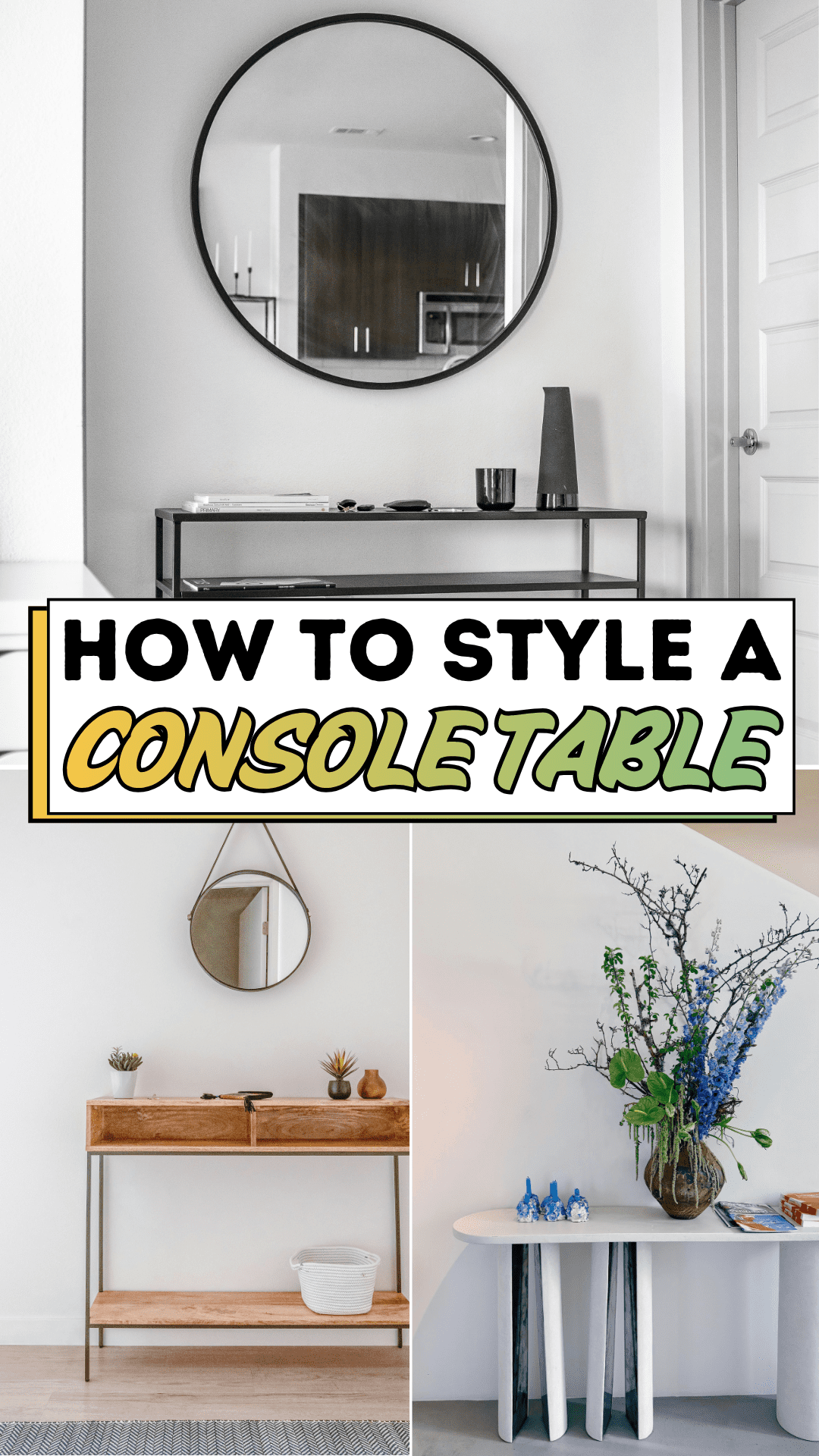
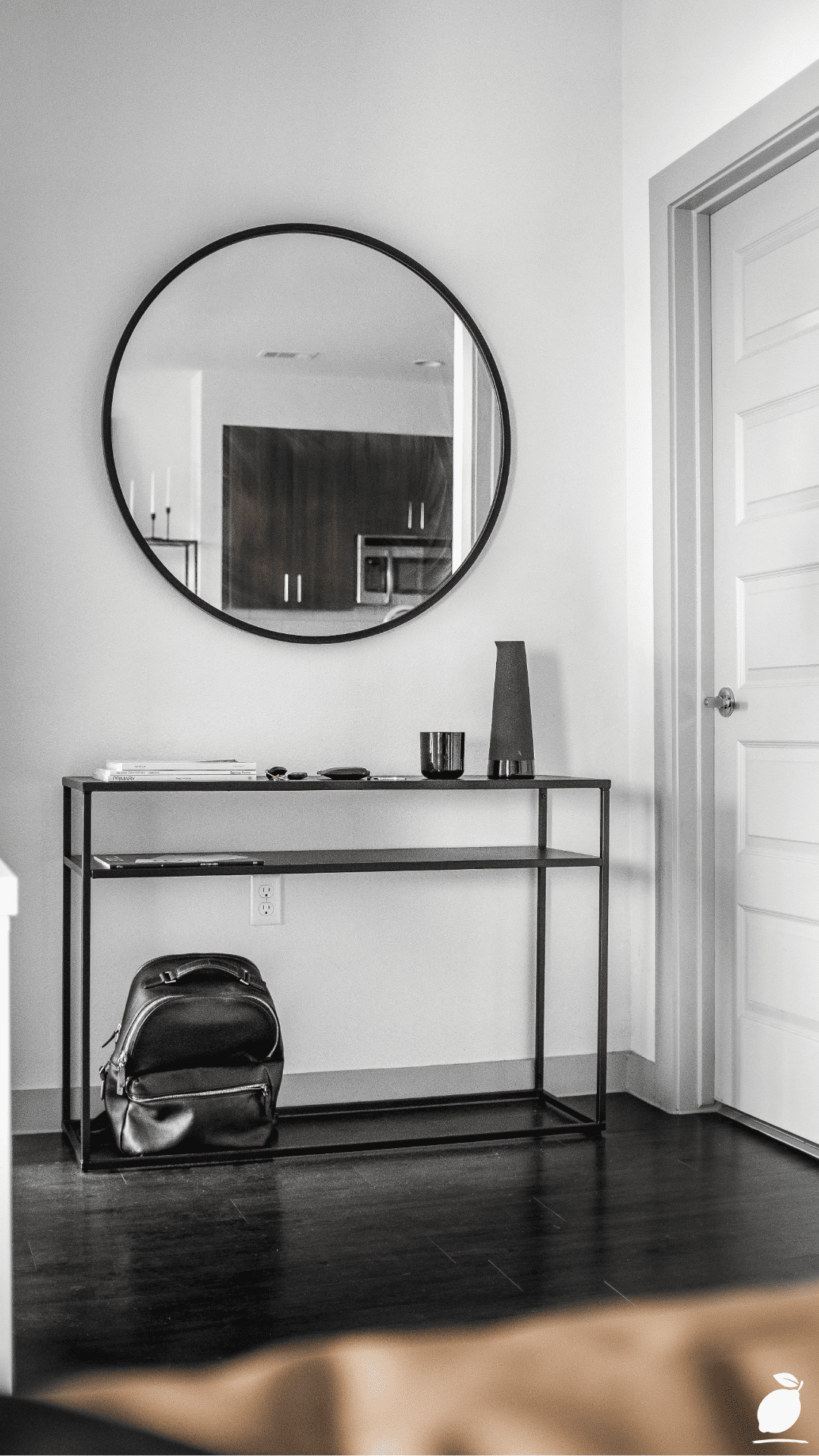
The image of a console table styled with restraint and confidence, a circular black-framed mirror overhead, a single small vase on the surface, a bag stored neatly on the lower shelf, the whole composition crisp in black and white against white walls and dark wood floors is not show a surface that has been cleared for the photograph. It is showing a surface that has been designed so that it knows what it is for. Every element present is there with a purpose. Every element absent stays absent because the arrangement is complete without it. This is how console table styling works when it is done correctly, and it is entirely learnable. Here is the step-by-step process.
The Console Table Blueprint
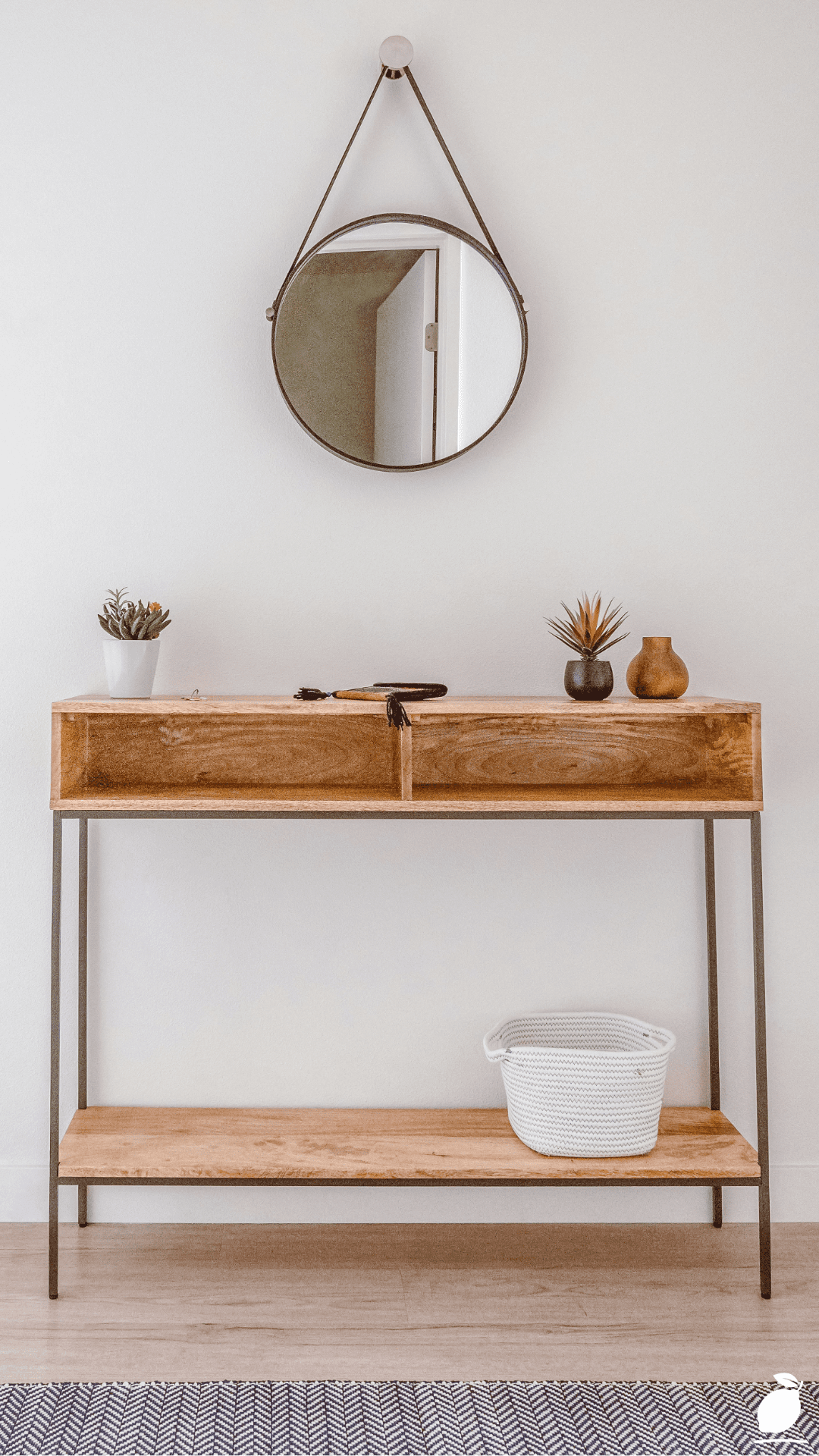
Styling a console table is a project with a sequence, not a one-time arrangement, but a designed system that holds its composition over time. Follow these steps in order, and the result is a console table that looks intentional every day, not just on the day it was arranged.
Step 1: Clear Everything and Start from Zero
The console table styling process cannot begin on top of an existing arrangement. Remove everything, every object, every piece of mail, every incidental item that has settled on the surface or the shelves beneath it. Set it aside out of sight. The cleared console table, bare and functional in the room, is your starting canvas. Standing back and looking at it in its context, the wall behind it, the floor beneath it, and the light in the room tell you things about proportion, scale, and color that are impossible to perceive when the surface is covered.
Note the dimensions of the console table: height, depth, and width. Note the height and width of the wall section it sits against. Note what is above it, whether it has a mirror, artwork, or bare wall, and what is visible on either side. These physical relationships determine every styling decision that follows. A console table styling project that ignores these relationships produces arrangements that look good in isolation and wrong in their actual room.
Step 2: Establish the Anchor Mirror or Artwork Above
The console table and the wall above it are a single composition, not two separate decisions. The single most impactful element in that composition is what hangs or stands above the console table surface. A mirror, the choice in the image, a large circular black-framed piece, provides the clearest possible statement of intent above a console table: it defines the axis, frames the arrangement below it, and adds the spatial quality of depth and light that no artwork provides. A large piece of framed artwork in a coordinating palette achieves a similar anchoring effect with more character and less reflective complexity.
The scale of the anchor must be considered relative to the console table width. The mirror or artwork should span approximately two-thirds of the console table’s width, wide enough to relate clearly to the furniture below without extending beyond it. Center it precisely on the console table’s horizontal midline. This alignment is the structural foundation of the entire console table styling composition and must be established before any surface objects are placed.
Step 3: Define the Surface Arrangement: The Rule of Three
The console table surface is styled most effectively using the rule of three: an arrangement of three elements at varying heights creates visual rhythm and balance without the symmetry that reads as rigid or the randomness that reads as accidental. For the surface of a console table, those three elements typically consist of one tall, vertical element (a lamp, a vase with tall stems, a sculptural object), one medium-height element (a stack of books, a small plant, a decorative box), and one low, horizontal element (a tray, a candle, a small bowl).
The tall element creates the visual link between the console table surface and the mirror or artwork above it. The medium element provides the transition and the visual interest at eye height. The low element grounds the arrangement and provides a sense of considered completeness. In the image, this principle is visible in miniature: the mirror is the vertical anchor, the single vase on the surface is the object, and the horizontal line of the console table itself provides the third plane. Even a minimal arrangement like this one reads as deliberate because the relationships between the elements are understood.
Step 4: Introduce a Tray to Define the Functional Zone
The console table’s most practical styling challenge is maintaining a balance between looking designed and remaining functional because a console table at the entrance to a home will inevitably receive daily-use items: keys, sunglasses, and a phone. The tray solves this problem by defining a contained zone where functional items are permitted to land without visually disrupting the wider arrangement.
Place a rectangular tray in a minimalist setting, a round tray for a softer aesthetic on one end of the console table surface, and designate it as the catch-all zone for daily-use items. Keys go in the tray. Sunglasses go in the tray. Small change goes in the tray. Everything inside the tray reads as deliberately stored rather than randomly dropped, and the arrangement outside the tray remains undisturbed. The tray is the console table styling device that makes a designed arrangement sustainable in a household with daily use, rather than only manageable in an empty showroom.
Step 5: Use the Lower Shelf with Intention
A console table with one or more lower shelves, like the metal two-tier piece in the image, offers vertical storage capacity that most styling guides overlook. The lower shelf should be styled as deliberately as the surface, not used as a casual overflow zone. The most effective lower shelf styling for a console table uses one or two significant objects, such as a bag, as in the image, a basket, a stack of oversized books, or a plant, rather than multiple small items that compete and create visual noise.
In a hallway console table, the lower shelf is the ideal position for a neat bag or basket that holds the daily-carry items: wallet, keys, backup, mask, small umbrella in a contained, visually tidy form. The bag in the image works precisely because it is a single, well-chosen item on a clean shelf: it reads as part of the composition rather than as something left behind. Lower shelf objects should be large enough to fill the space without looking lost, and few enough to prevent the shelf from looking stored-in rather than styled.
Step 6: Edit, Then Edit Again
The final step in the console table styling process is editing, removing what does not earn its place in the arrangement. Stand at the room’s natural viewing distance from the console table (typically the distance from the opposite wall or doorway from which the arrangement is first seen when entering the room) and look at the composition with fresh eyes. Is every object visually necessary? Does each one contribute to the arrangement or simply occupy space? Is the overall feeling calm, considered, and complete, or is there a sense of one too many that diffuses the impact?
The instinct in styling is to add. The skill is in removing. The console table arrangements that are photographed and admired almost always have less on them than the person who initially styled them. The circular mirror and the single vase in the image would read as significantly less composed with a second object on the console table surface. The restraint is the design decision. Edit until the arrangement feels exactly right, then stop adding.
Expert Secrets for Success
Pro-Tips for a Better Result
- Commit to a single metal finish across all console table hardware and accessories. A console table styled with a black-framed mirror, brass candle holders, a silver vase, and a chrome tray is a console table styled by accumulation rather than design. Choosing one metal tone, matte black as in the image, warm brass, cool brushed silver, and applying it to every metallic element in the console table arrangement creates the visual cohesion that distinguishes a designed composition from an assembled one.
- Ground the console table with a rug beneath it. A console table floating on a bare floor without a rug beneath it lacks visual weight and reads as unanchored in the room. A narrow runner rug in a complementary tone or in the contrasting color that provides a designed counterpoint placed beneath the console table grounds the furniture in the space and completes the vertical composition from floor to mirror with every element intentionally placed.
- Match the console table depth to the space’s traffic requirement. A console table in a narrow hallway must be shallow enough, ideally 25 to 35cm deep, to allow comfortable passage on both sides without physical contact. A deeper console table in a wider space or living room allows for a more generous arrangement, but a piece disproportionately deep for its position creates a spatial problem that no amount of styling resolves. Scale is the prerequisite for styling.
- Style in odd numbers for every element group. Whether it is candles (one or three, never two), books in a stack (three or five), or decorative objects on the console table surface (one or three), odd numbers create visual rhythm and avoid the static symmetry that makes arrangements look unresolved. The exception is a deliberately symmetrical composition of identical objects on both sides of a centered mirror, which works when the symmetry is total and precise.
- Photograph the arrangement before adding daily-use items. Once the console table styling is complete and edited, photograph it from the room’s natural viewing position. This image is the reference standard that the console table returns to after keys and bags, and sunglasses have been gathered, and the daily-use tray has been cleared. Without a reference photograph, the “reset” state of the console table is memory-dependent and gradually drifts from the original composition.
Common Mistakes to Avoid
- Using the console table as a filing surface. Mail, catalogues, school forms, and paper documents placed on a console table surface create the visual chaos that no styled objects alongside them can resolve. Paper is the single most destructive console table styling element because it signals “this surface is not under control.” A designated letter rack mounted on the wall beside the console table, or a slim document tray as part of the arrangement, removes paper from the flat surface and keeps it contained, vertical, and visually neutral.
- Over-accessorizing the console table surface. More objects on a console table surface do not create more visual interest; they create competition that eliminates the calm that the arrangement is supposed to generate. The console table surface is not a display shelf for a collection. It is a composed arrangement of a very small number of deliberate objects. If removing an item makes the arrangement feel more considered and calm, the item should be removed.
- Ignoring the sightline from the entrance. A console table arranged to look good when standing directly in front of it frequently looks very different from the natural approach angle, the hallway entrance, the doorway, or the stairs. Style the console table from the angles it is actually seen from, not from the position of someone styling it. Walk away and approach the console table from every natural sightline in the room before considering the arrangement complete.
- Choosing a console table that is too large for the space. A console table whose width spans the majority of a narrow hallway wall, or whose height conflicts with the proportions of the room, is a furniture selection problem that styling cannot solve. The console table must be proportionate to its space before styling begins an over-scaled piece creates spatial tension that no arrangement of objects on its surface can resolve.
- Neglecting the console table’s lower visual zone. The area beneath the console table visible from seated positions and from the angle of approach is part of the composition, whether it is addressed or not. A console table with a visible underside that shows scuffed legs and accumulated dust reads as less considered than one whose lower zone is addressed: a styled lower shelf, a rug that grounds the piece, or legs that are clean, consistent, and part of the overall visual statement.
Why Console Table Matters
The console table is the first domestic object that greets you when you enter your home. Not the sofa, not the kitchen, not the artwork on the living room wall, the console table, or the surface that serves its function, is the transition object between outside and inside, between the demands of the world and the particular quality of peace that a well-ordered home provides. What it looks like in that moment, cluttered and overwhelming, or composed and calm, sets the register for the entire experience of being home. The home that greets you with order signals that the rest of it is under control. The one that greets you with chaos has already extracted something from you before you have put your bag down.
For families, the styled console table serves a function that goes beyond aesthetics. A console table with a tray for keys, a shelf for bags, and an arrangement that clearly communicates “this surface has a system” teaches everyone in the household, including children, that the space has an order and that maintaining it requires only returning things to their designated positions rather than organizing them anew each time.
The console table that looks effortlessly tidy is the one that has a simple system invisible to visitors but legible to the people who live with it every day. That combination of designed appearance and functional clarity is what makes the home feel genuinely managed rather than perpetually behind.
And for the person who styles it, getting the console table right produces an outsized return on the relatively small investment of time and objects it requires. Unlike a room renovation or a furniture purchase, styling a console table requires only rearranging and editing what is already owned. The impact on the perception of the entire entrance of the home’s first impression is disproportionately large relative to the effort.
A well-styled console table makes visitors notice something is different about the house without being able to say exactly what. It makes the homeowner notice it every time they come through the door. And in the accumulated daily experience of a life lived in a home, that small, consistent moment of visual calm is worth more than its modest components suggest.
Frequently Asked Questions
What height should a console table be for a hallway?
The standard console table height is 75 to 80cm, approximately the same height as a standard dining table and a comfortable height for placing and retrieving objects without bending. In hallways with high ceilings, a console table at 80 to 85cm provides better visual proportion relative to the vertical space above it. For console tables that will be used primarily for storage rather than daily item placement, a slightly lower height of 70 to 75cm works well. The most important height consideration is the relationship between the console table and the mirror or artwork above it. The gap between the console table surface and the bottom of the hanging should be 15 to 20cm for the best visual connection.
How wide should a console table be for a hallway?
A console table in a hallway should span approximately two-thirds to three-quarters of the wall width it sits against, wide enough to feel anchored and substantial relative to the wall, narrow enough to leave visual breathing space on both sides. For narrow hallways, a console table of 90 to 120cm width is typically appropriate. For wider entrance halls or living room placements, 120 to 150cm provides a more generous composition surface while maintaining proportion. Never choose a console table wider than the mirror or artwork above it; the top element should be the narrower of the two.
What is the best mirror size and position for a console table?
The mirror above a console table should be approximately two-thirds of the console table’s width. This relationship creates the most visually balanced composition of furniture and wall objects. For a 120cm-wide console table, a mirror of 70 to 85cm diameter (circular) or 70 to 90cm width (rectangular) provides the correct scale. Center the mirror precisely on the horizontal midline of the console table and hang it so the bottom of the mirror is 15 to 20cm above the console table surface, close enough to relate clearly to the surface below, far enough to allow generous styling of the top.
How do I stop a console table from becoming cluttered again after styling it?
The most effective anti-clutter system for a console table is a designated tray for daily-use items, positioned at one end of the surface, that becomes the only permitted landing zone for anything that is not part of the permanent styled arrangement. Keys, sunglasses, and small daily items go in the tray, not beside the vase, not on the shelf, not stacked on the books. A weekly one-minute tidy, clearing the tray, returning any displaced objects to their positions, and removing anything that has migrated from elsewhere, maintains the arrangement without requiring a full reset. The tray is the mechanism. The weekly tidy is the habit that makes the mechanism work.