The front yard had bothered me since the day we moved in: a patchy stretch of lawn with no real shape to it, a few overgrown shrubs planted too close to the foundation, and absolutely no sense of flow from the driveway to the front door. It wasn’t ugly exactly, just formless, like someone had planted things decades ago without any plan and everyone since had just mowed around the mess. Every time we hosted people, I’d catch myself apologizing for the yard before they even got out of the car.
That kind of shapeless, uninspired front garden is incredibly common, especially on older properties or homes that have changed hands a few times. Nobody actively ruined it; it just accumulated, decision by unrelated decision, until the whole thing lost any sense of cohesion. Fixing it feels overwhelming because it seems like it needs a total teardown, when really, most yards just need one clear structural idea to build everything else around.
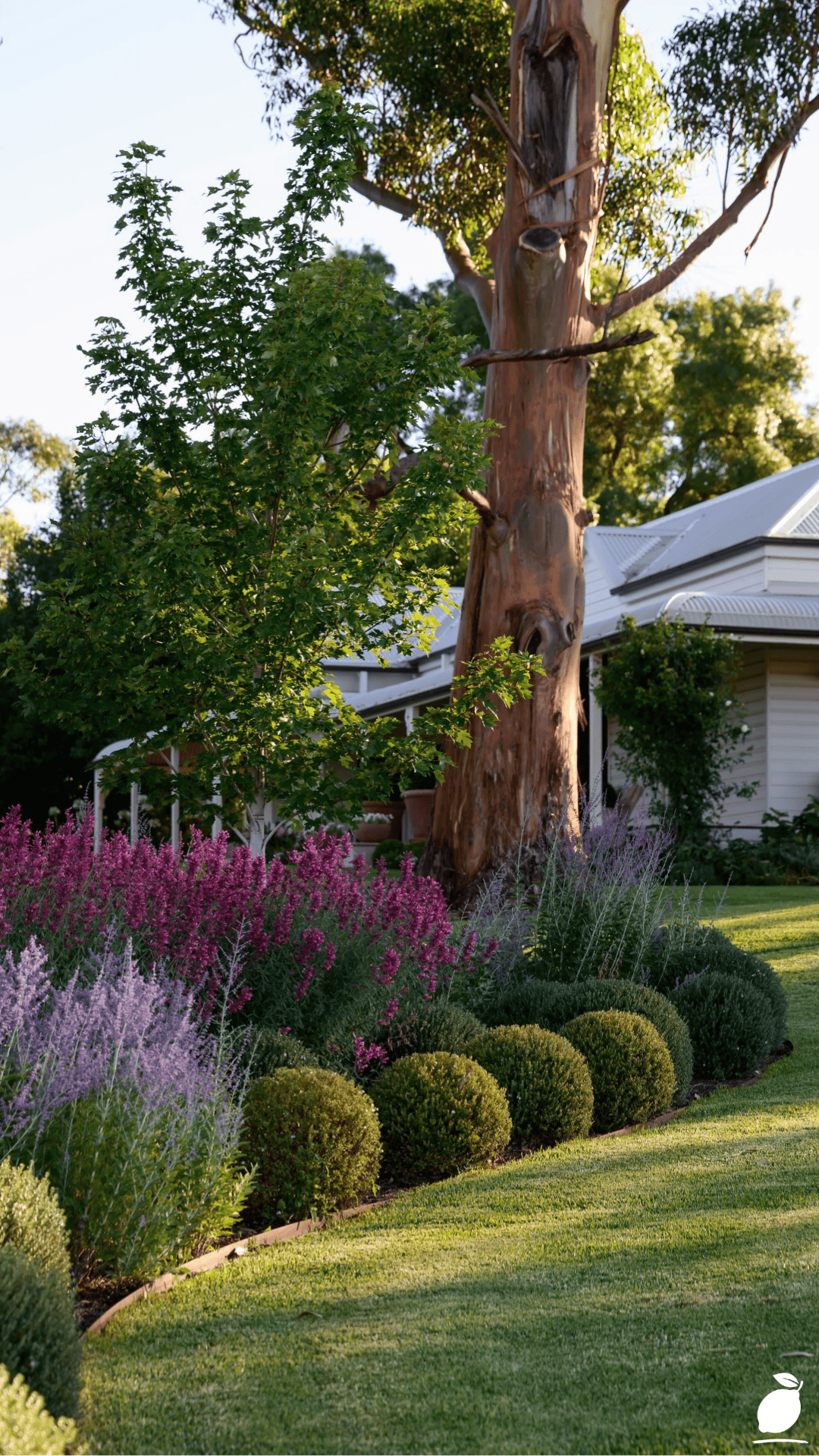
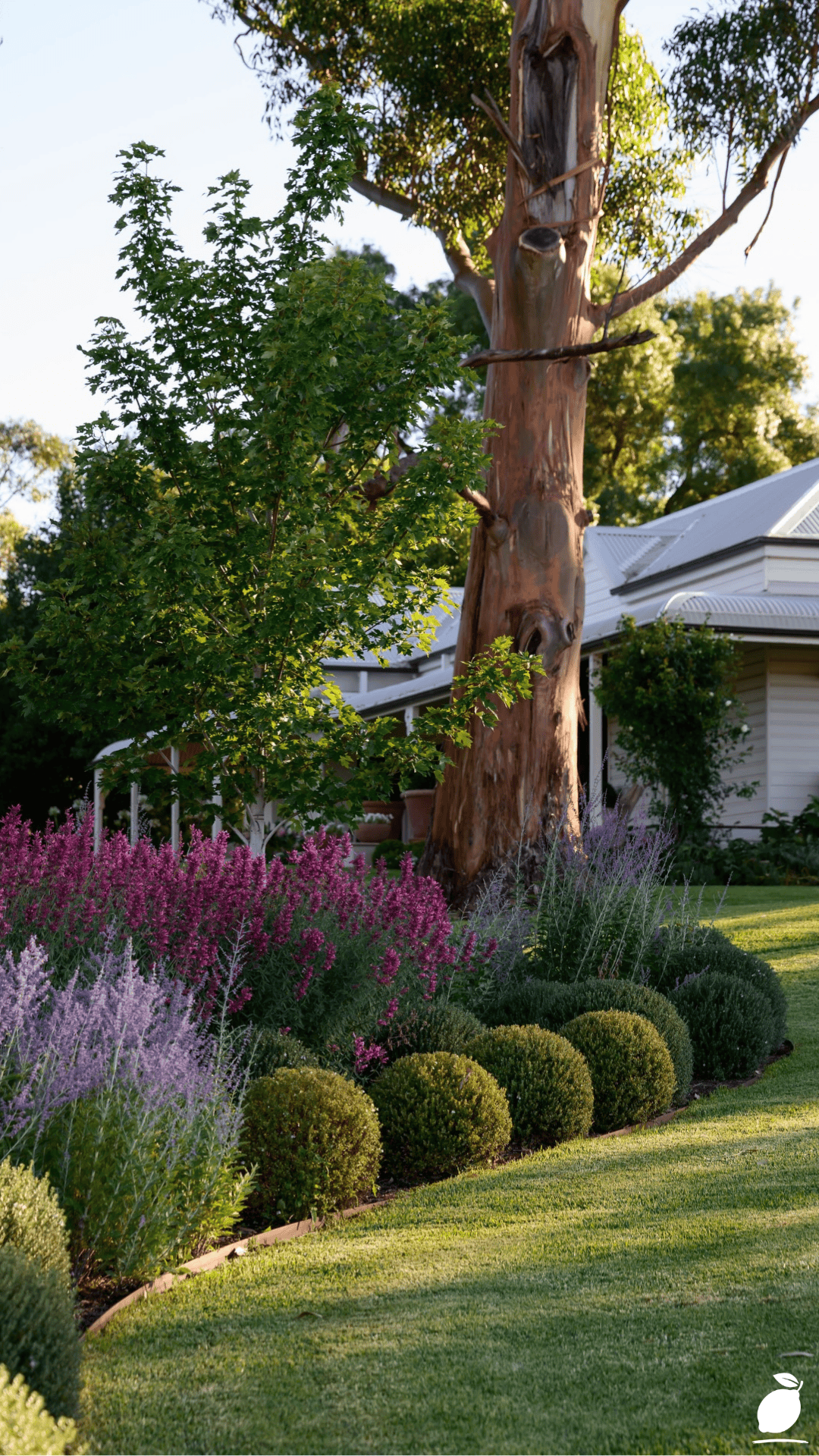
That idea, for us, turned out to be a curved hedge border. A simple, sweeping line of neatly trimmed round hedges along the front of the property, backed by tall purple flowering plants and lavender, with a mature shade tree anchoring the whole scene against a crisp white farmhouse exterior. Suddenly the yard had a shape, a rhythm, a clear path leading the eye toward the house instead of scattering it everywhere at once. These farmhouse country landscaping ideas are exactly what took our formless front yard and gave it that same calm, classic country charm.
The Country Landscaping Blueprint
Building a cohesive country-style landscape comes down to establishing structure first, then layering in color and texture around it. Here’s the full sequence.
Step 1: Map Out Your Border Shape
Before planting anything, use a garden hose or rope to lay out a curved border line along your front yard, stepping back frequently to check the flow from different angles. A gentle, sweeping curve is a defining feature of classic country landscaping and immediately gives an undefined yard a sense of intentional shape.
Step 2: Prepare the Bed
Remove existing grass or weeds along your marked border and amend the soil with compost, since healthy, well-draining soil is the foundation every part of your country landscaping design depends on.
Step 3: Plant Structural Hedges Along the Border
Install rounded box hedges or a similar evergreen shrub at even intervals along the curve, spacing them to allow for mature growth without overcrowding. These clipped, rounded forms are a signature element of country landscaping, providing year-round structure even when nothing else is in bloom.
Step 4: Layer in Flowering Color
Plant tall purple flowering perennials and lavender in front of the hedge line, choosing varieties suited to your climate and sunlight. This layered color band is what gives country landscaping its soft, romantic feel against the more formal hedge shapes behind it.
Step 5: Anchor the Space with a Statement Tree
Choose one mature or fast-growing tree, like a eucalyptus, as a central focal point that provides shade, scale, and visual weight to the overall design. A single well-placed tree does more for country landscaping cohesion than several scattered smaller plantings ever could.
Step 6: Refresh and Define the Lawn
Overseed thin patches, edge the lawn cleanly along the new border, and maintain a consistent mowing height to create the crisp, bright green backdrop that makes the rest of the landscaping pop.
Step 7: Maintain the Hedge Shape Seasonally
Trim your hedges two to three times per growing season to keep their rounded form crisp and defined, since consistent shaping is what separates polished country landscaping from an overgrown, formless border.
Step 8: Step Back and Adjust
Walk the full length of your new border from multiple angles, including from the street and the front door, and fill in any thin or uneven sections before calling the project finished.
Expert Secrets for Success
Pro-Tips for a Better Result
Choose a single hedge variety for consistency. Using one type of shrub along the entire border keeps the country landscaping cohesive rather than visually busy.
Stick to a limited color palette. Purple, lavender, and green, as seen in classic country gardens, create a calmer, more sophisticated look than a rainbow of mixed flower colors.
Plant in odd-numbered groupings. Clusters of three or five flowering plants read more naturally than even pairs, a principle that applies just as well to landscaping as it does to floral arranging.
Give your statement tree room to mature. Planting a shade tree too close to the house or hedge line creates crowding issues years down the road, so plan for its full mature size from the start.
Edge borders cleanly and consistently. A crisp line between lawn and garden bed instantly elevates the finished look of any country landscaping design.
Common Mistakes to Avoid
Skipping the planning stage. Planting without first mapping the border shape often results in an uneven, awkward curve that’s difficult to fix later.
Overcrowding the hedge line. Planting shrubs too close together looks lush at first but leads to competition and misshapen growth as they mature.
Ignoring soil quality. Poor, compacted soil undermines even the best-planned country landscaping design, since healthy roots depend on it above all else.
Neglecting seasonal hedge maintenance. Without regular trimming, rounded hedges quickly lose their defined shape, and the whole border starts to look neglected.
Choosing plants without checking climate suitability. A flowering plant that struggles in your specific region will never achieve the lush, healthy look seen in well-established country gardens.
Why Country Landscaping Matters
There’s a genuine shift that happens once a shapeless yard becomes an intentional one. Our front garden used to make me feel a little embarrassed; now it’s the first thing people comment on when they pull into the driveway. Country landscaping done well doesn’t just improve curb appeal; it changes how you feel walking up to your own front door every single day.
A well-structured yard also has a way of easing a surprising amount of mental clutter. When the outside of your home feels finished and cared for, that sense of order tends to carry inward too, and there’s real satisfaction in a DIY project you planned, built, and maintained yourself. It’s proof that a formless, frustrating space can become something calm and beautiful with the right structure guiding it.
At Easy Peasy Life Matters, this is exactly the kind of transformation we love featuring: not a total landscape overhaul, but one clear structural idea that reshapes an entire yard’s feel. Farmhouse country landscaping ideas like these prove that classic, timeless charm is achievable in almost any front yard, with the right plan behind it.
FAQ
What plants are essential for a classic country landscaping look?
Rounded evergreen hedges, lavender, and tall purple flowering perennials form the backbone of most classic country landscaping designs, offering both year-round structure and seasonal color.
How long does it take for a curved hedge border to fully mature?
Most hedge varieties take two to four years to reach a full, rounded mature shape, though regular trimming from the start helps establish good form much earlier in that timeline.
Do I need a professional landscaper for country landscaping projects?
Many elements of country landscaping, like border planting and hedge maintenance, are very doable as a DIY project, though larger tasks like grading or mature tree planting may benefit from professional help.
What’s the best time of year to start a country landscaping project?
Early spring or fall are typically ideal for planting hedges and perennials, since cooler temperatures reduce transplant stress and give root systems time to establish before extreme heat or cold arrives.
How do I keep a country landscaping design low-maintenance long term?
Choosing drought-tolerant, climate-appropriate plants, mulching garden beds to reduce weeding, and sticking to a consistent seasonal hedge-trimming schedule are the most effective ways to keep a country landscaping design manageable over time.