
For two years, the side path along our garden was just… dead space. A stretch of gravel between the vegetable beds and the back window that nobody looked at twice, edged with a tangle of squash vines that sprawled flat across the ground, smothering everything nearby and turning half the walkway into an obstacle course by August. I’d trip over pumpkin stems on my way to check the tomatoes, curse at the mess, hack it back with pruning shears, and watch it all grow right back within a week. It felt less like gardening and more like a losing argument with my own vines.

I think a lot of gardeners hit this exact wall: you plant something with real potential, like squash or pumpkins, and instead of the lush, storybook garden you imagined, you end up with a sprawling, ground-level mess that’s genuinely hard to walk through, let alone enjoy. The plants aren’t the problem. The layout is. Vining crops are desperate to climb; we just don’t usually give them anywhere to go.
The fix, once I finally tried it, was almost embarrassingly simple: a garden arch. Instead of fighting the vines, I gave them structure to climb and within a season, that same messy side path had turned into a natural, leafy tunnel with pumpkins hanging overhead, framing a view straight toward the back window like something out of a garden magazine. This is how I actually used garden arch ideas to turn a chaotic corner of the yard into the calmest, most photographed spot in the whole garden.
How I Used Garden Arch Ideas: The Blueprint
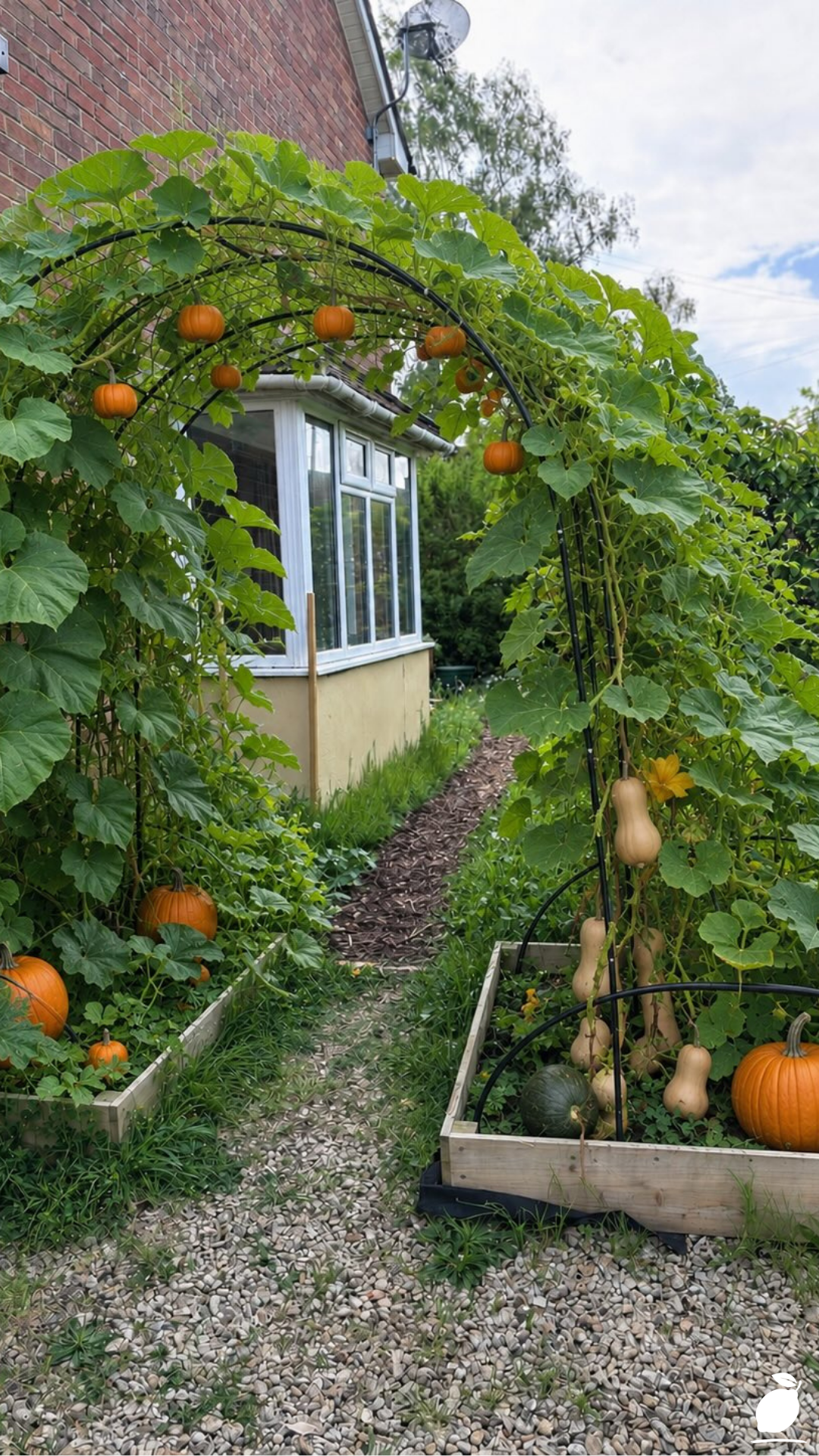
Building a working garden arch isn’t complicated, but getting the structure, placement, and plant choice right up front makes all the difference between a leafy showpiece and a collapsed mess of vines by midsummer.
Step 1: Choose the Right Location
I picked the narrow gravel path running between our raised beds and the back of the house, since it already had foot traffic and led somewhere meaningful that window on the brick wall. A good garden arch works best when it frames a destination, whether that’s a doorway, a view, or simply the transition from one part of the garden to another.
Step 2: Select a Sturdy Arch Structure
I went with a simple metal cattle-panel arch, though wood and heavy-gauge wire arches both work well too. The key is choosing something rated to handle real weight, since mature squash and pumpkin vines get surprisingly heavy once fruit sets in.
Step 3: Anchor It Properly Before Planting
Before anything went in the ground, I set the arch legs into concrete footings about two feet deep on each side. Skipping this step is the single fastest way to end up with a leaning or collapsed arch once the vines fill in.
Step 4: Plant Vining Crops at the Base
I planted winter squash and small pie pumpkin varieties directly at the base of each arch leg, choosing compact or semi-vining types rather than the most sprawling varieties, which can outgrow even a sturdy structure.
Step 5: Train the Vines Early
As soon as the vines had a few feet of growth, I gently guided them onto the arch structure by hand, weaving them through the lower panels. Doing this early, before the vines get heavy and stubborn, makes training dramatically easier.
Step 6: Support Developing Fruit
Once pumpkins and squash started forming overhead, I slipped simple fabric slings, made from repurposed mesh bags, underneath each fruit and tied them to the arch. This prevents heavy fruit from snapping the vine or dropping unexpectedly onto the path below.
Step 7: Maintain and Redirect Growth Weekly
Throughout the season, I did a quick five-minute walk-through each week, redirecting any vines wandering off the structure and trimming back excess growth so the arch stayed open and walkable underneath.
Step 8: Enjoy the Payoff in Late Summer
By late summer, the arch was fully leafed in, pumpkins hanging like ornaments overhead, and that same path I used to trip through had become the most inviting part of the whole garden.
Expert Secrets for Success
Pro-Tips for Better Results
Choose semi-vining or compact squash varieties. Full-sized sprawling pumpkin vines can overwhelm even a sturdy garden arch, so look for bush or semi-vining types bred for vertical growing.
Water at the base, not overhead. Vining crops on an arch are more prone to fungal issues if leaves stay wet, so drip irrigation or careful hand-watering at the soil line works best.
Sling every fruit over a certain size. Once a pumpkin or squash reaches softball size, give it fabric support rather than waiting until it’s noticeably heavy.
Prune selectively, not aggressively. Removing a few excess side shoots improves airflow and fruit size without sacrificing the lush, full look that makes a garden arch so striking.
Add a finishing touch at the base. A few flowering annuals or low herbs planted around each arch leg tie the whole structure into the surrounding garden beautifully.
Common Mistakes to Avoid
Skipping proper anchoring. An arch that isn’t set deep and secure will lean or collapse once fully loaded with vines and fruit.
Choosing too flimsy a structure. Decorative arches meant for lightweight flowering vines often can’t handle the real weight of mature squash or pumpkins.
Planting too many vines per arch leg. Overcrowding the base leads to tangled, competing growth that’s harder to train and more prone to disease.
Waiting too long to train the vines. Mature, woody vines are far harder to redirect than young, flexible growth, so early guidance saves significant frustration later.
Forgetting to support heavy fruit. Unsupported pumpkins can snap their vines or drop suddenly, damaging both the fruit and anything below.
Why Garden Arch Ideas Matter

There’s something genuinely calming about walking through a living archway instead of stepping around a tangled mess on the ground. What used to be the most frustrating corner of our garden is now the spot I actually slow down in a shaded, leafy little passage that turns a simple walk to check the tomatoes into a small daily moment of quiet.
Gardening projects like this one matter for more than just curb appeal. There’s real mental clarity that comes from taking a chaotic, unruly space and turning it into something structured and functional through your own hands. It’s proof, in a very tangible form, that a problem you’ve been stepping around for years actually has a solvable fix and that kind of small, DIY success has a way of spilling over into how capable and calm you feel about everything else on your to-do list.
At Easy Peasy Life Matters, this is exactly the kind of transformation we love featuring: not a total garden overhaul, but one well-planned structure that changes how an entire space feels and functions. Garden arch ideas like this one aren’t just about growing prettier pumpkins; they’re about turning a source of daily frustration into a source of daily peace.
FAQ
What plants work best for a garden arch besides squash and pumpkins?
Cucumbers, pole beans, and morning glories all climb beautifully on the same style of structure, and mixing a few flowering vines in with edible crops adds extra color throughout the season.
How much weight can a typical garden arch hold?
A sturdy metal cattle-panel or heavy-gauge wire arch can typically support 50 to 100 pounds of mature vine and fruit growth, though this varies by structure, so always check the manufacturer’s weight rating before planting heavy vining crops.
How long does it take for a garden arch to fill in with vines?
Most vigorous vining crops like squash and pumpkins will substantially cover a garden arch within 8 to 10 weeks of planting, given consistent watering and regular training.
Do I need to support every pumpkin growing on the arch?
Any fruit larger than a softball benefits from a fabric sling for support, since unsupported fruit can snap the vine or fall as it grows heavier.
Can a garden arch work in a small backyard?
Yes, a garden arch is actually a great space-saving solution for small yards, since it lets you grow sprawling vining crops vertically instead of letting them spread across valuable ground space.