For several years now, I have experienced an increase of 25 – 30% in my anxiety related to the condition of my dining space. A year’s worth of chaos had been dumped there: bags full of dirty laundry, French country decorating, children’s uncompleted projects from school, and enough misplaced mail to open my own recycling center! It was not only a physical representation of clutter but also represented an emotional burden upon each of my walks.
As I walked by the dining room, I experienced heart palpitations. The dining room had now become the visual illustration of my inability to stop; it appeared to be a triangular intersection of my multiple to-do lists with no end in sight! The room that should represent the heart/center of our family, that represents bonding time, a family’s connection, and the opportunity for long, lazy Sunday brunch-type gatherings, has instead created daily stress for me.
I wanted and needed the dining room, the physical space, to be more than just a dumping ground; I wanted a physical representation of a space with intention—that has meaning and purpose—and is not so fragile, so if a child spills some water from his or her glass or drops some crumbs on the floor, it does not ruin the dining experience. As I looked at the current state of our dark and overcrowded dining room, I could not fathom the possibility of it ever being a space with an airy feel and elegance.
The French Country Decorating Blueprint
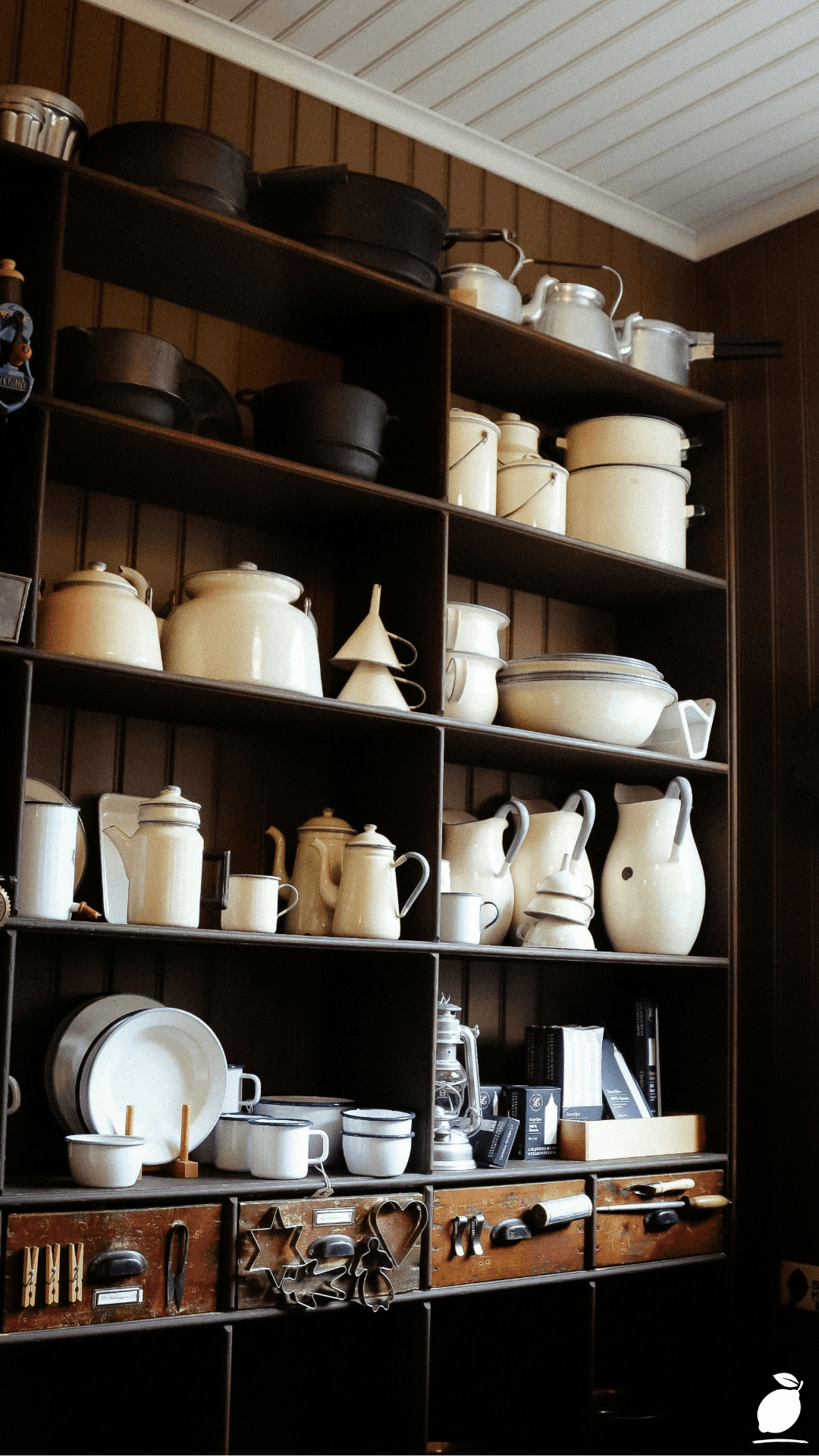
Achieving a high-end French country aesthetic in 2026 is about balancing the rugged strength of the farmhouse with the refined elegance of the chateau. This step-by-step guide will help you build a space that feels both historic and fresh.
Step 1: Establish a Sun-Washed Color Palette
The foundation of French country decorating is light. Start by painting your walls in a warm white or a soft, creamy greige. In 2026, we are seeing a move toward sun-washed tones and colors that look as though they have been gently faded by years of Mediterranean sun. Think muted sage greens, dusty blues, and soft lavenders. These colors reflect natural light, making even smaller dining rooms feel bright and airy.
Step 2: Select Foundational Furniture with Patina
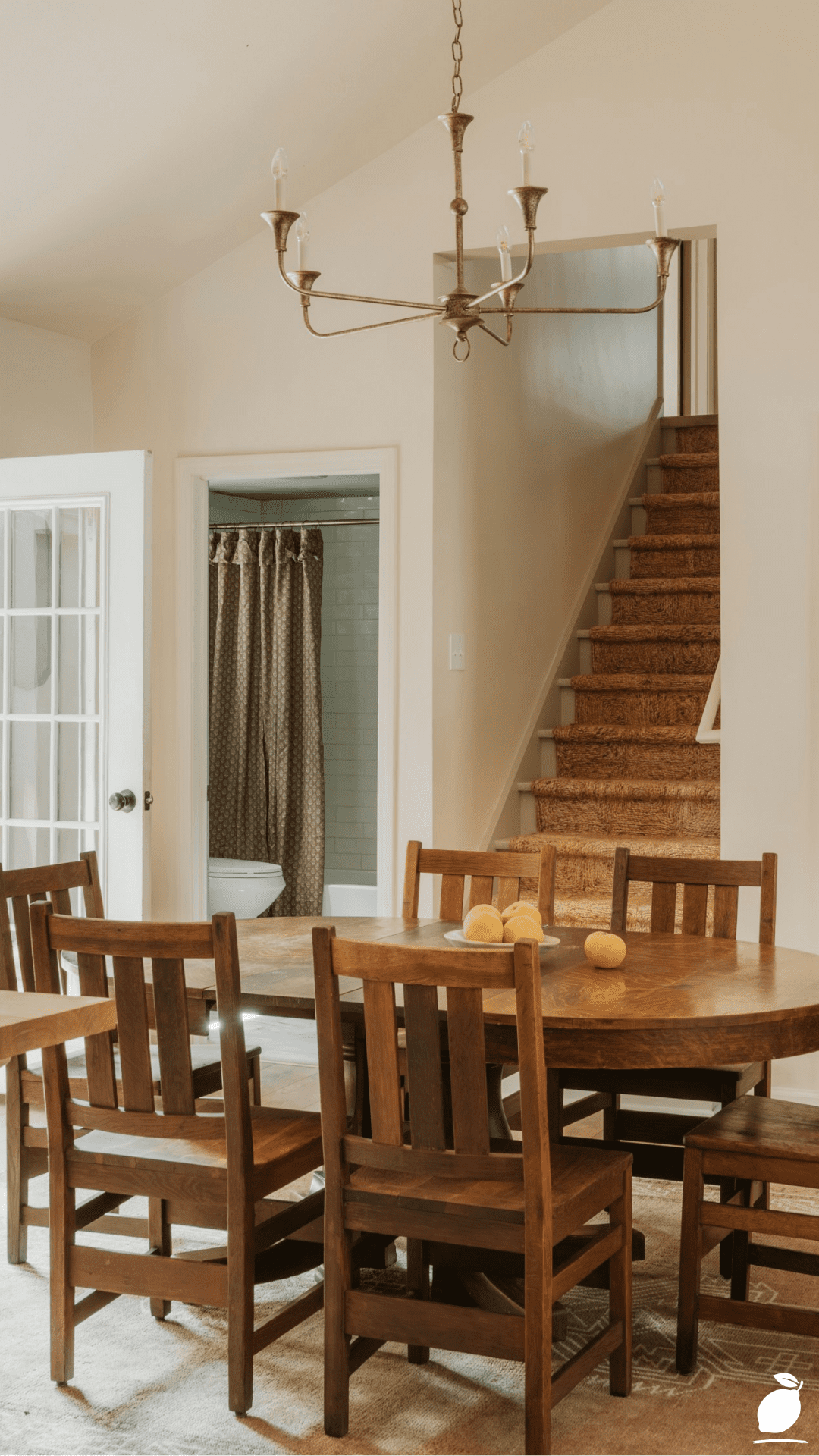
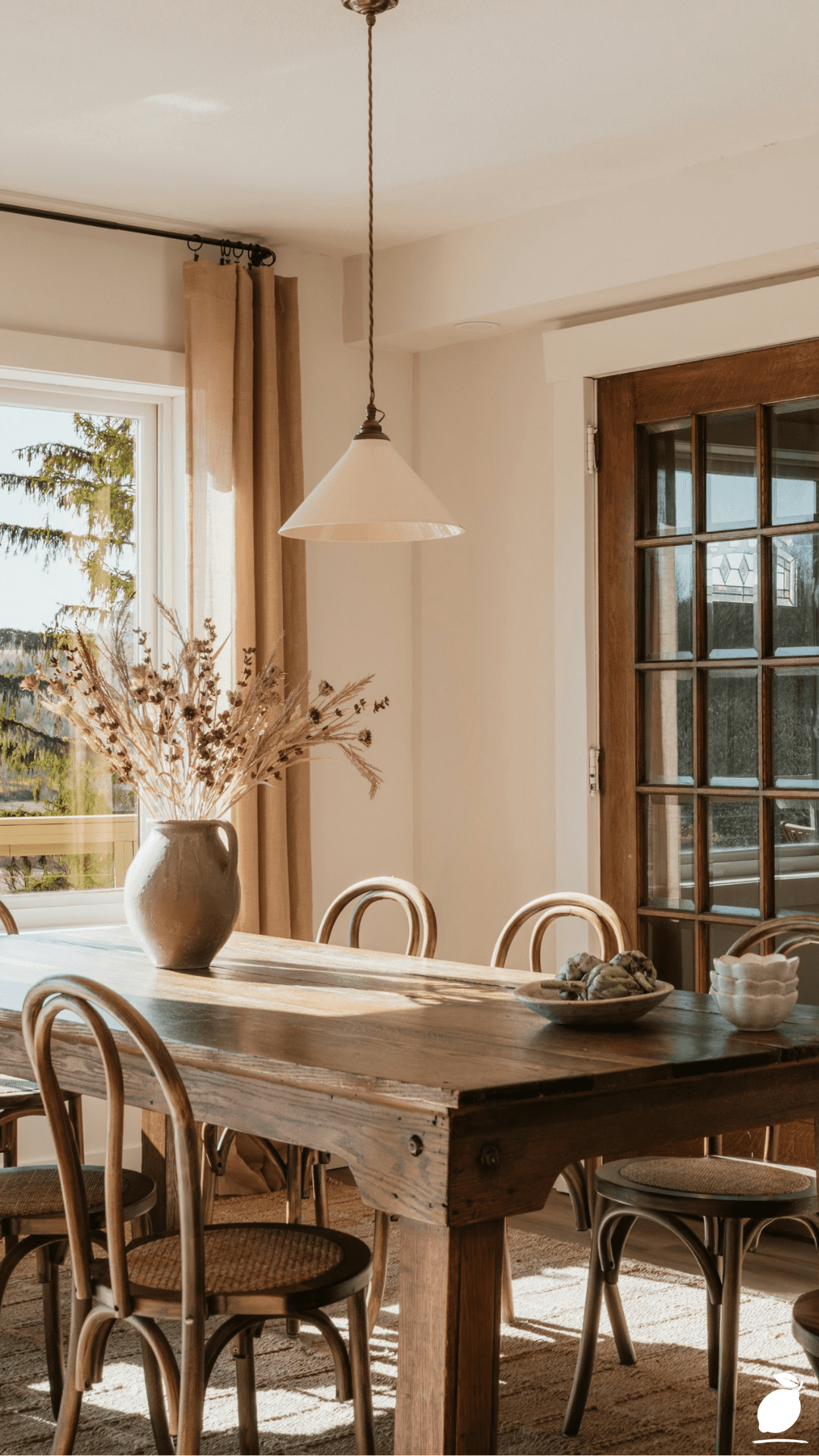
The centerpiece of a French country room is almost always a sturdy, dark brown wooden dining table. Look for pieces with a rustic finish that celebrates the wood’s natural grain and imperfections. Pair this heavy anchor with lighter, more graceful seating, such as bentwood dining chairs. The curved backrests provide a feminine contrast to the table’s straight lines, while woven cane seats add essential organic texture, a staple of French country decorating.
Step 3: Layer Textures for Livable Elegance
Texture is the secret ingredient that prevents a neutral room from feeling flat. Incorporate a textured area rug in neutral tones to ground the furniture. Use natural fabrics for your window treatments; beige curtains in linen or cotton allow light to filter through while adding a soft, vertical element to the room. In 2026, slow-living textiles like hand-embroidered linens and ruffles are making a major comeback in French country decorating, providing that Grandma Chic warmth.
Step 4: Integrate Architectural Details
If your home lacks historical character, add it manually to enhance your French country decorating theme. Incorporate wooden French doors with glass panes to create a sense of flow and connection to the outdoors. Traditional millwork, such as picture frame molding or a simple chair rail, can give a standard box room the depth and sophistication of a French manor. These details provide a permanent sense of structure that stands the test of time.
Step 5: Curate Organic and Artisanal Accents
Finish the space with items that feel collected over time rather than bought in a day. A large ceramic vase filled with dried wheat stalks or branches creates a dramatic, maintenance-free focal point common in French country decorating. Add a white dome pendant light above the table to provide a modern, clean geometric shape that balances the more ornate, rustic elements below. A few well-placed green plants will bring a touch of the garden salon energy indoors.
Expert Secrets for Success
Navigating the line between rustic and cluttered requires a strategic eye. Use these professional insights to ensure your home feels curated, not chaotic.
Pro-Tips for a Better Result
- Embrace the Mix: Don’t be afraid to pair a sleek, modern pendant light with an antique-looking table. The tension between old and new is a hallmark of high-end French country decorating.
- Focus on Curves: If your room feels too hard or modern, add a curved element. Whether it’s the rounded back of a chair or an arched mirror, curves soften the space and inject that signature feminine elegance.
- Let the Light Lead: Position your most important furniture pieces near your largest windows. Natural light is the most important accessory in French country decorating; it highlights the textures of the wood and the grain of the fabrics.
Common Mistakes to Avoid
- Overmatching Furniture: Avoid buying an entire dining set from a big-box store. French country decorating should look like it was inherited and assembled over decades. Mix your chair styles or finishes for a more authentic, soulful feel.
- Using Faux Distressing: Be careful with mass-produced furniture that has fake scratches or paint chips. Authenticity is key in 2026. If you want a distressed look for your French country decorating project, choose reclaimed wood or learn to apply a proper limewash or milk paint finish yourself.
- Ignoring the View: If you have a view of green hills or a garden, don’t hide it behind heavy drapes. Use sheer or light-colored curtains that can be pulled back completely to invite the outdoors in.
Why French Country Decorating Matters
Home is the staging ground for our mental health. When we choose a design style like French country decorating, we aren’t just picking out furniture; we are choosing a philosophy of slow living. The emphasis on natural materials, wood, stone, and linen grounds us in a world that often feels overly digital and fast-paced.
Completing a DIY project, whether it’s refinishing a table or simply styling a mantel, provides a sense of agency and pride. This DIY success translates into mental clarity; when your environment is orderly and beautiful, your mind is freed from the low-level hum of visual noise. For families, a warm, inviting dining room encourages longer conversations and slower meals, fostering family peace and connection. In the end, French Country Decorating creates a sanctuary that protects your spirit and celebrates the joy of being present.
FAQ
What is the difference between farmhouse and French country style?
While both embrace rustic elements, farmhouse style tends to be more utilitarian, featuring clean lines and high-contrast colors like black and white. French country decorating is softer and more romantic, emphasizing curves, ornate details, and a sun-washed, pastel-leaning color palette.
Can I achieve the French Country look in a modern house?
Absolutely. In fact, the contrast between modern architecture and French country decorating furniture is a major trend for 2026. Focus on adding texture through rugs and curtains, and use traditional lighting fixtures to soften the sharp lines of a newer home.
Is French country decorating expensive?
It doesn’t have to be. While authentic antiques can be pricey, you can achieve the look by repurposing thrifted furniture with a bit of paint and new hardware. Focus your budget on foundational items like a good dining table or high-quality lighting, and fill in the rest with affordable, organic accents like dried florals.
Is this style still in for 2026?
Yes! French country decorating is considered a timeless style that evolves but never truly disappears. In 2026, it is evolving into a modern French look that is less cluttered and more focused on sustainable, natural materials and artisanal craftsmanship.