For the longest time, my bedroom was the room I stopped seeing. Not because it was terrible, it wasn’t, but because it had reached that particular state of visual noise where nothing was actively wrong, and nothing was intentionally right either. A mismatched duvet bought in a hurry during a sale. A bedside table inherited from a previous apartment. Clothes draped over a chair that existed in the corner, mostly to hold things that weren’t quite clean enough for the drawer and not quite dirty enough for the laundry basket. Every morning I opened my eyes into that low-grade visual chaos and started the day already slightly behind, already slightly drained, as though the room itself had spent the night quietly demanding something from me I didn’t know how to give it.

The turning point was less a design revelation than an honest conversation with myself about what I actually needed from a bedroom. Not trends. Not showroom drama. Rest. Visual quiet. A space that communicated calm in every direction I looked so convincingly that my nervous system believed it, even before I fell asleep. When I started searching for gray and white bedroom ideas not the maximalist kind loaded with gallery walls and statement headboards, but the truly minimal kind I kept returning to the same qualities: a palette of layered grays and clean whites, a handful of intentional objects rather than a surface full of accumulated ones, and exactly one living element of green that reminded the room it was connected to something outside itself.
What I built from those gray and white bedroom ideas is a room I now actively look forward to entering. The gray upholstered bed frame anchors the space with quiet weight. The white bedding and white walls expand it. The floor mirror makes it feel twice its actual size. The ficus in the corner does more emotional work per square foot than any decorative object I’ve ever owned. Every element is doing something; nothing is just there. This guide walks through every gray and white bedroom idea that made the biggest difference, explains exactly why it works, and gives you a clear path to replicating the result in your own space. Let’s get into it.
The Gray and White Bedroom Ideas Guide
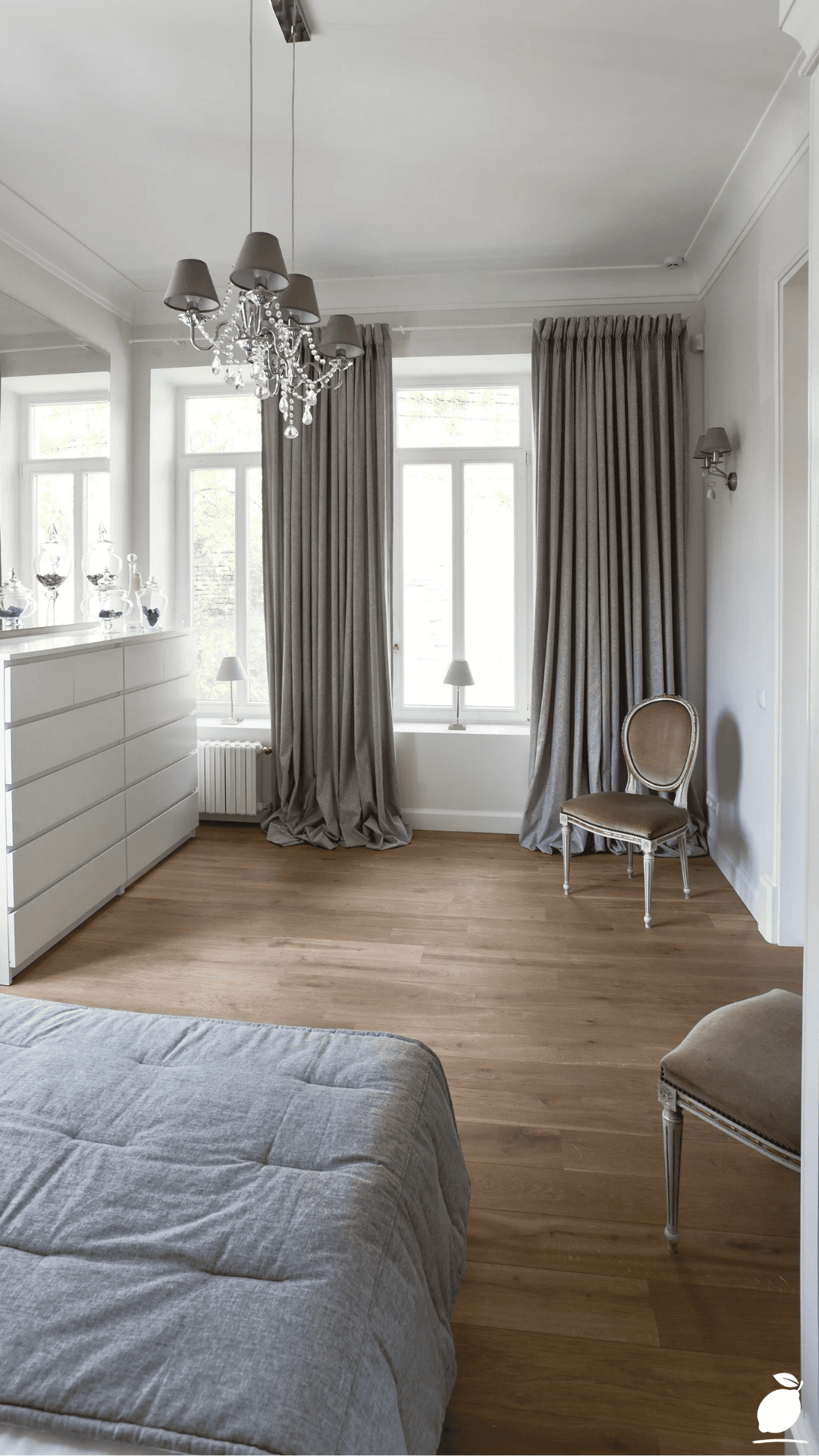
Gray and white bedroom ideas succeed when each element is chosen for a specific visual and emotional purpose, not simply because it fits the color scheme. Here are the elements that matter most and precisely why each one works.
A Gray Upholstered Bed Frame as the Room’s Visual Anchor
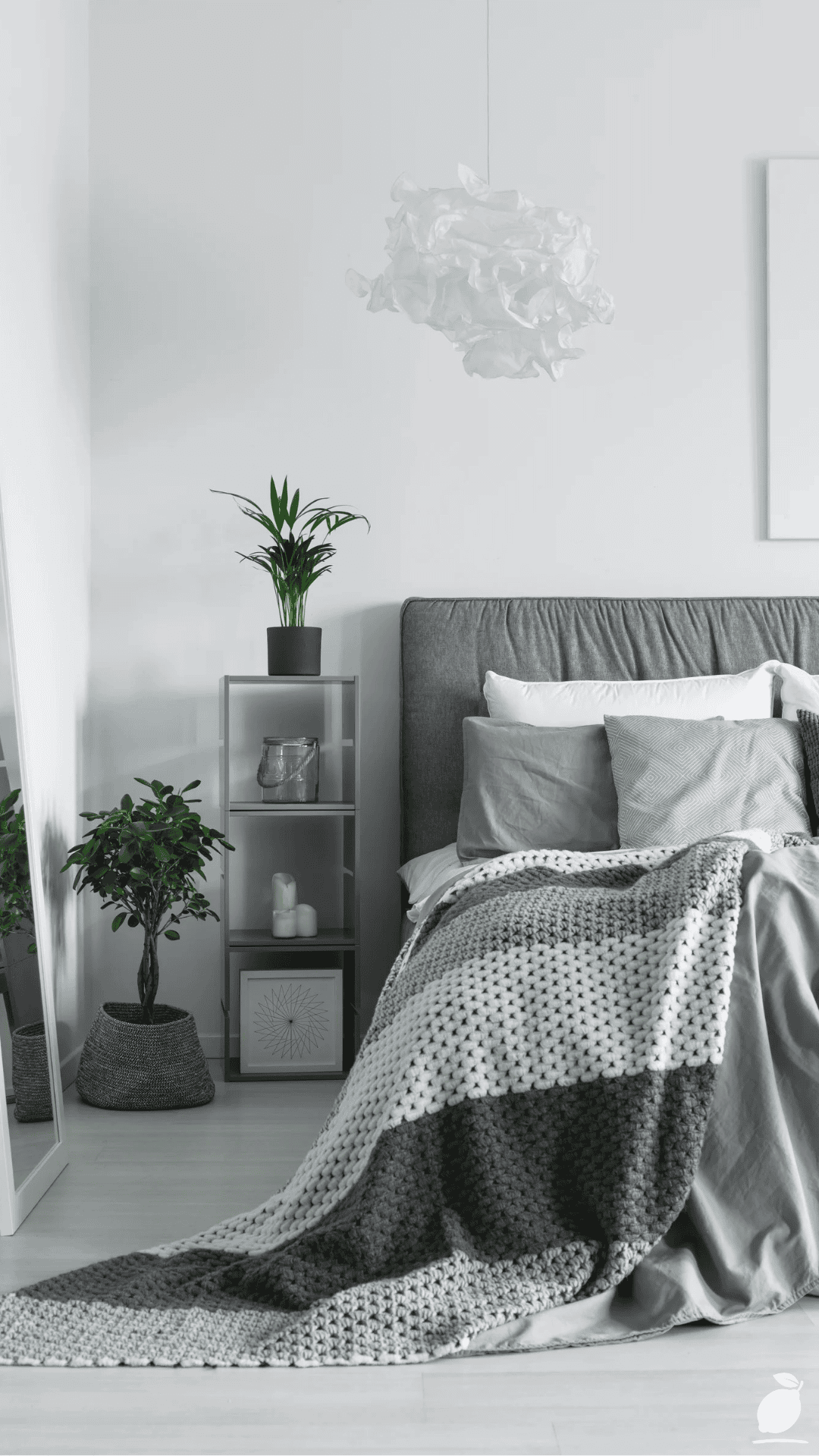
Why it works: In any gray and white bedroom idea built around a neutral palette, the bed frame is the room’s most important design decision; it sets the tonal depth around which everything else calibrates. A gray upholstered bed frame (rather than a wood or metal alternative) introduces warmth and texture without introducing competing color. The fabric surface absorbs and softens light rather than reflecting it, creating a sense of visual weight and groundedness that the palette’s lighter elements need to lean against. Choose a mid-tone charcoal or warm gray upholstery over a blue-gray; the warmer gray interacts more harmoniously with white bedding and light walls, reading as sophisticated rather than cold. The bed frame is the tonal foundation of the entire gray and white bedroom idea; get this right, and every other decision becomes significantly easier.
Layered White Bedding With a Geometric Throw Blanket
Why it works: White bedding is the non-negotiable centerpiece of any gray and white bedroom idea. It provides the room’s dominant bright surface, communicates cleanliness and calm, and creates the high-contrast anchor against which the gray bed frame reads as intentionally sophisticated rather than dull. But white bedding alone risks looking sterile. The solution is a geometric-patterned throw blanket in gray, white, and charcoal tones draped casually across the foot of the bed. It introduces pattern and textural variation while staying strictly within the gray-and-white bedroom color language. The geometry of the pattern adds visual interest without the emotional stimulation of pictorial or floral prints, making it the ideal gray and white bedroom idea for a space meant to support rest rather than conversation.
A Tall Leaning Floor Mirror With a White Frame
Why it works: A full-length floor mirror leaning against the wall is one of the most spatially generous of all gray and white bedroom ideas. It doubles the visual depth of the room by reflecting it on itself, multiplying available light, and creating the impression of a second window or doorway where none exists. A white frame keeps the mirror within the gray and white bedroom color palette while adding a clean architectural edge that frames the reflection. The leaning position (rather than wall-mounted) introduces a relaxed, unfussy quality that aligns with the contemporary minimalist aesthetic of a well-executed gray and white bedroom idea. Position it to reflect the room’s best feature, ideally the bed, the ficus, or a window, so the reflected view amplifies the room’s most intentional composition.
A Gray Metal Shelving Unit for Open, Edited Storage
Why it works: Open shelving is a bold choice in any bedroom, and it’s one that only works as a gray and white bedroom idea when the discipline of editing is applied ruthlessly. A gray metal shelving unit with geometric compartments introduces structural variety and visual interest to the wall plane without the visual heaviness of a solid wood wardrobe or the closedness of a dresser. The key is to treat each compartment as a curated display rather than a storage zone: one green plant, one decorative object, deliberate space. The metal material stays within the gray and white bedroom idea’s tonal range while adding an industrial-modern edge that prevents the palette from reading as too soft or feminine. Style with restraint, the shelving is most beautiful when it looks like it has room to breathe.
A Large Green Ficus Tree in a Dark Gray Planter
Why it works: The single most emotionally significant of all the gray and white bedroom ideas in this guide is also the most organic: a large ficus tree in a dark gray ceramic or concrete planter positioned in the corner of the room. Green is the biological signal of living systems, of growth, of safety, and a room built entirely around achromatic tones (grays, whites, blacks) benefits enormously from the presence of one bold living color that reminds the nervous system it is in a living space rather than a designed one. The ficus specifically works because its branching structure and large, glossy leaves create a sense of interior canopy, a ceiling-adjacent living element that makes a room feel more like a sanctuary and less like a container. The dark gray planter anchors the tree tonally within the gray and white bedroom idea while grounding it at floor level with visual weight.
Abstract White Wall Art for Texture Without Distraction
Why it works: Art in a gray and white bedroom needs to add visual texture without introducing competing color or narrative complexity that would stimulate rather than settle the mind. A single large abstract piece in white or white with subtle gray tonal variation achieves exactly this balance. It creates movement and depth on the wall surface through its form rather than its color, functioning more like architecture than decoration. One large piece has significantly more visual impact than a grid of smaller frames in a minimal gray-and-white bedroom idea context. Scale reads as confidence, and confidence is what a composed, intentional room communicates. Keep the frame white or frameless for the cleanest integration with the overall palette.
A White Paper Pendant Lamp for Soft, Diffused Ceiling Light
Why it works: Overhead lighting in a gray and white bedroom requires a delicate balance — enough ambient light to make the room functional, but diffused and warm enough to support the room’s restorative purpose. A white paper pendant lamp achieves this beautifully: the translucent paper shade distributes light evenly in every direction, eliminating harsh shadows while creating a warm, lantern-like glow that makes white walls look soft and gray tones look rich rather than flat. The organic, slightly imperfect texture of paper introduces a handmade quality that balances the precision of the metal shelving and the geometric throw, giving the gray and white bedroom idea an overall sensory warmth that a glass or metal shade would not provide.
Expert Secrets for Success
Pro-Tips for Better Results
- Use at least three distinct shades of gray to prevent flatness. The most common misconception about gray and white bedroom ideas is that “gray” is a single color. It isn’t; it’s a spectrum from barely-there silver to deep charcoal, and the rooms that look sophisticated rather than flat use at least three distinct gray values: a light gray on the walls, a mid-tone on the bed frame or throw, and a deep charcoal in the planter, shelving, or accent object. This tonal layering is what gives a gray and white bedroom idea its visual depth and prevents the palette from looking like a desaturated version of a real design decision.
- Keep your white consistent across surfaces. Not all whites are equal, and mixing warm whites (cream-based) with cool whites (blue-based) in the same gray and white bedroom idea creates a subtle but persistent visual dissonance that reads as unintentional. Choose one white, ideally a slightly warm off-white like Sherwin-Williams Alabaster or Benjamin Moore White Dove, and apply it consistently to walls, trim, bedding, frames, and lampshades. Consistent white is the silent glue that holds a gray and white bedroom idea together.
- Position the floor mirror to face a window, not a wall. A floor mirror that reflects another gray wall simply duplicates the existing surface. A floor mirror positioned to reflect a window, even a small one, floods the reflected image with natural light and makes the gray and white bedroom idea feel dramatically brighter and more spacious. This single placement decision determines whether the mirror is decorative or genuinely architectural in its effect.
- Limit decorative objects on open shelving to five or fewer total. Open shelving in a gray and white bedroom idea is only an asset when it’s edited to the point of feeling almost sparse. More than five visible objects create the same kind of visual noise that the gray and white bedroom idea is specifically designed to eliminate. One plant, one ceramic object, one meaningful personal item, and two empty compartments are the ideal ratio. The space is not wasted; it is part of the design.
- Choose a ficus over smaller plants for maximum visual impact. Small succulents and desk plants disappear in a room-scale gray and white bedroom idea. A large ficus (4 to 6 feet tall) in the corner operates at room scale, creating a vertical living element that changes the room’s entire spatial quality. Water a ficus approximately once a week, place it near the brightest window in the room, and rotate the pot quarterly so all sides of the canopy receive even light. It is significantly lower-maintenance than its impressive presence suggests.
Common Mistakes to Avoid
- Using cool blue-gray on the walls with warm gray furniture. Blue-based grays on the walls clash persistently with yellow- or taupe-based warm grays in furniture and bedding; the two undertone families fight each other rather than harmonize. In a gray and white bedroom idea, choose either a consistently warm gray palette (walls in greige or warm gray, furniture in taupe-gray) or a consistently cool gray palette (walls in blue-gray, furniture in true neutral gray). Mixing undertone families in the same room produces the visual unease that gray and white bedroom ideas are designed to eliminate.
- Over-accessorizing to “fill” the room. The instinct to fill visual space is the enemy of every gray and white bedroom idea. The breathing room between a carefully chosen set of objects is not emptiness; it is the thing that makes each object visible and meaningful. Every additional decorative item beyond the intentional selection competes for attention and collectively produces the exact visual noise that a gray and white bedroom idea sets out to resolve. When in doubt, remove rather than add.
- Choosing bedding in a true bright white rather than a soft white. Optically brightened, brilliant white bedding reads as slightly harsh and clinical against gray walls and gray upholstery. It creates too much contrast and makes the room feel more like a hotel corridor than a personal sanctuary. Choose bedding in a soft, warm white (linen-white or natural white) for a gray and white bedroom idea that feels genuinely inviting rather than photographically styled.
- Neglecting the floor as a design element. Light gray walls, white bedding, and gray furniture all float above the floor, and a floor that reads as visually discordant (dark wood in a cool-toned room, patterned tile in a minimal room) undermines the coherence of the entire gray and white bedroom idea. Light wood, whitewashed wood, or pale gray concrete-look flooring integrates most seamlessly with gray and white bedroom ideas, keeping the tonal palette consistent from ceiling to floor.
- Skipping the living plant element. A gray and white bedroom idea executed entirely in inorganic materials, metal, fabric, paper, and glass risks reading as sterile and emotionally cool regardless of how beautifully each element is chosen. The living plant is not optional in a gray and white bedroom idea that is meant to feel genuinely restorative. It is the element that signals life, growth, and care, and its absence is more noticeable than its presence because the room registers as slightly incomplete without it.
Why Gray and White Bedroom Ideas Matter
The bedroom is the room where your day both ends and begins, and the visual environment you wake up into has a measurable effect on how the first minutes of each day feel, which has a measurable effect on how the rest of the day unfolds. A gray and white bedroom idea executed well is not simply an aesthetic preference; it is a deliberate choice to begin and end each day in an environment calibrated for calm. The achromatic palette eliminates the low-level visual stimulation that color-heavy rooms produce. The minimized object count removes the subconscious processing load that clutter imposes. The living plant introduces a biological signal of safety and vitality. Together, these gray and white bedroom ideas create a room that your nervous system can trust, and a nervous system that trusts its environment is one that can genuinely rest.
For households with children, partners, or housemates, the bedroom that functions as a genuine personal sanctuary becomes even more important. When every shared space in the home is negotiated, compromised, and occupied by the needs and aesthetics of others as the shared spaces in every family home necessarily are, the private bedroom is the room where one person’s need for calm, order, and beauty gets to be honored completely. Gray and white bedroom ideas are particularly well-suited to this function because the palette communicates rest and privacy rather than invitation and sociability. Building this room well, thoughtfully, intentionally, with each gray and white bedroom idea chosen for a specific purpose, is an act of genuine self-care that extends into better sleep, better emotional regulation, and a calmer presence in all the shared spaces that follow.
Frequently Asked Questions
What shades of gray work best for gray and white bedroom ideas?
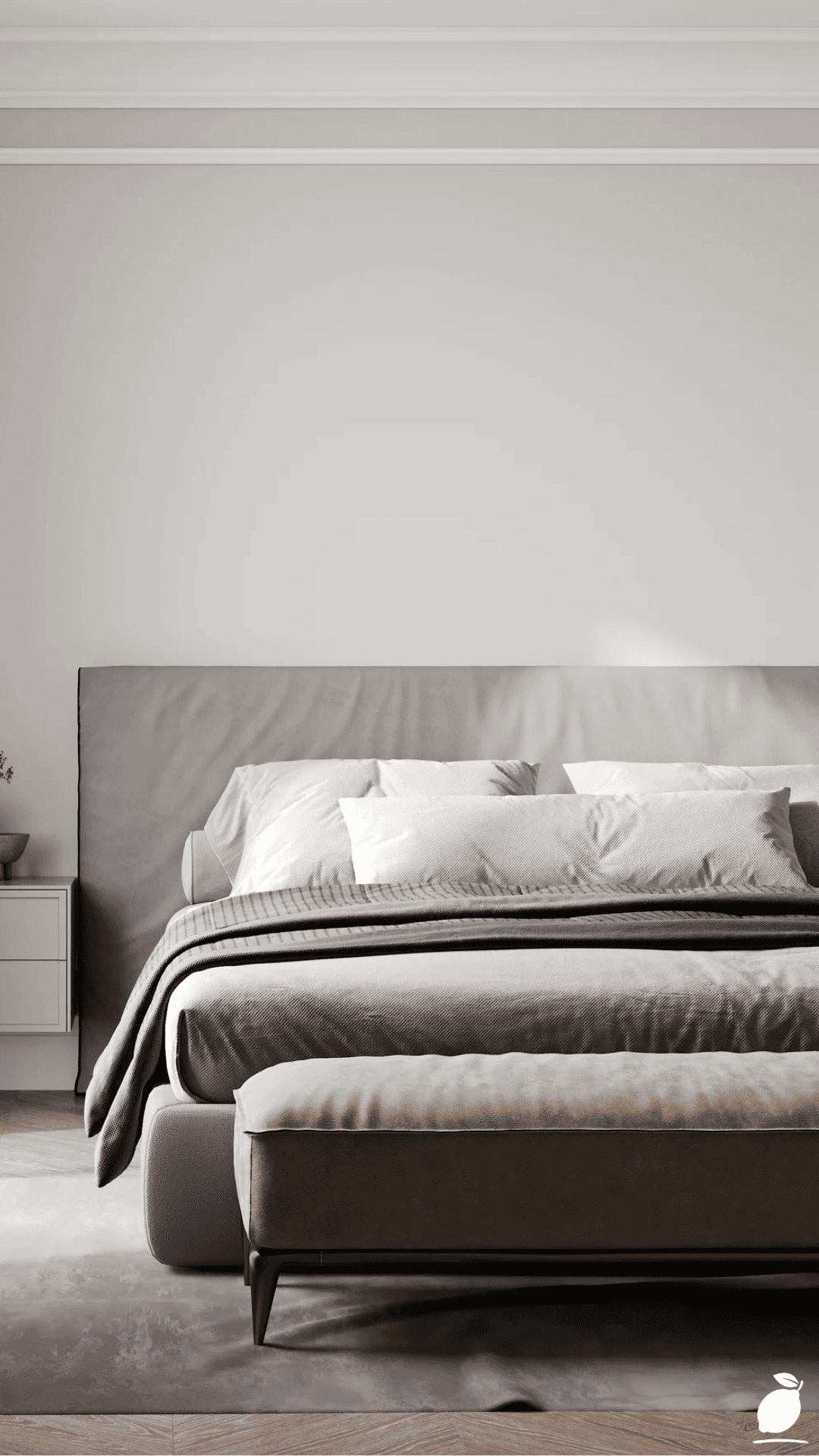
Warm grays with beige or taupe undertones work best for most gray and white bedroom ideas because they avoid the coldness and slight lavender quality of blue-based grays. Top performers include Sherwin-Williams Agreeable Gray (SW 7029) for walls, Repose Gray (SW 7015) for a slightly cooler but still balanced option, and Worldly Gray (SW 7043) for a deeply sophisticated warm-neutral. Layer at least three gray values in the room: light on the walls, mid-tone in textiles, deep in accent objects for a result that reads as dimensional rather than flat.
How do I make a gray and white bedroom idea feel warm rather than cold?
Warmth in a gray and white bedroom idea comes from three sources: undertone (choosing warm grays with beige rather than cool grays with blue), material texture (linen bedding, upholstered bed frame, paper lampshade, and natural plant life all add tactile warmth), and lighting (warm-toned bulbs at 2700K in bedside lamps rather than cool overhead LEDs). A single large green plant is the single most effective warmth-adding element in a gray and white bedroom. Its organic color and living presence counteract the palette’s potential for emotional coolness more effectively than any additional decorative object.
Can gray and white bedroom ideas work in a small bedroom?
Gray and white bedroom ideas are actually ideal for small bedrooms. The palette’s light-reflective quality and visual restraint make small rooms feel significantly more spacious than they are. A large leaning floor mirror is the most powerful space-expanding tool available in a small gray and white bedroom idea, effectively doubling the room’s visual depth. Keep furniture minimal (bed frame, one or two nightstands, a single storage unit), maintain a clear floor plane, and choose a light gray on the walls rather than a deep charcoal to maximize light reflection in a compact space.
What accent colors can I add to gray and white bedroom ideas without disrupting the palette?
Green in any of its natural, muted, or sage tones is the most harmonious accent color for gray and white bedroom ideas because it references nature and biological systems without introducing competitive visual energy. A single large plant, a sage green throw blanket, or a small piece of art with a green botanical illustration all integrate seamlessly. Soft gold or warm brass in lamp bases or hardware is a secondary accent option that adds luxurious warmth without overwhelming the achromatic base palette of gray and white bedroom ideas.
How do I style open shelving in a gray and white bedroom without it looking cluttered?
The rule for open shelving in a gray and white bedroom idea is rigorous subtraction: allow no more than five objects total across the entire shelving unit, including the plant. For each compartment, choose between three options: one object displayed, two objects displayed, or space, and make sure at least one-third of the total compartments remain empty. Objects should vary in height and texture but stay within the gray, white, and green palette of the room. Remove anything that represents unfinished business, generic decoration, or a color that doesn’t belong to the room’s language. Revisit the styling every two to three months and remove anything that has stopped earning its place.