I had been chasing a living room that felt genuinely cozy for longer than I wanted to admit. Not styled-for-photos cozy, actually cozy, the kind you feel the moment you walk through the door. Every paint sample I brought home looked different on the wall than it did on the chip. Every furniture piece I chose in isolation looked wrong once it arrived. And every time I tried to pull it all together, the space felt either too sterile or too heavy. Rustic farmhouse living room colors kept showing up in my searches, but I kept dismissing them as something that only worked in old houses with exposed beams and original hardwood. I assumed you needed a certain kind of architecture first.
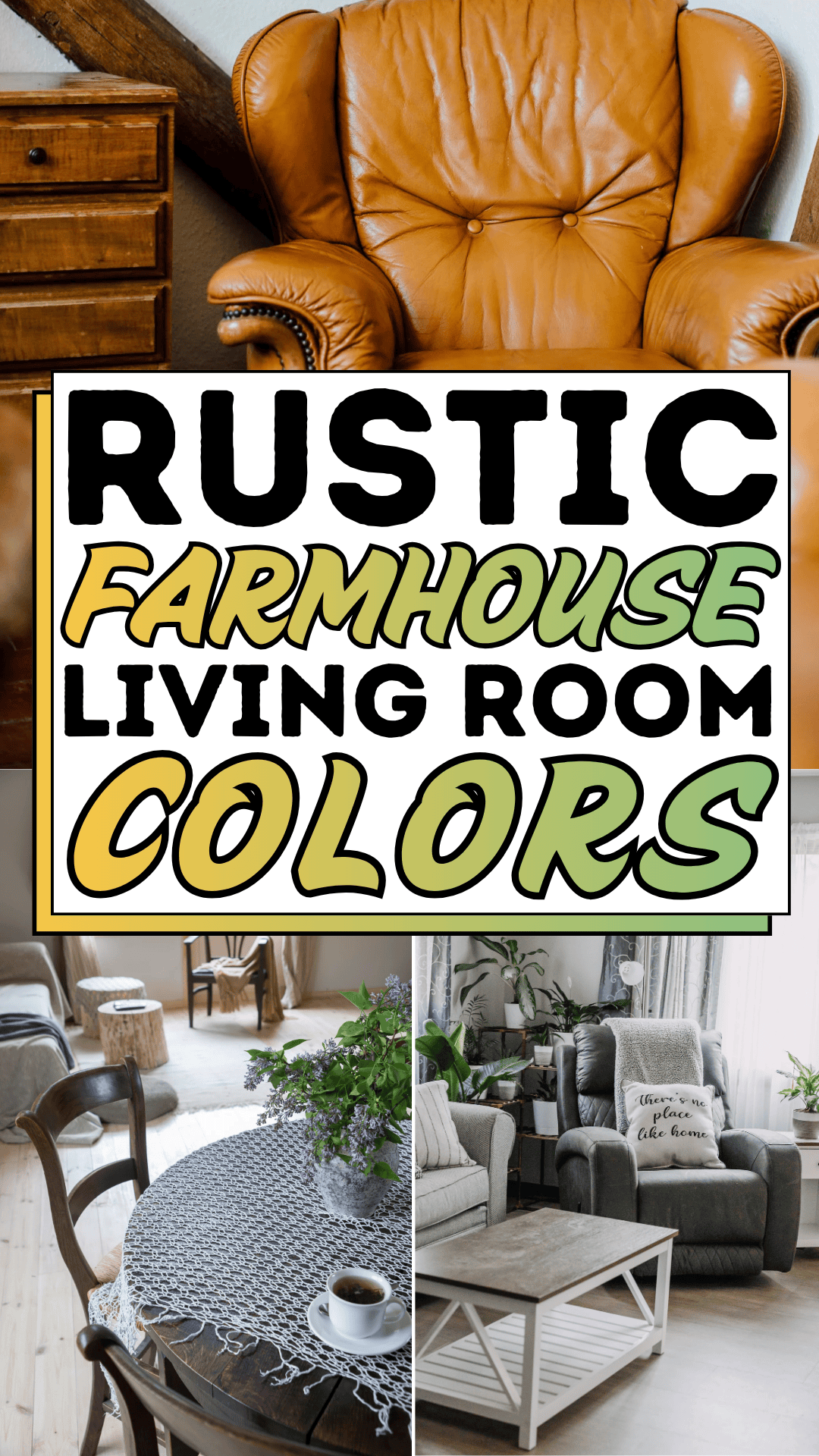
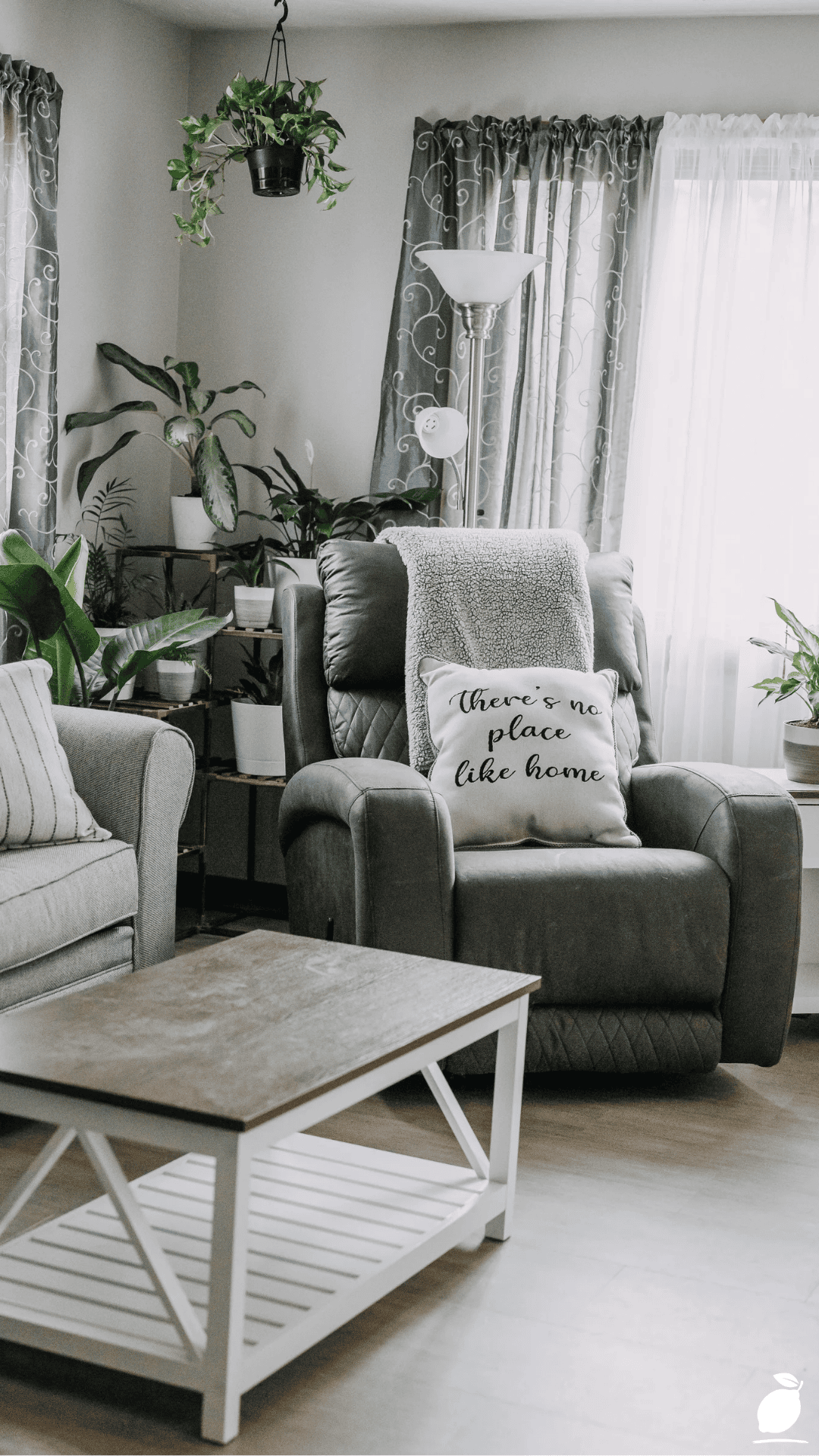
Then I stopped thinking about rustic farmhouse living room colors as a structural requirement and started thinking about them as a feeling. The image above captures that feeling. Gray upholstered furniture against off-white walls. A white X-frame coffee table with a warm wood top. Patterned curtains with gray swirling designs layered over white sheers. Multiple plants in white ceramic pots fill every corner with green. A throw pillow that simply reads “there’s no place like home.” This room is warm without being heavy, airy without being cold, and lived-in without being messy, exactly what rustic farmhouse living room colors are capable of when the palette is applied with intention.
This guide is the actionable version of rustic farmhouse living room colors. These steps cover the wall color, the upholstery tones, the wood accents, the textiles, and the plants that make rustic farmhouse living room colors breathe in a real home. Whether you’re starting fresh or refreshing an existing space, follow this blueprint, and you’ll get to the room in the image, a space that genuinely feels like home from the moment you walk in.
The Rustic Farmhouse Living Room Colors Blueprint
Step 1: Start With the Right Wall Color
Every rustic farmhouse living room color project begins on the walls, and the wall color is what sets the entire palette in motion. The specific wall tone in the image isn’t pure white; it’s a warm off-white with subtle gray undertones, and that distinction matters. Pure optical white feels clinical and modern. Warm off-white feels soft and inviting. It’s the difference between a room that looks organized and one that actually feels like home.
For this palette, the most reliable options are Benjamin Moore White Dove (OC-17), Sherwin-Williams Alabaster (SW 7008), and Farrow & Ball Wimborne White (No. 239). All three sit at the warm end of the white spectrum without tipping into cream or yellow. Apply in an eggshell finish it cleans easily maintaining the soft, matte quality that rustic farmhouse living room colors walls benefit from that farmhouse walls benefit from. This warm base is what allows the rest of the rustic farmhouse living room color palette to cohere.
Step 2: Choose Gray Upholstery in Two Tones
The gray furniture in this rustic farmhouse living room uses two distinct tones: a darker charcoal recliner and a lighter dove-gray sofa. This two-tone approach adds depth and visual interest without introducing a second color into the palette. The darker piece provides grounding; the lighter piece keeps the room airy. Together, they create the layered, relaxed quality that rustic farmhouse living room colors are known for.
The key to rustic farmhouse living room colors is choosing warm grays, not cool ones. Grays with blue or purple undertones can make a room feel cold and disconnected. Grays with beige or brown undertones, sometimes called greige, maintain the earthy warmth this palette needs. Always test swatches against your wall color in natural daylight before committing.
Step 3: Add Warm Wood Tones as the Natural Accent
In any rustic farmhouse living room color scheme, the X-frame coffee table with its warm wood top is the element in this room that most clearly signals the rustic farmhouse aesthetic. Wood tones bridge the gap between the cool gray upholstery and the warm off-white walls, creating material coherence across the full palette. Without warm wood tones, rustic farmhouse living room colors can feel flat, technically correct but lacking warmth.
Look for pieces in honey oak, light walnut, or natural pine, the golden-brown range that reads as organic and lived-in. The wooden shelf unit against the wall in the image follows the same principle at a larger scale, grounding the plant collection while adding storage without visual heaviness. Avoid dark espresso or cool-gray finishes, which pull in the wrong direction.
Step 4: Layer Textiles to Complete the Rustic Farmhouse Living Room Color Atmosphere
Textiles are where rustic farmhouse living room colors truly become an atmosphere. The image layers three textile elements: upholstered furniture in gray, patterned curtains with swirling gray and white designs, and sheer white curtains behind them. Each layer adds softness and depth without introducing new colors. Everything stays within the same warm neutral range.
For a rustic farmhouse living room color space, the layered curtain approach (patterned over sheer) is the most effective way to add richness without visual complexity. Mount the curtain rod close to the ceiling and let the fabric fall to the floor. This makes ceilings appear higher and windows appear larger, which amplifies the openness that defines rustic farmhouse living room colors. At the pillow level, the “there’s no place like home” throw is a signature farmhouse move: personal, warm, and unapologetically sentimental.
Step 5: Fill the Room With Living Plants
No rustic farmhouse living room color palette is complete without living green. The image uses plants generously, a hanging pothos from the ceiling, multiple plants on the wooden shelf, and smaller pots scattered across surfaces. That abundance of green is what gives the rustic farmhouse living room color palette its organic quality. Without plants, the same room reads as simply gray and white.
Good choices include pothos, snake plants, and monstera, all of them tolerant of indoor conditions and visually generous. Plant them in white ceramic or neutral textured pots to maintain palette consistency. Cluster your rustic farmhouse living room colors and plants at different heights: ceiling-hung, shelf-level, and floor-level. The layered green depth in the image comes directly from that vertical variety.
Step 6: Light for Warmth, Not Brightness
The white floor lamp with an upward-facing shade completes the room’s lighting approach. It washes the ceiling with soft ambient light rather than directing harsh brightness downward. This is a small but important decision: uplighting creates warmth; downlighting creates clarity. For a room built around comfort and atmosphere, warmth wins.
Use warm-white LED bulbs at 2700K throughout any rustic farmhouse living room space. Layer multiple sources at different heights rather than relying on a single overhead fixture. Add table lamps in natural materials, ceramic, rope, or aged brass that connect back to the palette’s wood and neutral tones. Good lighting makes rustic farmhouse living room colors rustic farmhouse living room colors look their best at every hour of the day.
Expert Secrets for Success
Pro-Tips for a Better Result
Test paint in large swatches before committing. The off-whites and warm grays central to rustic farmhouse living room colors shift significantly between morning light, afternoon sun, and evening lamp light. Paint a 30cm × 60cm section on the actual wall and observe across a full day before purchasing full gallons.
Use the 60-30-10 rule for balance. Off-white on the walls and ceiling: 60 percent. Gray upholstery and textiles: 30 percent. Wood tones and green plants: 10 percent. This proportion keeps any one element from overwhelming the palette.
Cluster plants in odd numbers. Groups of three or five feel naturally composed; groups of two or four feel artificially symmetrical. The plant clusters in the image follow this rule, giving the room its casual, gathered quality.
Mount curtains at ceiling height. This one change, moving curtain rods from window height to ceiling height, makes the room feel larger, airier, and more intentionally designed. It costs nothing and takes twenty minutes.
Common Mistakes to Avoid
Don’t use cool grays for upholstery. Blue-gray or purple-gray tones conflict with the warm off-white walls and wood accents. The gray needs beige or brown undertones to stay cohesive with the rest of the palette.
Don’t use fake plants. Artificial greenery undermines the authentic, organic spirit of this aesthetic at a glance. Living plants are non-negotiable; they add real warmth, clean the air, and change with the seasons in ways a silk monstera never will.
Don’t introduce glossy surfaces. Lacquered furniture, metallic finishes, and high-gloss flooring work against the matte, aged-material quality this palette communicates. Keep all surfaces in the matte to satin range.
Don’t skip the textile layering. A room with the right paint and furniture but no layered textiles reads as incomplete. Throws, patterned pillows, and curtains are what convert a color scheme into an atmosphere. They’re the last step and the most impactful one.
Why Rustic Farmhouse Living Room Colors Matter
Rustic farmhouse living room colors answer a specific and underrated daily need: the need for a home that feels genuinely restful rather than merely functional. The combination of warm off-whites, soft grays, natural wood tones, and living green creates an environment that the nervous system reads as safe, warm, and organic. That’s not an accident; it’s a feature of rustic farmhouse living room colors that has made farmhouse aesthetics enduringly popular across generations and design cycles.
Research in environmental psychology supports what these colors have communicated intuitively for decades: natural material references, warm-spectrum tones, and soft diffused lighting are the conditions most consistently associated with reduced stress, improved mood, and the specific quality of peace that families describe when their home feels right. This palette isn’t a trend. The rustic farmhouse living room color system has deep human resonance, built on the same sensory principles that made the original farmhouse feel like home in the first place.
Easy Peasy Life Matters is built on the belief that your home should do genuine work for you and that the right colors, materials, and light should make coming home feel like an exhale. The room in the image does that. Get the rustic farmhouse living room colors right. The throw pillow in the image says it simply: there’s no place like home. Rustic farmhouse living room colors, done right, make that statement feel true. Get the rustic farmhouse living room colors right, and your rustic farmhouse living room colors will make that phrase feel genuinely earned.
Frequently Asked Questions
What are the key rustic farmhouse living room colors to use?
The core rustic farmhouse living room color palette includes warm off-white for walls, warm gray in two tones for upholstery, honey or light walnut wood for furniture accents, white for textiles and ceramics, and living green from houseplants. These five elements cover the rustic farmhouse living room color palette and relate through a shared warm-neutral temperature that produces a cohesive, inviting room.
Can rustic farmhouse living room colors work in a modern or contemporary home?
Absolutely. The image demonstrates exactly this clean-lined modern furniture used with rustic farmhouse living room colors clean-lined modern furniture used alongside warm rustic farmhouse living room colors to produce a space that’s simultaneously current and inviting. Rustic farmhouse living room colors adapt naturally to any architectural style because they’re based on material temperature and natural references, not period-specific forms.
How do I keep rustic farmhouse living room colors from looking dated?
When modernizing rustic farmhouse living room colors, avoid the hallmarks of an older interpretation: competing patterns, rustic rooster motifs, and excessive burlap. The contemporary approach uses clean, solid upholstery, simple botanical patterns, and living plants. Keep the palette in the calm, plant-forward neutral zone, and the look stays fresh.
What flooring works best with this palette?
Light to medium warm-wood flooring is ideal. The light brown hardwood in the image is the benchmark. Honey oak, natural pine, and warm LVP in similar tones all work well with rustic farmhouse living room colors. If existing flooring is cool gray or very dark, a large warm-toned area rug bridges the gap and brings the floor into the palette.
How many plants do I actually need?
More than you think. The image uses at least eight visible plants across multiple heights. The room doesn’t feel overcrowded because the pots are consistent, all white or neutral ceramic. For rustic farmhouse living room colors, aim for one ceiling-hung or tall plant, two to three medium plants on furniture or shelving, and two to three small plants on side tables for the layered, abundant green that makes this palette come alive.