Every gardener has a section of ground they cannot quite reclaim. It might be the strip along the fence where bindweed comes back every June with the specific confidence of something that knows it has won. It might be the area beneath the old tree where couch grass has run underground and colonizes the border faster than it can be pulled. It might be the driveway expansion joint, the gravel path, the patio crack, the space between the raised bed and the wall any of the positions where weeds and grass establish themselves in exactly the places that are hardest to work and most visible from the kitchen window. You pull them, they return. You spray them, the ones you miss come back stronger. The weeds and grass are not failing. The approach is failing.
The difference between a temporary weed and grass solution and a permanent one is almost always about addressing the root system rather than the visible growth above the soil surface. Most weeds that appear to have been killed by pulling, hoeing, or surface treatment have simply been reduced at the shoot level while the root system, sometimes penetrating 60cm or more below the soil surface in the case of established perennial weeds, remains completely intact. The plant regrows from the root not as a failure of the treatment but as the predictable consequence of a treatment that never reached the source of the problem.
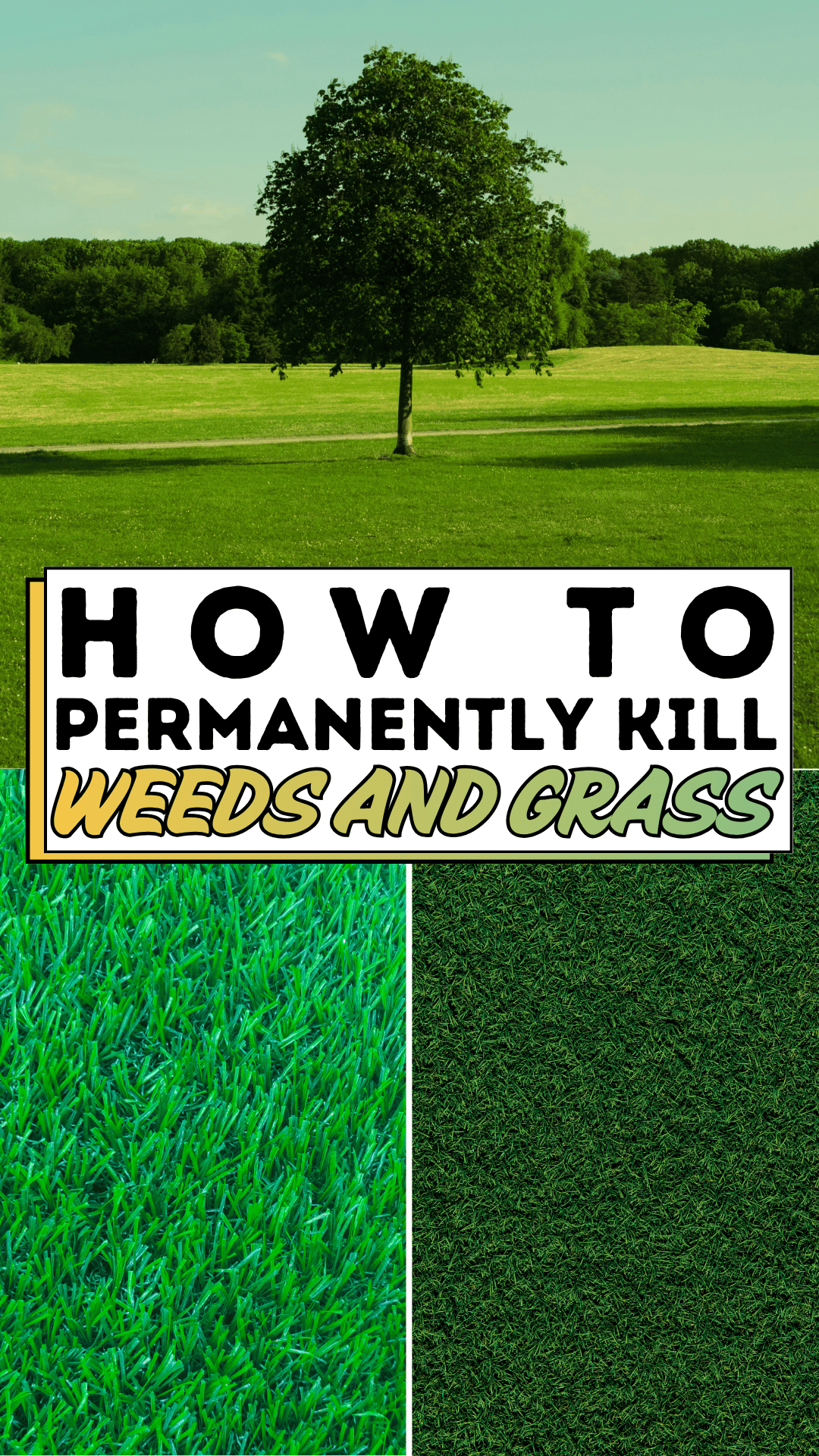
The field in the image above is the standard that effective weeds and grass management produces: open grass with space, a clean soil surface visible beneath the solitary tree, a clear horizon line between the managed field and the treeline beyond it. It is not a weeds-free field in the zero-plant sense; there are small white flowers in the grass that belong to the meadow’s character, but it is a field where the ground is under management rather than being lost to the opportunistic colonization that untreated weeds and grass produce. That quality of a managed, readable landscape is what a permanent weeds and grass elimination approach achieves for any garden space. This guide covers every step of doing it correctly.
The Weeds Blueprint
Step 1: Identify the Weeds and Grass Types in the Target Area
Before applying any weeds and grass elimination method, accurately identifying the specific plant types present in the area is the step that determines which approach will be permanently effective and which will require repeated application. This distinction matters enormously: the treatments that permanently kill annual weeds and grass are not necessarily the treatments that permanently eliminate deep-rooted perennial weeds, and using the wrong approach for the weed type present produces the specific frustration of repeated retreatment without lasting result.
Annual weeds and grasses bittercress, groundsel, annual meadow grass, chickweed complete their life cycle within a single growing season, setting seed and dying back naturally before re-establishing from seed the following spring. These are the easiest category of weeds and grass to eliminate permanently: kill the plants before they set seed for two consecutive seasons and the seed bank in the soil is progressively depleted. Surface treatments are sufficient for annual weeds and grass because the root system doesn’t persist between seasons.
Perennial weeds and grass bindweed, couch grass, creeping thistle, dock, ground elder, and Japanese knotweed have root systems that persist underground across multiple seasons and regrow from root fragments. These weeds and grass cannot be permanently eliminated by surface treatment alone. Effective permanent elimination requires either a systemic herbicide that travels from the leaf surface through the plant’s vascular system to the root, or repeated physical removal of the entire root system over multiple seasons until the root reserve is exhausted.
Grass present in a bed or paved area also divides into types: annual meadow grass (annual, seed-driven) responds to surface treatment; perennial ryegrass and creeping bent grass (perennial, spreading by stolons) require systemic treatment or physical exclusion to eliminate permanently.
Step 2: Choose the Correct Permanent Weeds and Grass Elimination Method
With the weed and grass types identified, select the elimination method appropriate to the specific situation: the weed type, the area size, the presence of adjacent desirable plants, and the preferred approach (chemical or non-chemical).
Systemic glyphosate herbicide is the most widely used and most effective chemical method for permanently killing weeds and grass, particularly perennial types. Glyphosate is a systemic herbicide; it is absorbed through the leaf and translocated to the root system, killing the plant from the root upward rather than from the surface downward. Applied to actively growing weeds and grass in warm, dry conditions (air temperature above 15°C, no rain forecast for 24 hours after application), glyphosate produces permanent kill of treated plants in two to three weeks. Repeat application may be required for established perennial weeds with very deep root systems, particularly bindweed and Japanese knotweed, but each application further depletes the root reserve.
Note: Glyphosate is a regulated substance in many jurisdictions, and its use is restricted or prohibited in some areas. Always check local regulations before using glyphosate, follow label instructions exactly, and avoid application near water courses, wildlife habitats, and in areas where spray drift could affect food crops or desirable plants.
Non-chemical smothering methods are the most sustainable and ecologically sound permanent weeds and grass elimination approach for large areas where chemical application is not preferred. Cover the target area with a light-excluding material: cardboard (at least two layers, with overlapping joints), black polythene sheeting, or a proprietary weed-suppressing membrane anchored at the edges and covered with a mulch layer to hold it in place. The light exclusion kills existing weeds and grass by preventing photosynthesis and depletes the seed bank by preventing germination. Effective smothering requires a minimum of six months of continuous coverage for annual weeds and grass and twelve to eighteen months for established perennial weeds. This is the most appropriate method for large areas being converted from lawn or overgrown ground to productive planting beds.
Boiling water application kills weeds and grass in paving cracks, driveway joints, and path edges through thermal shock to the plant tissue. It is most effective against annual weeds and shallow-rooted perennials, less effective against deep-rooted perennial weeds and grass. Apply directly from a full boiling kettle to the target plants, ensuring the water penetrates the crown and into the soil around the root zone. Multiple applications over two to three weeks are typically required for complete kill.
Flame weeding uses a propane torch to apply brief, intense heat to weed and grass foliage, causing the plant cells to rupture and the plant to wilt and die within 24 to 48 hours. Most effective for annual weeds and grass in gravel paths, paved areas, and borders where a flame can be safely applied. Less effective for deep-rooted perennials. Avoid in dry conditions near combustible materials.
Step 3: Prepare and Apply the Chosen Treatment
Permanent weeds and grass elimination depends as much on the quality of application as on the method chosen. A glyphosate application made in the wrong conditions, to the wrong growth stage, or with insufficient coverage produces partial kill that allows the strongest plants in the treated area to survive and regrow.
For systemic herbicide application: apply to actively growing weeds and grass at the stage of maximum leaf area; this maximises the leaf surface available for absorption and the quantity of chemical translocated to the root system. Do not apply to weeds and grass that are drought-stressed, dormant, or recently cut back; a plant producing no photosynthesis cannot transport herbicide to its roots. Apply in calm conditions to prevent spray drift onto desirable plants. Wait a minimum of two weeks before assessing the kill. Glyphosate works slowly and plants that appear unchanged at one week may be completely dead at two.
For smothering application: prepare the ground surface by cutting or strimming existing weeds and grass to ground level before applying the light-excluding material. This is not strictly necessary but reduces the risk of tall weeds and grass pushing through the material in the early stages of coverage. Overlap cardboard sheets by a minimum of 15cm at all joints to prevent weeds from exploiting the gaps. Wet cardboard thoroughly before applying mulch; dry cardboard can be lifted by wind before the mulch anchors it.
For boiling water application: pour directly onto the weed or grass crown and into the surrounding soil, moving slowly enough that the boiling water penetrates around the root zone rather than simply wetting the surface foliage. Apply on a dry, still day and avoid wetting adjacent paving or surfaces that may be slippery when wet.
Step 4: Address the Soil Conditions That Favour Weeds and Grass Re-establishment
Permanently killing existing weeds and grass is the first step; preventing re-establishment from the seed bank and from adjacent spreading growth is the second step that determines whether the elimination is genuinely permanent rather than temporarily effective.
After the initial treatment, cover treated areas with a minimum 10cm layer of mulch (bark chip, wood chip, gravel, or proprietary weed-control mulch) before any new planting is installed. A thick mulch layer deprives germinating weed and grass seeds of the light they need to establish at the surface, reducing the re-establishment rate from the soil seed bank by approximately 70 to 80% compared to untreated bare soil. The mulch additionally retains soil moisture, improves soil structure, and gives any new planting a more hospitable establishment environment than bare post-treatment soil.
Install a weed-suppressing membrane beneath any gravel or decorative aggregates in paths and patio areas. Ground-level weed-suppressing membrane does not prevent deep-rooted perennial weeds from penetrating through over time, but it significantly reduces the rate of establishment and makes those that do establish easier to remove before they develop the deep root system that makes permanent elimination difficult.
At the area’s boundary, install a root barrier to prevent the lateral spread of perennial weeds and grass from adjacent untreated ground. Root barriers flexible plastic sheets buried vertically to a depth of 30cm at the treated area’s perimeter stop the underground rhizome spread of couch grass, bindweed, and ground elder from colonizing the treated area from adjacent beds or lawns.
Step 5: Monitor and Retreatment
True permanent elimination of weeds and grass in most garden settings requires a monitoring and retreatment schedule for the first two to three seasons, the period during which the treated area’s seed bank is depleted, and any surviving root reserves of perennial weeds exhaust themselves. Annual weeds and grass will continue to germinate from seeds in the soil during this period; perennial weeds may produce new growth from any root fragments not fully killed by the initial treatment.
Inspect the treated area every two weeks through the growing season and treat any new growth immediately either by hand-pulling of any new seedling before it establishes (when the soil is moist, young weeds pull cleanly with their root intact), by spot application of systemic herbicide to individual perennial regrowth shoots, or by retreating the full area if re-establishment is widespread. The critical principle is treating new growth at its earliest stage a weed or grass seedling treated at two weeks of age is permanently eliminated in one treatment; the same weed treated at six weeks may have produced sufficient root reserve to regrow after surface treatment.
Expert Secrets for Success
Pro-Tips for Better Results
Apply systemic herbicide in warm late summer conditions for the most effective permanent kill of perennial weeds. The late summer period, late August through September in temperate climates, is when perennial weeds and grass are actively translocating nutrients downward to their root systems in preparation for winter. Systemic herbicide applied in this period travels with the plant’s natural nutrient flow toward the root system, producing significantly deeper and more complete kill than the same herbicide applied in spring when the plant’s vascular flow is upward and outward. The late summer application is the most consistently effective timing for permanently killing deep-rooted perennial weeds.
Repeatedly cut perennial weeds before herbicide application to increase leaf surface area. Counter-intuitive as it sounds, cutting back established perennial weeds and grass three to four weeks before herbicide application, allowing them to regrow vigorously to approximately 15cm before treating, produces a more effective kill than treating the established woody growth. The young, vigorous regrowth has larger, more permeable leaf surfaces than the thick, waxy growth of an established plant and absorbs systemic herbicide significantly more effectively.
Mark treated areas clearly to prevent accidental disturbance. Glyphosate requires 24 to 48 hours without rainfall or soil disturbance to allow full absorption and translocation. Areas treated with systemic herbicide should be clearly marked (canes, string, or brightly colored stakes) to prevent accidental foot traffic, digging, or irrigation that washes the chemical from the leaf surface before it has been fully absorbed. This is particularly important in garden areas used by children or in shared outdoor spaces.
Common Mistakes to Avoid
Don’t apply systemic herbicide to drought-stressed or dormant weeds. The most common reason systemic herbicide treatments fail to produce permanent kill is application to plants that are not actively photosynthesising and translocating, such as drought-stressed plants (showing wilting or leaf curl), heat-dormant, or winter-dormant. Systemic herbicide applied to dormant weeds and grass stays on the leaf surface, breaks down before the plant resumes growth, and produces no kill effect. Water the area thoroughly 48 hours before herbicide application if drought stress is evident to restore active growth before treatment.
Don’t underestimate the root depth of established perennial weeds. The visual kill of a perennial weed’s above-ground growth the yellowing and collapse that occurs two to three weeks after systemic herbicide application does not confirm that the root has been permanently killed. Established bindweed, dock, and ground elder have root systems that can penetrate 60cm or more and require multiple treatment cycles across two to three growing seasons for permanent elimination. Declaring success after a single treatment of perennial weeds is the planning error that leads to the frustration of what appears to be complete elimination followed by resurgence the following spring.
Don’t leave treated bare ground uncovered. Bare soil following weeds and grass treatment is the most fertile establishment environment available to weed seeds; it has no competition, no shading, and all the light and moisture that germinating seeds need. The most common reason that treated areas re-infest rapidly is the failure to cover treated ground with mulch or a light-excluding material within two weeks of the initial treatment kill. The mulch doesn’t need to be deep or expensive; a 10cm layer of wood chip or straw covers the soil surface sufficiently to suppress annual weed germination while the treated area is being prepared for replanting.
Why Weeds Matter
A garden where weeds and grass are genuinely under control is a garden that the household can actually inhabit, where the beds look as good from the kitchen window as they do in a design intention, where the time spent outdoors is time in the space rather than time on the space. The psychological weight of an overgrown or weed-dominated area is disproportionate to its physical size: a patch of bindweed or a couch-grass-colonized bed can register as a sense of general garden failure that colors the whole outdoor space’s perceived quality. Resolving the weeds and grass problem doesn’t just clean up one area. It restores the quality of the whole garden’s relationship to the people who live with it.
Research in environmental psychology identifies perceived control over the domestic environment the sense that the home and garden are manageable, that problems are being addressed rather than accumulating as one of the most significant predictors of residential wellbeing. A chronic weeds and grass problem that has been unsuccessfully managed for multiple seasons contributes to a background sense of home-management inadequacy that compounds with other domestic pressures. Permanently resolving it with the right approach, at the right time, with the monitoring schedule that sustains the result removes that background pressure completely and replaces it with the specific satisfaction of a garden that is both visually pleasing and genuinely under control.
Easy Peasy Life Matters is built on the conviction that home and garden problems resolved correctly are resolved once the investment of understanding and applying the right method is always preferable to the repeated low-return investment of temporary measures that don’t address the root of the problem. Permanent weeds and grass elimination is the clearest example of this principle in garden management. The bindweed in the fence line border has been there for four years, not because it’s impossible to eliminate but because the approach used so far has addressed the symptom rather than the cause. This guide is the cause. That’s where permanent solutions begin.
Frequently Asked Questions
Does vinegar permanently kill weeds and grass?
Household white vinegar (acetic acid at 5% concentration) kills the above-ground foliage of annual weeds and grass through contact burning of the plant tissue, but it does not translocate to the root system and does not permanently kill perennial weeds. The root system of treated perennial weeds survives a vinegar application and regrows within two to four weeks. Commercial horticultural vinegar at 20 to 30% acetic acid concentration produces a stronger burn effect and may damage shallow root systems of young perennial weeds, but it is still not a systemic treatment and does not provide the permanent root kill of an established perennial weed system. Vinegar is most appropriate as a contact treatment for annual weeds and grass in paving joints and path edges, where the absence of a persistent root system makes contact kill sufficient for permanent elimination.
How long does it take for weeds and grass to die after treatment?
The timeline for weeds and grass death after treatment varies by method. Systemic glyphosate herbicide typically produces visible yellowing and wilting in seven to fourteen days, with complete above-ground death at two to three weeks and root death (for smaller perennials) within the same period. Boiling water produces visible wilting within 24 hours, and complete shoot kill within 48 hours. Flame weeding produces wilting within hours and complete shoot kill within 24 hours. Smothering methods kill existing weeds and grass progressively over four to eight weeks as the plant’s energy reserves are depleted through the absence of photosynthesis. None of these timelines guarantee permanent root kill for established perennial weeds; monitor for regrowth for a minimum of two growing seasons after initial treatment.
What is the most effective non-chemical method to permanently kill grass in a garden bed?
The most effective non-chemical permanent method for killing established grass in a garden bed is the smother method using cardboard and deep mulch. Apply two to three layers of plain (not waxed or printed) cardboard directly over the grass surface, wetting it thoroughly, and cover with a minimum 15cm layer of wood chip or compost. The double layer of cardboard excludes light completely and decomposes over six to twelve months, improving soil structure as it breaks down. The mulch layer above prevents the cardboard from drying out and adds additional insulation against light penetration. Applied in autumn, this method produces reliably dead grass by the following spring planting season in most temperate climates.
Will weeds and grass come back after permanent treatment?
In a realistic garden context, the term “permanent” for weed and grass elimination refers to the permanent elimination of the treated plants, not to permanent prevention of future weed or grass establishment in the area. Seeds from adjacent areas will continue to blow in and germinate on the surface of the treated area for as long as the area exists. A well-mulched treated area significantly suppresses this germination, but regular monitoring and prompt removal of any new seedlings is required indefinitely to maintain the treated area’s weed-free status. The critical distinction is between eliminating the existing established weeds and grass (achievable with the methods in this guide) and preventing any future weed presence (achievable only through ongoing management, not through a one-time treatment).