My yard was not a disaster. That is the most honest way to describe it, not a disaster, just a collection of decisions that had accumulated without ever adding up to anything. A strip of lawn that needed mowing but never seemed to reward the effort. A few shrubs were planted by the previous owners in positions that made sense to no one currently living there. A concrete path from the gate to the front door that communicated function and nothing else. I had added a pot here, a hanging basket there, moved things around in the spring with the annual optimism that this year the garden would feel like something. Every year, the garden felt like almost something improved, tended, technically acceptable, and still somehow not like a yard I wanted to sit in, show to guests, or photograph in the golden light of a Sunday morning. The cottage garden ideas I had bookmarked for two years stayed bookmarked. They felt like they belonged to someone else’s house, someone with a stone facade and ivy and the kind of relationship with plants that produces a climbing rose over the front door rather than a sad wisteria that refuses to climb anything.
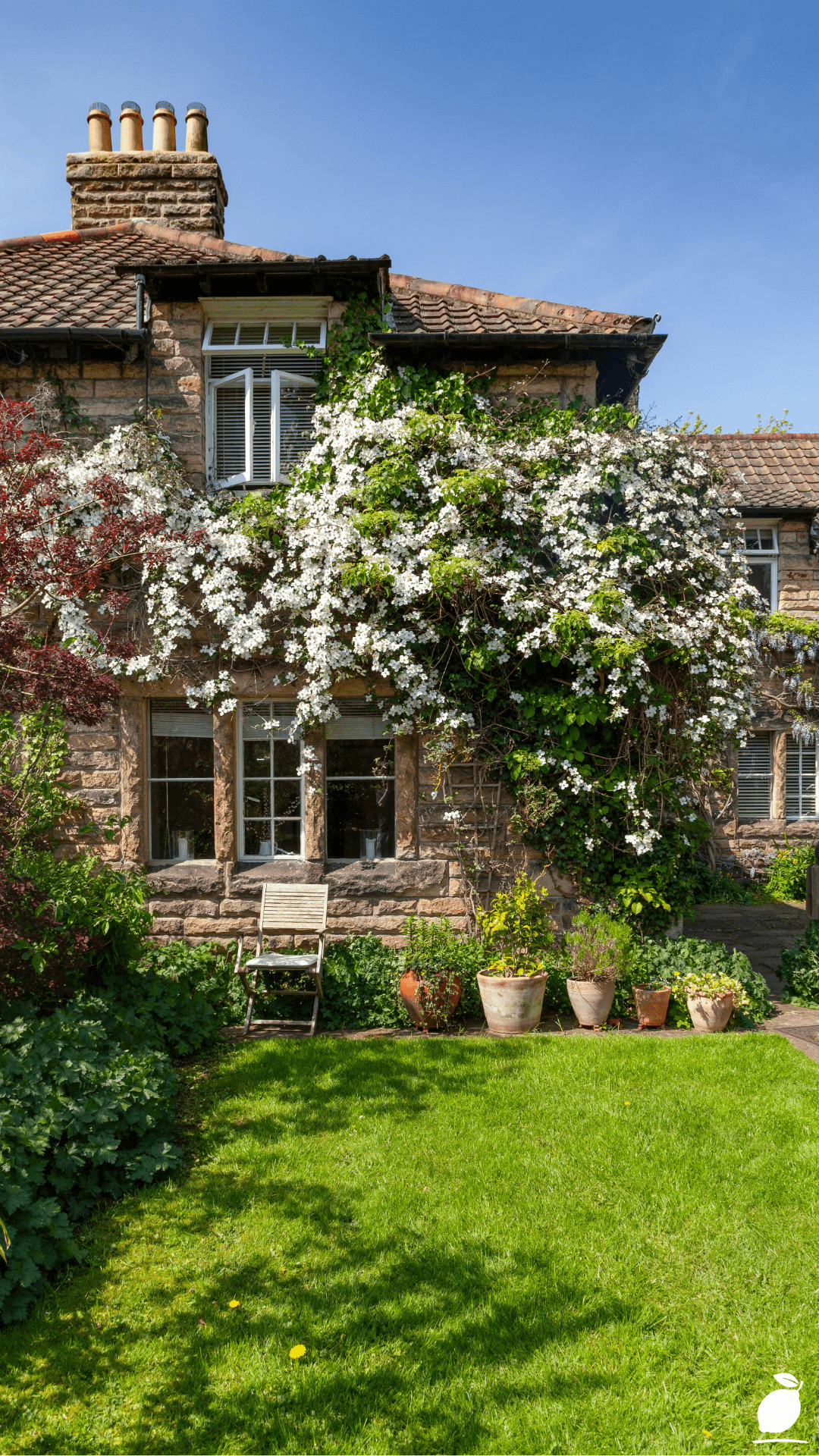
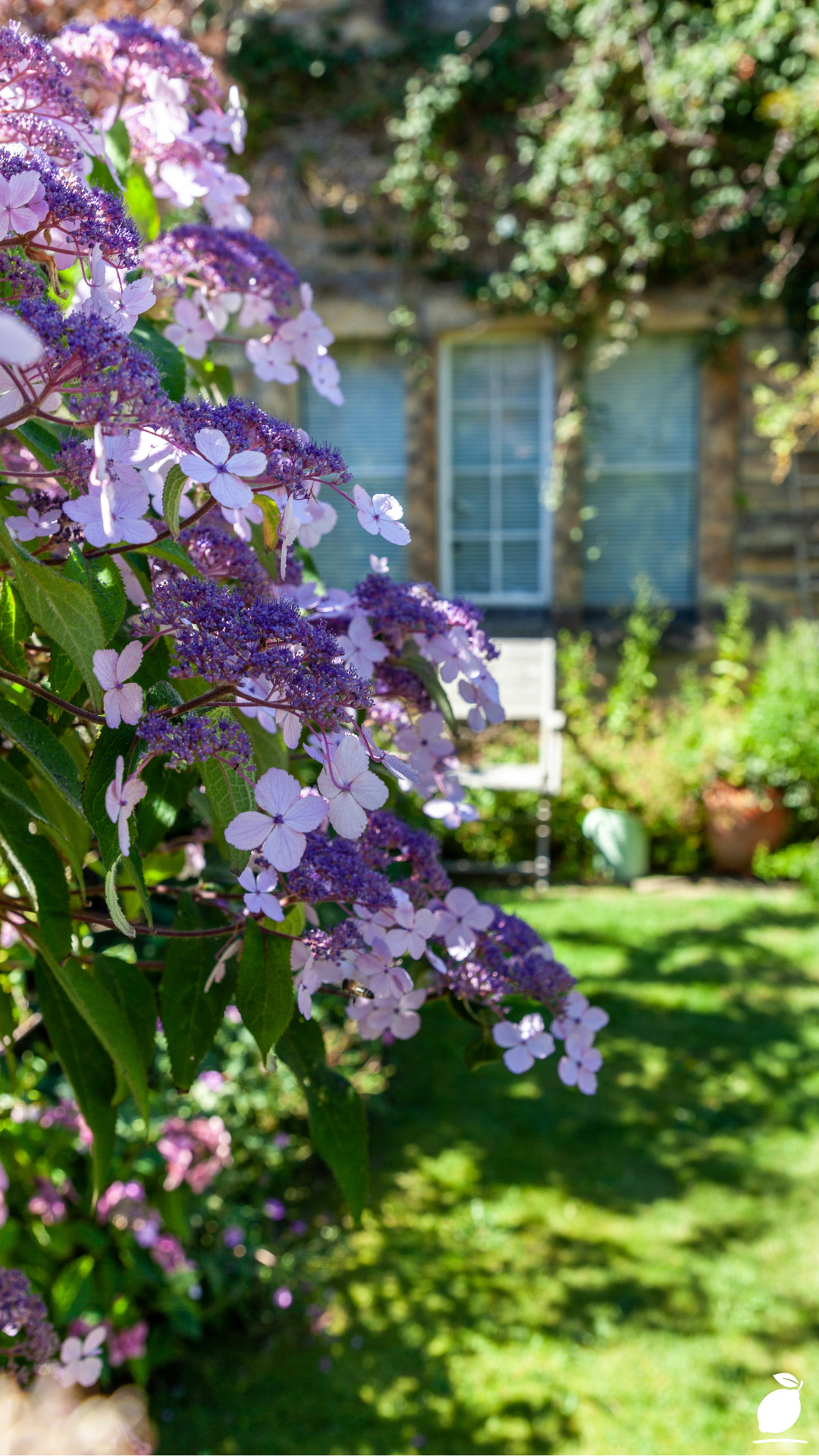
The garden in the image above is what those cottage garden ideas look like when they are given full permission. A Victorian stone cottage with ivy mapping every surface that gravity permits it to reach. A white flowering vine cascading down the front facade in an arch that no architect planned, but every eye immediately accepts as correct. Terracotta pots lining the front steps in an arrangement so apparently casual that its underlying composition takes a moment to recognize. A manicured lawn scattered with yellow dandelions that were allowed to stay because, in a cottage garden, certain wildness is not a failure; it is part of the design. A purple-leafed tree on the left provides the color drama that formal gardens achieve with tulip beds and cottage gardens achieve with one beautifully placed specimen. A wooden folding chair on the porch that says: ” This garden is for sitting in, not just looking at. I spent an afternoon with that image and understood what had been missing from my yard for three years: not more plants, not more pots, not a new layout, but a philosophy. The cottage garden idea is not a plant list. It is a way of relating to outdoor space that allows the garden to be simultaneously cared-for and alive.
I applied cottage garden ideas to my yard over two growing seasons, and the transformation was not dramatic in any single weekend but cumulative in the way that good cottage garden ideas always are, each element supporting the elements around it, the garden developing character as it grew rather than looking finished the moment it was planted. This guide is the record of everything that worked: the specific cottage garden ideas for structure, for planting, for the small accidental-looking details that are never actually accidental, and for the maintenance approach that keeps a cottage garden feeling loved without demanding the kind of attention that most of us do not have hours each week to give. These are the cottage garden ideas that changed my whole yard. They are entirely achievable, entirely scalable to whatever space you have, and entirely capable of producing the specific magic the image above demonstrates.
The Cottage Garden Ideas Blueprint
Step 1: Assess Your Yard’s Bones Before Any Cottage Garden Idea Is Planted
Every cottage garden idea that lasts begins with an honest assessment of the yard’s existing structure, the paths, the fences, the walls, the permanent plantings, and the architectural features of the house before a single new plant is selected or a single border is dug. Cottage garden ideas that are layered onto a yard without this structural assessment produce the slightly random quality that distinguishes a yard with cottage-style plants from a genuine cottage garden: individual elements that are charming without being connected to or to the house in a way that feels resolved.
Walk the yard at different times of day and in different weather conditions. Note which areas receive full sun (six hours or more of direct light), partial shade (three to six hours), and full shade (fewer than three hours). Photograph each section from the vantage points from which it will most often be seen from the gate approaching the house, from the front door looking out, and from the windows of the main rooms. The photographs reveal the yard’s current visual composition more clearly than standing in it, and they show immediately which cottage garden ideas will most transform the existing impression: a climber over the entrance (as in the image), a specimen plant at a visual anchor point, a line of terracotta pots along the path.
Map the sun exposure, soil conditions, and existing structural elements on a simple sketch of the yard. This map is the working document for every cottage garden idea. It tells you where climbing plants will thrive, where shade-tolerant cottage garden plants can fill the difficult areas, and which structural interventions (a trellis, an arch, a low border edging) will be most effective at establishing the cottage garden’s overall visual framework.
Step 2: Establish Vertical Cottage Garden Ideas Before Ground-Level Planting
The most visually transformative of all cottage garden ideas, the ones that produce the immediate, whole-yard quality shift rather than the gradual accumulation of small improvements, are vertical elements: climbing plants on walls and fences, arching roses or clematis over entrances, ivy allowed to map the facade, and trained vines creating the natural framework that the cottage garden uses in place of formal architectural structure. The image demonstrates this at its most complete: the ivy on the walls and the white flowering vine over the entrance do more for the cottage garden effect than all the terracotta pots and lawn plantings combined, because they relate the garden to the building in the way that only vertical elements can.
For cottage garden ideas involving climbers on walls, the most reliable and most visually effective choices for a beginner’s cottage garden are: climbing roses (Rosa ‘Iceberg’ or ‘New Dawn’ for white-flowering, archway-quality cottage garden effect; ‘Zéphirine Drouhin’ for a thornless option suitable for high-traffic entrances), wisteria for the cascading, heavy-bloom effect that cottage garden facades are most associated with, and ivy species for the year-round green coverage that makes a cottage garden house look as though it has been planted for decades rather than months.
Install support structures, trellis panels, horizontal wire runs, or timber archways before planting any climber, and fix them securely enough to support a mature plant’s weight. A climbing rose that has been growing for five years can weigh significantly more than the trellis it was trained on if that trellis was sized for a newly planted rose rather than a mature one. The support structure is the cottage garden idea investment that most homeowners undersize and most professional gardeners oversize, erring toward overbuilding.
Step 3: Define the Cottage Garden’s Path and Border Edges
Cottage garden ideas achieve their specific combination of abundance and legibility, the sense of a garden that is full but not chaotic, through the consistent use of defined edges at path and border boundaries. Without edge definition, cottage garden planting spills into paths, paths drift into lawn, and the overall impression tips from abundant to neglected. With edge definition, the same cottage garden planting reads as deliberately generous rather than uncontrolled, and the visual complexity of many different plants becomes richness rather than mess.
The cottage garden in the image uses the concrete path and front steps as the defining structural edge, with the terracotta pots marking the boundary between the entrance structure and the planted areas. The lawn’s edge against the planted borders is clearly maintained, giving the grass its manicured quality even though dandelions have been allowed within it. These two edge types, the hard architectural edge of the path and steps, and the soft maintained edge of the lawn border, are the cottage garden idea’s structural elements that hold the garden together.
For your own cottage garden ideas, install a physical lawn edging, such as metal, terracotta, or wooden board edging sunk flush to the soil surface along every border where planted areas meet the lawn. This single cottage garden idea installation requires one afternoon and prevents the months of deteriorating edge quality that are the most maintenance-intensive aspect of an unedged cottage garden. Define path edges with the same approach, or use a generous planting of low-growing cottage garden edge plants, catmint, alchemilla, or trailing aubrieta that spill softly over the path edge while remaining on the planting side of the boundary.
Step 4: Select Cottage Garden Plants That Layer by Height and Season
Cottage garden ideas succeed at creating the image’s layered, abundant, all-season visual richness through a specific planting approach: a vertical layer of tall structural plants (roses, delphiniums, foxgloves, hollyhocks) at the back of each border, a mid-layer of medium-height cottage garden staples (lavender, nepeta, geraniums, astrantia) in the middle, and a low-growing or spreading front layer (alchemilla, pansies, violas, creeping thyme) at the path edge. Planting in this sequence, tall at the back, medium at the center, low at the front, produces the cottage garden depth that single-layer planting cannot, regardless of how many cottage garden plant varieties are used.
The seasonal succession principle is the cottage garden idea that most distinguishes a garden that performs through the full growing year from one that peaks in early summer and declines by July. Plant each border zone with at least three species whose peak flowering periods do not overlap: a spring-flowering bulb layer (tulips, alliums, hyacinths) that precedes the summer cottage garden plants; a summer-flowering layer (roses, lavender, geraniums, delphiniums) at peak from June to August; and an autumn-extending layer (sedums, rudbeckia, Japanese anemones, late salvias) that carries the border into October. The terracotta pots in the image perform this seasonal succession role at the entrance. The pots can be replanted three times per year with the season’s appropriate cottage garden planting, ensuring that the entrance presentation is never bare.
Step 5: Introduce the Cottage Garden Specimen Plant as the Yard’s Anchor
Every great cottage garden has at least one specimen plant, a single tree, shrub, or large-scale perennial whose color, form, or scale provides the yard’s primary visual anchor point and gives the cottage garden its distinctive character. In the image, the purple-leafed tree on the left is this specimen: its deep burgundy foliage contrasts with the green lawn, the flowering vine white, and the ivy green in a way that a green-leafed tree in the same position would not, and its placement at the garden’s left edge creates the visual balance that the flowering vine on the right side needs to read as a composition rather than as an isolated feature.
For your cottage garden ideas, choose the specimen plant by its year-round contribution to the garden’s character rather than its flowering season alone. A purple-leafed Prunus cerasifera (the copper beech or purple-leaf plum), a white-flowering Amelanchier lamarckii (serviceberry) for spring blossom and autumn color, a multi-stem Betula utilis (Himalayan birch) for bark interest, or a standard-trained rose on a clear stem for formal cottage garden impact in a smaller yard, each provides the visual anchor that organizes the cottage garden ideas around it. Plant the specimen before any border planting, establish it, and develop the cottage garden’s surrounding plantings in response to the specimen’s color, size, and seasonal character.
Step 6: Complete the Cottage Garden with Container and Detail Planting
The final cottage garden idea layer, the terracotta pots, the windowbox plantings, the small detail elements that give the cottage garden its personal, inhabited quality, is the layer that most guests comment on and most homeowners find easiest to execute because it requires no permanent ground preparation and is fully adjustable throughout the season. The terracotta pots lining the front steps in the image are the cottage garden detail that guests register most immediately, because they are at eye-level on the path to the front door and because their arrangement of varied sizes, height, and plant species communicates exactly the kind of considered-but-casual curation that the cottage garden idea philosophy embodies.
For terracotta pot cottage garden ideas, use only genuine terracotta rather than plastic or fiberglass alternatives. The terracotta’s warm orange tone and slight surface porosity are the visual and material qualities that make the cottage garden pot arrangement read as authentic rather than staged. Group pots in odd numbers, vary the sizes within each group, and ensure that the tallest pot in each group is genuinely tall. A pot that extends above knee height reads as a visual element; a pot at ankle height reads as a garden accessory. Plant each pot with a combination of a thriller (a vertical, height-providing plant), a filler (a mounding, full plant), and a spiller (a trailing plant that cascades over the rim), the thriller-filler-spiller cottage garden pot formula that produces the abundant, overflowing quality the image demonstrates.
Expert Secrets for Success
Pro-Tips for a Better Result
Allow selected self-seeding cottage garden plants to naturalize in your borders. The yellow dandelions scattered through the lawn in the image are not a maintenance failure; they are a deliberate tolerance, and a philosophically important one. The cottage garden idea that distinguishes the most convincing cottage gardens from the most contrived ones is the willingness to allow certain plants to seed themselves and move around the garden freely. Foxgloves, aquilegia, verbena bonariensis, and alchemilla are the most reliable self-seeding cottage garden plants. Each year, they appear in slightly different positions, creating the organic, evolved-over-time quality that planted-to-plan cottage gardens cannot manufacture.
Train climbers horizontally on the lower portions of walls to increase flowering. The cascading abundance of the white flowering vine in the image is produced not by vertical training, which produces growth at the top of the plant and bare stems below, but by training the lower branches horizontally along wall wires before allowing them to grow upward. Horizontal training of climbing roses and other cottage garden climbers stimulates the production of flowering laterals along the full length of the horizontal branch, producing a flowering display at every height rather than only at the growing tip. Install wall-mounted horizontal wires at 30cm intervals from ground level to the height of the desired coverage before planting any climber.
Use the purple and burgundy foliage spectrum to anchor cottage garden color palettes. The purple-leafed tree in the image performs a function that a green-leafed tree in the same position could not: it anchors the cottage garden’s color palette by providing a deep, dark visual tone against which all the lighter greens and flowering colors read with greater intensity. Incorporate at least one burgundy or purple-foliaged plant at specimen scale in every cottage garden: Cotinus coggygria ‘Royal Purple’ (smoke bush), Physocarpus opulifolius ‘Diabolo’ (ninebark), or the Prunus species in the image as the palette anchor that makes the cottage garden’s color composition read as designed rather than assembled.
Repot terracotta containers with a seasonal planting schedule three times per year. The cottage garden entrance in the image maintains its abundant quality year-round because the terracotta pots are treated as seasonal stage sets rather than permanent plantings. In early spring, replant with spring bulbs and violas. In late spring, transition to summer cottage garden planting trailing verbena, upright salvias, scented pelargoniums. In early autumn, plant for the winter and early spring display ornamental kale, winter heathers, and early narcissus bulbs beneath. Three replanting sessions per year require approximately two to three hours each and produce a cottage garden entrance that is never bare or past its best.
Common Mistakes to Avoid
Don’t plant cottage garden climbers directly against a wall without adequate clearance for air circulation. The most common reason cottage garden climbing plants fail to establish or develop fungal problems within two to three years of planting is insufficient air circulation at the base of the gap between the plant’s main stem and the wall surface. Plant all cottage garden climbers a minimum of 45cm from the wall face and lean the plant back toward the wall support at planting time. The soil at the base of a wall is typically the driest and most nutrient-depleted in the garden. Direct-against-wall planting places the cottage garden climber’s roots in the most challenging soil conditions, while 45cm of clearance puts the roots in better-quality garden soil.
Don’t allow the cottage garden lawn to be replaced by hard paving in favor of low maintenance. The manicured lawn in the image is the cottage garden’s primary resting surface, the visual breathing space between the dense border plantings and the terracotta pot arrangement that prevents the cottage garden from tipping into overwhelm. Removing the lawn and replacing it with gravel or paving to reduce maintenance eliminates the one element that gives cottage garden abundance its necessary counterpoint. Maintain the lawn area even at a reduced size, and address the maintenance concern through lawn care simplification rather than lawn elimination. A sharp lawn edge and monthly mowing are the only lawn maintenance requirements the cottage garden idea needs.
Don’t buy all cottage garden plants at once from a single garden center. The cottage garden’s most important visual quality, the accumulated, evolved-over-time character of a garden that has been planted in stages and allowed to develop its own personality, is impossible to achieve in a single-day plant purchase, regardless of how many cottage garden plant varieties are selected. Buy foundational plants first (the climbers, the specimen tree, the structural shrubs), plant them, allow them to begin establishing, and add the border planting in subsequent seasons as you observe how the foundational plants are growing and what color and form the emerging cottage garden needs at each stage. The cottage garden that is purchased complete in a single afternoon looks purchased; the cottage garden assembled over two or three growing seasons looks grown.
Don’t neglect the cottage garden’s front facade as a planting surface. The ivy and flowering vine in the image are the cottage garden’s most architecturally transformative elements; they relate the garden to the building in a way that no amount of border planting can replicate. The facade is a planting surface available to every cottage garden, regardless of size, and it is the most underused one in most cottage garden attempts. Install wall fixings and support wires on the facade in the first season and plant at least one climber for each significant wall section. The transformative effect at year three and year five, when the climbers have begun to cover the facade, is the cottage garden idea result that most dramatically justifies the early investment.
Why Cottage Garden Ideas Matter
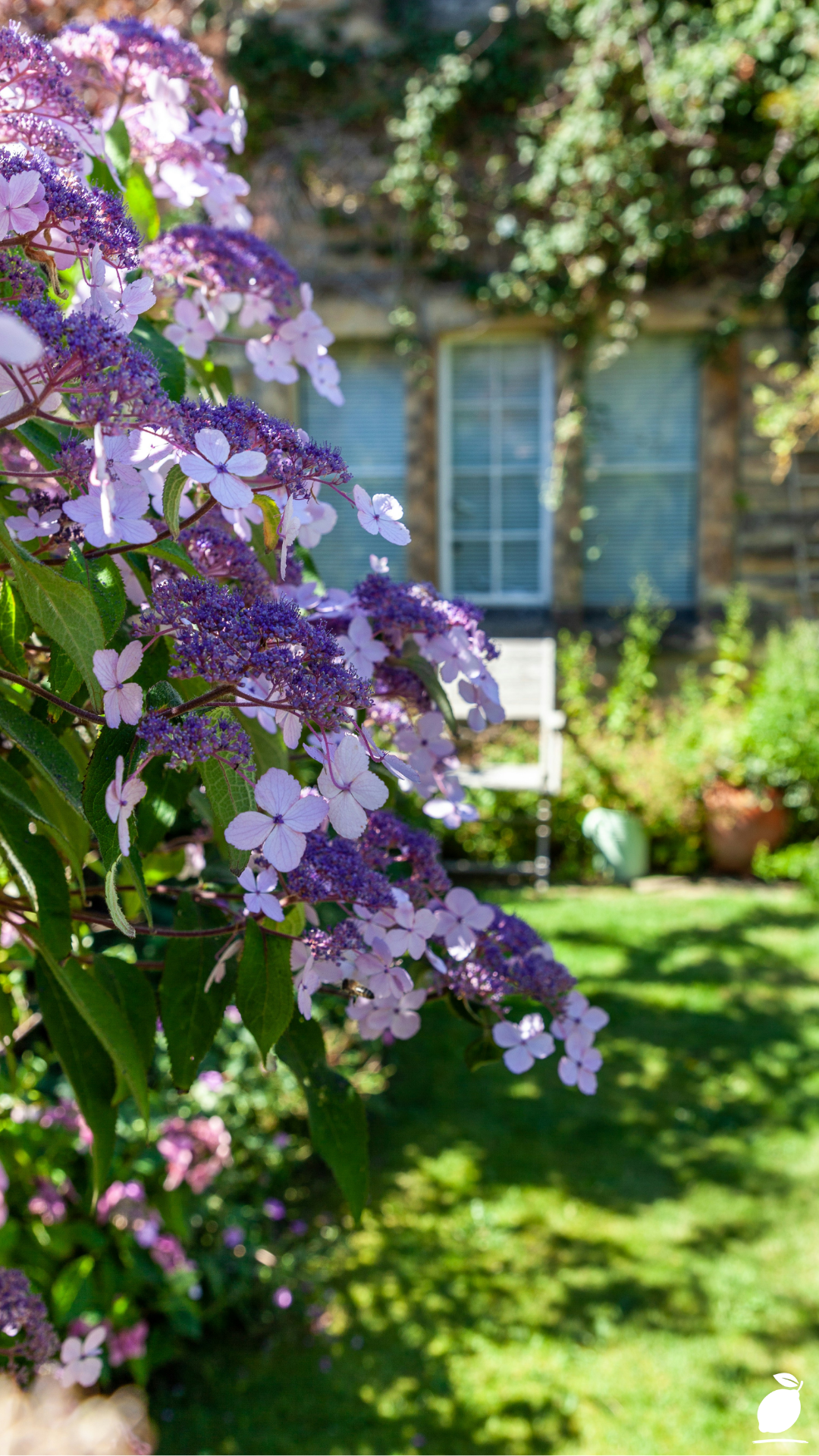
There is a specific quality that the best cottage garden ideas produce that no other garden style replicates, and it is worth naming precisely because it is what motivates the transformation and what sustains the effort through the seasons that precede the full result: the quality of a space that appears to have been loved over a long time. The cottage garden in the image does not look like it was installed in a weekend. It looks like it has been tended, added to, and allowed to grow by someone who has lived with it and in it who planted the ivy and came back each spring to see where it had traveled, who trained the climbing vine and stood back to observe how the flowers fell. That quality, the accumulated evidence of ongoing care and attention, is what cottage garden ideas produce, and it is the garden quality that most powerfully communicates to anyone who sees it that the people who live here are genuinely present in the space around their home.
Research in environmental psychology has documented the specific psychological benefits of garden tending, reduced cortisol, improved mood, increased sense of personal efficacy, and the cottage garden idea approach is particularly well-suited to producing these benefits because it is specifically an incremental, hands-on, observational form of garden keeping. The cottage garden asks its gardener to notice: to see where a self-seeded foxglove has appeared and decide whether to move it or let it stay, to observe whether the climbing rose is sending its new growth in the right direction and redirect it if not, to spend ten minutes with a cup of tea and the morning light assessing what the garden needs rather than simply what needs to be done to it. This mode of garden engagement, attentive, responsive, unhurried, is among the most reliably restorative activities available in domestic life.
Easy Peasy Life Matters is built on the conviction that the home’s outdoor spaces are as deserving of intentional design and ongoing care as its indoor rooms and that the cottage garden idea is among the most accessible of all serious garden approaches because it works with the natural tendencies of plants rather than against them, requires less precision than formal garden styles, and rewards patience and attention more consistently than any seasonal planting scheme. The garden in the image is not beyond reach. It is two growing seasons of the right cottage garden ideas applied with the right philosophy. This guide is the philosophy and the ideas together. Your yard is ready to become that garden.
Frequently Asked Questions
What plants are essential for a cottage garden?
The most essential cottage garden plant categories those that produce the abundant, layered, all-season quality the image demonstrates are climbing roses for the vertical layer on walls and over entrances, lavender and nepeta (catmint) for the soft mid-border layer, foxgloves and hollyhocks for the tall structural layer at border backs, alchemilla mollis (lady’s mantle) for the low frothing edge layer, and at least one specimen plant with distinctive foliage color for the garden’s anchor. Within each category, the specific variety matters less than the category itself: any climbing rose will produce the cottage garden effect on a wall; any foxglove will provide the vertical drama at the border back; any alchemilla will produce the soft, self-seeding edge quality. Start with these five categories before adding cottage garden plant varieties beyond them.
How long does it take to establish a cottage garden from scratch?
A cottage garden established from scratch typically takes two to three full growing seasons to reach the visual quality of an established cottage garden, the point at which climbers have covered significant wall surface, self-seeding plants have begun to naturalize, and the layers of border planting have grown together into the abundant, unified quality the image demonstrates. The first season produces a planted-but-sparse result; the second season shows significant growth in all layers and the beginning of the cottage garden character; the third season is where most cottage gardens produce their first fully satisfying result. This timeline is not a deterrent; it is the nature of a garden approach that values accumulated character over instant installation, and the progression from season one to season three is genuinely enjoyable for anyone who finds garden tending rewarding.
Can cottage garden ideas work in a small urban yard?
Yes, and some of the most successful cottage garden ideas are applied in small urban yards where the cottage garden’s density and verticality make the limited space feel far larger than its measurements. In a small urban yard, prioritize vertical cottage garden elements over ground-level ones: wall climbers, a trained standard rose or small specimen tree, and tall pot arrangements at the entrance. These vertical cottage garden ideas create the layered depth and enclosed quality that give cottage gardens their characteristic feeling of abundance without requiring the ground space that horizontal border planting needs. A small urban yard with a climber on the fence, an arch over the gate, and a cluster of terracotta pots at the door can achieve a cottage garden effect at 10 square meters that reads as abundantly as the image’s full-scale Victorian cottage garden.
How do I maintain a cottage garden without spending every weekend on it?
The cottage garden is among the most time-efficient garden styles to maintain once established because it is specifically designed to tolerate and incorporate natural plant behavior, self-seeding, spreading, and gentle wildness that formal garden styles require constant effort to suppress. The maintenance tasks that a cottage garden actually requires are: one annual structural prune of all climbers and roses (typically in late winter, three to four hours for a standard front garden), two to three border tidying sessions per year to remove completed flowering stems and divide overcrowded clumps, monthly lawn mowing with a sharp lawn edge re-cut four times per year, and seasonal terracotta pot replanting three times per year. Total annual maintenance time for a front garden cottage garden at the image’s scale is typically 25 to 40 hours spread across the year, averaging less than 1 hour per week.
What is the best soil preparation for cottage garden planting?
Cottage garden plants, particularly the roses, lavender, and foxgloves that form the backbone of the cottage garden planting palette, perform best in a well-drained soil with moderate fertility rather than the rich, heavily fertilized soil that vegetable gardens require. Over-fertilized soil produces lush, heavy foliage growth at the expense of flowering, the opposite of the cottage garden quality the image demonstrates, where generous flowering rather than foliage bulk is the design priority. Before any cottage garden planting, improve drainage in heavy clay soils by incorporating horticultural grit at a rate of one bucket per square meter. Improve nutrient retention in sandy soils by incorporating garden compost at the same rate. Add a top-dressing of well-rotted farmyard manure in autumn to the established border surface, not dug in, but left to be incorporated by worms, and your cottage garden soil will develop the open, well-structured quality that most cottage garden plants prefer without the excessive fertility that suppresses flowering.