For most of us, the garden starts with good intentions. We look out at the patch of outdoor space attached to our home, and we feel, briefly, inspired. Then the weekend passes, the tools stay in the shed, the grass grows a little longer, and the patch of ground beside the path fills quietly with weeds that were not there last month. The problem is never enthusiasm; most people genuinely want a beautiful outdoor space. The problem is not knowing where to begin, and the paralysing suspicion that without a large budget, a landscape designer, and three free weekends, the garden will never look the way you picture it. So it stays the way it is: half-finished, slightly apologetic, and full of unrealised potential
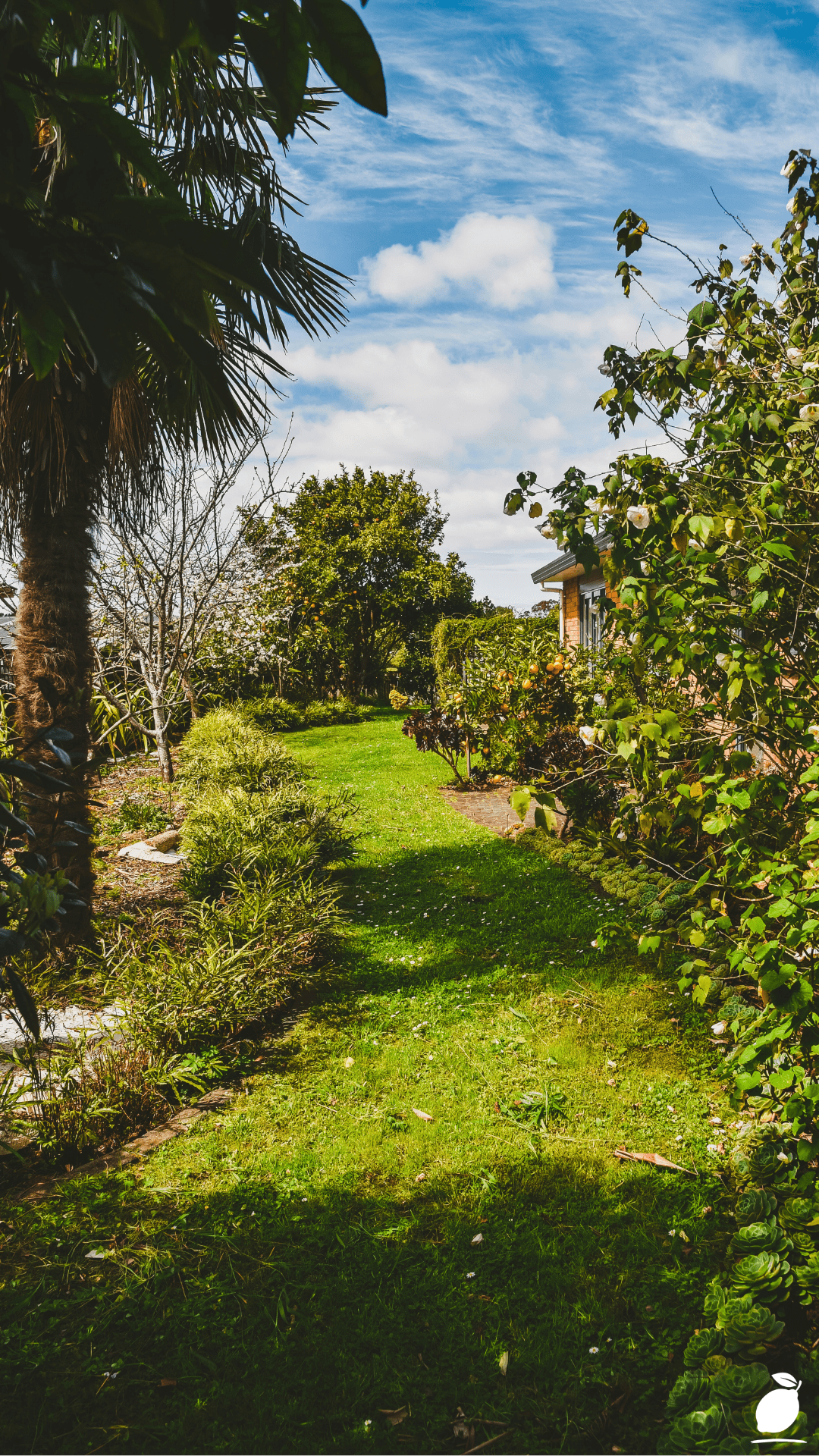
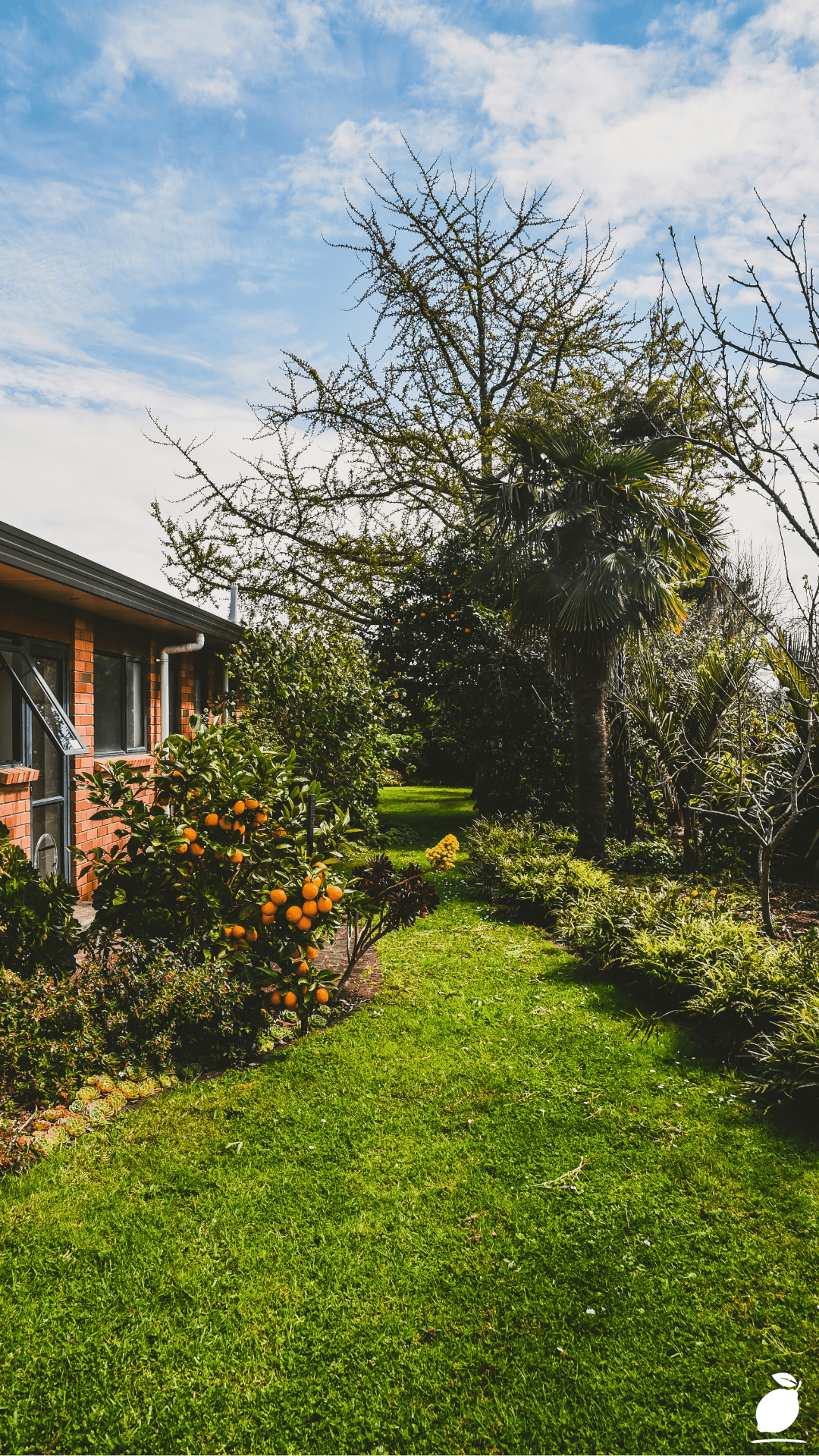
Then you see a garden that stops you in your tracks. It might be a photograph, or a neighbour’s front path, or a house at the end of a street that makes you slow down without quite knowing why. The grass is manicured but not fussy. A curved path leads your eye toward the front door in a way that feels welcoming rather than merely functional. There is a citrus tree heavy with fruit on one side, a layered arrangement of shrubs with different textures and heights on the other, and a bare-branched tree in the background that provides structure even in the colder months. The whole composition is alive and considered without looking like it required a team of professionals. It looks, most importantly, like a place someone actually tends and loves.
That is the promise of good home garden ideas: not a showpiece that demands constant maintenance and specialist knowledge, but a living space that rewards a little planning and a consistent light touch. This guide brings together the most effective home garden ideas drawn from that kind of outdoor space, the kind that photographs beautifully, functions practically, and improves every day you give it attention. Whether your garden is a small front plot, a generous suburban backyard, or something in between, the ideas here will give you a clear starting point and a practical path forward.
The Home Garden Ideas Guide

The best home garden ideas share a common logic: they create visual interest through variety, structure through repetition, and warmth through living colour. Each of the following ideas is drawn from the kind of garden that works in real life, not just in design books.
1. A Curved Garden Path
A straight path from the gate to the door is efficient. A gently curved path is an experience. One of the most universally effective home garden ideas, a curved walkway slows the journey from street to entrance, creates a natural viewing angle for the planting on either side, and makes even a modest garden feel more considered and more generous in its dimensions. The curve does not need to be dramatic; a gentle arc that follows the contour of the lawn is enough to transform a utilitarian approach into a genuine garden arrival.
Why it works: Curved lines read as natural rather than imposed. They echo the organic shapes of plants and lawn edges, creating a sense of cohesion between the hard landscaping and the living elements on either side.
2. A Fruit-Bearing Tree as Focal Point
Among home garden ideas that combine beauty with function, a fruit tree positioned as a mid-garden focal point is hard to beat. A citrus tree, as in the garden image above, offers year-round interest: glossy dark green foliage for most of the year, fragrant blossom in spring, and bright orange or yellow fruit from late summer into winter. Even in a temperate climate, dwarf citrus varieties in large containers can be moved indoors in cold months, making this one of the most adaptable making this one of the most adaptable options for smaller spaces. for smaller spaces.
Why it works: A tree with fruit provides layered visual interest at eye height and above, a dimension that purely ground-level planting cannot achieve. The bright colour of ripe citrus against green foliage creates a natural focal point that draws the eye and anchors the surrounding plantings.
3. Layered Shrub Planting
The most enduring home garden ideas for border and bed design involve layering plants by height, texture, and seasonal interest rather than planting in uniform rows. Tall structural shrubs at the back, mid-height textured plants in the middle, and low ground-cover plants at the front create a border that feels abundant from any angle and provides something of interest in every season. Choose shrubs that offer at least two of the following: interesting foliage, seasonal flowers, attractive berries, or architectural winter form.
Why it works: Layered planting mimics the structure of natural woodland edges, which the human eye is most instinctively drawn to as visually rich and restful. It also maximises the use of a border’s vertical space, creating the impression of a larger and more established garden than the footprint alone would suggest.
4. A Manicured Lawn with Defined Edges
Few home garden ideas have a higher impact-to-effort ratio than a well-maintained lawn with cleanly defined edges. A lawn that is regularly mown and edged along its borders with paths, beds, and paving looks intentional and cared-for regardless of what surrounds it. The defined edge is the key detail: a crisp line between grass and bed does more for the perceived quality of a garden than any number of expensive plants, because it signals that someone is actively maintaining the space.
Why it works: Clean edges create visual order. They frame the lawn as a designed element rather than simply an absence of other things, and they make every planted area beside them read as more deliberate and more composed.
5. A Structural Tree for Year-Round Interest
One of the most overlooked home garden ideas for long-term garden design is planting a structural tree that performs in winter as well as summer. A bare-branched tree against a blue sky, as in the image above, provides silhouette, height, and architectural interest during the months when most gardens go dormant. Consider ornamental pear, silver birch, or crab apple: all three offer spring blossom, summer foliage, autumn colour or fruit, and genuinely beautiful bare branch structure through winter.
Why it works: A garden with no trees lacks the vertical dimension that makes outdoor spaces feel complete. A well-chosen structural tree gives the garden a permanent backbone that every other planting can organise itself around, and it appreciates and impacts with every passing year.
6. Brick and White Trim Colour Harmony
Among home garden ideas that connect the house to its landscape, few are more effective than calibrating the garden’s colour palette to the materials of the building itself. The warm red-orange of a brick house pairs naturally with the greens of a lawn, the orange of ripe fruit, and the grey-blue of a clear sky, a colour relationship that requires no design training to read as harmonious. Echoing the warm tones of the brickwork in your plant choices (rusts, ambers, warm greens) and the white trim in your path edging or garden furniture creates a garden that feels like an intentional extension of the home rather than a separate outdoor space.
Why it works: Colour harmony between house and garden removes the visual tension that makes many outdoor spaces feel disconnected from the home they belong to. It is one of the simplest and most cost-free approaches available; it requires only observation and a considered plant palette. available, it requires only observation and a considered plant palette.
7. Low-Angle Composition and Sight Lines
This is one of the home garden ideas that operates entirely in the mind of the designer rather than in the soil, but its effect on the finished garden is substantial. Before planting a single thing, walk to the entrance of your property and crouch to roughly knee height. What you see from that low angle is roughly what photographs, children, and visitors approaching the front door will experience. Plan your path, your planting heights, and your focal elements from that sight line, ensuring there is always something beautiful at eye level, something at mid-height, and something reaching upward to meet the sky.
Why it works: Gardens designed from a single standing-height perspective often look flat in photographs and from the street. Designing for multiple viewing angles, including a low approach view, creates depth, layering, and the sense of abundance that distinguishes a truly designed garden from one that has simply accumulated plants over time.
Expert Secrets for Success
Pro-Tips for Better Results
- Start with the path, not the planting. The structural elements of a garden, such as paths, edges, and levels, determine whether every home garden idea you apply will look intentional or incidental. Get the hard landscaping right first, then build the planting around it.
- Plant in odd numbers. Groups of three, five, or seven of the same plant read as natural drifts rather than deliberate arrangements. Even the simplest garden projects benefit from this basic principle of repetition and rhythm. benefit from this basic principle of repetition and rhythm.
- Feed the lawn in spring and autumn. A manicured lawn is the backdrop against which all other A manicured lawn is the backdrop against which every other design decisions perform. perform. A lawn that is fed, scarified, and overseeded in autumn and fed again in spring will look dramatically better than one that is only mown.
- Choose plants for three seasons minimum. Every plant you add to a garden border should offer visual interest in at least three of the four seasons. Single-season performers waste valuable border space and leave gaps that look neglected for nine months of the year.
- Use gravel or bark mulch around the base of shrubs. A 7–10cm layer of bark mulch suppresses weeds, retains soil moisture, and makes every border look finished and maintained one of the most time-saving one of the most time-saving practices available to any gardener managing a space solo. available to any gardener managing a space solo.
Common Mistakes to Avoid
- Buying plants before planning the space. The most common reason gardens look incoherent is impulse buying at the garden centre. Map out where each plant will go, what size it will reach at maturity, and how it relates to its neighbours before spending a penny.
- Planting too close together. Plants shown at their nursery size in a planting plan always look sparse. Resist the urge to fill gaps by planting more densely than the mature spread of each plant requires. Overcrowded plants compete for resources and lose their individual form within two seasons.
- Neglecting the front garden for the back. The front garden is what the street sees, what visitors approach, and what photographs from the low angle showcase the garden’s design. It deserves as much attention as any other part of the outdoor space.
- Using too many different materials on paths and edging. A path in brick, edged in timber, bordered by stone chippings, next to concrete paving, creates visual chaos. Choose one or two complementary hard-landscaping materials and apply them consistently throughout the garden.
- Forgetting about the winter structure. A garden planned entirely around summer flowering will look bare and abandoned for five months of the year. Include at least two or three structural evergreens or bare-branch trees in any planting plan so the garden holds its form through winter.
Why Home Garden Ideas Matter
A garden is not just the space outside your house. It is the first thing you see when you arrive home and the last thing you see when you leave it. Research in environmental psychology is clear on this point: the quality of the green space immediately surrounding a home measurably affects the well-being of the people inside it. A garden that is neglected and visually disordered creates a low-grade background stress, a persistent sense of unfinished business that follows you indoors. A garden that is tended and considered does the opposite. It signals arrival. It signals care. It creates a moment of genuine visual pleasure at the transition between public and private life that sets a calmer, more grounded tone for everything that follows.
For families, a well-designed garden becomes something more than an aesthetic achievement. It becomes a space where children play without boundaries imposed by clutter or hazard, where summer evenings can be spent outside without the garden feeling like somewhere to be endured rather than enjoyed, and where the shared act of tending weeding together, planting together, harvesting fruit from a tree you planted together creates the kind of unhurried, side-by-side time that modern family life rarely provides automatically. A garden grown with care is a slow accumulation of shared moments, and that investment pays interest in ways that no interior renovation can replicate.
And for anyone navigating the noise and pressure of contemporary life, a garden offers something increasingly rare: a task with clear, visible results, a pace set entirely by the seasons rather than by a screen, and a connection to something living and growing that requires your attention but never your urgency. Exploring and applying home garden ideas, even a single well-chosen one, applied consistently, is one of the most effective ways available to turn an overlooked piece of outdoor space into something that genuinely improves the daily experience of being at home.
Frequently Asked Questions
Where do I start with home garden ideas if I have no experience?
Start with the structure before planting. Define your path, edge your lawn, and identify the one wall or boundary that will become your main planted border. From there, choose five plants with overlapping seasonal interest and plant them in groups of three. Most successful home garden ideas begin not with a full redesign but with one well-executed element that establishes a standard for everything else to follow.
What are the best low-maintenance home garden ideas for a front garden?
A curved path with defined lawn edges, one structural shrub as a focal point, and a ground-cover planting of evergreen perennials around the base of the shrub requires minimal ongoing effort while creating a year-round display. Add a bark mulch top-dress each spring, and the border essentially maintains itself between seasons. These three elements together represent some of the most impactful together represent one of the most impactful combinations available for minimum ongoing effort. available for minimum ongoing effort.
How do I choose plants that work together in a garden border?
Choose plants that share at least one visual characteristic, a colour, a leaf texture, a growth habit, while differing in at least one other. A border of plants that are all the same height and all flower at the same time lacks rhythm. A border where heights, textures, and flowering times vary creates the layered, naturalistic look that distinguishes the most admired home garden ideas from simple collections of plants.
Can I grow a citrus tree in a temperate climate?
Yes, with the right approach. Dwarf citrus varieties and Meyer lemon, Calamondin orange, and Eureka lime are the most reliable and grow well in large containers that can be moved indoors or into a sheltered porch during frost periods. In summer, they perform beautifully as garden focal points and produce genuine fruit. Container-grown citrus is one of the most rewarding home garden ideas for gardeners in cooler climates who want Mediterranean warmth in their outdoor space.
How do I make a small garden look larger?
Three principles from the most effective home garden ideas for small spaces: use a curved path to make the journey through the garden longer than the straight-line distance; plant taller elements at the back and shorter ones at the front to create depth; and choose a limited, harmonious plant palette rather than a wide variety of colours and textures, which creates visual cohesion and makes the space read as designed rather than cramped. A well-placed mirror on a boundary wall, an underused trick, can also double the apparent depth of a small garden dramatically.