By June, my backyard looked less like a garden and more like a battlefield. I’d spend an entire Saturday morning on my knees pulling weeds from between the tomato beds, only to walk outside on Wednesday and find the same patch overrun again. Bare soil, it turns out, is basically an open invitation; every gap I left “for later” filled itself in with crabgrass and dandelions faster than anything I’d actually planted. I loved the idea of a garden. I did not love becoming its full-time janitor, and I knew the real fix had to start with the right perennials for a weed-free garden, not another round of pulling and spraying.
If you’ve ever stood at the edge of your yard wondering why it feels like more upkeep than joy, you’re not imagining it. Most weed problems aren’t really about the weeds; they’re about space. Soil left uncovered, gaps between plants, beds that get replanted from scratch every spring all of it creates room for weeds to move in and take over. I didn’t need to work harder at weeding. I needed a garden that filled in on its own, season after season, without me starting over every year, which meant finally learning which perennials for a weed-free garden actually deliver on that promise.
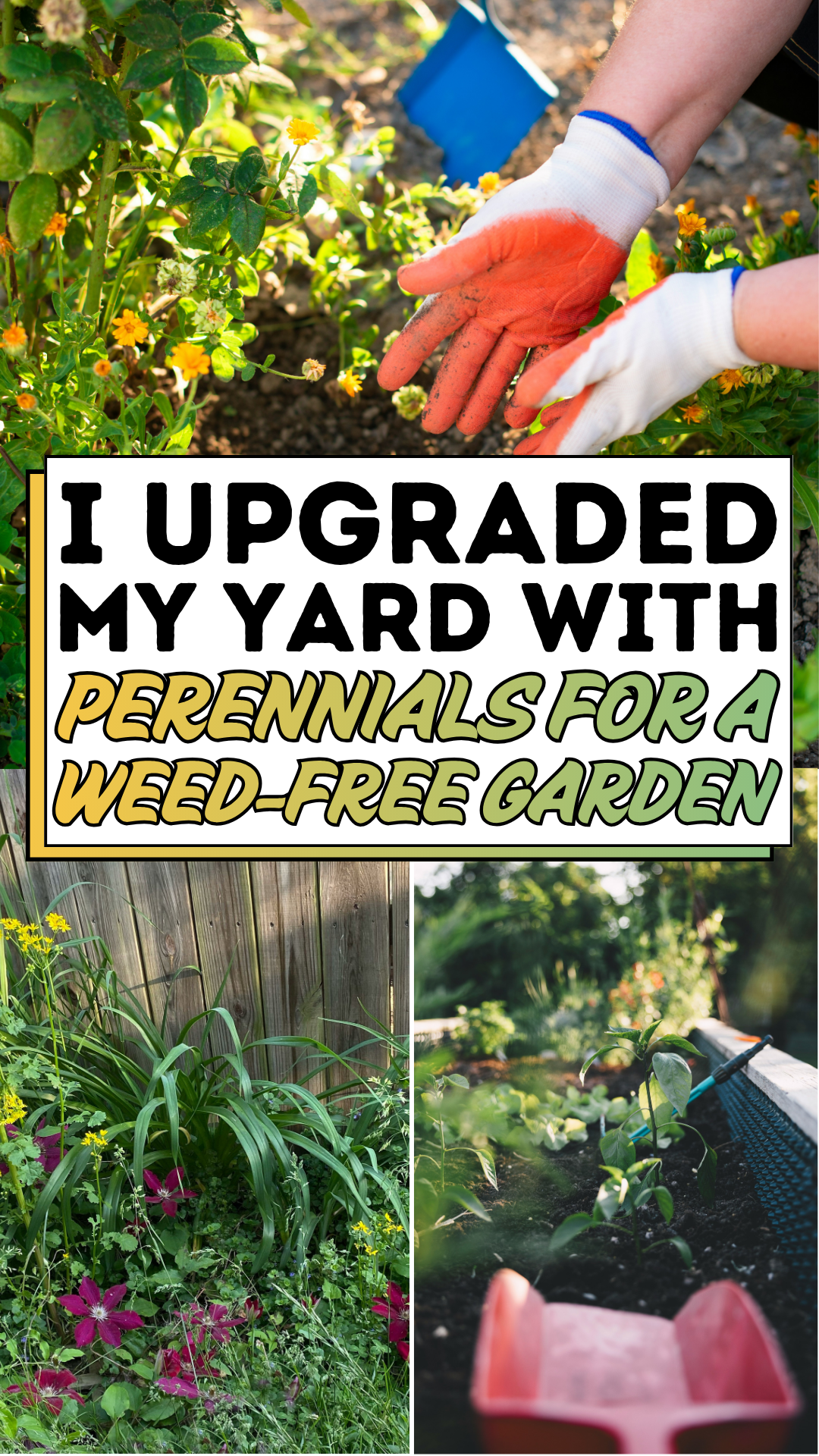
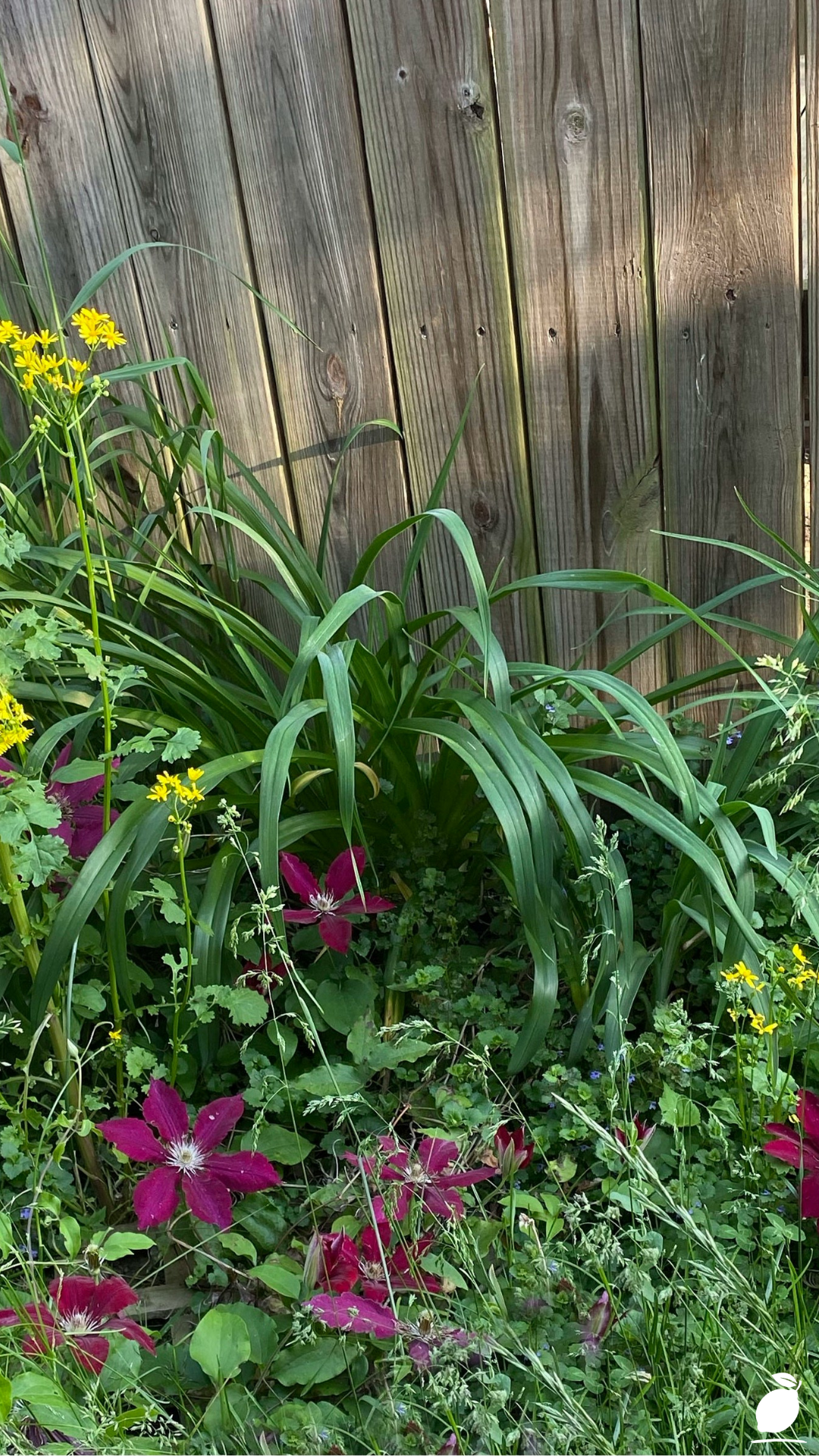
That’s exactly what led me to perennials for a weed-free garden as a real strategy instead of a vague Pinterest board. I found a photo that captured the whole idea perfectly: tall yellow blooms rising along a wooden fence, dense purple flowers crowding out the grass beneath them, sunlight dappling through a garden so full there was barely any bare soil left to see. Nothing about it looked high-maintenance; it looked established, layered, and quietly self-sufficient. That image became my roadmap, and after one real planting season built around the right perennials for a weed-free garden, my own yard finally started to look and behave the same way. Here’s the full guide I used to get there.
The Perennials for a Weed-Free Garden Guide

Not every plant labeled “low-maintenance” actually earns that title once weeds get involved. The perennials below were chosen specifically because they spread, root, or canopy in ways that make them genuinely effective perennials for a weed-free garden — not just pretty additions to a bed.
Daylilies
Why it works: Daylilies form dense clumps that spread steadily year after year, crowding out weed seedlings before they ever get established. Their thick, grass-like foliage shades the soil surface, which cuts down dramatically on the sunlight weeds need to germinate. Few plants earn their place among perennials for a weed-free garden as reliably as daylilies, since they require almost no intervention once established.
Catmint (Nepeta)
Why it works: Catmint grows into a low, sprawling mound that fills garden edges and pathways almost like a living mulch. It tolerates poor soil and drought, so it outcompetes weeds even in the tough, neglected corners of a yard where nothing else thrives. It’s one of the most forgiving perennials for a weed-free garden, especially for gardeners just starting to shift away from high-maintenance beds.
Black-Eyed Susan
Why it works: These cheerful yellow perennials self-seed and spread readily, filling in bare patches faster than most weeds can take hold. Their tall, branching habit also creates natural shade at the base, suppressing weed growth at soil level. Their fast spread makes them one of the quickest-acting perennials for a weed-free garden, often showing noticeable coverage within a single season.
Coneflower (Echinacea)
Why it works: Coneflowers develop deep, established root systems that make them incredibly competitive against shallow-rooted weeds for water and nutrients. As they mature into full clumps, there’s simply less open soil left for weeds to colonize. Their long bloom season also means they’re doing double duty as both pollinator support and one of the more attractive perennials for a weed-free garden.
Creeping Phlox
Why it works: As a low, mat-forming ground cover, creeping phlox spreads horizontally and physically blocks weed seeds from reaching sunlight or soil contact. It’s especially effective along borders, slopes, and the edges of walkways where weeds typically sneak in. For gardeners specifically hunting for ground-hugging perennials for a weed-free garden, creeping phlox is often the very first recommendation.
Russian Sage
Why it works: Russian sage forms tall, bushy, aromatic clumps that expand year over year, filling vertical and horizontal space in a bed. Its dense silvery foliage also makes it naturally deer- and pest-resistant, so it isn’t competing with damage on top of weeds. As one of the more drought-tolerant perennials for a weed-free garden, it thrives in exactly the hot, dry spots where weeds usually have free rein.
Hostas
Why it works: In shaded areas where grass struggles and weeds often move in instead, hostas form broad, overlapping leaves that create a near-total canopy over the soil. That dense leaf cover blocks the light most weeds need to sprout in the first place. Hostas remain one of the few genuinely shade-loving perennials for a weed-free garden, filling a gap most weed-suppressing plants can’t handle.
Sedum (Stonecrop)
Why it works: Sedum’s thick, low-growing succulent foliage spreads into tight mats that leave almost no visible soil exposed. It thrives in poor, dry conditions where weeds usually have the advantage, flipping that advantage back to your garden instead. Sedum is frequently cited among the most low-maintenance perennials for a weed-free garden, since it needs almost no watering once established.
Lamb’s Ear
Why it works: Lamb’s Ear spreads into a soft, dense mat of fuzzy, silvery leaves that smother weed seedlings before they can take root. Its shallow but wide-spreading root system makes it especially useful for filling awkward border gaps, rounding out a well-planned list of perennials for a weed-free garden with texture as well as function.
Yarrow
Why it works: Yarrow spreads through underground rhizomes, forming a dense mat of fern-like foliage that leaves very little exposed soil for weeds to exploit. It’s remarkably drought-tolerant and adaptable to poor soils, making it another strong choice among perennials for a weed-free garden that thrives on neglect rather than suffers from it.
Expert Secrets for Success
Pro-Tips for Better Results
- Plant perennials closer together than the “mature spacing” guidelines suggest for the first year; a tighter initial planting fills bare soil faster and shortens the window weeds have to move in, which matters most in the early stages of any perennials for a weed-free garden project.
- Apply a 2-3 inch layer of mulch between new perennials while they establish; it suppresses weeds in the short term until the plants themselves take over that job.
- Choose a mix of low ground covers and taller perennials so you’re blocking weeds at multiple heights, not just one layer. Layering is really the secret behind every successful bed of perennials for a weed-free garden.
- Water deeply and infrequently rather than lightly and often; it encourages deep perennial roots that outcompete shallow weed roots for moisture.
- Group perennials for a weed-free garden by similar water and sun needs so the whole bed establishes at a similar pace, rather than leaving thin, slow-growing patches where weeds can sneak back in.
- Edge your beds cleanly each spring; a defined border keeps lawn grass and weeds from creeping into your perennial planting from the outside in.
Common Mistakes to Avoid
- Don’t leave large gaps “for growth” without mulching them in the meantime; every inch of bare soil is an opportunity for weeds, even in a bed full of otherwise excellent perennials for a weed-free garden.
- Avoid mixing aggressive spreaders like mint directly into beds with slower perennials, since they can overwhelm neighboring plants just as easily as weeds do.
- Don’t skip fall cleanup entirely; leaving spent, seed-heavy weed growth over winter gives them a head start come spring, undoing months of progress toward a truly weed-free garden.
- Resist the urge to till bare soil right before planting; tilling actually brings dormant weed seeds up to the surface where they can germinate.
- Don’t expect instant results; most perennials for a weed-free garden need at least one full season before their weed-suppressing potential really kicks in, so patience is part of the process.
- Avoid overcrowding too aggressively in year one; while tight spacing helps, cramming plants in without any airflow can invite disease, which sets back your entire perennials for a weed-free garden plan.
Why Perennials for a Weed-Free Garden Matter
A yard that constantly needs rescuing from weeds is exhausting in a way that’s easy to underestimate. It turns what should be a relaxing hobby into a recurring chore, and it quietly steals the weekend hours you meant to spend actually enjoying your outdoor space. A garden built around perennials for a weed-free garden flips that relationship: instead of fighting your yard every season, you’re working with a system that gets stronger and lower-maintenance with each passing year.
There’s a real mental clarity that comes from stepping outside to a garden that mostly takes care of itself. Fewer weekends spent kneeling in the dirt means more time actually sitting in it, coffee in hand, kids playing nearby, the kind of quiet backyard moment that’s hard to enjoy when you’re distracted by a to-do list. A well-planned bed of perennials for a weed-free garden isn’t just less work; it’s more peace, built right into your own backyard.
That peace tends to spread further than the garden bed itself. A yard that finally feels under control often becomes the place a family actually gathers dinners outside, kids playing barefoot in the grass, and slower weekend mornings on the porch. Choosing the right perennials for a weed-free garden is a small, ongoing investment, but the payoff shows up in almost every corner of home life, not just the flower beds.
FAQ
How long does it take for perennials to fully crowd out weeds?
Most perennial beds take two to three growing seasons to fill in completely and reach their full weed-suppressing potential, though you’ll typically notice a significant reduction in weeds by the end of the first year of planting perennials for a weed-free garden.
Can I mix perennials for a weed-free garden with existing flower beds?
Yes, you can gradually introduce dense, spreading perennials like catmint, sedum, or creeping phlox into gaps within existing beds to reduce bare soil over time without starting the whole bed over.
Do I still need to mulch if I plant dense perennials?
Mulching is still recommended for the first one to two seasons while perennials establish and spread; once the bed fills in fully, most gardeners can reduce or eliminate the need for regular mulching around their perennials for a weed-free garden.
Which perennials work best for a weed-free garden in shady yards?
Hostas, along with shade-tolerant ground covers, are excellent choices for weed suppression in low-light areas where grass and sun-loving weeds typically struggle to compete anyway.
Are weed-suppressing perennials safe around pets and kids?
Most of the perennials listed here, including daylilies, coneflowers, and sedum, are considered low-risk for pets and children, though it’s always a good idea to check specific toxicity information for any plant before adding it to a family yard.
Can perennials for a weed-free garden replace the need for weed killer entirely?
For most established beds, yes, once perennials for a weed-free garden fully mature and cover the soil, chemical or manual weed control becomes rarely necessary, though occasional spot-checking around bed edges is still a good habit.