There is a specific kind of joy that arrives the moment a needle pulls thread through fabric and a pattern begins to emerge. It’s quiet, tactile, and deeply satisfying in a way that most screen-based activities simply aren’t. Embroidery on canvas builds intricate mandalas, geometric borders, and folk-art florals stitched by careful stitchers, tapping into something that feels both ancient and immediately calming. The creative payoff is real. The problem, for most people who try it, isn’t the craft itself. It’s everything surrounding the craft that slowly turns a joyful hobby into a source of low-grade stress

A tangled nest of thread on the wrong shelf. Hoops in three different sizes mixed into a drawer with scissors, rulers, and something that might be a tapestry needle from four years ago. Fabric cut without a plan, canvas stretched unevenly, half-finished projects stacked under projects that haven’t started. The workspace that was supposed to be a creative sanctuary starts to look like a craft store stockroom after a minor incident. And the psychological effect is real. Research consistently shows that visual clutter elevates cortisol levels and reduces focus, which means a disorganized craft space actively works against the mental clarity that making things by hand is supposed to deliver.
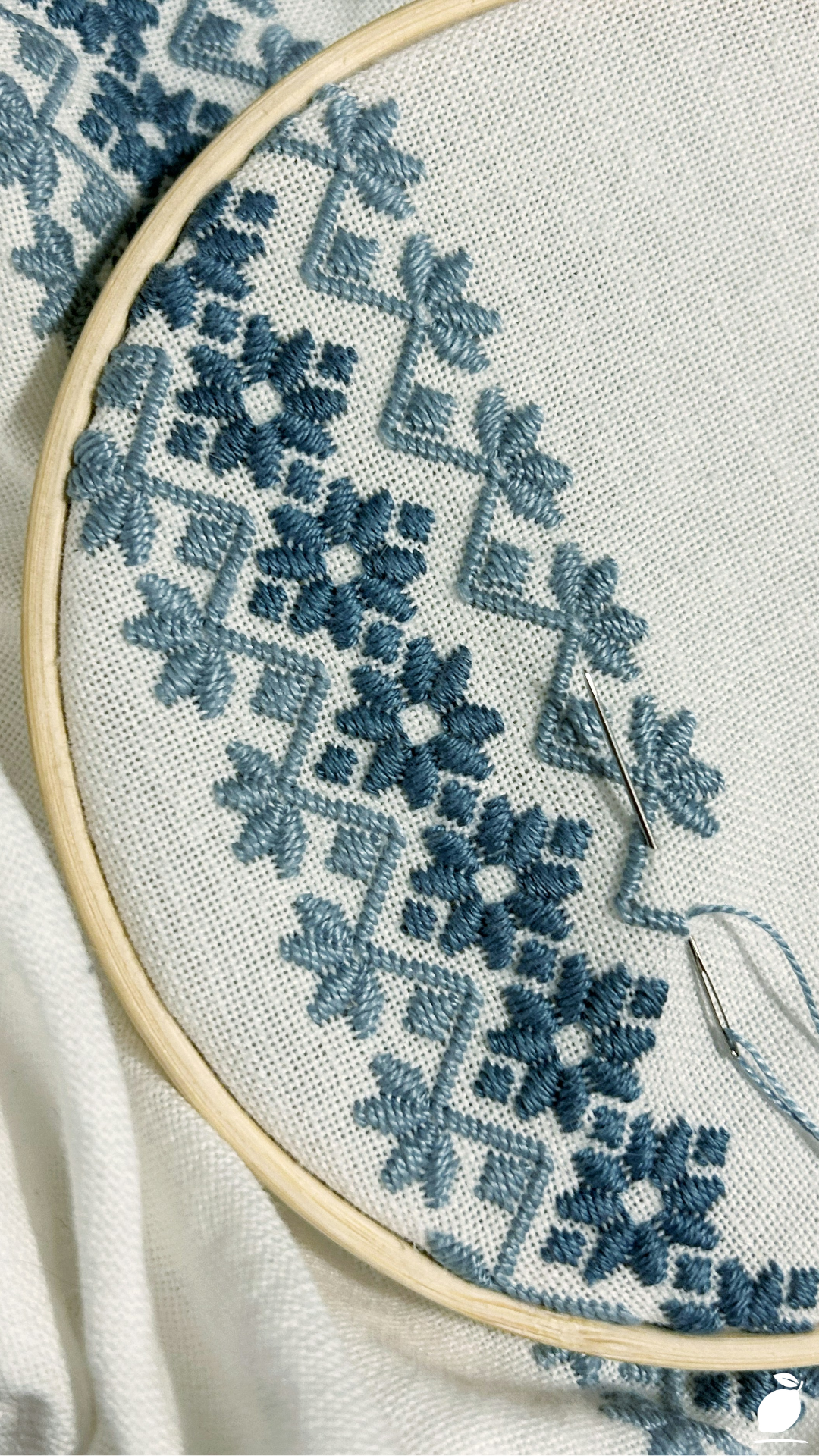
The embroidery mandala in the image above represents everything a clean, intentional canvas practice produces: precise navy stitching, coral and turquoise borders executed with clean, defined lines, a symmetrical design that radiates from center outward with zero visual noise. That level of finish isn’t just about skill; it’s about system. A clear workspace, a logical approach to the craft, and a clean-up routine that takes less time than the joy it protects. This guide gives you exactly that.
The Canvas Setup
Step 1: Prep the Workspace
Canvas embroidery rewards a prepared surface and penalizes an improvised one. Before a single stitch is made, the workspace needs three things: adequate light, a flat and stable working surface, and organized materials within arm’s reach without visual clutter in the peripheral field.
Lighting is non-negotiable. Natural daylight from a north or east-facing window is ideal for accurate color reading, particularly important when working with a multi-color palette like the coral, turquoise, navy, and red thread combination in the featured mandala. Where natural light is limited, a daylight-spectrum LED craft lamp positioned at a 45-degree angle to your dominant hand eliminates shadow without glare.
Surface preparation means your canvas or fabric is mounted before you sit down, not as the first step of a session. Stretch your fabric into the embroidery hoop with consistent tension across the entire frame. Press the outer ring firmly and evenly; an unevenly tensioned canvas will pucker during stitching and distort the finished design regardless of how precise the embroidery itself is. Transfer your pattern, whether traced, printed, or drawn freehand, before threading a single needle.
Materials go in one place. Thread organized by color family in small labeled bobbins or a floss organizer. Needles in a magnetic holder or cushion. Scissors dedicated solely to embroidery are never shared with paper or packaging. Hoop sizes are stored vertically in a narrow stand or stacked in a single drawer. The principle is simple: everything needed for this session is visible, within reach, and in its designated place. Everything else stays out of the workspace entirely.
Step 2: The Logic of the Craft
Canvas embroidery has an internal logic that, once understood, makes the process feel less like following instructions and more like thinking in thread. The logic has three layers: sequence, tension, and color commitment.
Sequence means working from the center outward, exactly as the mandala in our featured image is structured. The central navy floral elements are established first, creating the anchor from which every subsequent border radiates. Attempting to fill borders before the center is defined creates alignment problems that compound with every row. Start at the center. Build outward. Never skip layers.
Tension is the variable most beginners underestimate. Every stitch should lie flat against the canvas with consistent tautness, not pulled so tight the fabric distorts, not left so loose the thread sags. Develop a rhythm: pull each stitch to the same resistance before moving to the next. A consistent pulling motion, rather than an inconsistent one, is what produces the clean, defined lines visible in professional embroidery work.
Color commitment means deciding your palette before beginning and not improvising mid-project. Lay all your thread colors out together before the first stitch and assess them in your actual working light colors read differently under daylight versus artificial light, and a coral that looks perfect in the shop can read orange under warm indoor bulbs. Commit to the palette. Do not substitute mid-mandala. Color consistency across an entire canvas piece is what creates the visual cohesion that makes embroidery look intentional rather than assembled.
Step 3: The Clean-Up System
A clean-up system is not what you do after the craft. It is part of the craft. The thirty minutes of embroidery that ends with every item returned to its designated place costs the same time as thirty minutes of embroidery that ends with everything left where it landed. The difference is entirely in intention, and the downstream effect on your next session is enormous.
After each session, cut thread tails to a consistent length before setting the work down; loose tails tangle and catch during storage. Return all unused bobbins to the organizer in color order. Place scissors and needles in their holders immediately, not “in a moment.” If the canvas is mid-project, place it face down in the hoop on a clean, flat surface or cover it with a piece of muslin to protect the stitching from dust and snags. The hoop goes back on its stand or into its drawer.
Once a month: audit the thread collection. Remove half-used bobbins with less than 30cm remaining, too little to be useful, enough to create clutter. Replace bent or burred needles. Wipe down the hoop with a lightly damp cloth to remove any residue from your hands. A monthly ten-minute audit keeps the system functional without becoming a maintenance project in its own right.
The Secrets to Canvas

Three Pro-Tips for a Professional Finish:
Use a single strand for detail, multiple strands for fill. The intricacy visible in the featured mandala’s central navy elements comes from working fine detail in a single strand of embroidery floss, one strand of the standard six-strand skein. Border fills and larger geometric areas, like the diamond pattern surrounding the mandala, use two to three strands for fuller coverage and stronger visual weight. Matching the strand count to the scale of the element is the single clearest marker that separates practiced embroidery from beginner work.
Park your needle. When moving between colors or sections, “park” the working needle by pushing it through the canvas several centimeters from the active stitching area, leaving the thread attached. Parking prevents the needle from falling, keeps the thread from tangling in your supply, and means you can return to any color mid-session without re-threading. It’s a small habit with outsized organizational impact.
Press the finished piece before framing. A completed canvas embroidery will have minor surface texture variations from the hoop tension and handling during stitching. Before framing or displaying, press the reverse side only with a dry iron on a low setting over a thick towel, never the front, and never steam, which can distort thread texture. This single finishing step elevates the visual quality of finished canvas embroidery significantly.
Three Mistakes That Ruin the Aesthetic:
Starting without transferring the full pattern. Beginning to stitch from a partially transferred or improvised pattern on canvas is the fastest route to asymmetry in mandala and geometric designs. The symmetry in the featured image exists because the full pattern was established before a single stitch was made. Transfer completely. Stitch second.
Carrying the thread across the back of the canvas. Long threads carry running a color across the back of the canvas to reach a new area without finishing off, creating shadows visible through lighter canvas fabric and causing the front stitching to pull unevenly. Always finish a thread section before starting the same color in a new area. The extra few minutes of securing and re-threading are invisible from the front; the carries are not.
Using the wrong needle for the canvas weight. A needle that is too large for the canvas weave will distort the holes and create ragged stitch entries visible in the finished work. Match needle size to canvas weight: a size 24 or 26 tapestry needle for standard evenweave and Aida canvas, a finer size 28 for closely woven linen canvas. This is a detail that costs nothing to get right and visibly affects the finished result.
Why Creative Space Matters

The relationship between a tidy creative space and mental clarity is not coincidental or motivational. It is neurological. A workspace free of visual clutter reduces the cognitive load imposed by irrelevant stimuli, allowing the prefrontal cortex responsible for focused attention and decision-making to direct its full capacity toward the work at hand. This is why the same embroidery project feels meditative in an organized workspace and frustrating in a cluttered one. The craft hasn’t changed. The neural environment has.
Easy Peasy Life Matters exists for this reason: because the benefits of creative hobbies are real, researchable, and genuinely important for wellbeing, and they are only accessible when the surrounding system supports rather than undermines the practice. Your canvas embroidery space is a small investment in a daily ritual that pays in clarity, calm, and competence. Setting it up right is the most important thing you can do for your craft.
Frequently Asked Questions
How should I store embroidery floss to prevent tangling?
Wind thread onto cardboard bobbins or plastic floss bobbins immediately after purchase and store them in a compartmentalized floss organizer, sorted by color family. Label each bobbin with the thread brand and color number.
What tools does a beginner need to start canvas embroidery?
The minimal effective toolkit for canvas embroidery is deliberately short: one wooden embroidery hoop (20 to 25cm is the most versatile starting size), a size 24 or 26 tapestry needle, a small pair of dedicated embroidery scissors with fine points, a water-soluble fabric pen for pattern transfer, and a beginner palette of five to eight DMC or Anchor embroidery floss colors.
How do I keep a canvas embroidery project clean between sessions?
The most practical protection for a mid-project canvas piece is a square of clean white muslin or cotton laid face down over the stitched area when not in active use. This prevents the thread surface from catching lint or pet hair and protects the stitching from accidental snags. Store the covered hoop flat rather than standing, which can cause uneven pressure on the canvas.