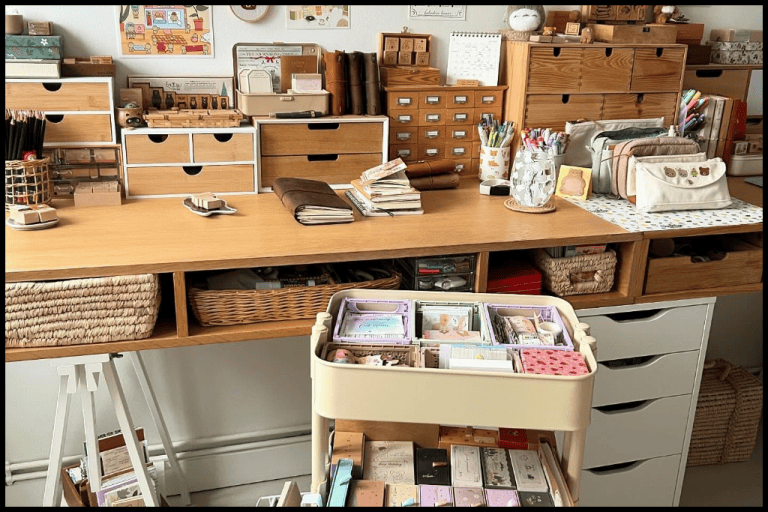
It starts the same way for almost every college student. You wake up on a Tuesday, ten minutes before your first class, and the entire surface of your desk has disappeared under a landslide of highlighters, half-finished energy drinks, printed syllabi from week one, and at least one laptop charger that is somehow tangled around everything. Your chair is buried under yesterday’s jacket and tomorrow’s laundry. The window that was supposed to let in motivating morning light is blocked by a pile of textbooks you swore you’d organize last weekend. You grab your bag, rush out the door, and spend the entire lecture feeling weirdly off, not just tired, but scattered, like your brain is as cluttered as the room you just escaped.
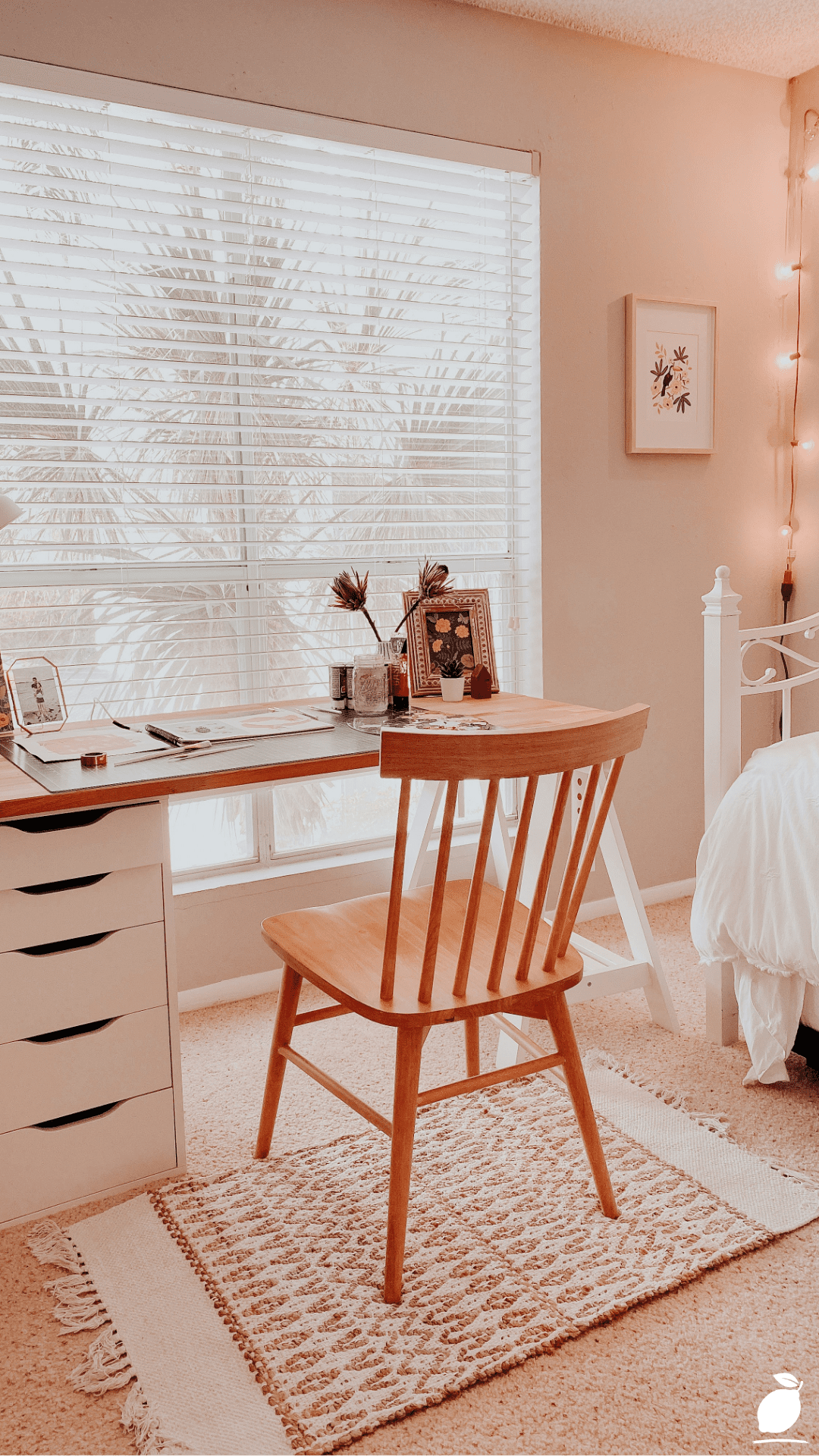
What nobody tells you before move-in day is that your physical environment and your mental performance are deeply, almost embarrassingly connected. When researchers study student well-being, they keep finding the same pattern: students who feel in control of their space report lower anxiety, better sleep, and, here’s the one that matters significantly, higher academic performance. The cozy, sunlit bedroom in the image above is not a fantasy from a Pinterest board. It is a system. A wooden desk angled toward natural light, a simple spindle-back chair, two small framed photos for warmth, a tidy rug that anchors the room, and fairy lights that shift the mood from chaotic dorm to personal sanctuary. Every single element is intentional, and every single one is achievable.
The good news is that mastering your environment as a college student does not require a big budget, a Pinterest obsession, or an interior design degree. It requires a handful of repeatable habits, a few clever organizational moves, and the willingness to build small routines that compound into something genuinely life-changing. These are the important life hacks every college student should know, not to become an aesthetic influencer, but to actually feel like yourself again, even in a twelve-by-twelve dorm room.
The College Student Blueprint
Step 1 — Anchor Your Space with a Dedicated Desk Zone
Your desk is the command center of your academic life, and it deserves to be treated like one. Position it as close to natural light as your room allows; even a slight angle toward a window, like the setup in the image, makes a measurable difference in alertness and eye strain during long study sessions. Keep the surface cleared to a “landing strip”: only the current project, a notebook, and your laptop. Everything else lives in the drawers or a bin underneath. A small desk lamp with warm light (3,000K or lower) handles evening studying without triggering the alertness-disrupting effects of harsh blue light.
Step 2 — Apply the One-Chair Rule
If your chair is a dumping ground, your brain reads your study space as a resting space. The spindle-back chair in the image faces the desk and only the desk. The rule is simple: the chair is for sitting and working, not for draping clothes, piling bags, or staging tomorrow’s outfit. This single boundary does more for your focus than any productivity app. When you sit down, your nervous system gets the memo: we are working now.
Step 3 — Create a Weekly Reset Ritual (The 15-Minute Sunday)
Every Sunday evening, before you start reviewing notes or drafting that week’s to-do list, spend fifteen minutes physically resetting your room. Clear the desk, hang or fold anything on the chair, run the vacuum over the rug, and check that your bed is made. This is not cleaning for cleanliness’s sake. It is a psychological transition ritual that tells your brain the week is starting from a place of intention, not chaos. Students who do a weekly reset consistently report feeling less overwhelmed when Monday hits.
Step 4 — Use Vertical Space and Visual Anchors
Dorm rooms are famously short on square footage, but they are rarely short on wall space. A single framed print, even a small, inexpensive one like the soft floral piece in the image, gives your eye a place to rest and signals that this is a curated, intentional space. Use adhesive hooks or a small shelf to get objects off the desk surface and onto the wall. A string of warm fairy lights draped beside the bed costs almost nothing and converts the emotional register of a room from institutional to personal within minutes.
Step 5 — Build a Morning Trigger Stack
A trigger stack is a sequence of two or three micro-habits that you link together every morning so that they happen automatically. For a college student, a simple and highly effective stack looks like this: alarm off → open the blinds (light triggers cortisol naturally, helping you wake up without a second alarm) → make the bed → set one thing on the desk for the day’s most important task. The whole sequence takes under five minutes and gives your morning a sense of forward motion before your phone has even loaded Instagram.
Step 6 — Control Light for Energy and Wind-Down
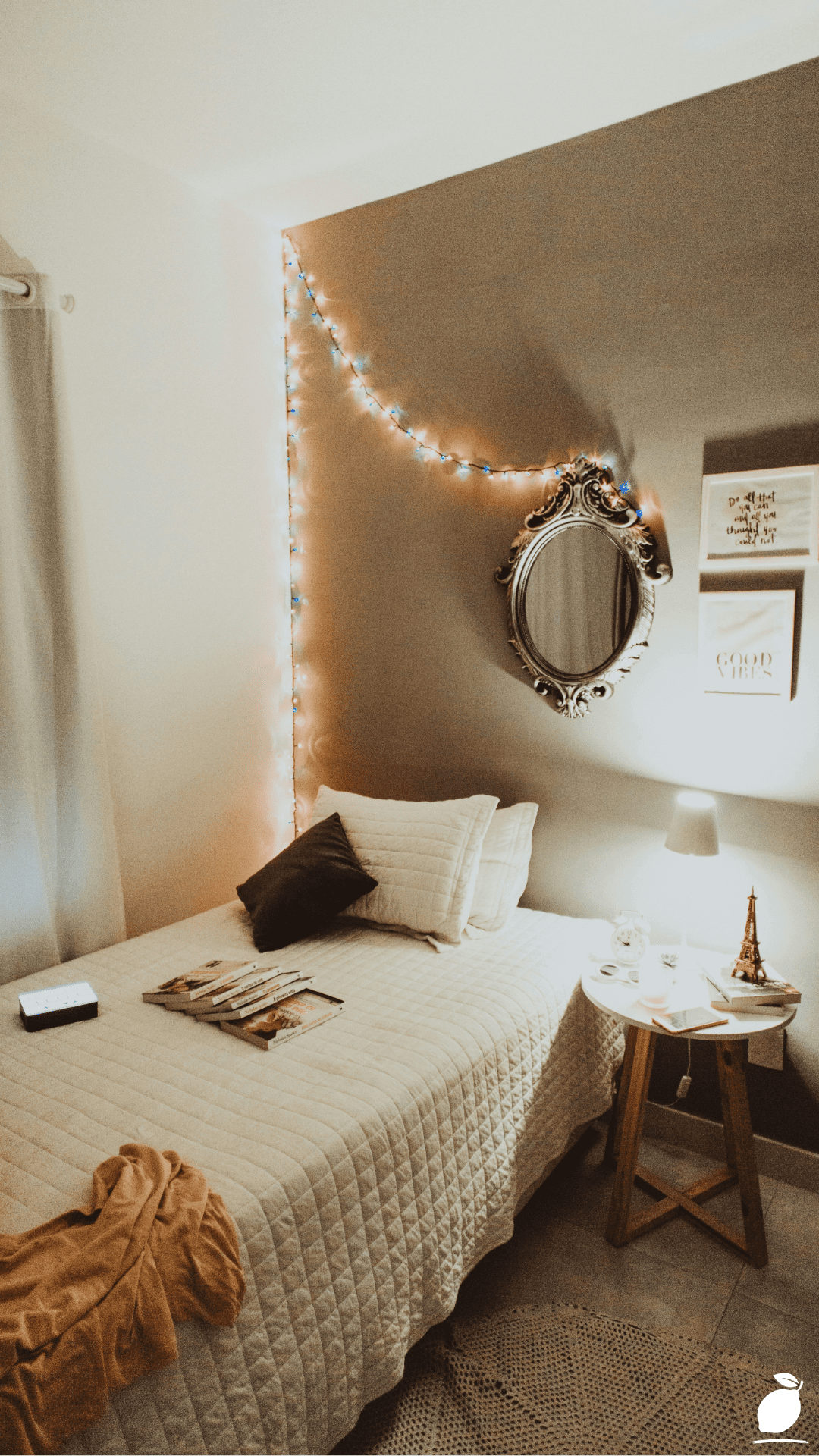
Light is the most underused tool in a college student’s environment toolkit. Bright, cool overhead light during study hours keeps you alert. Warm, dim lamp light after 9 PM signals your body to start producing melatonin. The fairy lights in the image are not just decorative; they are functional. Swap your overhead light for a warm lamp in the evenings, and you will find falling asleep easier and waking up more rested. Add a white noise app if your residence hall is loud; the combination of warm light and low background noise is one of the most effective sleep-onset hacks available.
Step 7 — Use the “One In, One Out” Rule for Clutter
College students acquire stuff at an alarming rate: free merch at orientation fairs, textbooks, dorm essentials, and impulse Amazon purchases. The one-in-one-out rule is the antidote: every time something new enters your room, something leaves. Donate it, recycle it, or store it at home on your next visit. This keeps your space at equilibrium without requiring a major decluttering session every two months.
Expert Secrets for Success
Pro-Tips for a Better Result
Pro Tip 1 — Study in 50-Minute Blocks. Use a timer to work for 50 minutes and then stand up, move to a different part of the room, and rest for 10. This Pomodoro-adjacent rhythm prevents the “2-hour blur” where you technically sat at your desk but absorbed almost nothing.
Pro Tip 2 — Layer Your Organizational System: Color-code your notebooks, folders, and digital files by class using the same color for each subject. When everything in Biology is green binder, sticky notes, digital folder, your brain can switch contexts faster, and your desk setup reinforces the system visually.
Pro Tip 3 — Invest in One Good Physical Planner. Digital calendars are excellent for reminders, but research on handwriting consistently shows that writing assignments and deadlines by hand improves retention and planning. A simple weekly paper planner on the desk right next to the lamp becomes a low-tech anchor for your academic life that your phone cannot replicate.
Pro Tip 4 — Keep a “Brain Dump” Notebook When anxious thoughts, to-dos, or random ideas interrupt your study session, write them in a dedicated notebook rather than acting on them or suppressing them. This “park and return” approach reduces cognitive interruption and keeps your focus on the task at hand.
Common Mistakes to Avoid
Mistake 1 — Using Your Bed as a Study Surface. Working from your bed is one of the most consistent predictors of poor sleep quality among college students. Your brain associates the bed with sleep; using it for studying blurs that boundary and makes it harder to wind down at night. Always study at the desk, even if the bed is three feet away and looks more comfortable.
Mistake 2 — Waiting Until You’re Overwhelmed to Organize. Most students only clean or organize when the chaos becomes unbearable. By that point, the emotional weight of the mess adds to the task’s difficulty. The weekly reset ritual exists specifically to prevent this spiral. Small maintenance beats big overhaul every time.
Mistake 3 — Ignoring Natural Light Keeping blinds closed “for privacy” or because you sleep late is a genuine academic liability. Exposure to morning light regulates your circadian rhythm, improves mood, and increases daytime alertness. Open those horizontal blinds as soon as you wake up, even for ten minutes.
Mistake 4 — Multitasking During Study Hours Playing a TV show “in the background” during studying is not multitasking; it is divided attention. Research shows that split-attention studying takes 40–50% longer to produce the same learning outcomes as focused single-task studying. Use the fairy lights and a lo-fi playlist instead; your grades will reflect the difference within a single semester.
Why College Student Matters
There is a version of college that most students do not expect when they arrive: the version where the hardest part is not the coursework but the invisible weight of managing your own life for the first time. No one is doing your laundry, reminding you to sleep, or making sure your study space is set up for success. That freedom is exhilarating, and it is also where students quietly fall apart, not from a lack of intelligence, but from a lack of systems.
When a college student takes ownership of their environment, even in something as small as keeping a desk clear, positioning a chair with intention, or building a Sunday reset ritual, something remarkable happens to their confidence. The room stops feeling like a storage unit they sleep in and starts feeling like a place where their best thinking happens. That shift is not cosmetic. It is the difference between reacting to your life and designing it.
And the impact ripples outward. Students who feel calm and organized in their personal space communicate better with roommates, show up to class more consistently, and handle the inevitable academic stressors, such as a hard exam, a group project disaster, or a financial aid form, with greater resilience. A sunlit desk with a good lamp and a framed print on the wall is not a luxury. It is an investment in the version of yourself that graduates not just with a degree, but with the habits and self-knowledge to build a life you actually want to live.
Frequently Asked Questions
How do I stay organized as a college student when my room is tiny?
Focus on vertical space and consistent habits rather than more storage. Wall hooks, a small shelf, and a rule against using the floor as storage go a long way in a small room. The most effective organizational tool is not a storage bin; it is a weekly reset ritual that prevents clutter from accumulating in the first place.
What are the best study habits for college students who get distracted easily?
Work in timed blocks of 45–50 minutes with a real break in between. Remove your phone from your desk (not just flipped over physically in a drawer or another room) during study blocks. Use a single browser window with only the tabs you need. A clear desk surface and a body-facing-the-window setup also reduce visual distractions that pull attention away from the task.
Is it really worth buying décor for a dorm room I’ll only live in for a year?
Yes, with proportion. You do not need to furnish it like a permanent apartment, but a few intentional touches (a rug, a framed print, warm fairy lights) make a measurable difference in how you feel in your space. Crucially, these items move with you to every apartment and house afterward. Think of them as the starter kit for every room you will ever live in.
How do college students manage their time effectively alongside a full course load?
Time management for college students comes down to three practices: planning one week at a time every Sunday (before the week starts, not during it), protecting two to three “deep work” blocks per day where you do your hardest academic tasks, and using a physical planner to externalize deadlines so they do not live rent-free in your head. Combine these with a consistent sleep schedule, even a loose one, and your available hours will feel dramatically more workable.
What is the single most impactful habit a college student can build in the first month?
Make your bed every morning. It sounds almost embarrassingly simple, but it has an outsized psychological effect: it is a completed task before your day has truly started, it makes your room look significantly cleaner without any additional effort, and it reinforces the habit of environmental ownership that underlies all the other hacks on this list. Start there. Everything else builds on that foundation.