The bathroom had been tolerated for years in the way that functional spaces get tolerated, not broken, not uncomfortable, not worth the disruption of renovation, but quietly unpleasant in a way that is noticed every single morning and evening. The builder-grade tiles that came with the house. The chrome taps had developed that particular aged finish somewhere between dull and water-stained. The vanity unit with its laminate finish and the drawer that required a specific angle of approach to open without catching. None of it was genuinely bad. All of it communicated the same thing every time the light went on: this room was designed to function and nothing more. Luxury bathroom ideas felt like someone else’s project, the kind of thing that required a complete renovation, a designer, and a budget that made the decision too significant to take without a great deal of uncomfortable deliberation.
The deliberation kept the bathroom exactly as it was. Because luxury bathroom ideas, filtered through the mental model of “full renovation or nothing,” remained in the aspirational category rather than the actionable one. What changed was understanding that the gap between a functional bathroom and a genuinely beautiful one is rarely a structural gap. It is a materials gap. The layout of most bathrooms is fine, the plumbing positions, the vanity position, and the window location. What makes a bathroom feel luxurious is not the arrangement of these elements but the quality and specificity of the materials around them: the marble effect of the walls, the warmth of a brass fixture, the visual weight of a significant mirror, the presence of a vessel sink that reads as an object rather than a utility. These are not renovation decisions. They are design decisions, and they can be made and executed at almost any budget level with the right priorities and the right sequence.
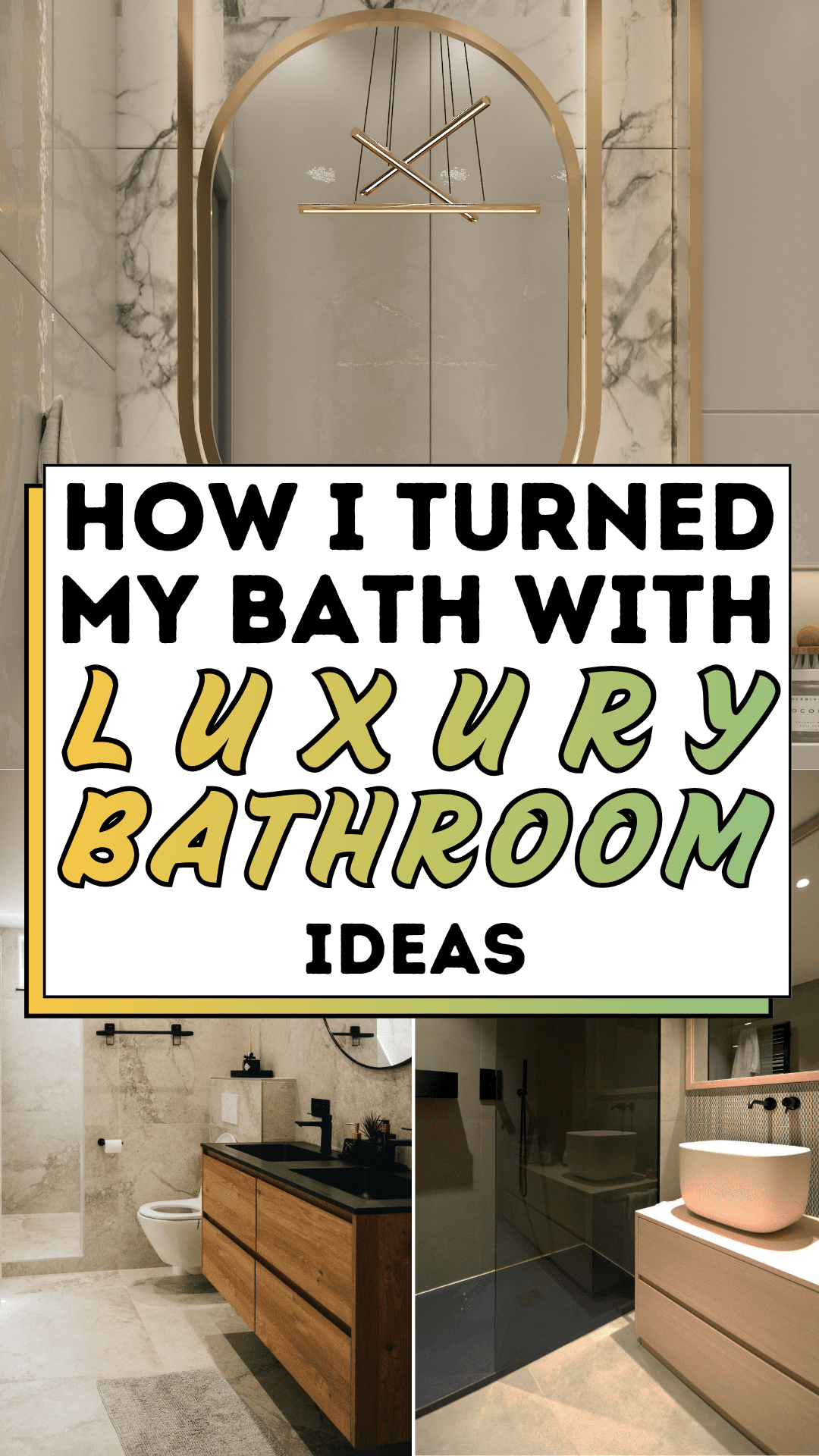
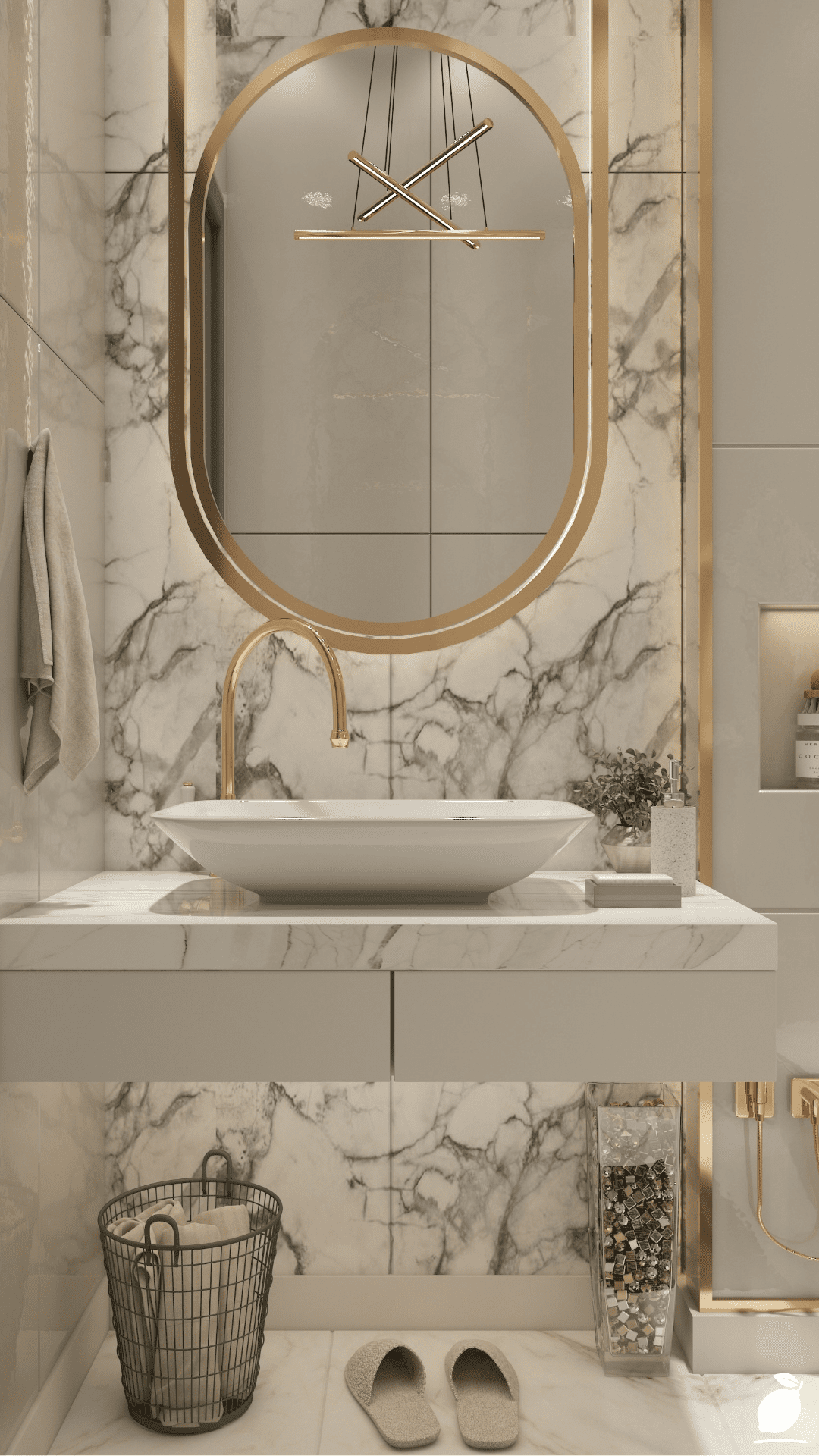
That bathroom in the image, the dramatic grey-veined marble wall, the brass oval mirror with its geometric light fitting, the white vessel sink on the floating grey vanity, the small green plant on the surface, the gold-trimmed recessed shelf, is the answer to the question “what does applying luxury bathroom ideas actually look like?” Not a hotel suite requiring an architect. A considered sequence of material choices applied to a real bathroom by someone who understood what creates the luxury effect and prioritised those things precisely. Here is that sequence.
The Luxury Bathroom Ideas Blueprint
Transforming a bathroom using luxury bathroom ideas is a project with a clear decision hierarchy; some decisions are foundational (they determine everything that follows), and some are finishing (they complete what the foundation established). Apply them in this order, and the result is coherent and intentional from every angle.
Step 1: Commit to the Material Palette First
Every successful application of luxury bathroom ideas begins with a material palette decision made before anything is purchased or installed. The palette in the image is a precise example: white marble with grey veining (the wall, the dominant surface), light grey in a matte finish (the vanity, secondary surface), brass and warm gold (the fittings and fixtures, the metal accent), and white ceramic (the vessel sink and accessories). Four materials, three surface categories, one metal accent tone.
Luxury bathroom ideas work through material coherence. The quality of a sophisticated bathroom comes from every material in the room being in deliberate relationship with every other material, not from the expense of any individual element. Before choosing a mirror, a tap, or a vanity, write down the four materials of your intended palette and test every subsequent decision against it. If a candidate product belongs to the palette in tone, material type, and finish quality, it earns its place. If it does not, it does not belong in the room, regardless of how beautiful it is in isolation.
Step 2: Transform the Walls With Marble-Effect Tile or Panel
The wall surface is the largest visual element in any bathroom and the most significant material commitment in the application of luxury bathroom ideas. Replacing standard builder-grade tiles with a marble-effect surface, whether genuine marble tile, large-format porcelain with marble veining, or high-quality composite marble wall panel, produces the most dramatic single change available to a bathroom transformation project.
Large-format marble-effect porcelain tile (600mm by 1200mm or larger) is the most cost-effective luxury bathroom material for wall transformation. The large format minimises grout lines, which is one of the key visual characteristics that distinguishes a luxury bathroom from a standard tiled one. Fewer grout lines means a more continuous surface, which reads as more premium regardless of the tile’s price point. Panels bathroom-rated composite marble panels in a continuous sheet provide the same effect with a fully grout-free surface and can be installed over existing tile in many cases, avoiding the disruption and cost of full tile removal.
Position the marble-effect surface on the primary wall that the vanity sits against, and the wall visible from the bathroom door to maximise the material’s visual impact with the minimum tile or panel quantity.
Step 3: Install a Statement Mirror With Integrated or Adjacent Lighting
The mirror is the focal point of a bathroom’s primary wall and the element that most directly communicates the aesthetic intent of the luxury bathroom ideas being applied. The brass oval mirror with geometric light fixture in the image is doing both jobs simultaneously: it provides the reflective function of a bathroom mirror, and it provides the decorative statement of a significant piece of furniture or artwork. The mirror frame is the room’s primary decorative object, and the light fixture above it, with the crossed metal bars in brass, is both functional and sculpturally interesting in a way that a standard ceiling light is not.
For luxury bathroom ideas, choose a mirror that is proportionate to the vanity’s width. The mirror should be no narrower than the vanity and ideally slightly wider. Invest in a frame finish that belongs to the room’s metal palette. Brass and warm gold frames suit the warm marble tones in the image. Brushed nickel suits cooler, blue-grey marble palettes. Matte black suits contemporary, monochrome bathroom palettes. Install a dedicated light source for the mirror, either an integrated LED mirror with adjustable color temperature, a wall-mounted sconce on either side, or a geometric pendant or bar light above, rather than relying on overhead ambient lighting, which creates unflattering downward shadows on the face and makes the mirror less functional as well as less beautiful.
Step 4: Replace the Vanity or Refinish the Existing One
The vanity and the storage unit beneath the sink are the second-most-significant surface decision in the application of luxury bathroom ideas. A floating vanity (wall-mounted, with a clear space between the cabinet base and the floor) immediately reads as more contemporary and more high-end than a floor-standing unit, because the visible floor beneath it makes the bathroom feel larger and the vanity itself feel more architecturally considered.
If budget allows for a full vanity replacement, choose a unit in a light grey, warm white, or natural timber veneer that belongs to the established material palette. Drawer fronts should be handle-free (push-to-open mechanisms or integrated finger pulls give the cleanest, most hotel-like result), and the surface finish should be matte rather than gloss. Matte vanity surfaces read as more premium and are less susceptible to visible watermarks in a bathroom environment.
If a full replacement is not within the budget, refinish the existing vanity: sand the laminate surface, apply a specialist primer designed for laminate adhesion, and paint with a bathroom-rated cabinet paint in the palette color. Replace the existing hardware with handles or pulls in the room’s metal finish. A refinished vanity with new hardware reads as intentionally designed at a fraction of the cost of replacement.
Step 5: Install a Vessel Sink for Immediate Luxury Visual Impact
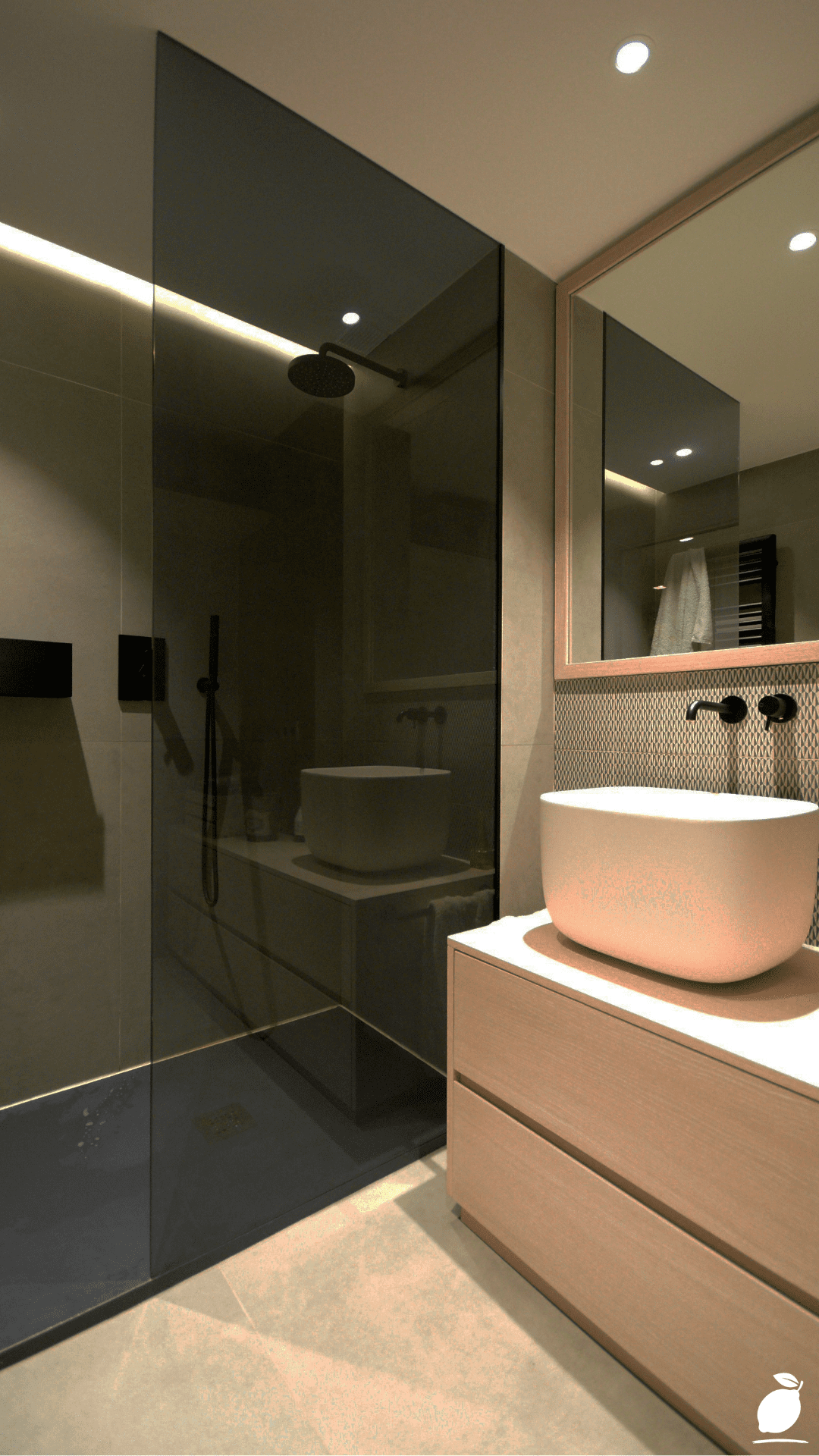
Among all luxury bathroom ideas for immediate visual impact, the vessel sink, a sink that sits above rather than within the vanity surface, has the highest return on investment relative to its installation complexity. A vessel sink turns what is typically the most utilitarian element in a bathroom (the sink) into a deliberate design object. The white ceramic oval vessel sink in the image reads as a sculptural element, not a utility, because its above-surface position makes it visible as a complete object rather than a surface-level cutout.
Replace an undermount or drop-in sink with a white ceramic or stone vessel sink and a tall, wall-mounted or deck-mounted brass faucet in the room’s metal palette. The faucet must be taller than the vessel sink’s rim to function correctly. This height relationship also creates the visual proportion that makes the sink-and-tap combination read as a composed design statement rather than a functional assembly. Ensure the vanity surface is waterproofed and sealed before the vessel sink is positioned to prevent water infiltration at the base of the sink over time.
Step 6: Add the Finishing Layer — Plant, Recessed Shelf, and Accessory Edit
The final step in luxury bathroom ideas is the finishing layer, the small number of accessories and objects that complete the room’s material composition and give it the lived-in warmth that distinguishes a genuinely used luxury bathroom from a showroom. In the image, this layer consists of three elements: a small potted green plant on the vanity (organic warmth, natural color accent), a gold-trimmed recessed shelf with small curated objects (storage that reads as décor), and the floor-level accessories, a black wire basket, light grey slippers that signal this is a room for daily use, not for display.
Edit the accessory layer to a maximum of five to seven objects total. Every object in the finished bathroom should belong to the material palette and should earn its presence through beauty, function, or both. Remove everything that belongs to neither category. The plant, specifically a compact variety like a small fern, a trailing tradescantia, or a small succulent, provides the one element that no inanimate object can deliver: the quality of organic life that makes a room feel occupied by something other than furniture and fixtures. In a bathroom composed primarily of stone, metal, and ceramic, a single living plant provides the organic counterpoint that keeps the composition from reading as cold.
Expert Secrets for Success
Pro-Tips for a Better Result
- Commit to a single metal finish across every fitting in the room. Luxury bathroom ideas depend on hardware cohesion; the tap, the mirror frame, the towel rail, the recessed shelf trim, and the shower fitting must all be in the same metal finish. Mixing brass taps with chrome towel rails and brushed nickel shower fittings creates the visual inconsistency that undermines the coherence luxury bathroom ideas require. Audit every metal surface in the bathroom before purchasing any new fitting and replace any that fall outside the chosen finish, even if they are functionally fine.
- Use large-format tile in a continuous pattern without borders. Border tiles, tile insets, and decorative tile panels break the continuous surface that makes a marble-effect wall read as genuinely luxurious. Install large-format marble-effect tiles in a single continuous field with minimal grout lines and no decorative interruption. The unbroken surface is the visual quality most associated with luxury hotel bathroom aesthetics, and it is achieved through restraint of pattern rather than expense of tile.
- Invest in a quality heated towel rail as a functional luxury element. Among luxury bathroom ideas that pay dividends in daily use, a wall-mounted heated towel rail in the room’s metal finish is the most consistently appreciated. It serves a functional purpose, warm, dry towels, while providing an additional hardware element in the palette of metal that reinforces the room’s material coherence. A heated towel rail in brass or warm gold, positioned on the wall adjacent to the shower or bath, reads as a designed element and performs as a daily comfort simultaneously.
- Replace the toilet seat before anything else. The toilet seat is the bathroom element most directly associated with the room’s level of investment and care, and it is also the most overlooked in luxury bathroom ideas and renovations. A soft-close, white ceramic or thermoset seat in a profile that matches the room’s aesthetic (clean-lined and contemporary for a modern palette) costs very little and is one of the most immediately noticeable improvements in a bathroom transformation.
- Install a recessed shelf rather than a surface shelf for a built-in luxury effect. A recessed shelf, a shallow niche cut into the wall between studs, finished in the wall tile, and fitted with a trim in the room’s metal palette, provides storage without projection into the bathroom space and reads as an architectural feature rather than an accessory. The gold-trimmed recessed shelf visible in the image is doing precisely this: it holds small objects in an organized, visible way while reading as a designed element rather than an afterthought. In a bathroom where wall studs are accessible during renovation, a recessed shelf is among the highest-return luxury bathroom ideas investments available.
Common Mistakes to Avoid
- Over-accessorising the vanity surface. The vanity surface in a luxury bathroom should hold a maximum of three to four objects: the vessel sink, one plant, one curated organiser or tray, and one or two small objects from the room’s palette. Every additional object beyond this reduces the premium quality of the surface and returns it toward the cluttered, functional aesthetic that luxury bathroom ideas are designed to replace. Clear the vanity surface completely and return objects only until the surface reads as composed rather than stored-upon.
- Choosing marble-effect tile in a small format. Small-format tile mosaic, subway tile, or standard 300mm square with its associated grout network reads as the opposite of the expansive, continuous surface quality that luxury bathroom ideas require. Even a genuine marble tile in a small format reads as less premium than a large-format porcelain tile in a marble effect, because the grout lines interrupt the visual continuity of the surface. Always specify the largest format tile practical for the space.
- Installing bathroom lighting that is overhead-only. A single overhead light source in a bathroom creates downward shadows that are unflattering to the face in the mirror, makes the room feel smaller than it is, and misses the opportunity to create the layered, spa-like lighting that luxury bathroom ideas consistently use. Layer the lighting: a dimmable overhead ambient source, a dedicated mirror light (integrated or mounted adjacent), and a small accessory light such as a recessed shelf LED or a countertop candle for atmospheric evening use.
- Choosing a vessel sink without considering the faucet relationship. A vessel sink requires a faucet tall enough to clear the sink’s rim while delivering water into the basin, with a minimum of 15 to 20cm of clearance above the sink rim. Installing a standard countertop faucet with a vessel sink produces either a faucet that barely clears the rim (functional problem) or an undersized proportional relationship between sink and tap that reads as poorly planned. Always select the vessel sink and faucet together, confirming the dimensional compatibility before purchasing either.
- Painting the walls rather than tiling or panelling them. Paint in a bathroom is subject to moisture, steam, and condensation that cause bubbling, peeling, and mould growth in conditions that any bathroom generates through regular use. Luxury bathroom ideas require wall materials rated for wet-area use: tile, composite panel, or specialist bathroom-grade paint with a moisture-resistant primer and at least 60% sheen finish. The temptation to refresh the bathroom with a coat of standard emulsion is an understandable but ultimately costly one the paint will begin to fail within one to two years in a regularly used bathroom.
Why Luxury Bathroom Ideas Matter
The bathroom is the one room in the house where every member of the household begins and ends each day alone, and the quality of that daily solitude is shaped entirely by the environment that contains it. A bathroom that is functional but joyless provides the experience of necessity without the experience of restoration. A bathroom transformed by luxury bathroom ideas, marble surfaces, warm brass hardware, a plant on the vanity, soft light at mirror height provides the specific quality of restoration that the beginning and end of every day deserves. The morning ritual in a beautiful bathroom is a different experience from the same ritual in a tolerated one, and that difference accumulates across every day of the year into a meaningfully different quality of life.
For families, the bathroom transformation communicates something to every person who uses the space: that the home is cared for, that the daily rituals it houses are worth considering, and that the attention given to the quality of the living environment extends to the private, daily-use spaces as much as to the public-facing rooms. Children who grow up in homes where beauty extends to every room, including the bathrooms, develop a relationship with their home environment that is subtly but genuinely different from those who do not. The luxury bathroom ideas applied in one room become part of the household’s standard for the quality of daily life in every room.
And for the person who undertakes the transformation who selects the marble-effect tile, installs the vessel sink, and chooses the brass mirror frame, the completed bathroom is one of the most personally satisfying home improvements achievable within a realistic budget. The daily return is immediate and uninterrupted: every morning and every evening, the space performs exactly as intended. No aspiration deferred, no compromise tolerated. The bathroom that was a source of daily low-grade dissatisfaction has become a source of daily quiet pleasure, and that, in the accumulated arithmetic of domestic life, is exactly what the best luxury bathroom ideas are designed to produce.
Frequently Asked Questions
Can luxury bathroom ideas be applied on a modest budget?
Yes — the most impactful luxury bathroom ideas are material and finishing choices rather than structural renovations. Replacing the mirror with a brass-framed oval, installing a vessel sink and tall faucet, applying large-format marble-effect porcelain panels over existing tiles, and replacing all chrome hardware with brass equivalents can collectively transform a standard bathroom for significantly less than a full renovation. Prioritise the primary wall (marble-effect panel or tile), the mirror (statement frame and dedicated lighting), and the metal hardware finish (single consistent choice throughout), and the majority of the luxury effect is achieved before any structural work is considered.
What is the most important single luxury bathroom investment?
The primary wall surface, the marble-effect tile or panel on the wall behind the vanity, provides the most dramatic single transformation available in any bathroom and should be the first luxury bathroom ideas budget priority. It is the surface most visible from the bathroom door, the backdrop for the mirror and vanity composition, and the element that most directly signals the room’s design intention. Every other luxury bathroom element in the room reads as more premium against a high-quality marble-effect wall than it would against standard tile.
How do I incorporate luxury bathroom ideas in a very small bathroom?
Small bathrooms benefit from luxury bathroom ideas even more than large ones, because the contained scale means every material choice is at close range and every detail is highly visible. In a small bathroom, prioritise: a large oval or round mirror (proportionate but not over-scaled) that reflects light and creates the illusion of depth; a floating vanity (its clear floor space makes the room visibly larger); a single wall-mounted plant to add organic warmth without consuming counter space; and large-format tile on the primary wall to eliminate the grout network that makes small spaces feel smaller. Luxury bathroom ideas in small spaces are about the quality of what is present rather than the quantity.
How long does a luxury bathroom transformation typically take?
The timeline depends on which luxury bathroom ideas are being applied. Hardware replacement, tap, towel rail, and mirror is a one-day project. Vessel sink installation with a wall-mounted faucet is a half-day plumbing task. Wall panel installation over existing tile (using specialist adhesive and compatible panels) takes one to two days for a standard-size bathroom. A full luxury bathroom ideas transformation involving all elements, new wall surface, floating vanity, vessel sink, statement mirror, recessed shelf, updated lighting, and accessory refresh is typically a long weekend project when the materials are pre-sourced, and the plumbing connections are compatible with the existing supply positions.