You saved the Pinterest board. You watched the renovation reels. You told yourself this was the year the kitchen was finally going to feel like yours. But somewhere between the paint swatches and the hardware samples and the contractor quotes that made your stomach drop, the whole dream quietly stalled. Now you’re standing in a kitchen that feels fine, functional, inoffensive, totally forgettable, with beige kitchen cabinets that you once loved but now can’t stop second-guessing. Are they too bland? Too builder-grade? Too safe? You didn’t go wrong choosing beige. You just haven’t yet learned how to make beige work for you instead of against you
Here’s what the design world has quietly known for years: beige kitchen cabinets are not a consolation prize. They are a canvas. The most beautiful, high-end kitchens you’ve ever scrolled past, the ones with the warm glow, the layered textures, the effortless elegance that feels expensive without screaming it, many of them are built on exactly that neutral, creamy foundation.
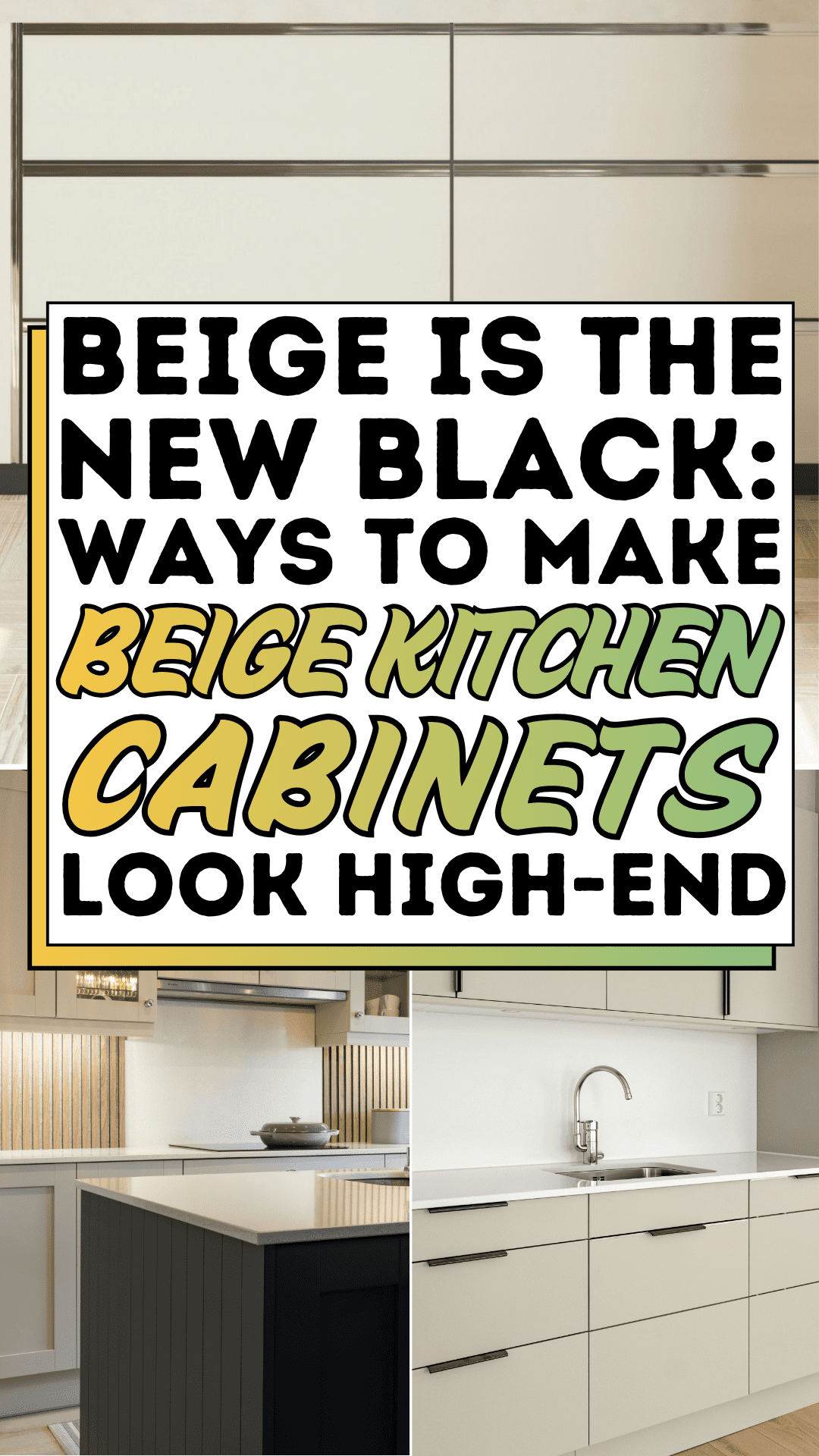
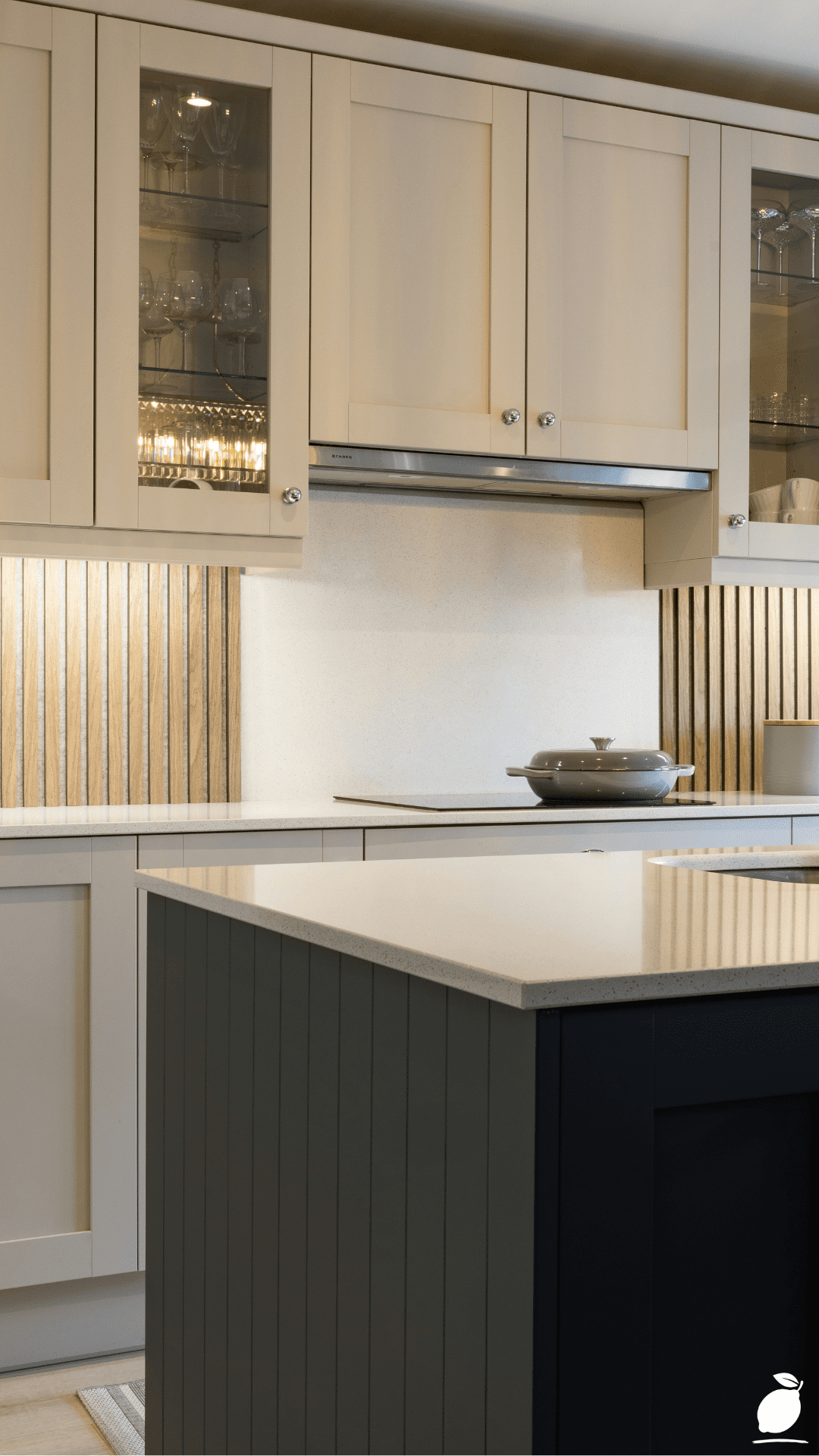
What separates a kitchen that looks like a showroom from one that looks like a rental is not the color of the cabinets. It’s the decisions made around them: the hardware, the lighting, the contrast, the materials, the intention. Look at the kitchen above. Cream shaker cabinets. A dark island. Warm wood accents. Hidden LED lighting. White quartz. That’s not a lucky accident; that’s a strategy.
Today, Easy Peasy Life Matters is giving you that strategy in full. Whether you’re working with original beige kitchen cabinets you inherited with the house or ones you chose yourself and now want to elevate, this guide will walk you through every decision that transforms “fine” into genuinely high-end. No gut renovation required. No six-figure budget. Just smart, intentional upgrades that make the most of what you already have and leave your kitchen feeling like the calm, beautiful space your home deserves.
The Beige Kitchen Cabinets Blueprint
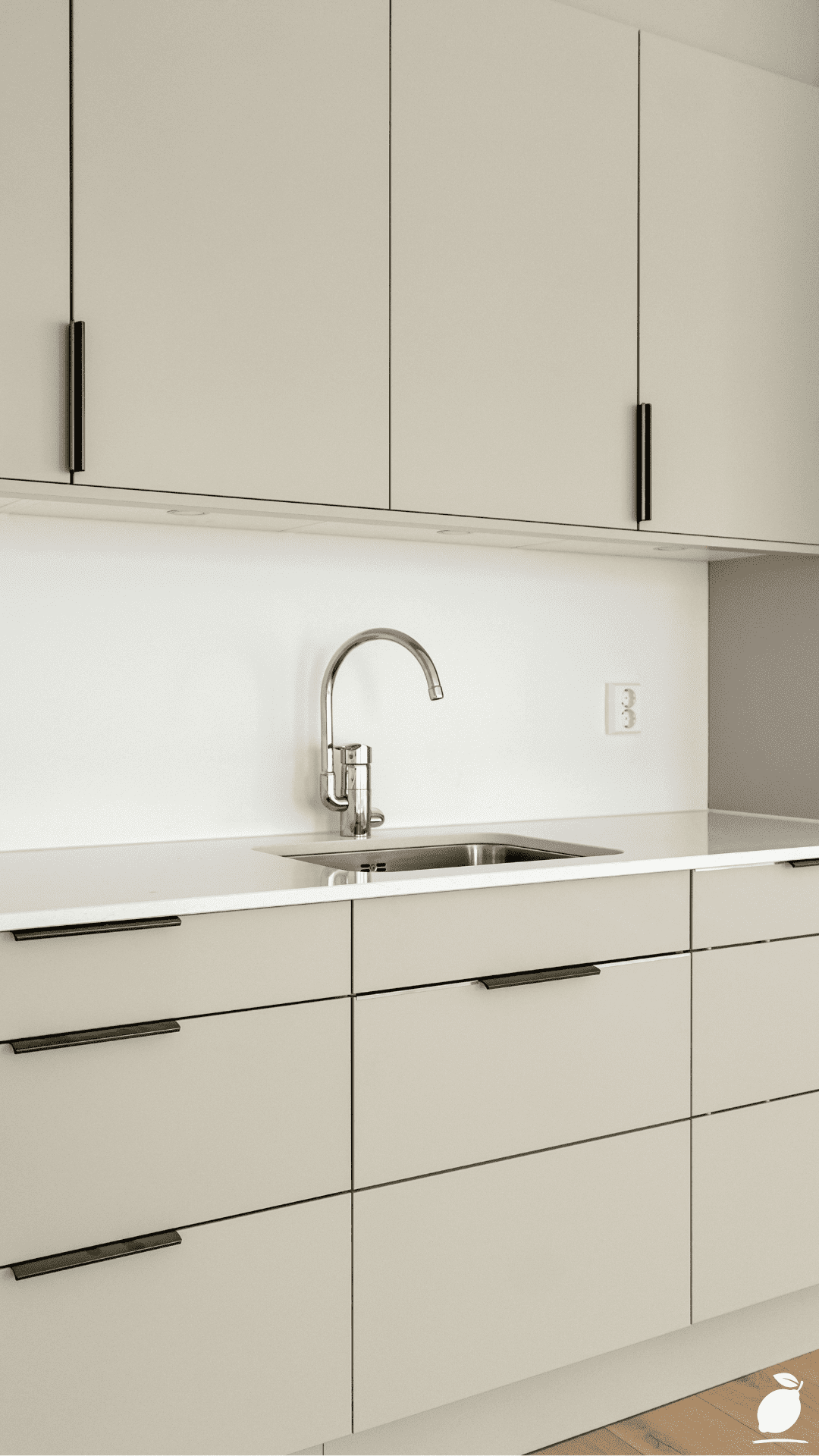
Making beige kitchen cabinets look high-end isn’t about hiding the beige; it’s about building a cohesive design story around it. Work through these steps in order, and you’ll see the transformation unfold layer by layer.
Step 1: Audit Your Current Cabinets Honestly
Before you spend a single dollar, look at your beige kitchen cabinets with fresh eyes. Are they the warm, creamy beige that leans toward ivory? The greige that tips into gray? The sandy beige with yellow undertones? Knowing your exact undertone is everything because it determines which accent colors, metals, and materials will harmonize versus clash. Pull the cabinets into natural daylight and hold paint swatches next to them. Photograph them at different times of day. What you see at noon is not what you’ll see at dinner, and your high-end result depends on working with the light, not against it.
Step 2: Commit to a Contrast Anchor
The single most powerful thing you can do for beige kitchen cabinets is introduce deliberate contrast. The kitchen in the image above does this masterfully, with creamy upper cabinets paired with deep charcoal lower cabinets and a matte black island. That interplay of light and dark is what creates visual depth and the feeling of a designed space rather than a default one. You don’t need to repaint everything. Even painting just the kitchen island a deep navy, forest green, or charcoal gives your beige cabinets a sophisticated foil that makes them look intentional rather than accidental.
Step 3: Upgrade Your Hardware Completely
Nothing ages beige kitchen cabinets faster than the wrong hardware, and nothing elevates them faster than the right choice. Brass and brushed gold warm up creamy beiges beautifully. Matte black creates drama and modernity. Brushed nickel reads clean and timeless. Avoid chrome; it runs cold against warm beige tones and cheapens the finish. When replacing hardware, go larger than you think necessary. Oversized knobs and long bar pulls read as intentional design choices and make the cabinets feel custom-built rather than off-the-shelf.
Step 4: Layer Your Lighting Intentionally
Lighting is the invisible luxury upgrade that most homeowners skip entirely, and it shows. Flat overhead lighting is the enemy of high-end kitchen aesthetics. To make beige kitchen cabinets glow the way they do in design magazines, you need layers. Install under-cabinet LED strip lights to illuminate your countertops and create that warm, golden wash visible in the image. Add pendant lights over the island that complement your hardware finish. If you have glass-front cabinets, interior cabinet lighting, or even battery-operated puck lights turns displayed items into a curated moment rather than clutter. Warm white bulbs (2700K–3000K) are non-negotiable; cool white light strips the warmth right out of beige.
Step 5: Choose a Countertop That Does the Work
Your countertop sits directly against your beige kitchen cabinets and carries enormous visual weight. White quartz, as seen in the image, is the classic pairing for a reason: it’s crisp, bright, and makes cabinets pop with contrast. Marble or marble-look surfaces add luxury and pattern. Butcher block introduces warmth and texture that plays beautifully off creamy beige. Avoid countertops in a similar beige or tan tone, that’s where kitchens start looking muddy and undefined. The countertop should either be lighter (to contrast) or significantly darker (to anchor), never the same value as the cabinets.
Step 6: Introduce Texture Through the Backsplash
A flat, single-color backsplash does nothing for beige kitchen cabinets. Texture is what makes a kitchen feel rich and layered. The image features vertical wooden slat paneling, a bold, architectural choice that adds warmth and dimension. For a more traditional approach, consider handmade-look subway tiles with pronounced grout lines, zellige tiles with their irregular surface variation, or a natural stone mosaic. Even a simple shiplap backsplash painted in a slightly deeper tone than the cabinets creates depth. The goal is visual interest at eye level, which draws the eye and elevates the entire space.
Step 7: Style the Open and Glass-Front Spaces Intentionally
If your beige kitchen cabinets include open shelving or glass-front doors, what you display becomes part of the design. The image shows glassware arranged in glass-front cabinets, lit from within a simple display that looks curated and high-end. Edit ruthlessly. Keep only items that are beautiful or meaningful. Group by color and material: all-white dishes together, clear glassware together, and wooden or linen items together. Resist the urge to fill every inch. Negative space is a design tool. A half-empty shelf styled with intention reads luxury; a crammed shelf reads clutter, regardless of what’s on it.
Step 8: Finish With Cohesive Soft Furnishings
The final layer that ties beige kitchen cabinets into a high-end space is often overlooked because it feels trivial, but it isn’t. A linen window treatment in a natural tone. A runner rug in a warm geometric pattern. Woven bar stools with leather detail. A single large-format plant. These elements soften the hard surfaces of a kitchen and make it feel lived-in and intentional rather than staged. Choose a maximum of two accent colors and repeat them throughout in the rug, the plants, the small appliances, and the dish towels for a space that feels cohesive and considered from every angle.
Expert Secrets for Success
Pro-Tips for a Better Result
- Sample paint in the actual room. If you’re adding a contrast color alongside your beige kitchen cabinets, paint large swatches (at least 12×12 inches) directly on the wall and live with them for 48 hours before committing. Lighting changes everything.
- Mix metal finishes deliberately. One dominant metal (your hardware) plus one secondary (your faucet or light fixture) is the designer formula. Two metals feel curated; three or more feel chaotic.
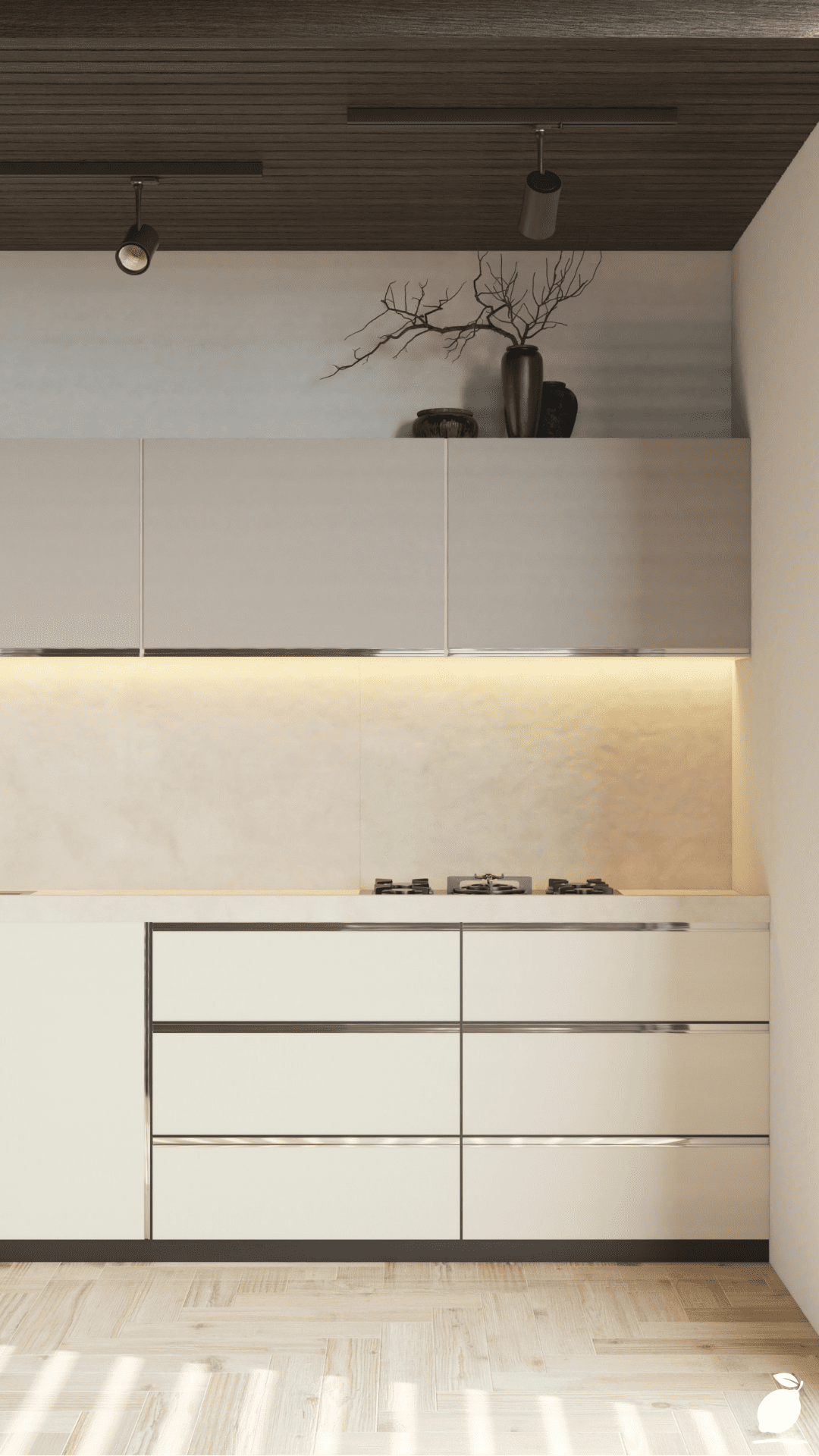
- Use vertical elements to add height. Tall cabinets that reach the ceiling, vertical tile patterns, or a statement range hood draw the eye upward and make the kitchen feel larger and more architectural.
- Invest in one statement piece. A Le Creuset pan in a bold color displayed on the counter, a sculptural faucet, a dramatic pendant light, and one intentional focal point does more for beige kitchen cabinets than a dozen small upgrades.
- Keep your countertops clear. The most high-end kitchens in design editorials have minimal counter clutter. Store small appliances inside cabinets. A clear countertop lets your beige kitchen cabinets breathe, and the whole kitchen reads as spacious and calm.
- Repaint rather than replace. If your beige kitchen cabinets are structurally sound, a professional cabinet respray costs a fraction of replacement and delivers a finish that looks custom.
Common Mistakes to Avoid
- Matching beige to beige. Pairing beige cabinets with a beige backsplash, beige countertop, and beige walls creates a flat, washed-out look with no contrast or dimension. Always introduce at least one strong contrasting element.
- Choosing the wrong white. Not all whites work with beige. Cool, stark whites can make warm beige look dingy. Test your white countertop, trim, or wall paint against your exact cabinet color before purchasing.
- Ignoring the ceiling and trim. Chipped, yellowed, or flat-painted trim undermines even the most carefully styled beige kitchen cabinets. Fresh, bright white trim is one of the cheapest and highest-impact upgrades you can make.
- Over-accessorizing. Beige is a quiet, refined color. It doesn’t need to compete for attention. Too many decorative objects, too many colors, and too many textures fight the calm that makes beige beautiful.
- Skimping on hardware quality. Lightweight, hollow-feeling hardware instantly signals budget finishes. Feel the weight in your hand before you buy. Solid brass or solid steel hardware communicates quality every time someone opens a cabinet door.
- Forgetting the flooring connection. Your floor and your beige kitchen cabinets need to work together. Light hardwood (like in the image) complements beige beautifully. Very dark floors can overpower soft cabinets. Very similar-toned floors blend in a way that lacks contrast.
Why Beige Kitchen Cabinets Matter
There’s a reason we spend so much time thinking about our kitchens. It isn’t really about the cabinets. It’s about what the kitchen represents: the place where the day starts and ends, where food is made and shared, where kids sit at the counter while dinner happens around them. When a kitchen feels chaotic or ugly or like it belongs to someone else, that energy seeps into everything. You avoid cooking. You feel vaguely unsettled in your own home. You can’t quite explain why, but the space just doesn’t feel like yours. Getting your beige kitchen cabinets to feel high-end isn’t vanity; it’s an act of claiming your space.
There is a real, documented mental health benefit to feeling at peace in your home environment. Clutter, visual noise, and spaces that feel unresolved create low-grade stress that compounds over time. Conversely, a kitchen that feels calm, cohesive, and intentional gives you a reliable place to exhale. The warm glow of under-cabinet lighting. The satisfying weight of good hardware. The clean expanse of a clear quartz countertop. These aren’t luxuries; they’re daily experiences that shape your mood, your energy, and your relationship with your home.
At Easy Peasy Life Matters, we believe that you don’t need to wait for a full renovation to feel good about where you live. Your beige kitchen cabinets are not a problem to solve, they are a starting point. With the right strategy, the right upgrades, and the right perspective, they can become the foundation of a kitchen that feels genuinely beautiful, deeply calm, and entirely yours. That’s worth every intentional decision along the way.
Frequently Asked Questions
Are beige kitchen cabinets going out of style?
Not at all, in fact, beige kitchen cabinets are stronger than ever in 2026. The shift away from stark all-white kitchens toward warmer, more livable neutrals has made creamy beige, greige, and warm ivory among the most sought-after cabinet tones in interior design. When styled with intention, beige reads timeless rather than trendy.
What color walls go best with beige kitchen cabinets?
Warm whites, soft creams, and warm greiges all complement beige kitchen cabinets without competing. For a more dramatic look, a deep sage green, dusty blue, or charcoal accent wall creates beautiful contrast. Avoid cool gray walls, which can make warm beige cabinets look yellow or dingy.
What hardware finish works best with beige kitchen cabinets?
Brushed brass and unlacquered brass are the top pairings for warm beige tones; they enhance the warmth and add richness. Matte black is the modern choice that creates a striking contrast. Brushed nickel works well with cooler, beige tones. Avoid polished chrome, which reads cold against warm beige.
How do I make beige kitchen cabinets look more modern?
Pair them with a strong contrast color (dark island, charcoal lower cabinets), choose sleek long-bar pulls over ornate knobs, incorporate a bold geometric or textural backsplash, and keep surfaces minimal and clutter-free. Matte black hardware and fixtures also push beige firmly into contemporary territory.
Can I mix beige upper cabinets with a different color on the lowers?
Absolutely, and this is one of the most effective ways to elevate beige kitchen cabinets. The two-tone kitchen look pairs creamy beige uppers with deep, moody lower cabinets (charcoal, navy, forest green, or black) for a layered, high-end look that feels custom-designed. Keep the hardware consistent across both cabinet colors to unify the palette.
Is it worth repainting beige kitchen cabinets instead of replacing them?
In most cases, yes. Cabinet repainting by a professional delivers a factory-smooth finish at 20–30% of replacement cost. If your cabinet boxes are structurally solid and the layout works for your kitchen, repainting or even refreshing the existing finish is the highest-ROI upgrade you can make to your kitchen.