The front of your home tells a story before anyone reaches the door. For many households, that story is a polite but noncommittal one: a clean path, perhaps a pot or two that did well in spring and are looking tired by August, and a perfectly functional door without being particularly welcoming. The entry area has square footage constraints that resist the usual garden solutions: no room for a border, no width for a significant shrub, no depth for the kind of layered planting that would feel genuinely special. So the front stays as it is fine, adequate, neither embarrassing nor memorable. A beginning to the home that does not quite live up to what is inside.
The frustration with small entrance spaces is that the standard advice does not scale down gracefully. “Plant a rose arch” requires an arch. “Add a border of lavender” requires a border. “Create a welcoming container arrangement” requires containers that you cannot squeeze through the gate with. The recommendations designed for the kind of front garden that features on lifestyle blogs assume dimensions and maintenance bandwidth that a busy household with a modest entryway simply does not have. And so the advice is noted, the pins are saved, and the front door remains exactly as it was because the gap between the aspirational image and the actual space has no obvious bridge.
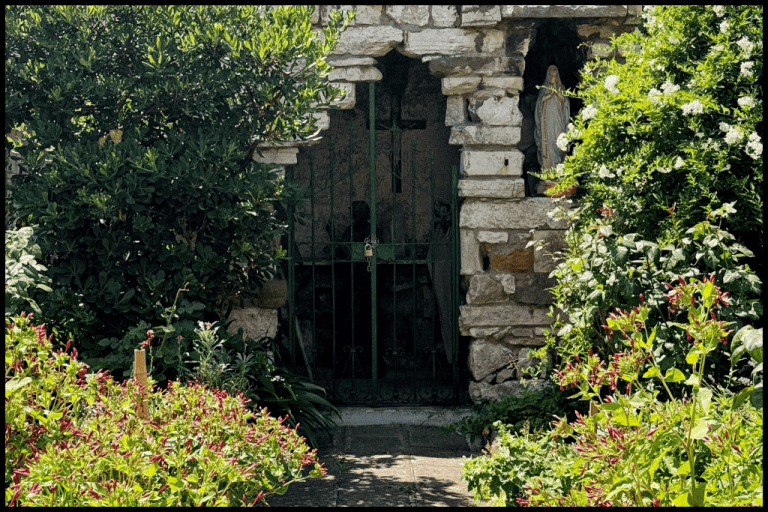
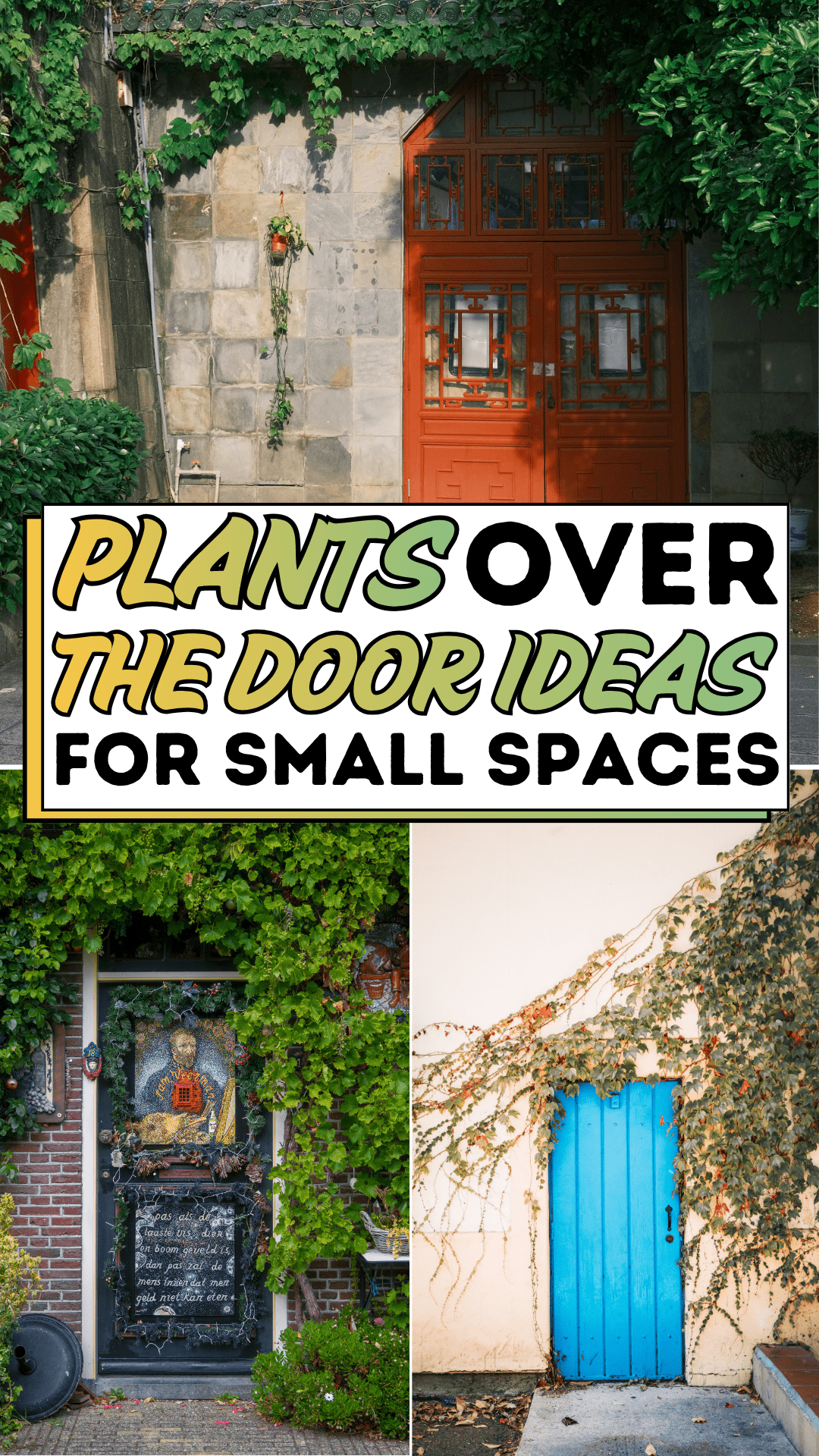
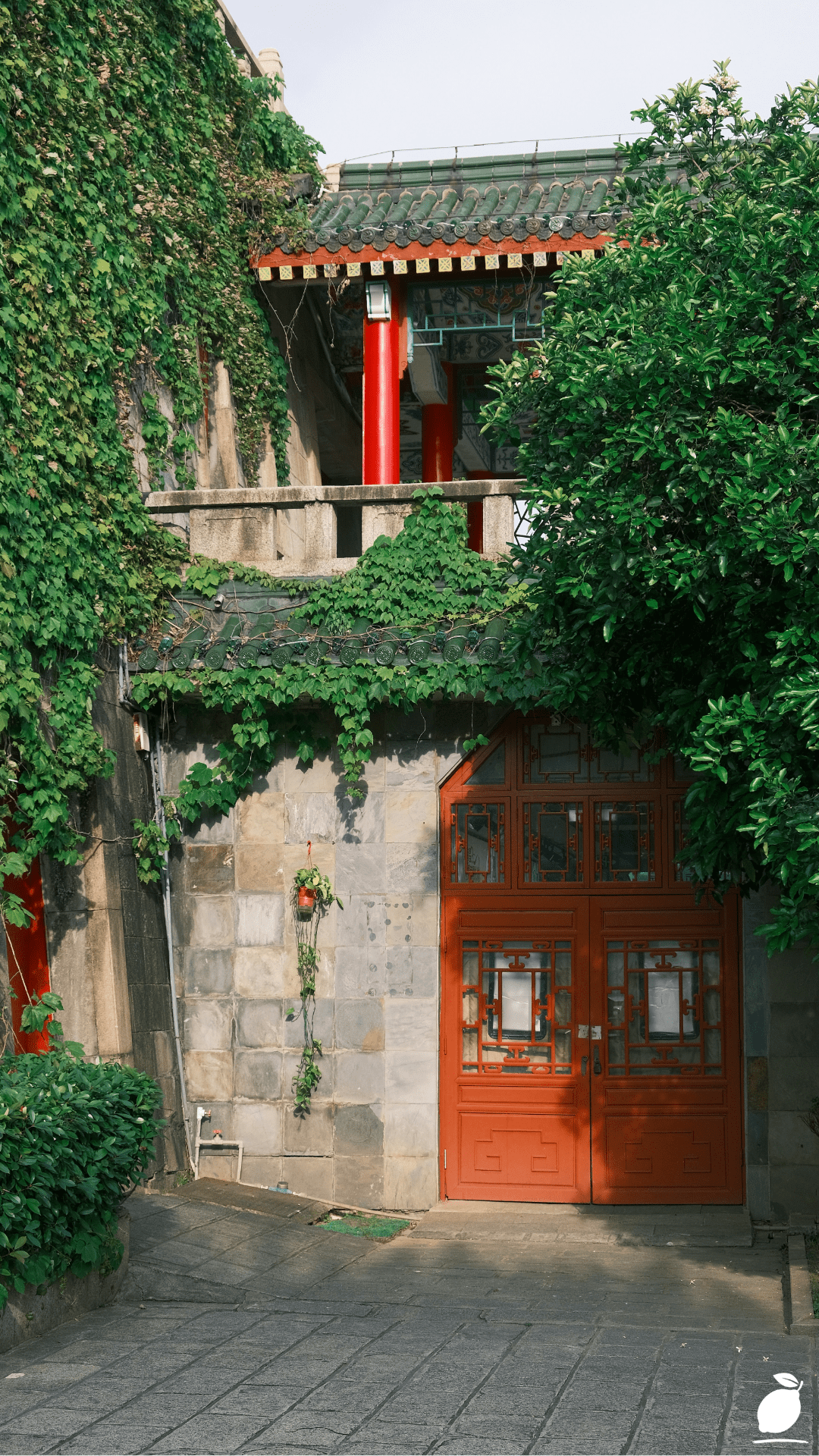
The bridge is vertical. The image of a traditional entrance framed by climbing ivy threading through stone, balanced against orange-red doors and ornate railings, green foliage cascading over the entrance from above, this is not a solution that requires square footage. It requires height. Plants over the door use the one dimension that small entrance spaces almost always have in abundance: vertical wall above the threshold, above the frame, above the lintel, up to the roofline, and beyond. In a space where ground-level planting is constrained, the door surround becomes the garden. These are the plants that do it best.
The Plants Over the Door Guide

The title calls for a plant roundup, a curated guide to the best plants over the door options for small entrance spaces, each with clear notes on why it works, how it is supported, and what it delivers at the threshold of a home. These selections range from the classic to the underused, covering sun and shade, fragrance and foliage, and fast establishment through to the long-term performers that improve every decade.
English Ivy (Hedera helix)
English ivy is the archetypal plant over the door solution, the plant that transforms a blank wall above an entrance from a surface into a living feature with a naturalness that no applied decoration achieves. It is self-clinging, attaching to stone, brick, and render via adhesive root pads that require no trellis or wire support. Given a foothold at the base of the wall beside the door, it works its way upward and across the entrance surround continuously, filling the space above the door with dense, overlapping foliage in deep green or variegated cream-and-green depending on the variety.
Why it works: Ivy as a plant over the door choice requires minimal infrastructure, establishes quickly, is evergreen for year-round impact, and thrives in the part-shade conditions common to north and east-facing entrances where other climbers struggle. The image of ivy threading through stone above a traditional entrance, the precise visual captured in the image above, is achievable within two to three growing seasons from a basic plant at the door base. Hedera helix ‘Glacier’ offers elegant silver-grey variegation; ‘Hibernica’ provides the most vigorous coverage for a larger entrance span.
Star Jasmine (Trachelospermum jasminoides)
For entrances that receive reasonable sun and where fragrance is as important as visual effect, star jasmine is among the most rewarding plants over the door available. Its small, white, intensely fragrant flowers appear from late spring through midsummer, filling the entire entrance area with a scent that is one of the most universally appealing in the plant world. The glossy, dark evergreen foliage provides year-round coverage, and the plant’s naturally twining habit means it self-attaches to a simple wire framework with minimal training required.
Why it works: Star jasmine as a plant over the door choice delivers three distinct seasons of value: spring green growth, summer fragrance and white flowers, and autumn foliage that takes on bronze tones in cooler temperatures. It is considerably more compact in habit than climbing roses or wisteria, making it genuinely suited to small entrance spaces where a more vigorous climber would quickly exceed the boundaries of a door surround. In a sheltered, south or west-facing entrance, star jasmine reaches the lintel within two seasons and stays neatly within a trained framework with one annual trim.
Climbing Hydrangea (Hydrangea anomala petiolaris)
For shaded or north-facing entrances where fragrant sun-lovers cannot perform, climbing hydrangea is the most spectacular plant over the door option available. It is self-clinging like ivy, requiring no support once established, and produces masses of flat-topped white lacecap flowers in early summer that transform even a deeply shaded entrance into a floral moment. The peeling, cinnamon-colored bark provides winter interest after the foliage drops, and the plant is completely hardy through the most severe winters in temperate climates.
Why it works: Climbing hydrangea solves the specific problem of the dark, shaded entrance that most plants over the door recommendations do not address. It is slow in its first two seasons establishing its self-clinging root system, then grows steadily and covers the wall above the door with increasing generosity each year. A climbing hydrangea over a door is a long-term investment: modest in its first three years, established and beautiful from year five onward, and genuinely spectacular from year ten. For a home intended to be lived in for decades, it is the most rewarding plant over the door choice available.
Rosa ‘New Dawn’ (Climbing Rose)
A climbing rose over the door is the definitive plant over the door statement, the image that the English cottage aesthetic is built around, and the scent that makes every arrival at a house feel like a genuine welcome rather than a transactional approach to a building. Rosa ‘New Dawn’ is the most reliable choice for a plant over the door planting in a small space: its soft pearl-pink flowers appear in a first flush in June and repeat intermittently through to October, its growth is vigorous but manageable with annual training, and it tolerates partial shade better than most climbing roses.
Why it works: ‘New Dawn’ as a plant over the door choice combines the iconic visual impact of a flowering climbing rose with the practical manageability that a small entrance surround requires. Trained horizontally across wires fixed above and around the door frame, encouraging lateral stems that produce more flowering shoots than vertical ones, a single plant provides full coverage of the door surround within three years. The fragrance at peak flowering makes arriving home an experience rather than an event, and the repeat-flowering habit ensures the entrance remains beautiful across the full summer season rather than delivering a single spectacular June flush followed by bare stems.
Clematis (Various species and hybrids)
Clematis offers the widest color range of any plant over the door climber from the pure white of Clematis montana to the deep purple of ‘Jackmanii’, the soft lavender of ‘The President’, and the vivid red of ‘Niobe’. Different species bloom at different points across the season, meaning a thoughtfully chosen selection of two or three clematis varieties can maintain flowering presence over the door from March through October. Most clematis prefer their roots in shade, and their flowering stems in sun, the classic “head in sun, feet in shade” requirement that a door surround planting with a ground-level mulch naturally accommodates.
Why it works: Clematis as plants over the door performers are particularly suited to small entrance spaces because they are fine-stemmed and light, they add flowering abundance without the weight and bulk of a rose or wisteria, and their twining habit works with a simple wire grid framework above the door rather than requiring a robust support structure. Montana clematis is the fastest and most vigorous choice for an established flowering arch over a door within two seasons; large-flowered hybrids are more compact and more suited to a smaller door surround where a montana would quickly exceed the available space.
Wisteria (Wisteria sinensis or floribunda)
For an entrance where long-term, spectacular impact is the primary goal and patience is available, wisteria is the most dramatic plant over the door choice in any garden. Its cascading racemes of purple, pink, or white flowers appearing before the leaves in late spring produce one of the most visually arresting entrance moments in the entire plant world. Wisteria requires robust support, substantial vine eyes and wires, or a sturdy timber framework, and annual twice-a-year pruning to maintain it within the bounds of an entrance surround. It is slow to establish and slow to flower; the popular wisdom of “the first year it sleeps, the second it creeps, the third it leaps” applies accurately.
Why it works: Wisteria over a door delivers an impact that no other plant over the door choice matches. The flowering moment, typically two to three weeks in May, transforms an entrance so completely that the building behind it is momentarily secondary. For a home where the entrance wall above the door offers significant height and the framework can be made robust, wisteria is the aspirational plant over the door choice that rewards the investment of patience with one of the most spectacular sights in temperate gardening. Choose Wisteria floribunda ‘Multijuga’ for the longest individual flower racemes, or ‘Alba’ for an elegant white-flowered alternative.
Passion Flower (Passiflora caerulea)
For entrances in mild climates or sheltered, south-facing positions, passion flower is among the most exotic and eye-catching plants among the door options available to temperate gardeners. Its extraordinary flowers are complex, sculptural, and colored in blue, white, and purple. The most common variety appears continuously from June through September, followed by oval orange fruits in warm years. It grows vigorously, twines readily over a wire framework, and in mild areas is evergreen through winter.
Why it works: Passion flower, as a plant over the door, provides the visual impact of a tropical climber with the hardiness of a temperate garden plant. Its rapid growth rate, establishing a door-covering framework within a single season from a decent-sized nursery plant, makes it the fastest-impacting of all the plants over the door options in this guide. The extraordinary flower structure stops visitors at the door in a way that more familiar plants do not, making it the ideal choice for an entrance where surprise and delight are the desired arrival experience.
Expert Secrets for Success
Pro-Tips for Better Results
- Install the wire framework before the plant, not after. The most common plant over-the-door installation mistake is buying and planting the climber first, then trying to install supporting wires around an established plant without damaging it. Fix vine eyes into the wall at 30 to 45cm intervals across and above the door frame, tension horizontal wires between them at 30cm vertical spacing, and then plant at the base. The framework is invisible once the plant covers it and provides a complete training structure from the first season of growth.
- Plant at least 30cm away from the wall base. The soil directly against a house wall is the driest, most nutrient-depleted growing zone in the garden, protected from rainfall by the wall above and depleted by the foundation below. Plant your plants over the door at a minimum of 30cm out from the wall, angle the root ball toward the wall at planting, and the plant will grow toward the support while drawing from more moisture-retentive, fertile soil. This single planting tip improves the establishment speed and long-term health of all climbers over the door.
- Choose the right plant for the aspect before choosing for appearance. A south-facing entrance suits star jasmine, climbing roses, passion flower, and sun-loving clematis. A north or east-facing entrance needs climbing hydrangea, ivy, or shade-tolerant clematis varieties, including Clematis montana. Planting a sun-loving plant over the door choice on a north-facing wall produces a struggling, non-flowering specimen regardless of the care invested. Aspect is the primary filter; appearance comes second.
- Train horizontally from the first season. Climbing plants trained vertically produce a single vertical stem with all flowering growth at the top, the opposite of what plants over the door require. From the first growing season, tie new shoots out to the horizontal wires rather than allowing them to grow straight up. Horizontal training encourages lateral shoots, which flower more prolifically and distribute coverage more evenly across the door surround. This habit, applied in the first two seasons, determines the framework of the plant for its entire life.
- Feed generously through the growing season. Plants over the door growing in the limited soil volume available at the base of a house wall need regular supplementary feeding to support the vigorous growth and heavy flowering that a productive entry planting requires. A monthly application of a balanced liquid fertilizer from April through August, combined with an annual top-dressing of well-rotted compost around the base, maintains the fertility that makes plants over the door genuinely spectacular rather than merely surviving.
Common Mistakes to Avoid
- Choosing wisteria for a small entrance without committing to its management. Wisteria is among the most beautiful plants over the door choices and among the most demanding in terms of structural support and twice-annual pruning. An unmanaged wisteria at an entrance surround grows rapidly beyond the door frame, lifts roof tiles, blocks gutters, and forces itself under window frames within five years. Choose wisteria only if a robust support structure can be installed and a twice-yearly pruning commitment in July and February can be genuinely maintained.
- Allowing self-clinging plants to grow onto window frames or under roof tiles. Ivy and climbing hydrangea self-climb effectively to stone and brick without causing structural damage to sound masonry. However, the same adhesive root pads penetrate and lift cracked render, force apart pointing that is already loose, work under improperly sealed window frames, and lift roof tiles. Redirect self-clinging plants away from these vulnerable areas at the first sign of contact. Plants over the door managed clear of windows, gutters, and roof edges are safe and beneficial; those that penetrate vulnerable building elements cause damage.
- Planting directly against the wall in the drip shadow. The strip of soil within 15 to 20cm of a house wall is almost always dry, compacted, and nutrient-poor, sheltered from rain by the overhang above and constrained by the foundation below. Planting here produces struggling, slow-establishing plants over the door that never achieve their potential. The 30cm-from-wall rule described in the pro-tips section is not a suggestion. It is the minimum offset that gives a climber access to meaningful soil moisture and root space.
- Neglecting annual pruning after the first established season. Plants over the door that are not pruned annually expand beyond the door surround, produce flowering growth only at the extremities of long, bare stems, and become difficult to manage without major cutting back. One to two hours of annual pruning timed correctly for the species keeps plants over the door within the entrance frame, flowering at the right height and density, and easy to manage for the next decade without a major restoration pruning project.
- Using inadequate vine eye fixings for heavy climbers. A large climbing rose or wisteria over the door generates significant wind load and weight on its support wires. Vine eyes fixed into mortar joints with standard screws are adequate for lightweight clematis but inadequate for heavy climbers. Use vine eyes with a minimum 6mm screw diameter fixed into solid brick rather than mortar joints, and use stainless steel tension wire rated for the load. A support system failure drops the plant and the support simultaneously and can damage both the plant and the wall.
Why Plants Over the Door Matter
The entrance to a home is the moment of arrival, the transition between the world outside and the life inside, and what frames that transition shapes the experience of it more than most homeowners consciously recognize. A bare wall above a plain door signals a threshold. Plants over the door signal a home: a place that is tended, cared for, alive in a way that extends beyond the people inside it to the fabric of the building itself. That signal is received by every person who approaches, including the people who live there, and arriving through an entrance framed in green and flowers is a qualitatively different experience from arriving through a blank wall at a functional door.
For families, plants over the door create a visual landmark for the home that children and guests register instinctively. The house with jasmine over the door. The house where the climbing rose comes out in June. The entrance with the ivy framing the orange-red door. These are the details by which homes are remembered and described, the elements that transform a building into a place with character and presence. Teaching children to tend the climber at the door, tying in a wayward shoot, watering in summer, and watching the first flowers open is one of the most accessible introductions to garden stewardship available at any age and in any space.
And for the gardener who plants and tends them, plants over the door deliver a compounding return that few other garden choices match for the investment. The first season produces a young climber and a sense of potential. The third season produces the beginning of the effect. The fifth season produces something genuinely beautiful that stops people at the gate. The tenth season produces something that looks as though it grew there naturally, permanent, living, and inseparable from the character of the home. That is the particular quality of plants over the door that distinguishes them from every other small-space gardening solution: they do not just improve the entrance. Over time, they become it.
Frequently Asked Questions
What are the best plants over the door for a shaded north-facing entrance?
For north-facing or heavily shaded entrances, climbing hydrangea is the most spectacular plant over the door choice, producing white lacecap flowers in summer, even in deep shade. English ivy in any of its variegated forms provides year-round evergreen coverage without flowering. Clematis montana tolerates partial shade well and flowers prolifically in spring. For fragrance in shade, some Lonicera (honeysuckle) varieties, particularly Lonicera japonica, tolerate north-facing positions better than most fragrant climbers.
How do I support plants over the door on a rendered wall where drilling is difficult?
On rendered walls, use adhesive vine eyes specifically designed for smooth masonry surfaces and tension stainless steel wire between them. For lightweight climbers like clematis and star jasmine, adhesive vine eyes rated for outdoor use provide adequate support. For heavier climbers like climbing roses and wisteria, drill through the render to fix into the masonry beneath using a masonry bit, applying flexible sealant around each fixing to prevent water penetration through the render. A timber trellis panel fixed at its corners to solid masonry and held away from the wall surface on spacers provides an alternative framework that distributes load across fewer fixing points.
How quickly will plants over the door cover the entrance area?
Growth rates vary significantly by species. Passion flower and clematis montana are the fastest-establishing plants over the door, reaching the top of a standard door frame within a single growing season from a healthy nursery plant. Climbing roses typically cover a door surround within two to three years of planting. Star jasmine and ivy establish more slowly but reliably cover the entrance within three to four seasons. Climbing hydrangea is the slowest, with one to two years of minimal growth followed by increasingly vigorous coverage from year three onward. Wisteria is variable, typically taking three to seven years to produce its first significant flowering display.
Can I grow plants over the door in containers rather than in the ground?
Yes, several plants over the door perform reliably in large containers, which is the primary option for entrances paved entirely to the door with no planting bed. Use containers with a minimum volume of 40 liters for any climber expected to cover a door surround significantly. Star jasmine, clematis, passion flower, and compact climbing roses all grow satisfactorily in containers with consistent feeding and watering. Ivy and climbing hydrangea are less suited to container culture for long-term plants over the door use. Water container-grown plants over the door daily in warm weather and feed weekly with a liquid fertilizer through the growing season. The contained root zone cannot access ground moisture and depletes fertilizer faster than in-ground planting.